Analysis | Security | National Affairs
Analysis: Why Military Recruitment Appears Lower in Nigeria’s South-East

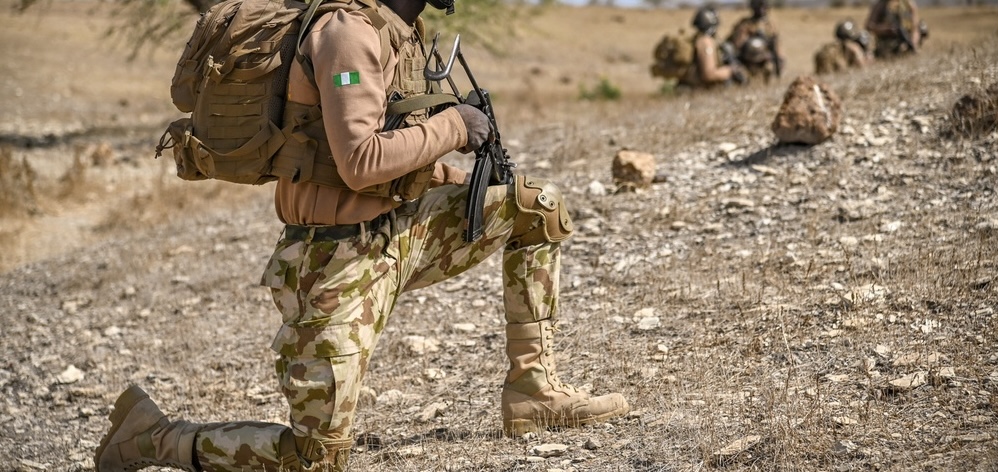
Every recruitment cycle into the Nigerian Army revives a familiar concern. While thousands of young Nigerians from many parts of the country compete for limited enlistment slots, recruitment figures from several states in the South-East have consistently lagged behind allocated quotas, prompting repeated appeals from military authorities.
Senior Army officers have on several occasions urged youths from Abia, Anambra, Ebonyi, Enugu and Imo states to take advantage of recruitment opportunities, warning that available slots often remain unfilled. The issue has generated debate across the country, raising an important question:
Why do relatively fewer young people from the South-East apply for military service?
The answer is unlikely to be found in a single explanation.
Instead, analysts point to a combination of history, public perception, security concerns, economic realities and trust in state institutions.
Army’s Concern Over Low Applications
Over the past decade, the Nigerian Army has repeatedly disclosed that some South-East states fail to exhaust their recruitment allocations.
Officials have argued that the situation could reduce the region’s representation within the military over time and have encouraged community leaders, traditional rulers and state governments to motivate eligible youths to enlist.
Military authorities insist that recruitment remains open to all qualified Nigerians and have rejected suggestions of institutional exclusion.
Historical Experiences Continue to Shape Perceptions
For many observers, understanding recruitment patterns requires acknowledging history.
The Nigerian Civil War (1967–1970) remains a defining event in the relationship between many South-East communities and the Nigerian state.
Although more than five decades have passed, memories of the conflict continue to influence political discussions, family narratives and perceptions of national institutions.
Some analysts argue that these historical experiences contribute to lingering mistrust among sections of the population, although they caution against assuming that all South-Easterners share the same views.
An Alternative Perspective
Offering another perspective on the debate, human rights lawyer and activist Aloy Ejimakor argues that historical experiences and more recent security operations have significantly influenced how many young people in the South-East perceive military service.
In a post published on his verified X (formerly Twitter) account, Ejimakor said the legacy of the 1967–1970 Nigerian Civil War continues to shape attitudes among many Igbo youths.
“The trauma of the 1967 army massacres of Ndigbo in the North remains an unhealed wound, constantly reopened by modern atrocities targeting youths suspected of IPOB ties, such as the state-sanctioned violence at Nkpor, the Aba prayer ground, Obigbo, the Trump victory rally in Port Harcourt, and many others,” he wrote.
Ejimakor further argued that the reported reintegration of some former Boko Haram members into society and security-related programmes has deepened scepticism among sections of the South-East.
“To ask them to bleed under a biased command, alongside former terrorists, is a compromise of dignity they refuse to make. So, their reluctance to enlist is not cowardice. Instead, it is a quiet, powerful protest against an institution that has often betrayed Ndigbo,” he stated.
His comments reflect one side of a broader national debate. The Nigerian military has consistently maintained that recruitment into the armed forces is open to all eligible Nigerians regardless of ethnicity or region, and that personnel are expected to uphold professionalism and national unity. The military has also repeatedly denied allegations of institutional bias, insisting that its operations are conducted in line with the Constitution and applicable rules of engagement.
Security Operations and Public Confidence
Another frequently cited factor is the impact of recent security operations in parts of the South-East.
Military deployments to tackle separatist violence and criminal activities have sometimes generated controversy, with civil society organisations raising concerns over alleged human rights violations during security operations.
While the military has maintained that its operations target criminal elements and are conducted within the law, some residents say such experiences have affected public perceptions of military service.
Security experts note that confidence in any institution often influences willingness to join it.
Economic Aspirations Have Changed
Employment choices among young people are also evolving.
Many graduates now prioritise careers in technology, entrepreneurship, healthcare, finance, international migration or private-sector employment.
The South-East, known for its strong entrepreneurial culture, has traditionally encouraged business ownership and commerce, leading some analysts to suggest that military service may not rank as highly among preferred career paths for many young people.
This trend, however, is not unique to the region.
Across Nigeria, security agencies increasingly compete with private employers for skilled young professionals.
Concerns About Welfare and Career Prospects
Interviews conducted in previous studies and media reports have highlighted concerns among some prospective recruits regarding salaries, welfare, housing, insurance, healthcare and long-term career development within the armed forces.
Families worried about insecurity and deployments to conflict zones may also discourage their children from pursuing military careers.
Military authorities have in recent years introduced reforms aimed at improving personnel welfare, training and career progression, although public perceptions often take time to change.
Perceptions of Fairness
Some commentators have also argued that perceptions—whether accurate or not—about promotion opportunities, postings and representation within senior military leadership may influence attitudes toward enlistment.
The Nigerian Armed Forces have consistently maintained that recruitment, promotion and appointments are guided by established rules, merit and applicable federal character provisions.
No official evidence has established systemic exclusion of South-East recruits from military careers.
A National Institution
Defence analysts emphasise that the Nigerian Army remains a national institution whose effectiveness depends on broad representation from every region of the country.
They argue that diversity within the armed forces strengthens national cohesion, improves operational effectiveness and reinforces the military’s constitutional role as a national institution rather than a regional one.
Beyond the Numbers
The debate over recruitment should not be reduced to accusations or stereotypes.
Not every young person in the South-East is unwilling to join the military, just as not every eligible Nigerian seeks a military career.
Understanding recruitment trends requires careful analysis of historical experiences, public trust, economic opportunities, institutional confidence and changing career preferences.
For policymakers, the challenge extends beyond encouraging enlistment.
Building confidence in national institutions, improving personnel welfare, strengthening transparency and fostering greater national unity may ultimately prove more effective than recruitment campaigns alone.
The question, therefore, is not simply why fewer South-Eastern youths appear to enlist.
It is whether Nigeria can create conditions in which young people from every region view military service as an honorable, rewarding and trusted path of national service.
Ultimately, the reasons behind recruitment trends in the South-East remain multifaceted, involving historical memory, public trust, security concerns, economic opportunities, family preferences and individual career choices. No single explanation fully accounts for the pattern, making continued dialogue and evidence-based research essential.



-

 Judiciary | Public Safety1 day ago
Analysis: Why Would Mary Habila’s Father Oppose an Autopsy?
-
 Judiciary | Public Safety4 hours ago
Supreme Court Restores Final Forfeiture of Emefiele’s Seven Luxury Properties
-

 Sports2 days ago
Stanley Nwabali Opens Up on Family Tragedy and Mental Health Before Chippa United Return
-

 Security5 hours ago
Kogi Rescues Abducted NECO Candidates as Governor Ododo Reaffirms No-Ransom Policy
-

 Editorial20 hours ago
When Nigeria’s Elite Choose Foreign Classrooms, What Does It Say About Our Universities?
-

 Investigations/Anti-Corruption1 day ago
Court Orders Final Forfeiture of 48 Properties Linked to Former AGF Abubakar Malami
-

 Judiciary | Public Safety3 hours ago
Lagos Gov’t Urges Residents to Adopt Responsible Waste Disposal to Combat Flooding
-
Uncategorized1 week ago
Hello world!