
News
NEMA Urges Residents in Flood-Prone Areas to Relocate as Heavy Rains Intensify


The National Emergency Management Agency (NEMA) has advised Nigerians living in flood-prone communities to relocate to safer locations as heavy rainfall continues to intensify across several parts of the country, raising the risk of widespread flooding.
The agency warned that the peak of the rainy season could trigger severe flooding in vulnerable communities if residents fail to heed early warning advisories and take necessary precautionary measures.
The appeal comes amid increasing rainfall in many states and renewed concerns over the potential impact of floods on lives, property, infrastructure and agricultural activities.
NEMA urged residents, particularly those living near rivers, floodplains and low-lying areas, to relocate temporarily to designated safer locations where necessary.
The agency also encouraged state governments, local authorities and community leaders to intensify public awareness campaigns, monitor water levels and activate emergency response mechanisms ahead of possible flooding.
Residents were further advised to avoid dumping refuse into drainage channels, as blocked waterways significantly increase the risk of urban flooding.
Flooding remains one of Nigeria’s most recurring natural disasters, with several states experiencing devastating floods during previous rainy seasons.
Experts have attributed the recurring incidents to a combination of heavy rainfall, poor urban planning, blocked drainage systems, encroachment on natural waterways and the effects of climate change.
Communities situated along major river basins, including those connected to the Rivers Niger and Benue, are often among the most vulnerable during periods of sustained rainfall.
NEMA said it is working with State Emergency Management Agencies (SEMAs), local governments and humanitarian partners to strengthen preparedness and ensure rapid response where flooding occurs.
The agency urged residents to remain alert, follow official weather forecasts and evacuation directives, and report emergencies promptly to relevant authorities.
Emergency officials also advised households to prepare emergency kits containing essential items such as drinking water, medications, important documents, flashlights and communication devices in case evacuation becomes necessary.
Disaster management experts say reducing the impact of flooding requires collective action from government agencies and the public.
They stressed that while infrastructure improvements and drainage maintenance are essential, compliance with safety advisories by residents is equally important in preventing avoidable loss of life and property.
As the rainy season progresses, authorities have reiterated the need for vigilance, particularly in communities identified as being at high risk of flooding.
Flooding continues to pose a significant humanitarian, environmental and economic challenge in Nigeria, displacing thousands of people and causing billions of naira in losses almost every year.
Early warning systems and public cooperation remain among the most effective tools for reducing casualties and protecting vulnerable communities.





Vice President Kashim Shettima has commissioned a garment factory in Ilorin, Kwara State, with the capacity to employ about 4,000 people when operating at full capacity.
Shettima also commissioned the 11-storey Kwara Revenue Service House as part of activities marking the turbaning of Kwara State Governor AbdulRahman AbdulRazaq as the Sardauna of Ilorin.
The development was disclosed in a statement issued on Wednesday by the Senior Special Assistant to the President on Media and Communications, Office of the Vice President, Stanley Nkwocha.
According to the statement, the garment factory is one of the signature projects of the AbdulRazaq administration and was designed to create employment opportunities for at least 4,000 people when fully operational.
The commissioning of the two projects formed part of activities surrounding the conferment of the traditional title on AbdulRazaq by the Emir of Ilorin, Alhaji Ibrahim Sulu-Gambari.
The Emir described the governor as the “Defence Minister of Ilorin Emirate” during the turbaning ceremony held at the Emir’s Palace in Ilorin.
Speaking at the ceremony, Shettima commended what he described as the legacy of continuity maintained by the AbdulRazaq administration in Kwara State.
The Vice President also reflected on the contribution of the governor’s late father, AbdulGaniyu AbdulRazaq, to the history of Ilorin and Nigeria’s legal profession.
Shettima noted that AbdulGaniyu AbdulRazaq made history as the first lawyer from Northern Nigeria, describing his legacy as one that had continued to resonate across generations.
“His father, Alhaji AbdulGaniyu AbdulRazaq, carried an Ilorin name into history as Northern Nigeria’s first lawyer,” Shettima said.
He also recalled that the late AbdulRazaq was the first Mutawalle of Ilorin, saying the title remained in the family as a reflection of its longstanding relationship with the Ilorin Emirate.
Shettima said AbdulRazaq’s turbaning provided an opportunity to reflect on how legacies and family names could be carried from one generation to another.
“As Governor AbdulRazaq receives his turban, we remember those who preceded him, and we offer prayers for the generations who will encounter this occasion through the stories their elders preserve,” he said.
The Vice President also spoke about his relationship with AbdulRazaq, describing him as a friend with whom he regularly discusses issues relating to governance and national development.
He said their responsibilities intersect at the National Economic Council, where issues concerning the federation and its constituent states are discussed.
According to Shettima, such responsibilities require governments to consider how economic proposals relate to implementation, financing and the needs of communities.
He said the success of Nigeria’s federal system depended on sustained dialogue among those entrusted with governing the country and meeting the needs of its citizens.
“A federation is sustained through the patient conversation between those who share responsibility for its people. No boundary on an administrative map can divide the dignity Nigerians are entitled to expect,” he said.
The Vice President also highlighted AbdulRazaq’s role as Chairman of the Nigeria Governors’ Forum, noting that the governor participates in engagements with the Federal Government and development partners.
Shettima said behind such institutional engagements was the broader responsibility of addressing the needs of farmers, households and businesses across the country.
He further commended AbdulRazaq’s administration for investments in education, healthcare and road infrastructure in Kwara State.
“These are chapters in the story of a state as its people encounter it: the lesson a child can attend, the treatment a household can seek, and the market a farmer can reach,” he said.
Shettima urged that such investments be sustained so future generations could build on them, stressing that the true measure of a legacy was its continued benefit to the people.
The statement noted that the turbaning made AbdulRazaq the first person to bear the traditional title of Sardauna of Ilorin.
The ceremony attracted several dignitaries, including the governors of Imo, Kebbi, Plateau, Ekiti, Ogun, Niger, Bayelsa and Kaduna states.


Kano State Governor, Abba Yusuf, has congratulated his Kwara State counterpart and Chairman of the Nigeria Governors’ Forum, Abdulrahman Abdulrazaq, on his turbaning as the Sardauna of Ilorin.
Yusuf’s congratulatory message was contained in a statement issued by his spokesperson, Sunusi Dawakin-Tofa, on Tuesday.
The Kano governor described the traditional title as a well-deserved recognition of Abdulrazaq’s leadership qualities, commitment to good governance and contributions to the development and unity of Nigeria.
According to Yusuf, the conferment of the prestigious title reflects the confidence and respect that the people and traditional institution of Ilorin have in Abdulrazaq’s leadership and service to humanity.
“The conferment of the prestigious traditional title further reflects the confidence and respect the people and traditional institution of Ilorin have in Governor AbdulRazaq’s leadership and service to humanity,” Yusuf was quoted as saying.
He prayed for continued wisdom, strength and good health for the Kwara governor to enable him discharge his responsibilities effectively and contribute to the peace, progress and prosperity of Kwara State and Nigeria.
Yusuf also wished the Chairman of the Nigeria Governors’ Forum continued success in his service to the people, while congratulating him on the historic occasion.
The turbaning ceremony was attended by dignitaries, with Vice President Kashim Shettima also commissioning the 11-storey Kwara Revenue Service House as part of activities marking Abdulrazaq’s installation as the Sardauna of Ilorin.
Speaking during the event, Shettima also used the occasion to call for political reconciliation among politicians in Kwara State and across the country ahead of the 2027 general elections.
The Vice President cited President Bola Tinubu’s response to northern governors who opposed his presidential ambition during the 2023 election, saying the President demonstrated political maturity by forgiving those who did not support him.
Shettima urged politicians in Kwara to adopt a similar approach by reconciling after political contests and avoiding the escalation of disagreements into permanent divisions.
He said political contests should be regarded as temporary, stressing the need for unity and issue-based politics as the country approaches another election season.
“I call on all of us to unite in this political season and play politics without bitterness. The truth that sets us free is also the truth that people don’t want to hear,” he said.
Shettima added, “After the 2023 election, President Tinubu hugged and forgave all other northern governors who did not support him. That is a mark of a good leader.”
The Vice President’s appeal comes as political activities intensify ahead of the 2027 elections, with political actors across the country already beginning to position themselves and their parties for the forthcoming electoral contest.
The turbaning of Abdulrazaq as Sardauna of Ilorin therefore provided an opportunity for political and traditional leaders to highlight the importance of unity, reconciliation and cooperation in advancing the interests of Kwara State and Nigeria.

Former Barcelona and Netherlands coach Ronald Koeman has announced the death of his wife, Bartina Koeman.
Koeman shared the heartbreaking news on Wednesday in a tribute posted on his Instagram page, describing Bartina as his “beautiful wife” and the family’s “dearest mother and grandmother.”
“With intense sadness, but also with great pride and love, we say goodbye to my beautiful wife, our dearest mother and grandmother,” Koeman wrote.
Following the announcement, Barcelona expressed its condolences to the former manager and his family, offering its support during the difficult period.
“FC Barcelona and its supporters send their deepest condolences and affection to Ronald Koeman and his family for the passing of his wife, Bartina Koeman. May she rest in peace,” the Spanish club said.
The Netherlands national team also paid tribute to Bartina and extended its sympathies to Koeman, their children, grandchildren and other members of the family.
“We wish Ronald, their (grand)children, family, and other loved ones a great deal of strength and support in the face of this great loss,” the national team said.
Koeman, 63, is one of the most recognisable figures in Dutch football, having enjoyed a highly successful playing career before moving into coaching and management.
As a player, he was known for his defensive ability, passing range and powerful set-piece strikes. He was also part of the Netherlands team that won the 1988 European Championship.
After retiring from playing, Koeman embarked on a managerial career that took him to several leading clubs and national teams.
He managed Barcelona between 2020 and 2021, winning the Copa del Rey during his spell at the Catalan club. He also had managerial stints with the Netherlands, Everton, Southampton and Ajax, among other clubs.
Koeman returned to the Netherlands national team for a second spell as head coach in 2023 after previously managing the side between 2018 and 2020.
Koeman and Bartina had been married for decades and had three children together. They also became grandparents during their long marriage.
The family has requested privacy as they mourn Bartina’s death and come to terms with their loss.
Tributes have continued to emerge from the football community as clubs, players and supporters offer their condolences to Koeman and his family.
-

 Security2 months ago
NDLEA Declares Alleged Drug Kingpin, Three Associates Wanted, Freezes ₦9.8bn Linked to Syndicate
-
 National Affairs2 months ago
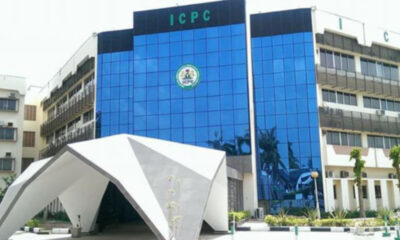
ICPC Uncovers 908 Suspected Ghost Workers Across 50 Federal MDAs, Recovers ₦942 Million
-

 Business/Finance2 months ago
How to Apply for Tunde Onakoya’s ₦250 Million Scholarship Programme and Free Laptop Offer
-
 Politics2 months ago
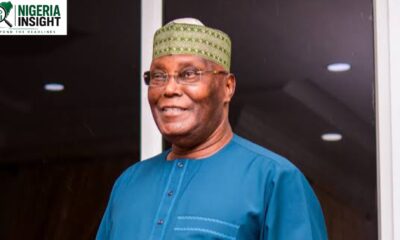
Atiku Challenges Tinubu to Reveal Details of ₦15.13bn SUV Procurement in 2026 Budget
-

 Judiciary | Public Safety2 months ago
INEC Tells Court Voter Information Is Not Confidential in Emeka Ike’s ₦10bn Lawsuit
-
 Judiciary | Public Safety2 months ago
Court to Rule Friday on NDLEA’s Bid to Destroy ₦480bn Meth Lab in Ogun
-

 Breaking News2 months ago
Girl Dies in Uyo House Fire After Allegedly Accompanying Man Home from Nightclub
-
 Security1 month ago
Family Paid ₦50 Million Ransom to Secure Release of Abducted Kebbi Judge