
National Affairs
Osun Assembly Moves to Regulate Motor Parks, Tackle Thuggery, Revenue Leakages

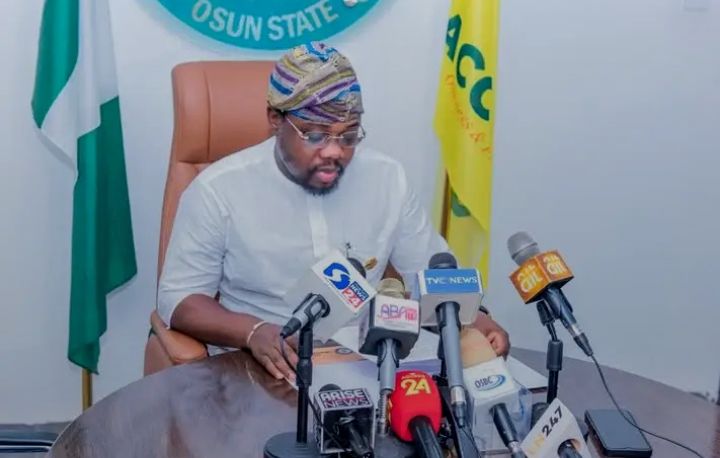
The Osun State House of Assembly has commenced consideration of a bill seeking to establish a Park Management System to regulate the operations of motor parks and garages across the state.
The proposed Osun State Park Management System Bill was presented during Monday’s plenary by the Chairman of the House Committee on Works and Transport, Abiola Waheed, who is also the sponsor of the private member’s bill.
Waheed said the proposed legislation was designed to create a structured management system for motor parks while improving safety, orderliness and accountability in their operations.
According to him, the bill would also regulate revenue collection from motor parks and help the state government block leakages in its internally generated revenue.
“The bill would regulate revenue collection and block leakages in the state’s internally generated revenue.
It will also prohibit thuggery and other violent activities in motor parks across the state if passed into law,” Waheed said.
He added that the proposed system would facilitate the digitalisation of ticketing in motor parks, thereby improving transparency in revenue collection and reducing irregularities associated with manual processes.
During the debate, lawmakers expressed support for the objectives of the bill, saying the proposed management framework could strengthen the state’s revenue base and address leakages in internally generated revenue.
The lawmakers also said the legislation would promote accountability in the management of motor parks while enhancing the safety of passengers, drivers and other road users.
They noted that a properly regulated park management system could help protect transport operators and passengers from extortion, while reducing activities capable of causing violence and disorder within motor parks.
The Speaker of the House, Adewale Egbedun, said the proposed legislation would provide several benefits to the state if passed.
“With all these submissions, a series of benefits will be derived from the passage of the bill,” Egbedun said.
Following the debate, the Osun State Park Management System Bill scaled its second reading during Monday’s plenary.
The legislative development comes against the backdrop of recent disputes and violence linked to the control and leadership of motor parks in the state.
Governor Ademola Adeleke had earlier directed the immediate vacation of motor parks by warring groups and announced plans to reintroduce the Park Management System as part of efforts to restore order and prevent further violence.
The governor issued the directive while responding to the killing of the Ajagungbade Emir, which was allegedly linked to a tussle over the leadership and control of a motor park.
In a statement issued by the governor’s spokesperson, Olawale Rasheed, Adeleke directed the Commissioner of Police in Osun State to immediately arrest those allegedly involved in the killing and ensure that anyone found responsible was brought to justice.
“The governor charged the Commissioner of Police to act immediately to arrest all those involved. Law and order must be maintained.
There will be no sacred cows as all culprits will be brought to book,” the statement said.
Adeleke also directed security agencies to restore normalcy in the affected motor parks and ensure the maintenance of law and order across the state.
“We call on members of the public to remain calm. We will ensure restoration of peace in all the affected parks and areas. The security agencies are under instruction to ensure the sustainability of peace at all cost,” he said.
Beyond the police investigation into the incident, the governor ordered the immediate establishment of a Park Management System as part of measures to address disputes and restore discipline in motor parks and garages across Osun.
According to the statement, Adeleke said he would issue an Executive Order to formally establish the new management structure.
“We are reintroducing the Park Management System. I will soon issue an executive order to give effect to the new management system to manage parks and garages across the state,” the governor noted.
The directive requires warring groups to vacate affected motor parks while security agencies work to restore calm and prevent further clashes.
The state government said the reintroduction of the Park Management System was aimed at restoring discipline and orderliness in motor parks, particularly amid disputes over the control and leadership of the facilities.
With the bill now before the Osun State House of Assembly, the proposed Park Management System is moving beyond an executive directive towards a legislative framework.
If eventually passed and assented to, the legislation could provide a statutory basis for the management of motor parks and garages, define the responsibilities of relevant authorities and establish a framework for regulating activities at the facilities.
The bill also places revenue collection, digital ticketing, safety, accountability and the prevention of violence at the centre of the proposed management structur.



The Kaduna State Government says its free Compressed Natural Gas (CNG)-powered mass transit scheme has continued to reduce the burden of transportation costs on residents, with the initiative now in its 15th month.
The state Commissioner for Information and Culture, Malam Ahmad Mayaki, disclosed this in an interview with our correspondent on Sunday while reacting to President Bola Tinubu’s renewed National Affordable CNG Transit Programme.
Mayaki said Kaduna State adopted the CNG transportation initiative ahead of the latest Federal Government intervention, noting that the state commenced its free bus service on July 7, 2025, following the inauguration of 100 CNG-powered buses in the state.
The commissioner said Kaduna remained the only state in Nigeria offering completely free CNG-powered mass transit services, while other states had introduced various levels of fare subsidies.
“Kaduna is the only state offering free services in the whole of Nigeria.
Other states offer different forms of subsidised costs; some offer 50 per cent, while others offer certain percentages.
“Even the FCT, where the Federal Government is partnering with the NURTW, is not offering it free. Kaduna is the only state providing free services to students, civil servants, traders, artisans and the entire citizens of the state,” he said.
According to him, the scheme currently operates across eight routes with 100 CNG buses and approximately 200 bus stops.
Mayaki said the initiative had significantly reduced the amount residents spend on transportation, particularly civil servants, students, traders and artisans.
“Transportation takes a chunk of people’s income. Taking that off their shoulders is reducing the impact of the removal of fuel subsidy.
“Instead of spending the money on transport, they have more money for their families, feeding and the education of their children.
It has significantly improved the productivity of our civil servants because they can save between 40 and 50 per cent of their salaries that would ordinarily have gone into transportation,” the commissioner stated.
He also linked the scheme to improved school enrolment and retention, saying transportation costs had previously contributed to some students missing classes or dropping out of school.
“Some students drop out or miss some days of school because of the cost of transportation. But with this transport scheme, it has improved school enrolment and retention,” Mayaki said.
The commissioner further said the free transportation programme had improved residents’ access to healthcare, particularly for women who needed to visit hospitals.
He added that reduced transportation expenses had eased financial pressure on households by leaving families with more disposable income.
Mayaki also claimed that the scheme had contributed to reducing domestic tensions in some households, attributing this to the additional income families could retain after transport expenses were removed.
“Funny enough, somebody said it has helped in the reduction of divorce and broken homes because men now have more money to take care of their families.
“Instead of spending the money on transport, they have more money for the upkeep of their families and to save for the education of their children,” he said.
The commissioner also highlighted the environmental benefits of the programme, saying the transition from conventional fuel-powered buses to CNG had helped reduce carbon emissions in the state.
3.2 million passengers carried in one year
The development comes after President Tinubu disclosed on September 19, 2026, that the 100 CNG-powered buses operating on major routes in Kaduna had carried about 3.2 million passengers in their first year.
Tinubu said the buses had saved commuters more than N3.5 billion in transportation costs during the period.
The President cited Kaduna’s experience while highlighting the potential impact of the renewed National Affordable CNG Transit Programme.
He had earlier, after a meeting with the 36 state governors on August 27, 2026, announced the establishment of an implementation committee for the programme under the auspices of the Nigeria Governors’ Forum.
The initiative is aimed at achieving measurable reductions in transportation costs from October 1, 2026, with states expected to work with transport unions and commercial operators to expand CNG-powered transportation.
Tinubu specifically referenced Kaduna as an example of how cheaper energy and subsidised public transportation could help reduce the burden on commuters.
“In Kaduna, 100 CNG-powered buses are providing free transportation on major routes across the State.
In their first year of operation, the buses carried about 3.2 million passengers, saving commuters more than ₦3.5 billion in transport costs,” the President stated.
The President inaugurated the 100 CNG buses in Kaduna on June 19, 2025, alongside other projects in the state.
Free service to continue indefinitely
Mayaki said the Kaduna State Government had directed that the free transportation service should continue indefinitely.
“The government has directed that these free services should continue indefinitely.
There is no window and there is no stopping; it is indefinite,” he said.
He added that the state government was currently compiling and analysing data to determine the broader impact of the initiative since its commencement.
“We are concluding the data and analysing it. We are going to make it public on how we have done in the last 15 months.
“The President just acknowledged what we have done in 12 months. Now we are in the 15th month,” Mayaki said.
The Kaduna government’s programme is therefore expected to remain a key component of the state’s efforts to cushion residents from rising transportation costs, while the Federal Government moves to expand affordable CNG-powered mass transit across the country.
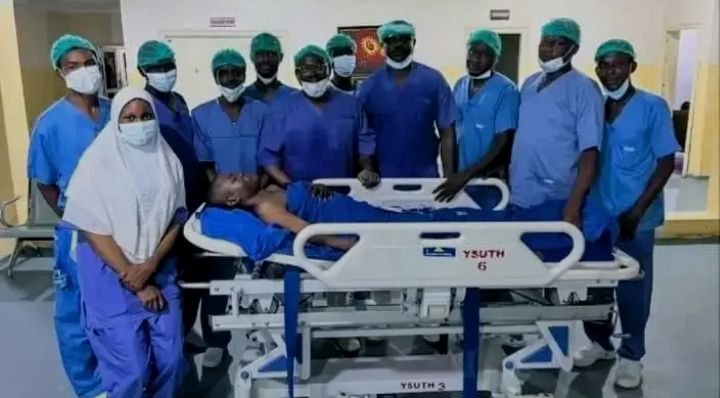
Yobe State University Teaching Hospital (YSUTH), Damaturu, has recorded a major milestone in specialised healthcare following the successful performance of its first total hip replacement surgery.
The procedure, carried out on Saturday, was performed on a young man living with sickle cell disease who developed avascular necrosis, a condition that occurs when the blood supply to bone tissue is disrupted, causing the affected bone to deteriorate.
In the patient’s case, the condition affected the head of the femur, the upper part of the thigh bone that forms part of the hip joint.
The successful operation was disclosed on Sunday by the Yobe State Commissioner for Health, Dr Muhammad Lawan Gana, who described the development as a landmark achievement for the state’s healthcare system.
Gana explained that total hip replacement, also known as total hip arthroplasty, involves surgically removing a damaged hip joint and replacing it with an artificial joint to restore function and relieve pain.
He said the specialised procedure had previously not been available in Yobe State, making its successful completion at the teaching hospital a significant development in the provision of advanced orthopaedic care within the state.
The surgery was led by Dr Lawan Musa Yari, with the medical team also comprising Dr Musa Abdulmalik, Dr Bashok Palagvi, Mr Manasseh Jonah and Mr Karumi Ibrahim.
The development means patients requiring the specialised procedure may now have access to treatment within Yobe rather than having to travel to other parts of the country for care.
Avascular necrosis is a condition in which reduced or interrupted blood flow causes bone tissue to die gradually. It can occur in people with sickle cell disease and may affect the femoral head, potentially resulting in severe hip pain, reduced movement and difficulty walking.
Total hip replacement can be used when damage to the joint becomes severe and other forms of treatment are no longer sufficient.
The latest achievement adds to the growing range of specialised medical services being provided in Yobe’s public hospitals. According to reports, the state’s healthcare facilities have also expanded services such as kidney dialysis and complex reconstructive procedures.
The Chief Medical Director of the Damaturu Specialist Hospital, Prof. Usman Abba, previously said patients requiring dialysis were not restricted based on their indigene status, allowing people in need of the service to access treatment.
The Yobe Government has attributed the expansion of specialised healthcare services in the state to continued investment in medical infrastructure, equipment and support for healthcare institutions.
The successful hip replacement surgery is therefore being viewed as another step towards strengthening the capacity of Yobe’s health facilities to handle complex medical conditions locally.
For patients living with conditions that require specialised interventions, the availability of such procedures closer to home could reduce the need for long-distance travel while improving access to advanced medical care.
The development also highlights the importance of sustained investment in specialist manpower, modern medical equipment, surgical facilities and post-operative rehabilitation to ensure that complex procedures can continue to be offered safely and effectively.

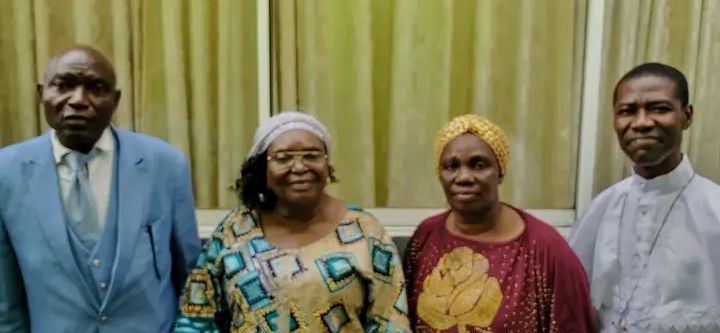
The Ikeja Chapter of the Christian Association of Nigeria (CAN) in Lagos State has described the challenges confronting the country as “foundational”, arguing that some of Nigeria’s current difficulties can be traced to problems inherited from the colonial era.
The association made the observation during a prayer session organised for the country in Lagos on Friday, where Christian leaders called for spiritual intervention and a rebuilding of what they described as Nigeria’s damaged foundation.
The CAN Coordinator for the Ikeja Chapter, Evangelist Rotimi Ajayi, said the country was facing problems that had existed for decades, including those created during the period of British colonial rule.
Ajayi said prayer was necessary alongside efforts to address the country’s challenges, expressing optimism that Nigeria could experience progress if its foundation was restored.
Quoting Psalm 11:3, he recalled that Nigeria had once been regarded as being on a similar development path with countries such as Malaysia, but had since fallen behind.
He said, “Once a house is built on sand, when erosion comes, that house is bound to fall.
That is why we are organising this prayer session—so that the foundation can be restored and rebuilt. I believe we will see progress after this session.”
The CAN coordinator stressed that the prayer session was aimed at seeking divine intervention in the affairs of the nation and encouraging a restoration of the values and structures needed for national development.
Also speaking during the programme, the ministering pastor, Bishop Bola Oyegbami, said policies and theories alone would not be sufficient to resolve Nigeria’s problems unless the underlying issues affecting the country were addressed.
Oyegbami argued that repairing the nation’s foundation would help create the conditions for other efforts to succeed, adding that the country needed divine direction.
She said things would naturally fall into place if God was involved in the process of rebuilding the nation.
Oyegbami also linked some of Nigeria’s challenges to what she described as an excessive pursuit of wealth and material gain.
“In Nigeria, we have a lot of problems. These problems started with the spirit of mammon.
Everything is all about money everywhere you go. So, it is the foundation we are dealing with,” she said.
The Christian leaders urged Nigerians to continue praying for the country while also addressing the deeper issues they believe have contributed to its current social, economic and institutional challenges.
The prayer session formed part of efforts by the Ikeja CAN chapter to seek spiritual intervention for Nigeria and encourage hope for national renewal.
-
 Security2 months ago
NDLEA Declares Alleged Drug Kingpin, Three Associates Wanted, Freezes ₦9.8bn Linked to Syndicate
-
 National Affairs2 months ago
ICPC Uncovers 908 Suspected Ghost Workers Across 50 Federal MDAs, Recovers ₦942 Million
-

 Business/Finance2 months ago
How to Apply for Tunde Onakoya’s ₦250 Million Scholarship Programme and Free Laptop Offer
-
 Politics2 months ago
Atiku Challenges Tinubu to Reveal Details of ₦15.13bn SUV Procurement in 2026 Budget
-
 Judiciary | Public Safety2 months ago
INEC Tells Court Voter Information Is Not Confidential in Emeka Ike’s ₦10bn Lawsuit
-
 Judiciary | Public Safety2 months ago
Court to Rule Friday on NDLEA’s Bid to Destroy ₦480bn Meth Lab in Ogun
-
 Security2 months ago
Family Paid ₦50 Million Ransom to Secure Release of Abducted Kebbi Judge
-
 News2 months ago
2026 Budget: FG Earmarks ₦962.83bn for SUVs, Empowerment Projects Amid Debt Concerns