
Security
Family Paid ₦50 Million Ransom to Secure Release of Abducted Kebbi Judge

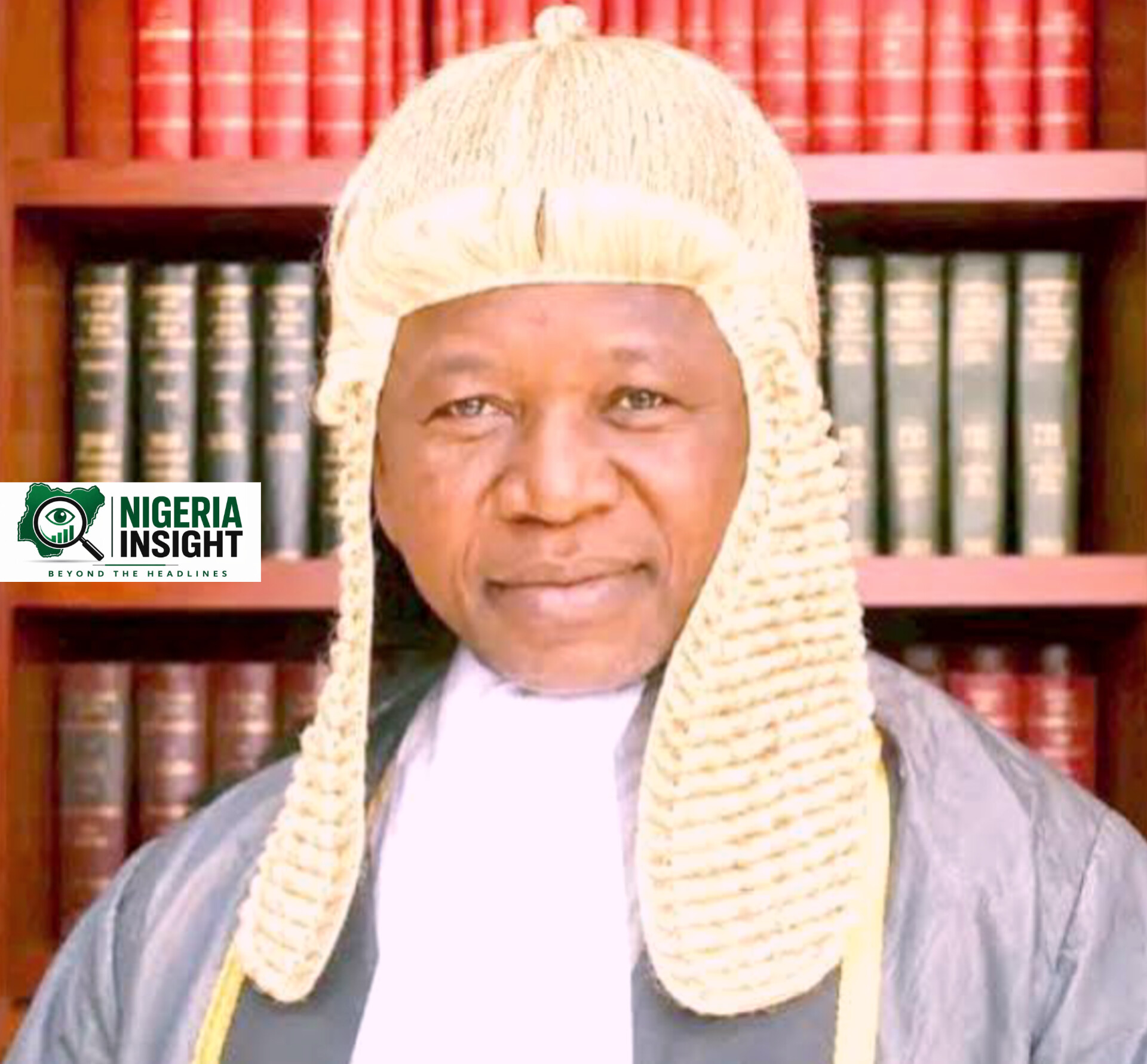
The family of Justice Faruk Hassan Bunza of the Kebbi State High Court has confirmed paying a ₦50 million ransom to secure his release after he was abducted by armed bandits from his residence in Bunza Local Government Area of Kebbi State.
Justice Bunza was kidnapped in the early hours of July 26, 2026, when heavily armed gunmen reportedly invaded his home shortly after he returned from a trip to Sokoto State.
His release, after eight days in captivity, was confirmed on Monday by the Kebbi State Police Command, his family, and the Kebbi State Ministry of Justice.
A family member, who spoke on condition of anonymity because he was not authorised to comment publicly, disclosed that the kidnappers initially demanded ₦200 million but later accepted ₦50 million after several days of negotiations.
“We are still attending to him at home since his release on Monday. He needs time to recover from the trauma he went through,” the source said.
“As for whether a ransom was paid, I can confirm that ₦50 million was paid.”
According to another family member, the abductors believed to be about five in number directed relatives to deliver the ransom at a location deep inside a forest more than 70 kilometres from Birnin Kebbi.
The relative also claimed the kidnappers made an unusual request before collecting the money.
“While we were on our way to deliver the money, they called and asked us to bring five bottles of malt drinks and five bottles of Dudu drinks.
They opened the drinks and consumed them in our presence before collecting the ransom,” the source alleged.
The family said they received news of the judge’s release between 6:00 a.m. and 7:00 a.m. on Monday, adding that he was brought home in a commercial vehicle transporting firewood and dropped near his residence.
According to the family, Justice Bunza appeared physically healthy despite his ordeal and is currently recovering at home.
Confirming the release, the spokesperson of the Kebbi State Police Command, Bashir Usman, said security agencies had intensified efforts to track down those responsible for the abduction.
“With the judge now released, the police and other security agencies have intensified investigative efforts to track down the perpetrators and bring them to justice,” the police said.
The command, however, maintained that it does not support the payment of ransom to kidnappers.
Justice Bunza’s abduction has renewed concerns over the safety of judicial officers in Nigeria.
It is the second reported kidnapping of a serving judge in recent times, following the abduction of Justice Ebiyerin Umokoro of the Bayelsa State High Court in 2025.
The incident also drew strong condemnation from the Nigerian Bar Association (NBA), which described the kidnapping as an attack on the judiciary, the rule of law, and Nigeria’s constitutional democracy.
The NBA urged security agencies to ensure those responsible are arrested and prosecuted while calling for stronger protection for judicial officers across the country.
The latest incident adds to growing concerns over kidnapping for ransom in Nigeria, where criminal gangs continue to target public officials, traditional rulers, business owners, students, and other citizens despite ongoing security operations.






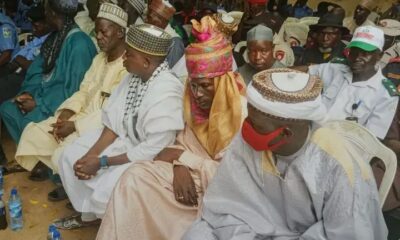





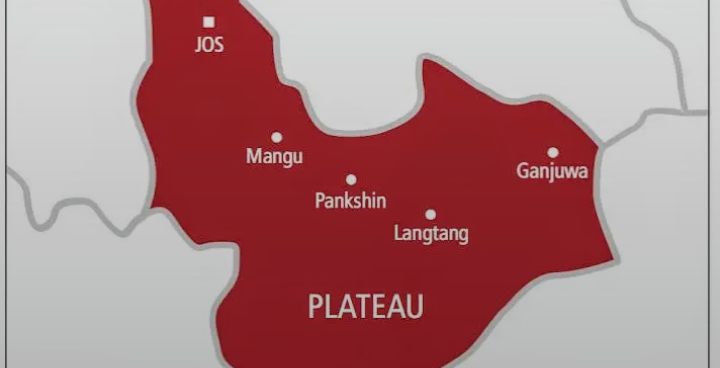
Chairmen of the 17 local government areas in Plateau State have agreed to establish formally registered security outfits to strengthen community policing and support conventional security agencies in tackling persistent killings and other security challenges across the state.
The Commissioner for Local Government and Chieftaincy Affairs, Ephraim Usman Gar, disclosed this on Thursday during a press conference in Jos, where he presented a report on the ministry’s inspection of projects executed by local government councils.
Gar, who appeared alongside the 17 council chairmen, said the councils had agreed to adopt the security initiative already implemented in Wase Local Government Area as a model for strengthening grassroots security.
He explained that the initiative would involve establishing properly registered security outfits whose personnel would work in collaboration with conventional security agencies to combat criminal activities.
“Right now, we have Wase LGA that has trained its own personnel. But it is just a matter of time before other LGAs follow suit, and they have all agreed that they are going to take a cue to have a formal security outfit that will help our conventional security agencies combat crimes within our society,” he said.
According to the commissioner, personnel of the Wase security outfit underwent three months of training conducted by the Nigeria Security and Civil Defence Corps (NSCDC).
He added that formal registration of the outfits would improve information sharing and strengthen coordination between community-based security personnel and conventional security agencies.
Gar cited the Wase Rock Security Network Limited as an example of the initiative, noting that its 140 officers had recently completed their training and participated in a passing-out parade organised by the council chairman, Hamisu Mohammed Anani.
The ceremony also featured the donation of 25 patrol motorcycles and two Toyota Hilux vehicles to support the officers’ mobility and improve their response to security incidents.
The commissioner said the outfit was formally inaugurated by the Plateau State Command of the NSCDC after the completion of its training programme.
The proposed security arrangements come amid persistent security challenges in Plateau State, where recurring attacks and killings have continued to threaten communities and disrupt livelihoods.
The state already operates security structures, including Operation Rainbow and Neighbourhood Watch, established under the Plateau State Operation Rainbow and Neighbourhood Watch Law of 2012. The Neighbourhood Watch serves as a civilian intelligence-gathering structure supporting security operations.
Meanwhile, Gar said the ministry’s inspection tour was designed to assess completed and ongoing projects executed by the 17 local government councils, evaluate their quality and ensure that public funds were properly utilised.
He disclosed that the inspection covered the state’s three senatorial zones, adding that the ministry was satisfied with the projects examined.
“Providing dividends of democracy at the grassroots remains the top priority of this administration. From what we have seen, governance has truly been taken closer to the people,” he said.
Gar added that the council chairmen had embraced Governor Caleb Mutfwang’s development agenda and demonstrated commitment to delivering democratic dividends to residents.
Among the projects inspected in the Southern Zone were the remodelling of a youth centre, a mini stadium, computer-based test centres, primary healthcare facilities, motorised boreholes and solar-powered streetlights.
The inspection team also visited the Wase Rock Radio and Television Station and facilities at the temporary headquarters of the Nigerian Army’s 175 Infantry Motorcycle Battalion.
In the Central Zone, the team inspected the 23-kilometre Gugur Road in Kanke, a 1,500-capacity event hall in Mangu and a 200-capacity anatomy laboratory at Plateau State University, Bokkos, funded by the Association of Local Governments of Nigeria.
Other projects visited included primary healthcare centres, rural electrification facilities and the palace of the Ngolong Ngas.
In the Northern Zone, the inspection covered primary healthcare centres, rural electrification projects, council secretariats, information and communication technology centres, markets, bridges, police outposts and town halls.
The planned establishment of security outfits across the 17 councils is expected to expand community-level security participation and provide additional support for existing security agencies as the state continues to address recurring threats to lives and property.
The development comes against the backdrop of renewed violence in parts of Plateau State. At least 13 people were reportedly killed in separate attacks in Jos South, Mangu and Riyom on September 13, 2026, while an earlier attack on communities in Mangu in August reportedly claimed at least 25 lives.
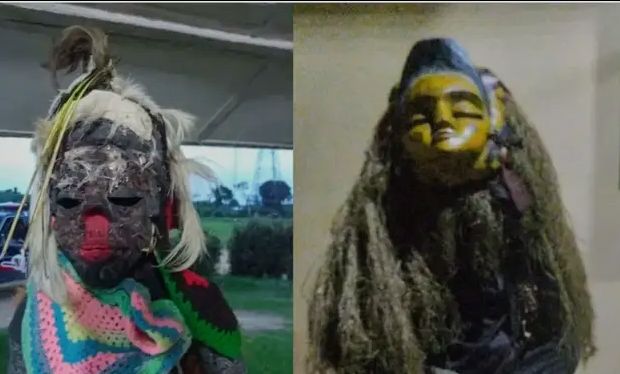
The arrest was disclosed in a statement issued on Thursday by the Police Public Relations Officer, Timfom John.
According to the statement, police operatives apprehended the suspects at about 6pm on Monday, October 26, along the Ukana/Abak Highway during an operational show of force.
The suspects were identified as Ine Isong, 29, of Ukana Ikot Esoh Village, and Emmanuel Ekpenyong, 20, from Ikono Local Government Area.
John said the suspects were allegedly found in possession of Ekpo masquerade costumes and attire, machetes, spears and arrows at the time of their arrest.
Preliminary reports indicated that the suspects and other individuals allegedly involved in the activities had been terrorising residents and extorting money from unsuspecting members of the public.
The police spokesperson added that some innocent persons, particularly women, were allegedly assaulted during the incidents.
“Reports further indicate that some innocent persons, particularly women, were assaulted in the process.
Investigations were continuing to establish the circumstances surrounding the incident and identify other people who might be connected to the alleged offences,” the statement read.
The police said investigations were ongoing to determine the full circumstances of the alleged offences and identify other individuals who might have participated in the activities.
The Commissioner of Police in Akwa Ibom State, Baba Azare, warned against the misuse of cultural practices and masquerade activities to intimidate, extort or assault members of the public.
Azare stressed that cultural traditions should not be used as a cover for criminal activities, including violence and other unlawful acts.
The police command reiterated its commitment to protecting residents and maintaining public order, while investigations into the case continue.
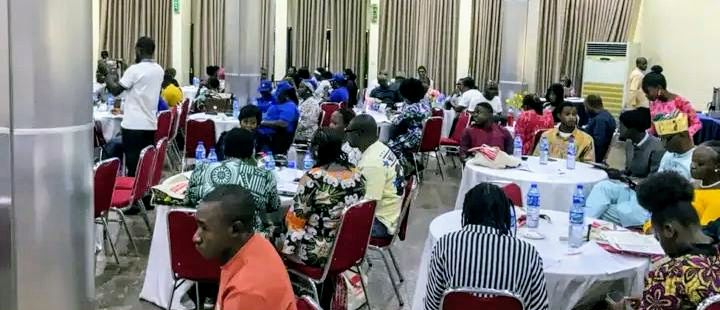
Ochogwu, has said that state policing could help tackle farmer-herder conflicts and rural banditry in Nigeria by improving intelligence gathering, strengthening community engagement and ensuring faster responses to security threats.
Ochogwu, however, warned that decentralised policing must operate under professional standards and effective oversight to prevent political interference, human rights abuses and the persecution of minority groups.
He spoke in Abuja on Thursday while delivering the keynote address at a conference on peace and conflict resolution in Nigeria, organised by the Rosa Luxemburg Foundation-West Africa.
The conference, themed “Peace and Conflict Resolution in Nigeria: Rethinking Strategies for Sustainable Peace,” featured discussions on farmer-herder conflicts in North-Central Nigeria, rural banditry and strategies for achieving lasting peace in communities affected by violence.
The debate over state policing has gained momentum following progress on a proposed constitutional amendment to establish a dual policing system. On October 23, the Presidential Working Group on the National Policing Bill announced that 24 state Houses of Assembly had approved the amendment, meeting the constitutional threshold for it to proceed towards presidential assent.
State Police Could Improve Local Intelligence
Speaking on the potential benefits of decentralised policing, Ochogwu said security personnel who understand the communities they serve could be better positioned to gather intelligence, identify emerging threats and respond promptly to incidents.
He noted that Nigeria’s peace and security challenges were closely linked to governance failures, institutional weaknesses and the inability of public institutions to resolve grievances through legitimate channels.
According to him, disputes over land, identity and political representation can escalate into wider communal violence when affected communities perceive public institutions as unfair or unresponsive.
He stressed that security operations must be accompanied by justice, accountability, humanitarian assistance and measures to restore the livelihoods of affected residents.
“Decentralisation must bring security closer to citizens without exposing them to local political coercion,” he said.
Farmer-Herder Conflicts Persist in North-Central Nigeria
One of the conference’s panel sessions examined the recurring violence associated with disputes over land, access to water, grazing routes, livelihoods and relations between farming and herding communities.
States such as Benue and Plateau have experienced repeated attacks, communal clashes and displacement, disrupting agricultural activities, separating families from their homes and heightening tensions among affected communities.
Participants emphasised the need to move beyond reactive security operations towards approaches that address the underlying causes of conflict.
They identified stronger early-warning and response mechanisms, dialogue between affected communities, impartial law enforcement and the resolution of disputes over land and natural resources as important measures for reducing violence.
Ochogwu cited the June 2025 attack on Yelewata community in Benue State, where more than 200 people were reportedly killed and over 3,000 residents displaced, as an example of the devastating consequences of rural insecurity.
He maintained that lasting peace would require government institutions to respond more effectively to community grievances before they develop into violent confrontations.
Rural Banditry Threatens Livelihoods
Another panel session focused on rural banditry and the search for sustainable peace,
examining how armed groups threaten lives, livelihoods, freedom of movement and economic activities.
Banditry and kidnapping have contributed to displacement in parts of North-Central and North-West Nigeria, forcing residents to abandon their homes and farms and weakening their ability to earn a living.
The discussions highlighted the importance of protecting civilians while addressing the conditions that enable armed criminal groups to operate.
Ochogwu argued that military and policing operations alone could not guarantee lasting peace if communities continued to experience weak governance, economic exclusion and ineffective justice systems.
He also identified unemployment, economic inequality, weak public services and the proliferation of small arms as factors that could worsen insecurity when grievances were not properly managed.
The IPCR director-general called for stronger grassroots institutions and more responsive governance, stressing that local authorities must be equipped to address community concerns before they escalate into violence.
Foundation Calls for Sustainable Peace
In her welcome remarks, Angela Odah of the Rosa Luxemburg Foundation-West Africa said insecurity had made ordinary activities, including road travel and visits to rural markets, increasingly dangerous.
She said the foundation had organised dialogues and supported initiatives aimed at promoting democratic participation, peaceful coexistence and practical responses to Nigeria’s political, economic and social challenges.
Odah explained that the conference was designed to review the country’s security situation and develop recommendations for sustainable peace.
She added that the foundation planned to sustain the dialogue annually over the next three years.
The event brought together academics, civil society activists, government representatives and peacebuilding practitioners, including activist Ene Obi and Professor Plangshak Suchi of the University of Jos.
Participants examined ways to address the underlying causes of conflict, strengthen community-level responses and improve the prospects for lasting peace across Nigeria.
The discussions underscored the need for a comprehensive security strategy that combines effective policing with accountable governance, economic opportunities, justice and sustained engagement with affected communities.
-
 Security4 months ago
NDLEA Declares Alleged Drug Kingpin, Three Associates Wanted, Freezes ₦9.8bn Linked to Syndicate
-
 National Affairs4 months ago
ICPC Uncovers 908 Suspected Ghost Workers Across 50 Federal MDAs, Recovers ₦942 Million
-

 Business/Finance3 months ago
How to Apply for Tunde Onakoya’s ₦250 Million Scholarship Programme and Free Laptop Offer
-

 Judiciary | Public Safety4 months ago
INEC Tells Court Voter Information Is Not Confidential in Emeka Ike’s ₦10bn Lawsuit
-

 Politics3 months ago
Atiku Challenges Tinubu to Reveal Details of ₦15.13bn SUV Procurement in 2026 Budget
-
 Judiciary | Public Safety4 months ago
Court to Rule Friday on NDLEA’s Bid to Destroy ₦480bn Meth Lab in Ogun
-

 News3 months ago
2026 Budget: FG Earmarks ₦962.83bn for SUVs, Empowerment Projects Amid Debt Concerns
-

 News3 months ago
SERAP Sues NNPC Over Alleged Failure to Account for ₦211 Trillion in Oil Revenue