
World News | International Affairs
Nigeria Targets Creative Economy Growth as FG Unveils $617m Investment Programme

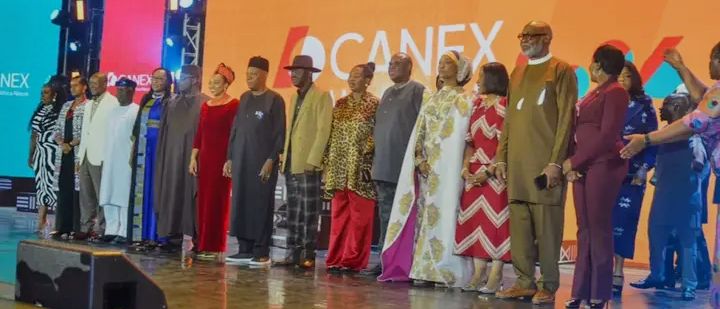
The Federal Government has announced plans to unlock more than $600m in financing for Nigeria’s digital and creative industries as part of efforts to support businesses, attract private investment and boost the sectors’ contribution to the economy.
The Minister of Industry, Trade and Investment, Dr Jumoke Oduwole, disclosed this on Thursday at the opening of the 2026 Creative Africa Nexus Weekend (CANEX) in Lagos, where she outlined government initiatives aimed at strengthening Nigeria’s creative economy.
Oduwole said the financing was being facilitated through the Bank of Industry under the Investment in Digital and Creative Enterprises (iDICE) programme, with the support of the Office of the Vice-President.
“With the leadership of the Office of the Vice President, through the Bank of Industry, the Federal Government is unlocking over $600m in financing for digital and creative enterprises under the iDICE programme,” she said.
The iDICE programme is a $617m Federal Government initiative implemented by the Bank of Industry in partnership with development finance institutions.
It is designed to support young Nigerian entrepreneurs and businesses in the technology and creative sectors through access to finance, skills development, enterprise support and infrastructure.
Oduwole said the government was seeking to attract investments across the entire creative value chain, including performing arts, film, literature, gastronomy, fashion, sports, gaming, crafts, design, creative technology and infrastructure.
She expressed optimism that Nigerian creative businesses would secure investment opportunities through engagements with institutional partners at the event.
“Our ambition is a deal from every part of the creative economy, from performing arts to film to literature to gastronomy to fashion to sports and gaming to craft and design to creative technology and infrastructure,” she said.
The initiative forms part of the broader economic agenda of President Bola Tinubu’s administration to transform Nigeria’s growing creative influence into a commercially viable industry capable of attracting domestic and international investments.
Although Nigeria’s music and film industries have gained considerable international recognition, Oduwole said the government wanted more of the financial benefits generated by their success to remain in the hands of Nigerian creatives and businesses.
She cited the investment in Mavin Records as an example of how institutional capital could generate commercial returns from Nigeria’s creative industry.
In 2019, Kupanda Capital and TPG Group invested more than $10m in the Nigerian music label founded by music executive Don Jazzy. Five years later, Universal Music Group acquired a majority stake in Mavin Records, providing an exit opportunity for TPG.
According to the minister, the transaction demonstrated that Nigerian creative businesses could attract institutional investors and deliver profitable returns.
“Today, when an investor asks a Nigerian filmmaker or music executive, how do I get my money back? They can point to the Mavin deal as a win for the investors in our creative economy,” she said.
“Yet, we need more of that profit to stay in the hands of more of our creatives, right here at home.”
To replicate such investment outcomes across the industry, Oduwole highlighted several government interventions targeting market access, intellectual property protection and investment opportunities.
She said Nigeria was named co-champion of the African Continental Free Trade Area (AfCFTA) Protocol on Digital Trade in February 2025, a development expected to create more opportunities for Nigerian creative businesses to provide services across African markets.
She explained that digital trade covered services such as music licensing, film distribution and production work delivered by Nigerian studios to clients across the continent.
The minister also disclosed that the Federal Executive Council approved Nigeria’s first National Intellectual Property Policy and Strategy in November 2025.
The policy, developed by the Federal Ministry of Industry, Trade and Investment in collaboration with stakeholders across government, the private sector and the World Intellectual Property Organisation, is intended to strengthen the protection of intellectual property and enable Nigerians to earn more from their creative works.
Additionally, she said the government released its Creative Sector Investment Playbook at the World Economic Forum in Davos in January 2026.
The document identifies investment opportunities across the creative industry, including financing for studios and the distribution of Nigerian content nationwide.
Beyond financing and policy reforms, Oduwole said the government was working to expand opportunities for Nigerian creative businesses to access regional and international markets.
She explained that Nigeria’s bid to host the 2027 Intra-African Trade Fair was part of the strategy to showcase the country’s creative and commercial potential.
According to her, President Tinubu approved Nigeria’s bid in November 2024 to host the continental trade fair in 2027.
The timing coincides with the 50th anniversary of the Second World Black and African Festival of Arts and Culture, FESTAC ’77, as well as the reopening and renaming of the National Theatre as the Wole Soyinka Centre for Culture and Creative Arts.
Oduwole said hosting the trade fair would provide an opportunity to showcase Nigerian businesses, cultural products and investment opportunities to African and international markets.
She also highlighted the growing participation at the 2026 CANEX event, disclosing that registration had been stopped after reaching 17,000 participants, compared with 6,000 at the previous edition.
“We beat every record with this CANEX. The last CANEX had 6,000 people. We had to stop registration at 17,000 people,” she said.
The minister described the organisation of the event as a collaborative effort involving the Federal Government, Lagos State Government, private sector partners, Afreximbank and the Nigerian Creative Advisory Council.
She said the government’s objective was to ensure that Nigeria’s creative talent translated into jobs, business opportunities and shared prosperity.
“This bid was for every young Nigerian who sees a future in this industry. This bid was for jobs, for the economy, and shared prosperity,” she said.
Speaking at the event, Vice-President Kashim Shettima said the Federal Government was working to strengthen intellectual property protection, expand access to financing for creative businesses and position Nigeria to lead creative trade under the AfCFTA.
He described creativity as an increasingly important component of international trade, urging African countries to move beyond celebrating their cultural products and focus on building businesses that generate commercial returns.
“From FESTAC ’77 to CANEX 2026, Africa returns to the same stage, but we return with a difference. In 1977, we came to celebrate our culture. In 2026, we come to capitalise it, to turn the applause of the world into contracts, its admiration into markets, and the talent of our young people into enduring wealth,” Shettima said.
The Vice-President commended Afreximbank for its support for the continent’s creative industries, disclosing that the bank had committed $2bn to the sector through 2027.
He also referenced the 2024 CANEX edition, which attracted nearly 4,000 participants from 81 countries and facilitated deals valued at more than $540m.
Shettima said the figures demonstrated the commercial potential of Africa’s creative economy and the need for governments and investors to provide businesses with the financing and market access required to expand.
He urged creatives attending the Lagos gathering to use the event to secure business partnerships, distribution agreements and investment opportunities.
“To our creatives, do not leave Lagos with memories alone. Leave with a signed term sheet, a distribution deal, and a buyer’s handshake. The world is ready to pay for what you make,” he said.
He also encouraged investors to support emerging creative businesses, noting that the next generation of globally recognised creative companies could emerge from Africa.
The Vice-President further called on African governments to reduce barriers to intra-African trade, particularly those affecting creative businesses seeking to distribute their products and receive payments across the continent.
He said Nigeria’s hosting of CANEX was significant given its established presence in music, film, fashion and other creative industries, adding that the event would lay the groundwork for the country’s hosting of the fifth Intra-African Trade Fair in Lagos in 2027.









World News | International Affairs
FG Targets 500 More CNG Stations as 160 Facilities Become Operational
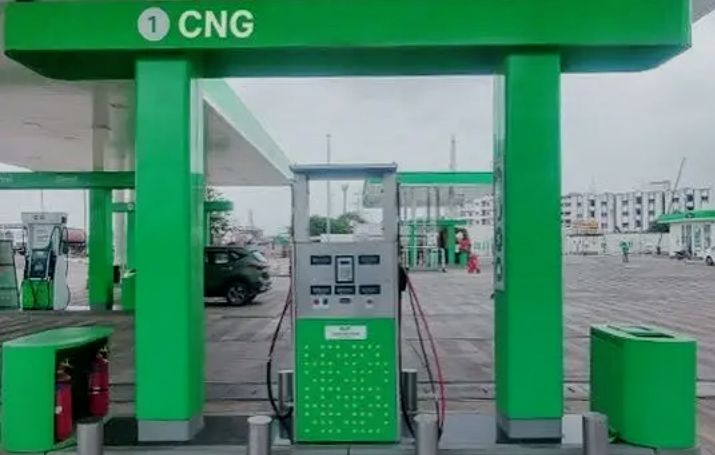
The Federal Government has announced plans to establish an additional 500 Compressed Natural Gas (CNG) infrastructure facilities across Nigeria as part of efforts to expand the adoption of alternative fuels and reduce transportation costs.
The government disclosed that about 160 CNG refuelling stations are currently operational nationwide, while another 170 facilities are at various stages of development and regulatory approval.
The Executive Chairman and Chief Executive Officer of the Presidential Initiative on Compressed Natural Gas and Electric Vehicles (Pi-CNG), Ismaeel Ahmed, disclosed this on Friday during the inauguration of a CNG Integrated Refuelling Unit in Karu, Abuja.
The facility was established through a partnership involving the State House, Pi-CNG and Electric Vehicles, and Rolling Energy.
Ahmed said Nigeria had moved beyond the experimental stage of CNG adoption, noting that private investors had committed approximately $2.6bn to the development of related infrastructure across the country.
He added that President Bola Tinubu had directed another round of infrastructure expansion, with about 500 additional units expected to be developed through the Midstream and Downstream Gas Infrastructure Fund.
“This is almost our 106th station across the country in less than two years. This is not beginning any longer. The market has been proven,” Ahmed said.
He explained that the country’s CNG programme was now focused on expanding existing infrastructure to meet the demands of Nigeria’s large population and vehicle market.
“The investors are chipping in $2.6bn worth of private investment. Our President has ordered another round of about 500 infrastructure units to come in through the MDGIF. So I don’t think it’s a proof of concept any longer.
“It’s not the beginning. It’s a scale thing. Nigeria is 220 million people strong, 12 million vehicles. We are moving at a scale that we need to move. The work is in progress. What we need is to fasten up the scale,” he said.
According to Ahmed, another 170 refuelling facilities are undergoing development or awaiting regulatory approvals from the Nigerian Midstream and Downstream Petroleum Regulatory Authority.
He said the Federal Government expected additional infrastructure to become operational between now and early 2027.
The Pi-CNG chief executive urged more private investors to take advantage of opportunities in the sector, stressing that expanding the refuelling network was critical to making CNG accessible to more Nigerians.
He noted that the country’s existing petrol station network had taken decades to develop, with most facilities financed and operated by private businesses.
“It took us 60 years to get to 24,000 PMS stations, and like the Permanent Secretary said, these are all privately owned,” he added.
Ahmed also disclosed that the adoption of CNG-powered buses had helped reduce transportation fares by between 30 and 40 per cent on some routes.
He cited operations in Abuja, Lagos and Kano, including the Kano-Katsina route, where commuters were reportedly paying considerably less than they previously spent on transportation.
The expansion comes amid the Federal Government’s efforts to promote natural gas as a cheaper alternative to petrol following the removal of fuel subsidy in 2023, which significantly increased transportation costs across the country.
Despite Nigeria’s substantial natural gas reserves, much of the resource remains underutilised, with significant volumes historically lost through gas flaring.
Speaking at the inauguration, the Permanent Secretary, State House, Temitope Fashedemi, said the new facility reflected the government’s commitment to promoting alternative transportation fuels and encouraging private-sector investment.
He explained that the project was developed by converting an abandoned petrol dispensing station belonging to the State House into a CNG refuelling and vehicle conversion centre.
According to Fashedemi, the State House provided the existing facility, while Rolling Energy financed its rehabilitation and the installation of the necessary equipment without government expenditure on the project.
He said the arrangement demonstrated how government institutions could support the CNG programme by making available existing infrastructure and creating opportunities for private businesses to invest.
Also speaking, the Chief Executive Officer of Rolling Energy, Mubarak Danbatta, said the facility highlighted the importance of collaboration between government institutions and private investors in expanding Nigeria’s alternative fuel infrastructure.
The Federal Government is expected to rely heavily on private-sector participation to achieve its expansion targets and make CNG a more accessible option for vehicle owners and transport operators nationwide.
World News | International Affairs
Lagos to Engage Fintech Operators on Taxation, Digital Infrastructure

Lagos State is set to engage financial technology operators on taxation, digital infrastructure and innovation as industry stakeholders seek greater involvement in shaping the state’s digital economy agenda for 2027 to 2031.
The engagement will take place at a fintech town hall organised by My Card Global in collaboration with the Fintech Association of Nigeria (FintechNGR) on November 20 at The George Hotel, Ikoyi, Lagos.
According to a statement sighted by The PUNCH on Monday, the meeting will bring together senior government officials, technology entrepreneurs, investors and industry executives to discuss policies and economic conditions needed to support the growth of digital businesses in the state.
The town hall, themed “The Lagos Digital Economy Blueprint: Co-Authoring the Lagos Digital Economy Agenda 2027–2031,” is expected to provide a platform for government and private-sector stakeholders to jointly develop priorities for Lagos’ digital economy over the next five years.
Among the government officials expected at the event are the Minister of Communications, Innovation and Digital Economy, Bosun Tijani; Lagos State Deputy Governor, Obafemi Hamzat; and the Chairman of the Lagos State Internal Revenue Service, Ayodele Subair.
Their expected participation is significant to discussions around taxation, digital infrastructure and the relationship between government regulation and private-sector innovation.
Also expected is Iyinoluwa Aboyeji, co-founder of Andela, alongside founders, chief executives and other professionals in Nigeria’s fintech industry.
The proposed discussions will focus on taxation, digital infrastructure, innovation and long-term economic growth, with particular attention to the operating conditions affecting technology businesses in Lagos.
Participants are expected to examine how tax policies are designed and administered, the availability of infrastructure required to support digital services and the extent to which government regulations encourage or constrain innovation.
The organisers said the town hall was designed to encourage direct engagement between policymakers and businesses, with an emphasis on developing practical policy proposals rather than limiting conversations to general discussions about technology.
They added that the meeting would give fintech operators an opportunity to contribute their industry experience and expertise to policy development while allowing government representatives to engage directly with businesses affected by regulatory and economic decisions.
FintechNGR is a self-regulatory, not-for-profit and non-political industry association established to promote the development of Nigeria’s financial technology sector and provide a platform for engagement among industry stakeholders.
The association is also a member of the Global Fintech Hubs Federation and has engaged regulatory institutions, including the Central Bank of Nigeria, the Securities and Exchange Commission and the National Insurance Commission, on policies affecting the fintech ecosystem.
It has also maintained engagements with governments at different levels on issues relating to the growth and regulation of financial technology businesses.
My Card Global and FintechNGR said their objective was to promote a sustainable and inclusive digital economy through stronger collaboration between the public and private sectors.
The November 20 town hall is expected to produce policy recommendations for consideration in shaping Lagos State’s digital economy priorities for the 2027–2031 period.
World News | International Affairs
Tinubu Moves to Tackle 15m Housing Deficit as Abbas Demands Real Estate Reforms
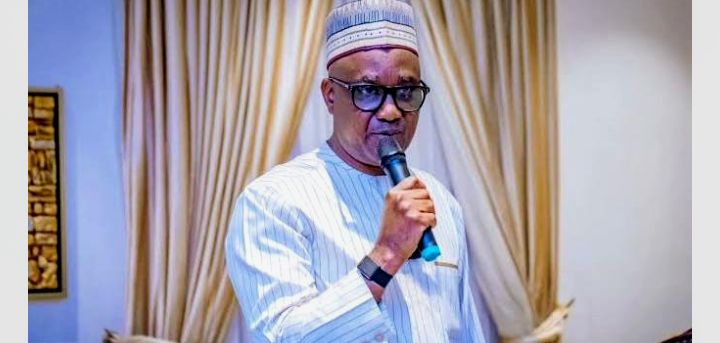
The Federal Government has intensified efforts to address Nigeria’s estimated 15 million housing deficit, unveiling plans for a 5,000-unit residential estate in Lagos and proposing the construction of 100 housing units in each of the country’s 774 local government areas.
The initiative comes as Speaker of the House of Representatives, Tajudeen Abbas, calls for sweeping reforms in the real estate sector, warning that weak regulation, fraudulent property transactions, bureaucratic bottlenecks and poor institutional coordination are discouraging investment and making homeownership increasingly difficult.
The Minister of Housing and Urban Development, Muttaqha Rabe Darma, disclosed the Federal Government’s plans during the groundbreaking ceremony of the 5,000-unit Harmony Renewed Hope Housing Estate in Ibeju-Lekki, Lagos State.
Darma said President Bola Tinubu was concerned about the country’s growing housing shortage and had directed the ministry to explore ways of expanding access to affordable accommodation through partnerships with private developers, mortgage institutions and other investors.
Akinyelure recalled Mosadoluwa’s involvement in the delivery of 4,000 housing units in Karsana, Abuja, describing the participation of indigenous developers in large-scale residential projects as an opportunity to expand housing supply through public-private partnerships.
He called for greater recognition of local investors contributing to residential development, stressing that stronger collaboration among government institutions, mortgage providers and private developers would help increase housing availability and improve access to homeownership.
-
 Security4 months ago
NDLEA Declares Alleged Drug Kingpin, Three Associates Wanted, Freezes ₦9.8bn Linked to Syndicate
-
 National Affairs4 months ago
ICPC Uncovers 908 Suspected Ghost Workers Across 50 Federal MDAs, Recovers ₦942 Million
-

 Business/Finance4 months ago
How to Apply for Tunde Onakoya’s ₦250 Million Scholarship Programme and Free Laptop Offer
-

 Judiciary | Public Safety4 months ago
INEC Tells Court Voter Information Is Not Confidential in Emeka Ike’s ₦10bn Lawsuit
-
 Politics3 months ago
Atiku Challenges Tinubu to Reveal Details of ₦15.13bn SUV Procurement in 2026 Budget
-
 Judiciary | Public Safety4 months ago
Court to Rule Friday on NDLEA’s Bid to Destroy ₦480bn Meth Lab in Ogun
-

 News3 months ago
2026 Budget: FG Earmarks ₦962.83bn for SUVs, Empowerment Projects Amid Debt Concerns
-
 Security3 months ago
Family Paid ₦50 Million Ransom to Secure Release of Abducted Kebbi Judge