
2027 Elections
2027: OK Movement vows not to surrender structures to NDC

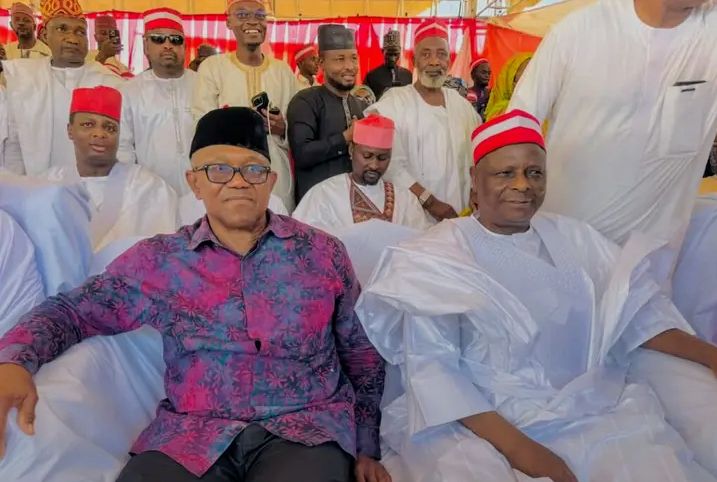
The Obi-Kwankwaso Movement, popularly known as the OK Movement, has vowed not to collapse, merge or surrender its organisational structures to the Nigeria Democratic Congress ahead of the 2027 general elections.
The Director-General of the movement, John Ughulu, made the position known on Wednesday while reacting to comments by the NDC National Leader, Senator Seriake Dickson, on the role of support groups in the party’s 2027 campaign.
Ughulu said the movement would retain its national, state, local government and ward structures, stressing that its cooperation with the NDC did not amount to organisational subordination.
Dickson had argued that political support groups should complement political parties rather than compete with them or operate as parallel structures.
The former Bayelsa State governor made the remarks on Tuesday at the unveiling of former Secretary to the Government of the Federation, Babachir Lawal, in Abuja.
Dickson said the existence of multiple support groups was normal during election campaigns but maintained that such groups should operate within their proper roles and support the political party sponsoring their candidates.
He also criticised the OK Movement’s decision to establish a presidential campaign council, describing the move as “unheard of” and “nonsensical”.
However, Ughulu disagreed with the characterisation, insisting that the OK Movement was not a conventional support group created as an appendage of a political party.
He said the movement was independently organised and comprised members of different political parties united by their support for the presidential ticket of Peter Obi and Rabiu Kwankwaso.
“For the avoidance of doubt, the OK Movement is not a support group created as an appendage of any political party or another movement.
It is independently organised, managed and structured through its own established movement mechanisms,” Ughulu said.
He argued that the movement’s decision to establish its own campaign council should not be regarded as an attempt to challenge the authority of the NDC.
According to him, the political landscape has evolved beyond the conventional party structures of previous years, making it possible for independent political organisations to mobilise support for candidates while retaining their own identities.
“The OK Movement comprises individuals and members from different political parties who share a common commitment to the ideals, values and political aspirations represented by the presidential candidate, Peter Obi and his running mate, Senator Rabiu Kwankwaso,” he stated.
Ughulu maintained that the movement would continue to mobilise support for the candidates while preserving its internal administration and organisational independence.
“The OK Movement remains an independent organisation. Its existence and internal administration are not subject to the internal management of the NDC.
“The OK Movement will not be collapsed, merged or subsumed into the NDC or any other organisation. Cooperation and political alignment do not extinguish the independent identity of the Movement,” he said.
He further insisted that the movement’s established structures remained under its control.
“Our organisational structure remains the property and responsibility of the OK Movement. We will not surrender our established national, state, local government and ward structures to any political party or external support group for management,” Ughulu added.
The OK Movement DG also argued that the organisation had the right to establish campaign and mobilisation structures in support of the NDC’s presidential candidates, saying he was not aware of any provision of the party’s constitution expressly prohibiting such an arrangement.
He, however, stressed that the movement was not seeking to usurp the authority of the NDC.
“Let us also make one important distinction absolutely clear.
The OK Movement does not claim supremacy over the NDC Party, nor does it seek to usurp the constitutional powers of the party.
“We respect the NDC and recognise the constitutional authority of the party over its own internal affairs.
Equally, the NDC and every other organisation must recognise the independent identity, structure and legitimate interests of the OK Movement,” he said.
Ughulu warned that the movement would resist any attempt to take over its structures or alter its identity without the approval of its legitimate organs.
He said the organisation had invested significant effort in building its structures and would not allow them to be dissolved or transferred without due process.
“We will resist, through lawful and democratic means, any attempt by any individual or group to disenfranchise members of the movement, appropriate its structures, or unilaterally redefine its identity.
“We did not build the OK Movement overnight.
Therefore, no individual can simply declare that structure dissolved, transferred or absorbed without the authority of the Movement’s legitimate organs.
We will not be intimidated, surrender our identity or abandon the structures we have built,” he warned.
The disagreement followed the NDC’s decision to dissociate itself from a 59-member Presidential Campaign Council constituted by the OK Movement to mobilise support for Obi and Kwankwaso ahead of the 2027 elections.
The NDC National Chairman, Senator Moses Cleopas, had said the party did not authorise the movement to constitute or announce a campaign council in its name.
The party also stated that no individual, presidential candidate or support group could establish a campaign structure on behalf of the NDC without approval from its National Working Committee.
In response, the OK Movement’s National Secretary, Saadatu Sani, demanded an apology from Cleopas, insisting that the movement remained an independent political organisation with its own leadership, structures and internal processes.
The latest exchange highlights an emerging disagreement over the relationship between the NDC and organisations mobilising support for its presidential candidates ahead of the 2027 general election







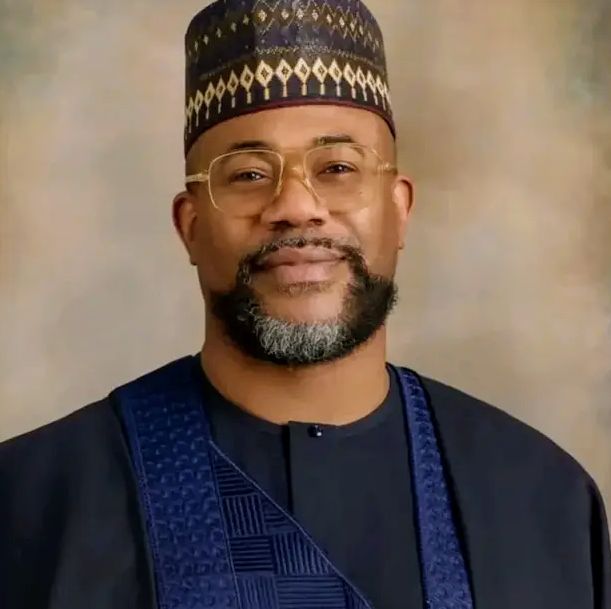
The Kwara State chapter of the Peoples Democratic Party has appointed a former governorship aspirant, Prince Omar Bolaji Gambari, as the Director-General of its campaign organisation for the 2027 governorship election.
Gambari’s appointment was unanimously approved at an expanded meeting of the party’s leadership and its 2027 governorship candidate, Bolakale Kawu.
The meeting was presided over by the state chairman of the party, Isa Adamu.
The appointment was disclosed in a statement issued in Ilorin on Wednesday by the PDP Publicity Secretary in the state, Olusegun Adewara.
According to the party, Gambari was selected based on his professional experience, organisational capacity, knowledge of Kwara’s political environment and his engagement with youths across the state.
The statement described the new campaign Director-General as bringing “a combination of professional experience, youthful energy, organisational exposure and an understanding of contemporary political communication” to the role.
The party said Gambari’s professional background spans international law, finance, entrepreneurship, real estate, agriculture and community development.
It added that his diverse experience would be useful in coordinating a campaign organisation involving people from different backgrounds and generations.
Gambari was among the aspirants who contested the PDP’s 2027 governorship ticket before the party adopted a consensus arrangement that produced Kawu as its candidate.
During the process, Gambari and other aspirants reportedly agreed to support the outcome of the consultations and work with whoever emerged as the party’s consensus candidate.
He subsequently stepped down from the contest in favour of Kawu.
Following Kawu’s emergence as the party’s governorship candidate, Gambari continued to participate in the PDP’s political activities in the state.
The party said his continued involvement, alongside his professional and political experience, contributed to the decision to appoint him as head of the campaign organisation.
“Our party believes his experience in the private sector, international legal practice, entrepreneurship and community engagement, combined with his familiarity with the political environment in Kwara, informed the decision to entrust him with the coordination of the party’s 2027 campaign organisation,” the statement said.
The PDP said the new campaign structure would coordinate the party’s activities across the different levels and constituencies of Kwara State ahead of the 2027 governorship election.
The appointment represents another step in the party’s preparations for the election, as political parties continue to strengthen their structures and mobilise supporters ahead of the 2027 electoral cycle.
The campaign organisation is expected to provide coordination among the party’s various structures and constituencies as the PDP intensifies preparations for the governorship contest in Kwara State.
The National Democratic Congress (NDC) has commenced preparations for the 2027 general elections by directing its state and Local Government Area (LGA) chairmen to begin the compilation and harmonisation of party agents across the country.
The party gave its state and LGA executives two weeks to submit the final lists of nominated agents for scrutiny and approval by the party leadership.
The directive was contained in a statement issued on Tuesday by the NDC National Publicity Secretary, Osa Director.
Director said the state and LGA chairmen were expected to immediately convene meetings with candidates and other relevant stakeholders to compile comprehensive lists of party agents in accordance with the provisions of the Electoral Act, 2026.
According to him, the party would prepare two separate categories of agents to cover the different elections scheduled for 2027.
One list will comprise agents for the National Assembly elections, while the second will cover the governorship and State House of Assembly elections.
The party said the lists would subsequently undergo scrutiny and ratification by its leadership before the commencement of training for the selected agents.
The process will involve the participation of the party’s presidential candidate and running mate, alongside other members of the leadership.
The NDC also directed that the final lists must be counter-signed by the respective state chairmen and candidates.
The party said the requirement was intended to authenticate the nominations and establish clear ownership of the submitted lists.
It further stipulated that where disagreements arise between party leadership and candidates regarding the selection of agents, the choice made by the candidate would prevail.
The statement partly read, “That State and LGA Chairmen shall meet with candidates and stakeholders to generate a comprehensive list of two sets of party agents;
those for National Assembly elections and another set for governorship/State Assembly elections.
“These party agents shall be scrutinised and ratified by the party’s leadership, including the presidential candidate and his running mate, before training commences.”
Director said the mobilisation was part of the party’s broader preparations for the 2027 elections, assuring members and supporters that its organisational structures were already being put in place for the campaign.
“The leadership of the party wishes to reassure all members, supporters and stakeholders that the National Democratic Congress is fully prepared and ready for a robust, issue-based campaign, with all necessary structures firmly in place for victory,” he said.
The commencement of agent mobilisation marks an early organisational step by the party ahead of the 2027 general elections, with the exercise expected to provide the framework for the selection and subsequent training of representatives who will monitor proceedings at polling units on election day.
The Independent National Electoral Commission has warned that the misuse of artificial intelligence in creating and spreading manipulated content is no longer a distant or theoretical threat to Nigeria’s 2027 general elections.
INEC said the growing accessibility of generative artificial intelligence had made it cheaper and increasingly difficult to detect fabricated audio, videos and images, raising concerns about the potential effect of manipulated information on voters and confidence in the electoral process.
The commission raised the alarm on Monday in Abuja during a capacity-building workshop for its Public Affairs Officers drawn from states across the country.
The warning was contained in a statement signed by INEC’s Director of Voter Education and Publicity, Victoria Eta-Messi.
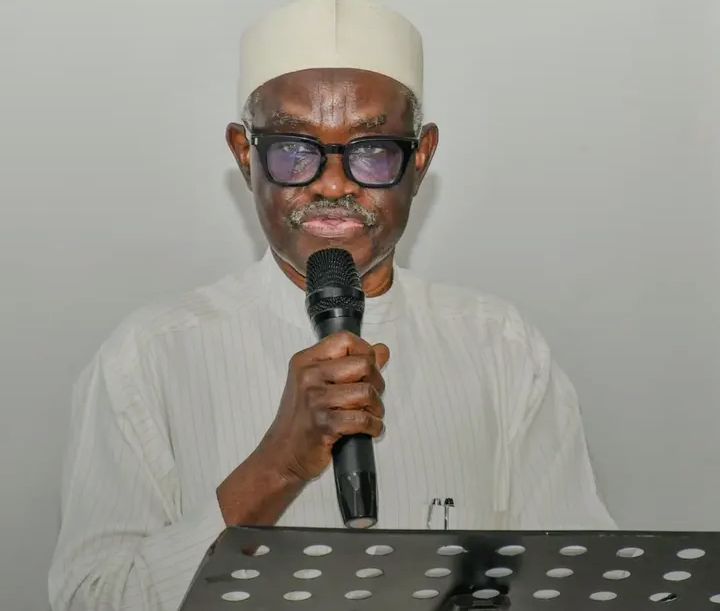
Declaring the workshop open, INEC National Commissioner and Chairman of the Information and Voter Education Committee, Mohammed Haruna, said artificial intelligence could be exploited not only to produce fabricated content but also to develop highly targeted messages aimed at exposing different groups of voters to conflicting narratives.
Haruna said, “Generative AI has made it cheaper and considerably harder to detect manipulated audio, video and images.”
He stressed that the threat posed by AI to elections went beyond fake photographs, videos and audio recordings, noting that the technology could also be used to create targeted communication capable of presenting different versions of events to different segments of the electorate.
According to him, the development has made it necessary for electoral technology and electoral communication to be considered as interconnected components of election management.
Haruna recalled that INEC Chairman, Professor Joash Amupitan, had recently noted that electoral credibility no longer depended solely on physical election materials and technology such as ballot papers, the Bimodal Voter Accreditation System and result sheets.
Amupitan, according to Haruna, had emphasised that the information environment in which voters formed their judgments was equally important to the credibility of elections.
The INEC chairman had consequently called for electoral technology and electoral communication to be treated “not as separate concerns but as a single discipline.”
INEC trains communication officers ahead of 2027.
Haruna said the workshop was organised in response to the changing information environment and was designed to equip Public Affairs Officers with the knowledge and practical skills required to communicate accurately and respond to emerging information threats ahead of the 2027 elections.
The workshop is themed, “Strengthening PAOs Capacity for Credible, Verified and Responsible Election Communication Towards 2027.”
Describing the Public Affairs Officers as “the frontline communicators of INEC in the states,” Haruna said the credibility of the commission’s communication depended significantly on their work.
He said participants would receive training in verification, escalation procedures and clear and consistent messaging.
Haruna added that the skills acquired would be particularly important as the 2027 general elections approach and the volume of election-related information circulating across traditional and digital platforms increases.
INEC raises concern over misinformation
In her welcome remarks, Eta-Messi said Public Affairs Officers played an important role in shaping Nigerians’ perception of the electoral commission.
“It is through you that Nigerians form much of their impression of who we are, what we stand for, and how reliable our information is,” she said.
She noted that INEC operated under constant public scrutiny and was frequently confronted with attempts to misrepresent its activities and undermine public confidence in the commission.
According to her, the challenge requires public communication officers to be adequately prepared to distinguish verified information from misinformation and disinformation.
Eta-Messi disclosed that the workshop was not intended to be a one-off intervention.
She said additional capacity-building programmes were already at an advanced stage of planning, with support from development partners.
Describing the current training as “the beginning of sustained engagement,” the director said the objective was to ensure that INEC’s communication officers were sufficiently equipped to handle their responsibilities.
Officers to receive AI communication training
Presenting the objectives of the workshop, INEC.
Deputy Director, Information and Publicity, Wilfred Ifogah, said the programme was designed to strengthen the practical.
communication skills required by Public Affairs Officers in their daily duties and in preparation for the 2027 elections.
Ifogah said the training would clarify the lines of escalation between Public Affairs Officers, heads of department, the Voter Education and Publicity Department and Resident Electoral Commissioners.
He added that the programme would promote consistency in press statements, talking points and social media communication across the commission.
The training will also strengthen the officers’ ability to monitor the information ecosystem and respond appropriately to misinformation and disinformation.
Ifogah said participants would be introduced to the responsible use of artificial intelligence in communication work, including its practical applications, limitations and safeguards relating to confidentiality and verification.
He said the objective was not simply to expose officers to new technology but to ensure that they understood how to use it responsibly while maintaining the accuracy and credibility expected of INEC communication.
Participants, he added, were expected to leave the workshop with “a shared appreciation of the standards of accuracy, consistency and professionalism required of every Public Affairs Officer of this Commission,” particularly as Nigeria moves towards the 2027 general elections.
The commission’s latest warning places the information environment alongside electoral technology as an important area of preparation for the 2027 polls, with INEC seeking to strengthen its ability to verify information and respond to false or manipulated narratives in real time.
-
 Security2 months ago
NDLEA Declares Alleged Drug Kingpin, Three Associates Wanted, Freezes ₦9.8bn Linked to Syndicate
-
 National Affairs2 months ago
ICPC Uncovers 908 Suspected Ghost Workers Across 50 Federal MDAs, Recovers ₦942 Million
-

 Business/Finance2 months ago
How to Apply for Tunde Onakoya’s ₦250 Million Scholarship Programme and Free Laptop Offer
-
 Politics2 months ago
Atiku Challenges Tinubu to Reveal Details of ₦15.13bn SUV Procurement in 2026 Budget
-
 Judiciary | Public Safety2 months ago
INEC Tells Court Voter Information Is Not Confidential in Emeka Ike’s ₦10bn Lawsuit
-
 Judiciary | Public Safety2 months ago
Court to Rule Friday on NDLEA’s Bid to Destroy ₦480bn Meth Lab in Ogun
-
 Security2 months ago
Family Paid ₦50 Million Ransom to Secure Release of Abducted Kebbi Judge
-
 News2 months ago
2026 Budget: FG Earmarks ₦962.83bn for SUVs, Empowerment Projects Amid Debt Concerns