
News
Politicians Rely on Courts, Not Voters, to Win Elections — Ex-NBA President

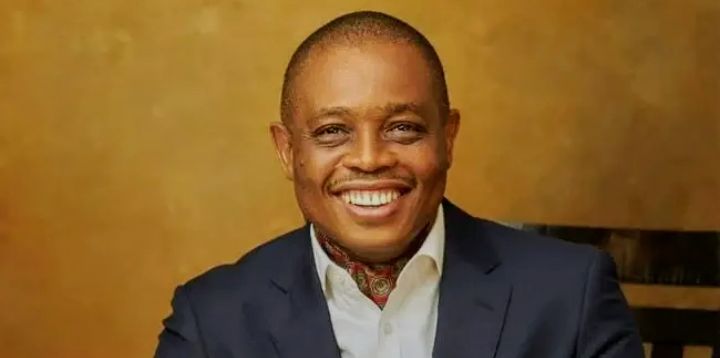
The immediate past President of the Nigerian Bar Association, Mazi Afam Osigwe, SAN, has criticised the growing reliance on election tribunals and courts to determine electoral victories, saying the development is gradually weakening the power of voters in Nigeria’s democracy.
Osigwe said controversial legal technicalities and difficulties in proving violations of electoral laws had increasingly shifted the determination of election outcomes away from voters and towards the judiciary.
The former NBA president spoke on Thursday in Enugu at the 22nd Nigeria Guild of Editors Conference, where he criticised what he described as the “judicialisation” of Nigeria’s electoral process.
He argued that the growing number of election petitions and prolonged legal battles had created a situation in which politicians increasingly looked to the courts after elections rather than relying solely on the support of voters to secure political office.
Osigwe said the problem was partly linked to the difficulty of establishing non-compliance with electoral laws in court.
He said, “A judge once presented a paper called ‘The Judicialisation of the Electoral Process.’
He argued that because of the difficulty of proving non-compliance with the Electoral Act, the courts have gradually and increasingly usurped the role of the voters. I couldn’t agree more.”
According to him, Nigeria records a very high number of election petitions globally, while delays in resolving electoral disputes have further complicated the process and weakened public confidence.
Why Nigerians are losing interest in voting
Osigwe also linked declining voter turnout to the perception among some Nigerians that their votes may not ultimately determine who emerges victorious at the polls.
He said some voters had become discouraged by what they perceived as irregularities between voting at polling units and the final collation of results.
“They believe that between polling units and collation centres—especially at night—miracles happen before daybreak. So why vote?” he asked.
He said the situation had also created an environment in which politicians could allegedly influence voters with money and food items such as rice and salt, while thugs were sometimes recruited during elections.
Osigwe further criticised the conduct of some state electoral commissions, alleging that ruling parties routinely emerged victorious in elections conducted by such bodies.
“Sometimes you’ll be waiting for ballot papers, and results are already announced,” he said.
BVAS, IReV and election disputes
The former NBA president also raised concerns about the legal treatment of technology introduced to improve the transparency of Nigeria’s electoral process, particularly the Bimodal Voter Accreditation System and the INEC Result Viewing Portal.
He argued that some court decisions concerning electoral technology had undermined the effectiveness of the innovations.
Osigwe cited a court position that treated the BVAS machine itself as the primary evidence in certain electoral disputes rather than the printout generated from it.
He said, “The court held that the BVAS machine itself is the primary evidence, not the printout. So you must physically carry the BVAS from every polling unit to court within strict time limits.”
According to him, such legal requirements can create significant difficulties for litigants seeking to challenge electoral irregularities within the prescribed period.
Calls for electoral and judicial reforms
Osigwe also criticised the practice of politicians routinely approaching the courts after elections, arguing that the trend had contributed to declining confidence in the judiciary.
He alleged that some judges had been caught taking bribes and called for reforms to strengthen the credibility and independence of the electoral and judicial systems.
He also argued that pre-election matters should not be justiciable, as he expressed concern about the extent to which the courts have become involved in political contests before and after elections.
Reflecting on Nigeria’s broader political challenges, Osigwe cited Chinua Achebe’s The Trouble with Nigeria, attributing the country’s persistent problems to leadership failure across society.
“We gained independence 64 years ago. We keep making excuses, and we only end up making many lawyers wealthy and corrupt judges richer,” he said.
Osigwe warned that unless Nigeria reforms its electoral and legal systems, public confidence in elections could continue to decline.
He said a situation where voters increasingly believe that courts, rather than their ballots, determine electoral outcomes could pose a serious challenge to democratic participation.
He therefore called for reforms that would strengthen the credibility of elections, ensure that votes are properly counted and collated, and restore citizens’ confidence that their ballots can determine who governs them.





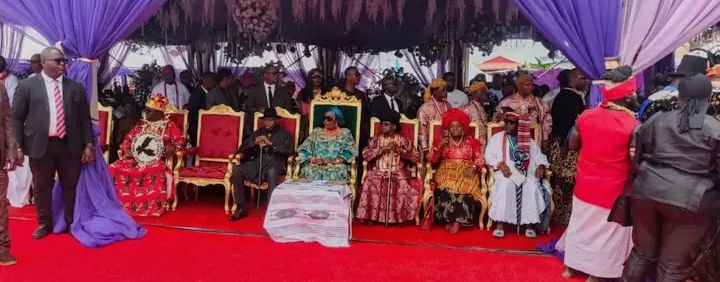
Former President Goodluck Jonathan and his wife, Dame Patience Jonathan, have joined dignitaries from across Nigeria at the coronation of King Charles Douglas MacPepple Jaja, Jeki VI, as the new Amanyanabo of Opobo Kingdom in Rivers State.
The former President and his wife arrived at the coronation venue in Opobo Town at about 11:15 am on Saturday, September 26, 2026, alongside other prominent guests.
The colourful ceremony has also attracted traditional rulers, political leaders and government officials who gathered to witness the formal installation of the new monarch of the historic kingdom.
Representing Rivers State Governor, Siminalayi Fubara, at the event is the Deputy Governor, Professor Ngozi Odu.
Also present are former Rivers State Deputy Governor, Sir Gabriel Toby, and his wife, Dame Christie Toby.
Among the traditional rulers attending the ceremony are the Igwe of Onitsha, King Nnaemeka Obi, and the Olu of Warri, who joined other monarchs and dignitaries at the historic event.
King Charles Douglas MacPepple Jaja was elected in December 2025 as the new monarch of Opobo Kingdom, following the death of the former occupant of the throne, King Dandeson Douglas Jaja.
The late monarch, who also served as Chairman of the Rivers State Council of Traditional Rulers, died in 2025 and was buried in April 2026.
The coronation marks the formal commencement of the reign of King Charles Douglas Jaja as the sixth Amanyanabo of Opobo Kingdom.
Ahead of the ceremony, the Vice Chairman of the Opobo Council of Chiefs, Princewill Dappa, said extensive preparations had been concluded for the coronation.
Dappa disclosed at a news conference in Port Harcourt that several activities had been scheduled as part of the programme leading to the grand coronation.
He said the events were designed to mark what he described as a historic occasion for the people of Opobo Kingdom.
The grand coronation is being held on Saturday, September 26, 2026, in Opobo Town, headquarters of Opobo/Nkoro Local Government Area of Rivers State.
The event has brought together members of the royal family, traditional institutions, government representatives and guests from different parts of the country to celebrate the emergence of the new traditional ruler.
The coronation also formally ushers King Charles Douglas MacPepple Jaja into the throne following his selection in December 2025 to succeed the late King Dandeson Douglas Jaja.
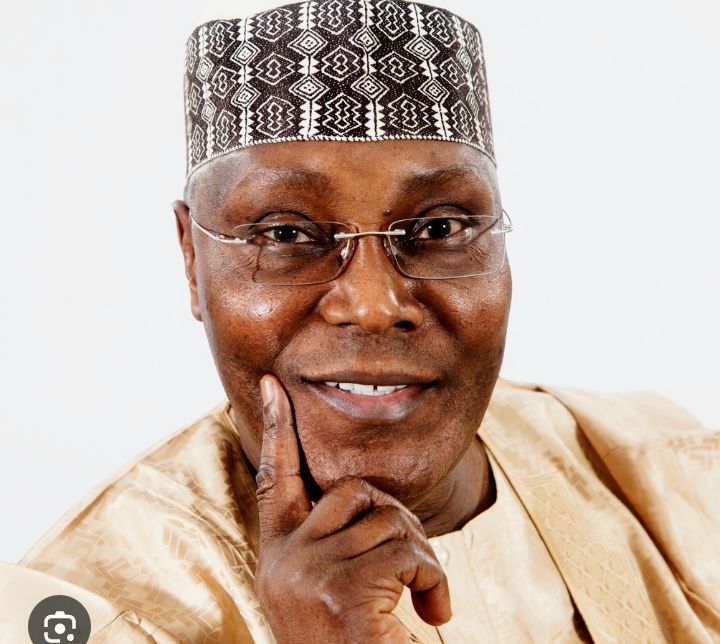
The African Democratic Congress (ADC) Presidential Campaign Council has announced plans to make additional appointments as it continues to expand its national campaign structure ahead of the 2027 presidential election.
The council made this known in a statement issued on Saturday by its Director of Strategic Communication, Phrank Shaibu, following the release of the first list of officials appointed to the campaign team.
Shaibu said the initial list marked an important step in the organisation of the campaign but stressed that it did not represent the final composition of the council.
“The campaign is still evolving. Consultations are continuing, and further responsibilities will be assigned as the structure expands across the country,” the statement said.
The campaign council also sought to reassure supporters whose names were not included in the initial appointments, saying their contributions and sacrifices over the years had not been overlooked.
Shaibu urged those who might be disappointed by their omission from the first list to remain patient, stressing that there would be further opportunities to participate in the campaign.
“To those who may feel disappointed that their names have not appeared yet, we ask for patience and understanding.
No one should believe that years of commitment and sacrifice have been forgotten,” he said.
“Our strength has always been our people and the relationships built over many years. We must preserve that bond.”
According to the council, the campaign structure will bring together party members, experienced political leaders, professionals, young people and other Nigerians willing to contribute to its activities.
It said plans were also underway to unveil zonal and state campaign structures, additional senior appointments and other layers of organisation extending to wards and polling units across the country.
The development comes two days after former Vice President Atiku Abubakar unveiled his Presidential Campaign Council.
Kashim Ibrahim-Imam was named chairman of the council, while former Kaduna State Governor, Nasir El-Rufai, was appointed deputy chairman. Senator Austin Akobundu was named Director-General and Campaign Manager.
Other prominent figures were also assigned various roles in the campaign structure. Former Rivers State Governor, Rotimi Amaechi, was named Atiku’s running mate, while Dele Momodu was appointed Deputy Director-General of the Media and Communications Directorate.
Former Senator Dino Melaye was also named Deputy Director-General of the Contact and Mobilisation Directorate.
However, the composition of the council generated a reaction from former Deputy Governor of the Central Bank of Nigeria, Kingsley Moghalu, who was listed as a member of the Policy Team.
Moghalu subsequently rejected the appointment, stating that he was neither consulted nor asked for his consent before his name was included in the list.
Meanwhile, Shaibu said the campaign council was strengthening its policy architecture to develop practical responses to major national challenges.
He listed the cost of living, food security and agriculture, security, energy and power, job creation, industrialisation, manufacturing, education, healthcare, infrastructure, housing and governance among the areas receiving attention.
The council will also focus on technology and innovation, social protection, natural resources, environmental issues and human capital development.
“Nigeria’s challenges are interconnected and cannot be addressed in isolation.
The objective is to ensure that every major national problem is matched with a serious, practical and implementable policy response capable of improving the everyday lives of Nigerians,” the statement said.
The campaign council described the emerging structure as a “people-driven national campaign” and said it would continue to expand its membership and responsibilities as preparations for the 2027 election progress.
“There is room in this journey for every sincere hand willing to serve,” the statement added.
The wife of the Lagos State Governor, Dr Ibijoke Sanwo-Olu, has appealed to residents to remain patient over delays in waste evacuation across the state, saying the government is working to address challenges affecting refuse collection.
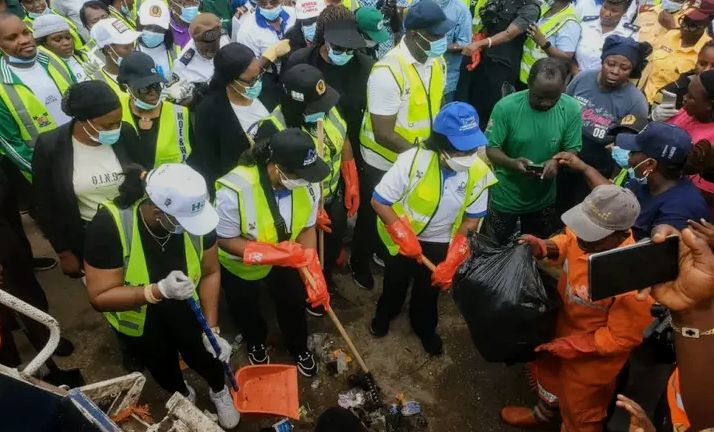
Sanwo-Olu made the appeal on Saturday while speaking with journalists during the monthly environmental sanitation exercise in the Mafoluku area of Oshodi-Isolo Local Government Area.
The appeal followed complaints from residents over irregular waste collection by Private Sector Participation (PSP) operators.
A resident, Adebayo Agbalara, who spoke during the exercise, appealed to the First Lady to intervene in the situation.
“The challenge we are facing is that the PSP operators are not coming regularly to pack our waste. Please help us to appeal to them,” Agbalara said.
Responding, Sanwo-Olu explained that the waste management challenges were linked partly to increased charges by PSP operators and delays experienced by waste trucks at dumpsites.
According to her, trucks sometimes spend two or three days waiting to discharge waste at dumpsites, affecting the speed at which operators can return to communities to collect more refuse.
“The turnaround time for the trucks to dump the dirt at the dumpsite, it takes a long time. They queue for like two or three days before they dump it, and then come out, because it’s just one way,” she said.
She disclosed that the state government was working on alternative strategies and approaches to improve waste disposal and management across Lagos.
Sanwo-Olu described the current situation as a “teething problem” and appealed to residents to be patient while efforts were being made to resolve it.
“Our prayer to our people is that they should be patient. We know we have this teething problem; we will overcome our teething problem with time. They should just be patient,” she said.
The First Lady also acknowledged that some individuals were taking advantage of the situation but said relevant stakeholders were working to ensure that Lagos remained clean.
Residents urged to improve waste handling
Assessing the sanitation exercise in Mafoluku, Sanwo-Olu commended residents for bagging their refuse rather than dumping it beside drainage channels.
She noted that a waste truck was already evacuating refuse in the area, although the operation was not moving as quickly as residents expected.
“You can see that the truck is here; it’s already packing. We’re not as fast as the residents want us to pack, but they are already taking the waste away,” she said.
She also called for improved waste separation, noting that recyclable materials and other categories of waste were often mixed together.
According to her, better separation of waste at the point of generation would make waste management more efficient and support recycling efforts.
Sanwo-Olu further highlighted the participation of schoolchildren in the monthly sanitation exercise, saying their involvement was aimed at instilling environmental consciousness in them from an early age.
Monthly sanitation exercise records increased participation
Speaking on the overall performance of the monthly environmental sanitation exercise since its return, Sanwo-Olu said Lagos had yet to attain the desired level of cleanliness.
However, she noted that public awareness and participation were gradually improving.
The Special Adviser to the Governor on Environment, Olakunle Rotimi-Akodu, also said the level of participation had increased significantly since the exercise began.
According to him, residents now voluntarily come out to clean their homes and streets, unlike at the initial stage when officials had to encourage them to participate.
“When we started, the awareness wasn’t this much. But today, you see people turning up, coming out to clean their environment, right from inside their house to the streets.
And that is to tell you there’s progress. We’re recording successes,” Rotimi-Akodu said.
He explained that the immediate objective of the sanitation exercise was to increase awareness and encourage a change in residents’ attitudes towards environmental cleanliness.
“What we want to achieve first is awareness.
And that is where you now have cultural change. We need to change the whole culture of being lackadaisical toward our environment.
People are beginning to pick up now, and for us, it’s a good measure of progress,” he said.
Rotimi-Akodu also urged Lagos residents to stop indiscriminate waste disposal and embrace waste separation from the point where refuse is generated.
He said residents could separate plastics, paper and other recyclable materials, noting that some of the materials could be sold and converted into income.
The government’s appeal comes amid continued efforts to improve waste management and public participation in environmental sanitation across Lagos, with authorities urging residents to support the process by properly bagging, separating and disposing of their wast.
-
 Security2 months ago
NDLEA Declares Alleged Drug Kingpin, Three Associates Wanted, Freezes ₦9.8bn Linked to Syndicate
-
 National Affairs2 months ago
ICPC Uncovers 908 Suspected Ghost Workers Across 50 Federal MDAs, Recovers ₦942 Million
-

 Business/Finance2 months ago
How to Apply for Tunde Onakoya’s ₦250 Million Scholarship Programme and Free Laptop Offer
-
 Politics2 months ago
Atiku Challenges Tinubu to Reveal Details of ₦15.13bn SUV Procurement in 2026 Budget
-
 Judiciary | Public Safety2 months ago
INEC Tells Court Voter Information Is Not Confidential in Emeka Ike’s ₦10bn Lawsuit
-
 Judiciary | Public Safety2 months ago
Court to Rule Friday on NDLEA’s Bid to Destroy ₦480bn Meth Lab in Ogun
-
 Security2 months ago
Family Paid ₦50 Million Ransom to Secure Release of Abducted Kebbi Judge
-
 News2 months ago
2026 Budget: FG Earmarks ₦962.83bn for SUVs, Empowerment Projects Amid Debt Concerns