
News
Oyo Abduction: 72 Witnesses Testify as Panel Submits Report to Makinde

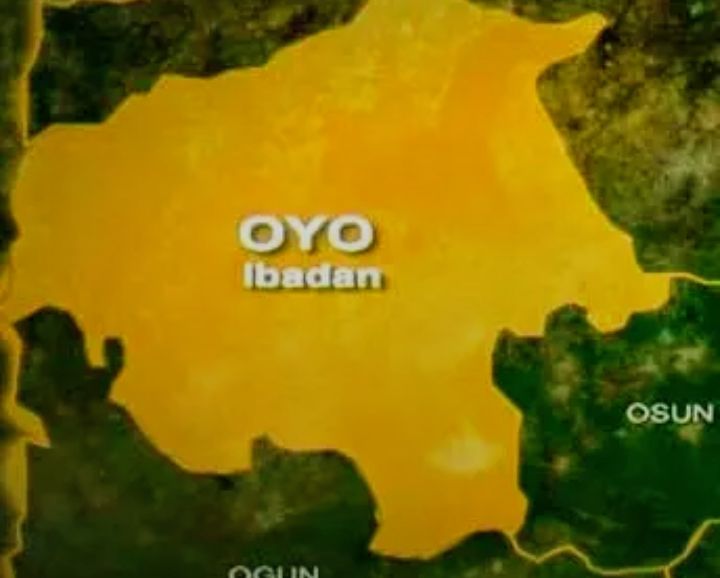
A Judicial Commission of Inquiry constituted by the Oyo State Government to investigate the May 15, 2026 abduction of 39 pupils and seven teachers in Oriire Local Government Area has submitted its report after taking evidence from 72 witnesses.
The chairman of the commission, retired Justice Mojeed Owoade, presented the report to Governor Seyi Makinde on Tuesday at the Executive Chamber of the Governor’s Office, Secretariat, Ibadan.
Owoade said the commission conducted extensive investigations, including visits to the scenes of the attack and the affected schools, as well as public hearings in Ikoyi-Ile, Ogbomoso and Ibadan.
He said the 72 witnesses who appeared before the commission included victims of the incident, traditional rulers, civil society organisations, experts, individuals and other stakeholders.
According to him, the commission’s report contains recommendations designed to strengthen preventive security measures, improve intelligence gathering and enhance cooperation between security agencies and government institutions.
“We visited the scenes of the crime, inspected the affected schools, and went through the bushes to have first-hand knowledge of what actually happened on that fateful day,” Owoade said.
“We held public hearings in Ikoyi-Ile, Ogbomoso, and Ibadan.
On the whole, we took 72 witnesses, including victims, traditional rulers, civil society organisations, individuals, experts, and other stakeholders.”
He said the commission’s recommendations were intended to prevent a recurrence of the incident by addressing gaps in intelligence gathering and coordination among relevant institutions.
A major recommendation, Owoade disclosed, concerns the management and security of forest reserves, particularly the Old Oyo National Park, where the victims were held after their abduction.
“Of particular significance is our opinion that there is a need to review the laws and management of forest reserves, especially the Old Oyo National Park, which belongs to the Federal Government.
“This is essential for maintaining security,” he said.
Makinde receives report
Receiving the report, Governor Seyi Makinde said the findings and recommendations would guide the state government’s decisions and the assignment of responsibilities following the incident.
The governor said the safety of children would be the ultimate test of any changes implemented as a result of the commission’s findings.
Makinde assured residents that his administration would carefully examine the recommendations and act on them, stressing that confidentiality would not be used to avoid accountability.
In a statement issued by his Special Adviser on Media, Dr Sulaimon Olanrewaju, the governor said the Oriire attack tested the security architecture his administration had developed over the years.
He recalled that the state had operationalised its 615 toll-free emergency number, refurbished and expanded its security control room and strengthened communication among security agencies and other security services.
“When we came into office, the 615 toll-free number had been approved but was not yet operational. The City Watch and Security Control Room infrastructure had also been initiated, although parts of the system were not functioning as they should.
“We operationalised the 615, refurbished and expanded the control room, expanded its coverage, and connected the Police, Amotekun, Operation Burst, and other relevant services through a communication system that helped them coordinate a response,” Makinde said.
The governor acknowledged that although his administration had previously recorded progress in reducing crime, the Oriire incident represented a serious failure that could not be overlooked.
“Some people will say that under this administration, we brought down the crime rate. But Oriire is part of the record.
No responsible government can point to earlier progress and ask families to overlook a grave failure of protection,” he said.
‘Rescue cannot be the only measure of success’
Makinde also praised security personnel and other groups involved in the rescue of the abducted pupils and teachers.
He acknowledged the contributions of the Operational Coordination Centre, Amotekun personnel, hunters, vigilantes, the military, police, intelligence services and other federal agencies.
The governor also commended the Director-General of the Department of State Services and the State Directors of Security in Oyo and Lagos states for their involvement in the response.
However, he said the successful rescue of the victims should not be the only measure used to assess the government’s response.
“Rescue cannot be the only measure of success. We must ask: What could have prevented the attack? What could have shortened the ordeal? What will make children safer in their schools?” he said.
Makinde said the lessons from the incident had also informed his advocacy for a broader security reset at the national level.
He said a functioning security system should make it possible to identify where failures occurred and assign responsibility for correcting them.
“This is why, at the national level, I have discussed a security reset for Nigeria.
We must have distinct systems. The reason we could ask the commission to see where there may have been failure is that we have a system — so we can point to where it broke.
Nigeria must also have a working system,” the governor said.
He added that the commission’s report would lead to decisions, the assignment of responsibilities and actions that members of the public would be able to monitor.
“Our children’s safety must be the test of what changes,” he said.
Why Oyo set up the commission
Explaining the reason for establishing the judicial commission, Makinde said the panel was mandated to examine how the attack occurred, the information available to authorities before the incident and the response of relevant institutions.
“We established this judicial commission of inquiry to examine how the attack occurred, what information was available, how institutions responded, whether there were intelligence, administrative, or operational failures, and what must change to prevent another such tragedy,” he said.
The governor thanked Justice Owoade and other members of the commission for completing the assignment despite the politically charged atmosphere surrounding the incident.
“When it was set up, it was in a politically charged atmosphere. But you took on the assignment and saw it through to a logical conclusion.
I say thank you on behalf of myself, the government, and the people of Oyo State,” Makinde said.
He also urged residents of Oyo State and Nigerians who had followed the inquiry to examine the evidence presented by the commission and assess the government’s actions before, during and after the attack.
“Please examine the evidence, examine what we did before, what happened when the attack came, what this commission has found, and what we do in response.
“And judge us by that full record and hold us to the changes we promise,” he said.
Makinde seeks rescue of Borno schoolchildren
The governor also called on the Federal Government to intensify efforts to secure the release of 40 schoolchildren abducted in Borno State on the same day as the Oriire attack.
According to Makinde, the children have remained in captivity for more than 110 days.
“I am calling on the Federal Government to intensify efforts to rescue the 40 schoolchildren abducted in Borno State the same day as the Oriire abduction who have remained in captivity for over 110 days,” he said.
Makinde said children should be able to attend school anywhere in Nigeria without fearing for their lives.
“No Nigerian child, irrespective of what corner of Nigeria they may be located, should have to fear for their life because they are trying to get educated,” he said.
Assembly pledges stronger security legislation
The Speaker of the Oyo State House of Assembly, Adebo Ogundoyin, commended the chairman and members of the commission for their commitment to uncovering the circumstances surrounding the abduction.
Ogundoyin said the state legislature would continue to prioritise legislation and other interventions aimed at strengthening security and protecting schools and communities.
“I commend the chairman and members of the panel for their service and commitment to uncovering the circumstances surrounding the incident,” he said.
“The Oyo State House of Assembly will continue to give priority to legislation and other legislative interventions that will strengthen security, protect our schools and communities, and enhance the safety of residents across the state.
“The lessons from this incident must translate into stronger systems and concrete actions to prevent a recurrence,” he added.
How the Oriire abduction happened
The judicial commission was constituted following the May 15, 2026 attack by suspected bandits on three schools in Oriire Local Government Area.
The affected institutions were Community Grammar School, Baptist Nursery and Primary School, and L.A. Primary School.
The attack resulted in the abduction of 39 pupils and seven teachers, including the principal, Mrs Alamu.
The victims were held by their abductors for 56 days inside the Old Oyo National Park before they were released on July 10, 2026.
The incident also resulted in the deaths of two teachers, Michael Oyedokun and Adesiyan Adegboye.
The submission of the commission’s report now puts the focus on the recommendations contained in the document and the measures to be taken by the Oyo State Government and relevant federal authorities to strengthen security around schools and forest reserves and prevent similar incidents.






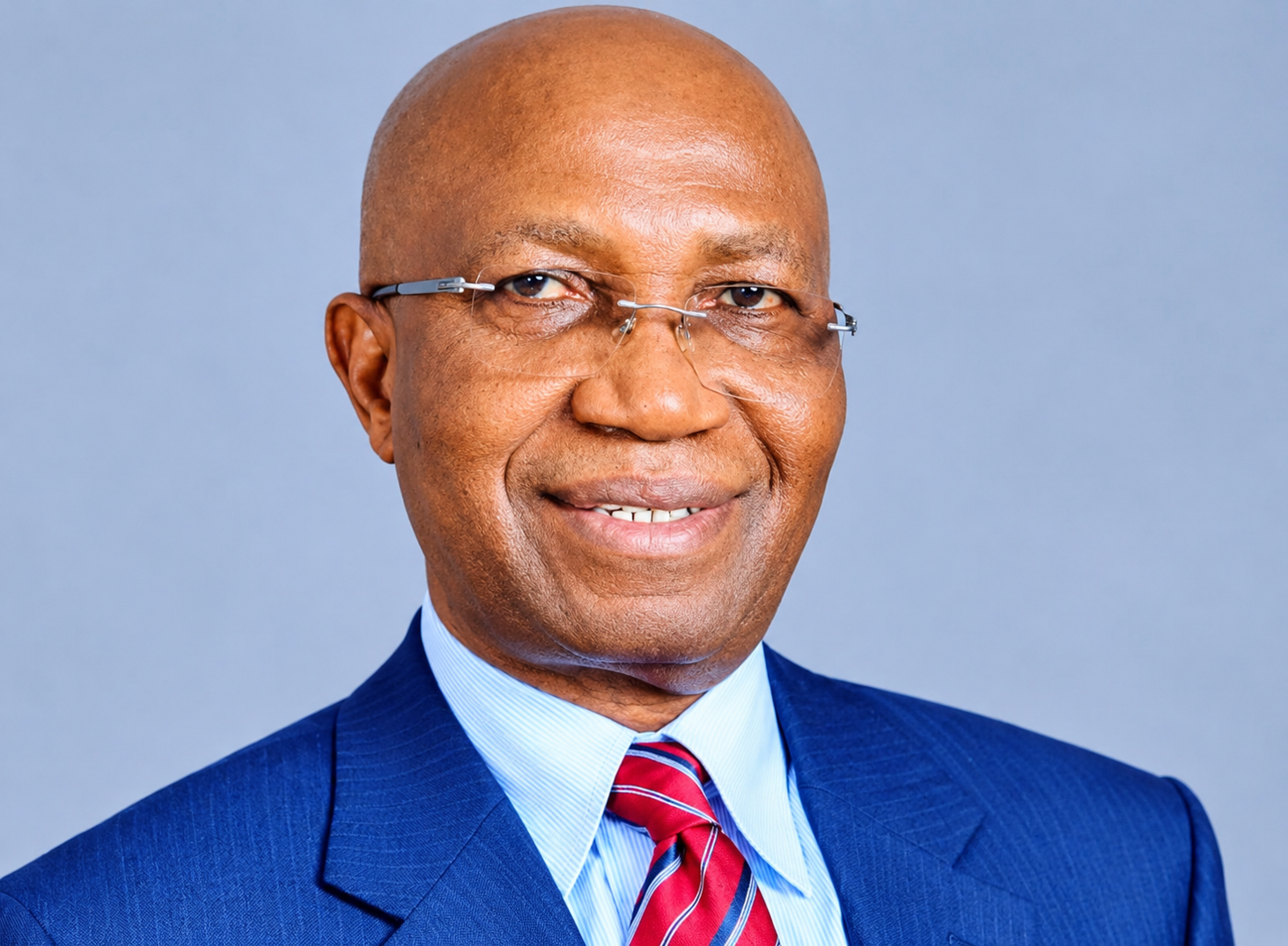
President Bola Tinubu expressed his ambition to govern Nigeria as far back as 1992, when he was serving as a senator during the military administration of former Head of State, General Ibrahim Babangida, Senior Advocate of Nigeria, Chief Wole Olanipekun, has revealed.
Olanipekun made the disclosure on Thursday while recounting his longstanding relationship with Tinubu at the presentation of his six-volume book, Wole Olanipekun Through the Cases, in Abuja.
The event, held at the Body of Benchers Complex, also marked Olanipekun’s 75th birthday, 50 years at the Nigerian Bar and 35 years as a Senior Advocate of Nigeria.
Tinubu attended the ceremony, unveiled the publication and conferred the Grand Commander of the Order of the Niger (GCON) on the senior lawyer.
Speaking at the event, Olanipekun recalled that Tinubu made the declaration during the inauguration of the National Assembly in 1992, when he was a member of the Senate.
According to him, Tinubu addressed his colleagues and told Babangida that members of the National Assembly had a personal interest in the survival of democracy because some of them hoped to govern the country in the future.
Olanipekun said the statement made a lasting impression on him, adding that Tinubu’s emergence as President in 2023 fulfilled the ambition he had expressed more than three decades earlier.
He said, “You said something that hit the card. You told President Babangida that you, every one of us in this country, particularly you senators, had an insurable interest in democracy because one day people like you wanted to govern this country. That was 1992.
“As God will have it, in 2023, you became President of Nigeria. And here you are, seated today as the President of Nigeria. You never knew then, but it is said, it is written, after the abundance of the heart, the mouth speaketh.
“You said it; it came to pass. We started. It was then I got attracted to you, Your Excellency.”
The senior lawyer also recalled Tinubu’s involvement in efforts to challenge the dissolution of the National Assembly following the 1993 military coup led by the late General Sani Abacha.
He said Tinubu and some other senators approached him and his senior colleague, the late Chief G.O.K. Ajayi, SAN, during a meeting at the residence of the late Senator Odi Adewumi on Agoro Doyin Street.
According to Olanipekun, the politicians briefed them to challenge the dissolution of the legislature in court.
He explained that although the lawyers filed an action, they later withdrew it because of the prevailing circumstances at the time.
“At that nocturnal meeting at Agoro Doyin Street, in the residence of late Senator Odi Adewumi, you briefed my boss, one of my bosses in the profession, G.O.K. Ajayi, and myself that we should challenge the dissolution.
“We did file an action, but later withdrew it for exigencies of that time. Shortly thereafter, we didn’t see you because we couldn’t locate our clients and couldn’t be fighting any cause on behalf of a client that we don’t see, because you had disappeared. You had to travel; you had to leave,” he said.
Olanipekun further disclosed that Tinubu later returned and engaged him and other lawyers to work alongside senior lawyer Chi Williams on his legal matters.
He described the President as someone who consistently appreciated the contributions of legal practitioners, recalling a letter Tinubu wrote to him in July 2003 after the conclusion of a legal case involving Mitchell Williams and Tinubu.
According to him, the letter contained commendations that deeply humbled him and would be included in his memoirs.
Olanipekun said, “I’m not doing any campaign, but I’m talking as a lawyer. I’m talking of what I’ve seen.
“I’m not talking of what I’ve witnessed or what I’ve experienced. At first hand, I did not only work for you, Mr President, but you’ve always appreciated lawyers. This is very important to our profession.”
He added that the letter was particularly significant because it reflected Tinubu’s appreciation of his professional contributions.
“You wrote me a letter in July 2003. That letter definitely will go into my memoirs. You said a lot about me.
“I was humbled. That was when we completed the case of Mitchell Williams and Tinubu. It’s in one of these volumes,” he added.
The senior advocate said his experiences working with Tinubu and other political figures reinforced the importance of defending democracy and upholding the rule of law.
He noted that the six-volume publication documented several legal cases handled by his firm, Wole Olanipekun & Co., including matters involving prominent political figures.
The book was unveiled at the ceremony attended by Tinubu and other dignitaries.
The leadership crisis rocking the African Democratic Congress (ADC) has takenOgun ADC Urges Members to Embrace Dialogue, Avoid Litigation Ahead of 2027 another turn, as the Nafiu Gombe-led Board of Trustees (BoT) has asked the Independent National Electoral Commission (INEC) to remove Senator David Mark and Rauf Aregbesola from its records as leaders of the party.
The board also called on the electoral commission to delist all candidates uploaded to its portal by the Mark-led leadership, insisting that such actions were inconsistent with the November 5, 2026, judgment of the Federal High Court in Abuja.
The BoT made the demands in a statement issued by its Chairman, Chief Rufus Ikanmi, who urged INEC to immediately enforce the court’s ruling on the leadership dispute.
Ikanmi maintained that the judgment delivered by Justice Peter Lifu in Suit No. FHC/ABJ/CS/1819/2025, filed by Hon. Nafiu Bala Gombe against the ADC and four others, remained valid, binding and enforceable.
According to him, the judgment had neither been stayed, varied nor set aside by any superior court, making it necessary for INEC to comply with its provisions.
He said, “The judgment of the Honourable Court is valid, binding, and subsisting. It has not been stayed, varied, or set aside by any superior court. INEC, as a statutory body bound by the rule of law, has a constitutional duty to give full effect to it without further delay.”
The BoT chairman specifically urged INEC to remove the names of the David Mark and Rauf Aregbesola-led leadership from its records and recognise only the leadership headed by Gombe.
The board also demanded the removal of all candidates uploaded to the commission’s portal by the Mark-led faction, arguing that the submissions violated the Nigerian Constitution, the Electoral Act 2022 and the ADC constitution.
It further called on INEC to recognise and deal exclusively with the leadership headed by Gombe, which it claimed had been affirmed by the Federal High Court.
Beyond its demands to the electoral commission, the board called on former Vice-President Atiku Abubakar and other individuals allegedly working with the Mark-led faction to suspend campaign activities, rallies and public engagements organised in the name of the ADC.
The BoT warned that continuing such activities without complying with the court judgment could amount to contempt of court.
“Any continued defiance of the judgment of the Federal High Court amounts to contempt of court and a direct assault on constitutional democracy and the rule of law,” Ikanmi said.
The board, however, appealed to ADC members and supporters to remain calm and law-abiding, assuring them of its commitment to peace, unity and the party’s constitutional order.
Background to ADC Leadership Crisis
The latest development follows the November 5, 2026, judgment of the Federal High Court in Abuja, where Justice Peter Lifu nullified the leadership of the ADC led by former Senate President David Mark.
The court also invalidated decisions taken by the party under the Mark-led leadership.
The judgment followed a suit instituted by Nafiu Bala Gombe, a former Deputy National Chairman of the ADC (North-East), who challenged the emergence of Mark and other members of the interim National Working Committee after the resignation of the party’s former National Chairman, Ralph Nwosu.
However, the Mark-led faction has challenged the ruling, filing an appeal against the judgment.
The faction also disclosed that it had submitted an application for a stay of execution pending the hearing and determination of the appeal.
Why INEC Has Yet to Change Its Records
Meanwhile, INEC has reportedly maintained its position on the matter amid the competing demands from the two factions.
Efforts to reach the Chief Press Secretary to the INEC Chairman, Dayo Oketola, for comments were unsuccessful as of the time of filing this report.
However, a report by Arise News on Thursday, citing a senior commission official, attributed INEC’s continued listing of the Mark-led leadership to the pending Notice of Appeal and application for a Stay of Execution relating to the court judgment.
The report added that the commission could not disregard the ongoing appellate proceedings while considering requests for recognition arising from the ruling.
The development has further complicated the ADC leadership dispute, with the Gombe-led BoT insisting on immediate enforcement of the Federal High Court judgment, while the Mark-led faction continues to pursue its appeal and stay application.
The dispute leaves the party’s leadership recognition and the status of candidates uploaded by the rival faction at the centre of the ongoing legal battle.
SEO Package – Nigeria Insight
SEO Headline: ADC Crisis: Gombe-Led BoT Asks INEC to Delist David Mark, Aregbesola, Candidates
Alternative Catchy Headline: ADC Leadership Tussle Deepens as Gombe Faction Demands Removal of Mark, Aregbesola from INEC Records
Meta Description: The Nafiu Gombe-led ADC Board of Trustees has asked INEC to remove David Mark, Rauf Aregbesola and candidates uploaded by the rival faction following a Federal High Court judgment.
Focus Keyphrase: ADC leadership crisis
SEO Keywords/Tags:
ADC leadership crisis
Nafiu Gombe
David Mark
Rauf Aregbesola
INEC
African Democratic Congress
ADC court judgment
Atiku Abubakar
Nigerian politics
ADC leadership dispute

Anti-immigrant protesters in South Africa have called on the government to ban Nigerians from entering the country, accusing some Nigerian nationals of engaging in activities they claim are harming local communities.
Members of the anti-migrant group, March and March, staged a protest in Pretoria on Wednesday, demanding an immediate restriction on the entry of Nigerians into South Africa.
The demonstrators, led by the group’s leader, Jacinta Ngobese-Zuma, marched through Sunnyside, a suburb of Pretoria with a significant Nigerian immigrant population, challenging Nigerians living in the area to explain why it is popularly referred to as “Little Lagos”.
During the protest, Ngobese-Zuma questioned how the neighbourhood acquired the nickname and demanded that Nigerian residents explain their presence in the community.
“I’m being told here that we’ve entered Sunnyside, the home of Nigerians. I’m inviting Nigerians to come out, let’s talk to each other. We want to know who gave you this place and called it Nigeria. Who gave you permission to call this place Lagos or whatever you call it?” she asked.
The protest highlights renewed anti-immigrant sentiments in South Africa, particularly against Nigerians and other foreign nationals living in communities with sizeable immigrant populations.
The group’s legal representative, Xolani Zuma, also called on the South African government to impose an entry ban on Nigerians, alleging that some were involved in drug-related activities.
“The state must ban Nigerians from South Africa. They must ban Nigerians until they stop selling drugs to our people. The rest of Africa we are fine, but we do not want Nigerians in South Africa anymore. That is what we are saying,” Zuma said.
However, the allegations made by the protesters were not accompanied by evidence establishing that Nigerians as a group were involved in criminal activities.
Ngobese-Zuma also called for South Africa to withdraw from the 1951 United Nations Convention Relating to the Status of Refugees, describing the agreement as unsustainable and impractical.
The convention establishes international standards for refugee protection, including the principle of non-refoulement, which prohibits returning refugees to countries where they face serious threats to their lives or freedom.
She argued that the presence of migrants places additional pressure on public resources and contributes to frustration among South African citizens.
Ngobese-Zuma said the protesters intended to take their demands to the Home Affairs Department.
Protest follows Nigeria-South Africa diplomatic tension
Wednesday’s demonstration comes amid renewed diplomatic tensions between Nigeria and South Africa following a disagreement over the exclusion of remarks by Nigeria’s High Commissioner, Femi Fani-Kayode, during his presentation of credentials.
Fani-Kayode had described the omission of his speech as disrespectful to Nigeria. However, he later said the matter had been put behind following the intervention of South African President Cyril Ramaphosa and an invitation from the Department of International Relations and Cooperation (DIRCO).
The Nigerian envoy also disclosed that he had begun addressing issues affecting Nigerians living in South Africa shortly after arriving in the country.
He described those responsible for xenophobic attacks as a tiny minority, insisting that they did not represent the majority of South Africans, whom he characterised as decent and accommodating.
The diplomatic disagreement and Wednesday’s protest have further drawn attention to the challenges facing Nigerians living in South Africa.
Over 1,500 Nigerians repatriated
The protest also comes against the backdrop of reported xenophobic attacks that have claimed the lives of Nigerian nationals in South Africa.
More than 1,500 Nigerians were repatriated from the country this year following xenophobic incidents that reportedly left at least four Nigerians dead.
Despite the developments, Fani-Kayode has maintained that Nigeria has no intention of severing diplomatic relations with South Africa.
However, he warned that patience was wearing thin within the Nigerian government over recurring attacks and hostility towards Nigerian nationals.
The latest demonstration is expected to renew discussions about immigration policies, refugee protection, xenophobia and the safety of foreign nationals in South Africa.
-

 Security4 months ago
NDLEA Declares Alleged Drug Kingpin, Three Associates Wanted, Freezes ₦9.8bn Linked to Syndicate
-

 National Affairs4 months ago
ICPC Uncovers 908 Suspected Ghost Workers Across 50 Federal MDAs, Recovers ₦942 Million
-

 Business/Finance4 months ago
How to Apply for Tunde Onakoya’s ₦250 Million Scholarship Programme and Free Laptop Offer
-

 Judiciary | Public Safety4 months ago
INEC Tells Court Voter Information Is Not Confidential in Emeka Ike’s ₦10bn Lawsuit
-

 Politics4 months ago
Atiku Challenges Tinubu to Reveal Details of ₦15.13bn SUV Procurement in 2026 Budget
-

 Judiciary | Public Safety4 months ago
Court to Rule Friday on NDLEA’s Bid to Destroy ₦480bn Meth Lab in Ogun
-

 Security4 months ago
Family Paid ₦50 Million Ransom to Secure Release of Abducted Kebbi Judge
-

 News4 months ago
2026 Budget: FG Earmarks ₦962.83bn for SUVs, Empowerment Projects Amid Debt Concerns