
Education
Nigerian Universities Must Improve Global Reputation, Research – Okebukola

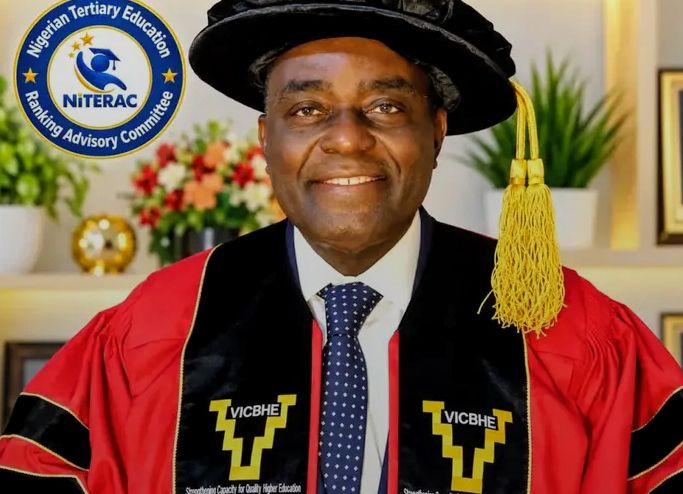
Nigerian universities must strengthen their global academic reputation, research output and international collaborations to improve the country’s performance in global university rankings, Chairman of the Nigerian Tertiary Education Ranking Advisory Committee (NiTERAC), Prof. Peter Okebukola, has said.
Okebukola, a former Executive Secretary of the National Universities Commission, made the submission while assessing Nigeria’s performance in the 2027 Times Higher Education (THE) World University Rankings released on Wednesday.
The 2027 ranking assessed 2,297 universities across 118 countries and territories, with Nigeria recording 29 ranked universities, an increase from 24 institutions in the 2026 edition.
Nigeria also recorded the highest number of ranked universities in sub-Saharan Africa, which had 69 institutions featured in the latest edition.
According to Okebukola, the increase in the number of Nigerian universities in the global ranking should be accompanied by greater attention to areas where the country continues to perform below its potential.
He identified global academic reputation as the biggest opportunity for improving Nigeria’s standing, noting that reputation-related measures account for 33 per cent of the overall ranking score.
Okebukola said Nigerian universities could improve their international academic standing by participating more actively in international conferences, undertaking joint research projects, attracting visiting professors and strengthening relationships with academics and alumni in the diaspora.
He also called for improved research funding and productivity, more accurate institutional data submission, increased doctoral output, deeper international collaboration and mobility, as well as stronger engagement with industry and greater patenting activity.
His assessment showed that Research Quality was Nigeria’s strongest ranking pillar, with a mean score of 43.3. Research Environment and Teaching recorded mean scores of 13.9 and 20.6 respectively.
Covenant, UI, UNILAG lead Nigerian universities
The latest THE ranking placed Covenant University, the University of Ibadan and the University of Lagos jointly in Nigeria’s highest position, within the 801–1000 global band.
Covenant University improved from the 1001–1200 band in the 2026 edition, while the University of Ibadan and the University of Lagos retained their positions.
Four other Nigerian universities — Ahmadu Bello University, Bayero University, Landmark University and the University of Ilorin — were placed in the 1001–1200 band.
The development brought the number of Nigerian universities in the global top 1,200 to seven.
Okebukola noted that federal universities continued to dominate Nigeria’s institutions in the upper bands, with five of the seven universities in the top 1,200 being federal institutions.
They are the University of Ibadan, University of Lagos, University of Ilorin, Ahmadu Bello University and Bayero University.
He said the number of federal universities in the top 1,200 increased from three in 2026 to five in 2027, while their share of Nigeria’s institutions in the band rose from 60 per cent to 71.4 per cent.
Overall, 19 federal universities, seven state universities and three private universities were ranked.
32 universities listed as Reporters
Beyond the 29 institutions that made the ranked table, 32 Nigerian universities were listed as “Reporters” after submitting data but failing to meet the requirements for inclusion in the ranking.
Sixteen of the Reporter institutions are private universities, 12 are state-owned and four are federal universities.
Okebukola said the latest results should be treated as a diagnostic tool for the Nigerian higher education system and provide empirical evidence for the work of NiTERAC.
The THE World University Rankings assess research-intensive universities based on their core missions, with indicators covering areas such as teaching, research, knowledge transfer and international outlook.
Nigeria to introduce national tertiary institutions ranking
Against the backdrop of the latest global ranking, Okebukola disclosed that NiTERAC had commenced work on a national ranking of Nigerian universities, polytechnics and colleges of education.
He said the exercise followed a directive from the Minister of Education, Dr Tunji Alausa, and is expected to be completed before December 15, 2026.
According to him, the national ranking is designed to stimulate healthy competition among tertiary institutions while helping Nigeria improve its performance in international rankings.
He said the national exercise would complement global rankings and enable institutions to identify gaps in areas such as research environment, doctoral output and academic reputation.








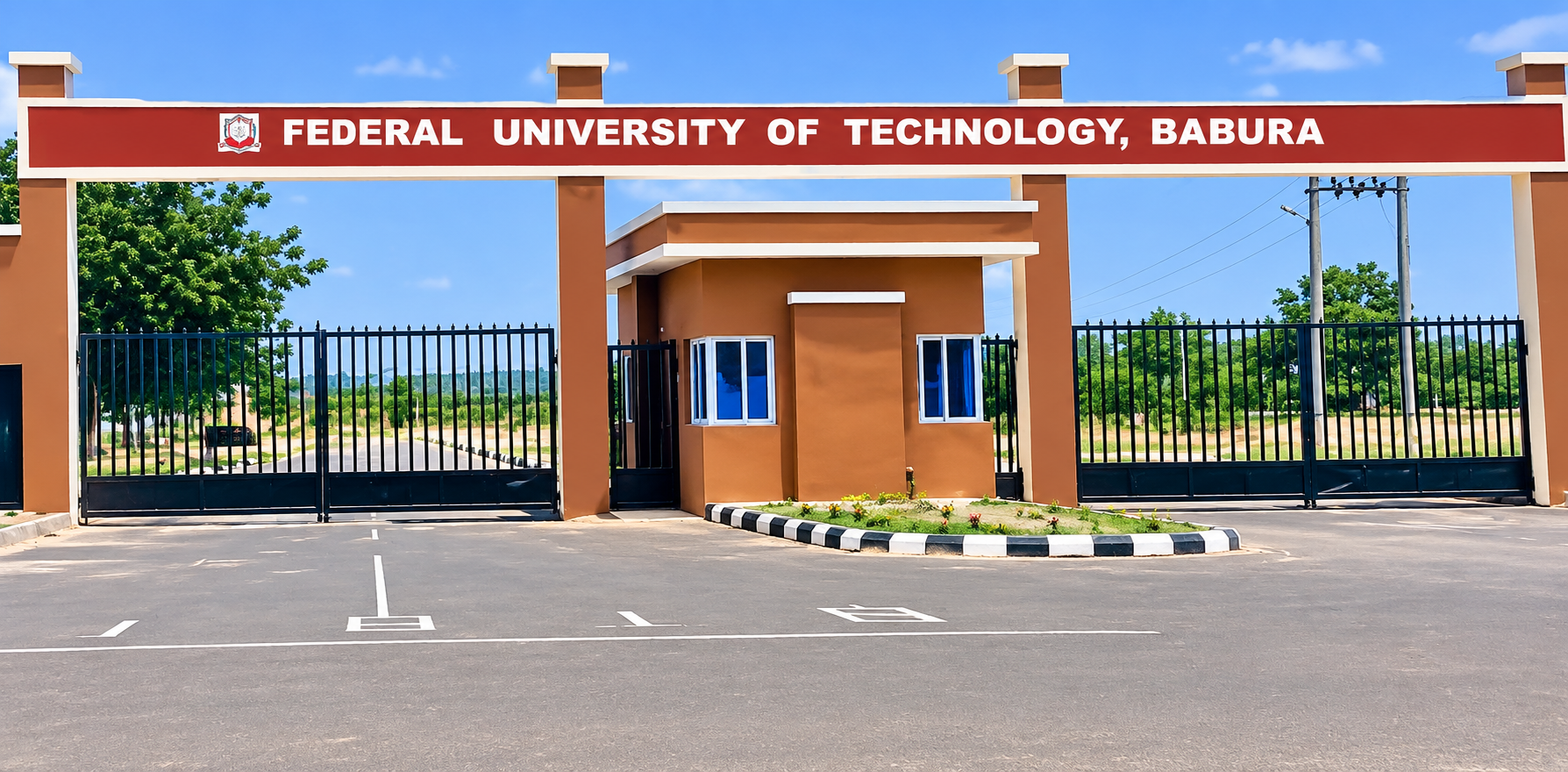
The Governing Council of the Federal University of Technology, Babura, Jigawa State, has appointed Professor Muhammad Auwal Hussaini as the institution’s new Vice-Chancellor after he emerged ahead of six other professors in a competitive selection process.
The Pro-Chancellor and Chairman of the Governing Council, Professor Onimawo Ignatius Akhakhia, announced the appointment on Wednesday while briefing journalists in Kano after the council’s meeting.
The six other candidates who contested the position were Professors Bala Sidi Aliyu, Ibrahim Ali Muhammad Dabo, Babawuro Usman, Joel Manasseh, Mohammed Kabir Yakubu and Usman Haruna.
Akhakhia said Hussaini’s emergence was based on merit, academic achievements and his commitment to the vision behind the establishment of the university.
“Professor Hussaini’s appointment is based purely on merit, hard work and his demonstrated commitment to the vision that informed the establishment of this university,” he said.
The incoming vice-chancellor is a Professor of Agronomy and an alumnus of Ahmadu Bello University (ABU), Zaria, where he obtained his bachelor’s degree in Agriculture in 1988, a master’s degree in Agronomy in 1994 and a PhD in the same discipline in 2000.
He began his academic career at ABU in 1990 before moving to Bayero University, Kano, where he served as Dean of the Faculty of Agriculture and pioneer Director of the Centre for Dryland Agriculture in 2012.
Hussaini also served as Provost of Bilyaminu Usman College of Agriculture, Hadejia, between 2012 and 2014.
Speaking on his vision for the university, the new vice-chancellor pledged to work closely with the institution’s management, staff and relevant government authorities to strengthen its mandate of providing quality science and technology education.
He said his administration would prioritise practical skills and ensure that students acquire the knowledge needed to contribute meaningfully to national development.
“By God’s grace, with the support of the staff, the university’s management and the government, we will ensure that the reason for establishing this university — to teach young people science, technology, skills and their practical applications — is fully realised,” he said.
Hussaini disclosed that the university commenced student admissions in the 2022/2023 academic session and currently has approximately 3,000 students, 400 staff members and 13 academic programmes.
He further pledged to collaborate with the Federal Government, Jigawa State Government, the Ministry of Education and other stakeholders to expand the institution’s capacity and achieve its founding objectives.
The professor also expressed appreciation to the Jigawa State Governor, the Minister of Education, members of the Governing Council and the outgoing management team for their contributions to the university’s development.
“We will continue to seek their support to ensure that whatever needs to be done for this university to progress and achieve its goals, God willing, we will do it,” he added.
Hussaini’s appointment is scheduled to take effect on January 27, 2027.
His emergence is expected to usher in a new phase of leadership at the relatively young institution as it seeks to strengthen its academic programmes, research capacity and contribution to science and technology education in Nigeria.

Students of state-owned polytechnics in Ogun State on Thursday staged a peaceful protest, calling on Governor Dapo Abiodun to urgently intervene in the ongoing industrial dispute between the state government and the Academic Staff Union of Polytechnics (ASUP).
The protest, organised by the National Association of Polytechnic Students (NAPS), followed the failure of repeated appeals and ultimatums issued by the students to secure the reopening of their institutions.
The students, who marched in their hundreds to the Governor’s Office at Oke Mosan, Abeokuta, expressed frustration over the continued closure of the polytechnics, which has disrupted academic activities for about 10 days.
Carrying placards with inscriptions such as “Gov Dapo Abiodun, Please End ASUP Strike”, “Save Polytechnic Education Now”, “Our Lecturers Must Return to Classroom” and “Attend to Our Lecturers’ Demands”, the protesters demanded immediate government action to resolve the disagreement.
Speaking during the demonstration, the NAPS Chairman, Ogun State Liaison Council, Comrade Joshua Opatunmibi, popularly known as Lush, said the students had exhausted diplomatic channels and would no longer accept repeated assurances without concrete action.
He clarified that the protest was not intended to create hostility between the students and the state government but to draw attention to their plight and demand accountability over the disruption of their academic calendar.
According to him, the association issued a 48-hour ultimatum to the government on November 12, appealing to Abiodun to intervene and resolve the strike.
Opatunmibi said the ultimatum expired without any meaningful response, prompting the students to hold another press conference on Monday, during which they issued a fresh 48-hour ultimatum.
He explained that the second ultimatum expired on Wednesday afternoon, leaving the students disappointed over what they described as the government’s failure to address their concerns.
“We are really not happy that the government has done nothing over our request. Is it that the government doesn’t care about our grievances or what? We are definitely not happy because this closure of all the polytechnics in the state is affecting us,” he said.
The NAPS chairman added that the prolonged strike was putting students’ academic futures at risk, urging the governor to address the lecturers’ demands so that academic activities could resume.
“We can’t continue to put our future in jeopardy. We call on Governor Abiodun to please attend to the demands of our lecturers so that we can all go back to our various schools to complete our education,” he added.
Also speaking, another NAPS member, Kolade Musbau, lamented that students who were supposed to be in classrooms had been forced to remain at home because of the industrial action.
Musbau said the students were disappointed that repeated appeals had yet to produce the desired government intervention.
He urged the state government to take immediate steps to resolve the dispute, warning that further delays could affect students’ ability to complete their academic programmes within the expected period.
Speaking on behalf of the state government, the Permanent Secretary, Bureau of Cabinet and Special Services, Mr Dolamu Idowu-Agida, assured the protesters that efforts were ongoing to resolve the disagreement between the government and the lecturers.
Idowu-Agida disclosed that the government had held two meetings with relevant stakeholders to address the issues responsible for the strike.
He further revealed that approval had been granted for an increase in the monthly subvention allocated to all state-owned polytechnics.
According to him, the government was giving serious consideration to the lecturers’ demands and expected academic activities to resume within 48 hours.
“I want to tell you that the State Government has held meetings with relevant stakeholders on this matter, twice. So government is seriously addressing your concerns. As of yesterday, approval has been granted for an increase of subvention to all polytechnics,” he said.
He added, “I want to assure you that very soon the matter will be resolved, and your lecturers will go back to classes. Be rest assured that your lecturers should be back in classrooms within the next 48 hours.”
The protest comes amid an indefinite strike declared by lecturers in the six state-owned polytechnics last Wednesday following the expiration of a 15-day ultimatum issued to the Ogun State Government.
The lecturers embarked on the industrial action over the non-implementation of the Consolidated Academic Tools Allowance (CATA) and Earned Academic Allowance (EAA).
ASUP also raised concerns over what it described as inadequate funding of polytechnic education in the state, accusing the government of failing to review the monthly subvention allocated to some institutions, which has reportedly remained at N5 million for more than a decade.
Among the union’s major demands are the payment of outstanding CATA and EAA allowances and an immediate review of the monthly subvention allocated to all state-owned polytechnics.
The union is demanding that the government increase the monthly subvention of each institution to N100 million to reflect current economic realities and the operational needs of the schools.
With students now mounting pressure on the state government and the authorities promising a resolution within 48 hours, attention will be on whether the ongoing negotiations will lead to the suspension of the strike and the resumption of academic activities across Ogun State’s polytechnics.

Sixteen school teams from eight states are set to compete for honours at the fourth edition of the Aketi Bowl National Championship of the Nigeria School Sports Flag Football League, which begins in Abuja on Thursday.
The two-day competition, organised by the Nigerian American Football Association (NAFA), will feature boys’ and girls’ teams at the Government Secondary School, Garki, Abuja.
NAFA President, Seye Obatolu, disclosed this on Wednesday during a press briefing ahead of the championship, explaining that the participating schools qualified through preliminary competitions held across 10 states between October 20 and November 12.
According to him, the preliminary matches provided an opportunity for schools to compete for the right to represent their respective states at the national level.
“From 10 states to one champion, that’s where we’re going to. Season Five began with preliminary games across 10 states from October 20 to November 12.
“In each of those states, schools played and they all played to get the right to carry their state name and to represent their state over the next few days,” Obatolu said.
He disclosed that 16 teams would participate in the boys’ and girls’ categories, with the opening match scheduled for 9:30am on Thursday.
Obatolu explained that the championship was part of the association’s efforts to identify and develop young sporting talents while creating opportunities for students to pursue American football beyond secondary school.
He highlighted Nigeria’s recent achievements in the sport, particularly the country’s performance at the 2026 ENFAF Flag African Championship in Kenya, where Nigeria’s Under-13 school team won gold after qualifying through the school sports competition.
The NAFA president also recalled that athletes developed through the school league contributed to Nigeria’s gold medal victories in both the men’s and women’s categories at the inaugural African Flag Football Championship held in Egypt in 2025.
He said the association was working to establish a sustainable pathway for young athletes through the development of the Nigeria Collegiate Flag Football League in collaboration with the Nigeria University Games Association.
According to him, the initiative would enable students to continue participating in the sport after completing their secondary education.
Obatolu further expressed optimism that the inclusion of flag football in the Los Angeles 2028 Olympic Games would create more opportunities for Nigerian athletes and increase interest in the sport among young people.
Also speaking, NAFA Vice-President, Nancy Damhindi, said the qualification process involved preliminary competitions among schools in the participating states.
She explained that each state was expected to have at least 10 schools compete during the preliminary stage, with the best-performing boys’ and girls’ teams earning places at the national championship.
Damhindi disclosed that approximately 100 schools participated in the preliminary competitions across the 10 states, providing a competitive pathway for the finalists to qualify for the Abuja championship.
The two-day event is expected to showcase emerging talents while strengthening the development of flag football in Nigerian schools.
-

 Security4 months ago
NDLEA Declares Alleged Drug Kingpin, Three Associates Wanted, Freezes ₦9.8bn Linked to Syndicate
-

 National Affairs4 months ago
ICPC Uncovers 908 Suspected Ghost Workers Across 50 Federal MDAs, Recovers ₦942 Million
-

 Business/Finance4 months ago
How to Apply for Tunde Onakoya’s ₦250 Million Scholarship Programme and Free Laptop Offer
-

 Judiciary | Public Safety4 months ago
INEC Tells Court Voter Information Is Not Confidential in Emeka Ike’s ₦10bn Lawsuit
-

 Politics4 months ago
Atiku Challenges Tinubu to Reveal Details of ₦15.13bn SUV Procurement in 2026 Budget
-

 Judiciary | Public Safety4 months ago
Court to Rule Friday on NDLEA’s Bid to Destroy ₦480bn Meth Lab in Ogun
-

 Security4 months ago
Family Paid ₦50 Million Ransom to Secure Release of Abducted Kebbi Judge
-

 News4 months ago
2026 Budget: FG Earmarks ₦962.83bn for SUVs, Empowerment Projects Amid Debt Concerns