
National Affairs
Medical Directors Demand Stronger Infection Control as 48.8% of Lagos Facilities Fail Assessment

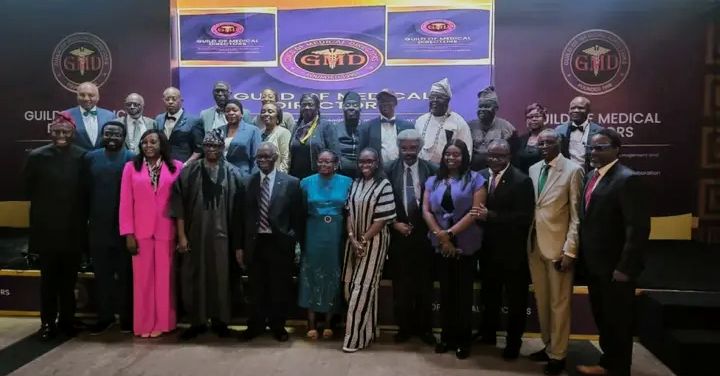
The Guild of Medical Directors has called for stronger infection prevention and control measures in healthcare facilities following an assessment which found that 48.8 per cent of 415 facilities evaluated in Lagos had inadequate infection prevention and control systems.
The Guild warned that weak infection prevention and control systems could increase the risk of healthcare-associated infections, antimicrobial resistance and the spread of infectious diseases.
The call was made at the GMD Scientific Conference and Annual General Meeting held on Friday at the Oriental Hotel, Victoria Island, Lagos, where healthcare professionals discussed infection prevention, disease surveillance and preparedness for emerging and re-emerging diseases.
Speaking on the theme, “Infection Prevention and Control: The Role of Healthcare Services,” Dr Olayemi Daudu said infection prevention should be regarded as a standard of care and driven by healthcare leadership, rather than treated as the responsibility of a particular department.
“Infection prevention is not a department or a department of activity, but a standard of care that is driven by governance, and we as directors are charged with that responsibility,” Daudu said.
She disclosed that an assessment of 415 healthcare facilities in Lagos using the World Health Organisation Infection Prevention and Control Assessment Framework showed that 48.8 per cent had inadequate IPC systems.
According to her, private healthcare facilities performed better than public facilities in the assessment, although none of the facilities assessed attained the advanced level.
Daudu said effective infection prevention could help reduce avoidable infections, antibiotic use, hospital stays and associated healthcare costs, particularly as healthcare-associated infections and antimicrobial resistance continue to place pressure on health systems.
“The hospital without an infection prevention and control system becomes an amplifier,” she warned.
To address the identified gaps, Daudu proposed a 90-day IPC compact for GMD member hospitals.
The proposed measures include facility assessments, regular audits, stronger laboratory links, improved hand hygiene, surgical-site infection surveillance, facility antibiograms and improved outbreak preparedness through effective triage and designated isolation areas.
She also advocated closer collaboration between healthcare facilities, laboratories and public health agencies.
“Infection prevention is not a cost centre. It’s a licence to operate,” Daudu stressed.
Hospitals must be ready for emerging diseases
Also speaking at the conference, Dr Adefolarin Opawoye, who addressed participants on “Emergency Preparedness for Emerging and Re-emerging Diseases,” said healthcare facilities, particularly private hospitals, must be equipped to identify suspected infectious diseases early and respond promptly.
He noted that private hospitals often serve as the first point of contact for patients and could therefore play a crucial role in preventing the spread of emerging diseases.
Opawoye identified Ebola, mpox, COVID-19, cholera, diphtheria, Lassa fever and antimicrobial resistance among the threats requiring sustained preparedness.
“The next case of an emerging disease must be identified in a private facility. The facility must be trained, ready and able to respond quickly. It must be able to isolate a suspected case,” he warned.
He said healthcare facilities should have effective triage systems, designated isolation areas, disease surveillance mechanisms, appropriate personal protective equipment and functional links with Disease Surveillance and Notification Officers.
The medical expert also called for continuous training of healthcare workers, appropriate vaccination where indicated, emergency drills and clear procedures for disease notification and referral.
“Usually, we have four things that we do: Screen. Isolate. Notify. Transfer,” he explained.
Opawoye further advised healthcare facilities not to wait for laboratory confirmation before taking appropriate precautions where there is strong clinical suspicion of a dangerous infectious disease.
Responding to questions, he explained that the WHO Infection Prevention and Control Assessment Framework provides healthcare facilities with a structured self-assessment covering eight areas of infection prevention and control.
He said the framework helps facilities identify weaknesses and develop measures to strengthen their IPC systems.
On vaccination and booster measures, Opawoye said decisions should depend on the disease involved, the level of risk and surveillance findings during suspected cases or outbreaks.
GMD moves to raise healthcare standards
Earlier, the Chairman of the GMD Lagos Chapter, Dr Omoniyi Fagbemi, said the need to improve healthcare standards was also behind the Guild’s decision to require members to enrol in a quality improvement programme.
He disclosed that Care Level Three is expected to become the minimum standard for members after a period of grace.
Fagbemi said healthcare providers must develop systems capable of protecting patients and healthcare workers while responding effectively to emerging and re-emerging diseases.
“Our theme today is particularly important because we continue to face emerging and re-emerging diseases. We have witnessed serious outbreaks in different parts of the world, including Ebola in the Democratic Republic of Congo,” he said.
He recalled Nigeria’s 2014 Ebola outbreak and the role played by Dr Ameyo Adadevoh and other healthcare workers at First Consultant Hospital in containing the disease.
Fagbemi also stressed the importance of building healthcare businesses that can achieve sustainable growth.
“Growth is not enough; it must scale,” he maintained.
Medical directors urged to build sustainable healthcare systems.
Speaking on “Systems, Strategy and Leadership for a Healthcare Enterprise Built to Last,” Dr Ayobami Kuyoro urged healthcare.
organisations to reduce their dependence on individual medical directors and establish systems capable of functioning effectively beyond their tenure.
She said sustainable healthcare organisations require strong leadership, succession planning, institutional knowledge, financial discipline, effective technology and data-driven decision-making.
“The strongest leaders do not create dependants; they create capacity,” Kuyoro noted.
Kuyoro cautioned healthcare organisations against adopting technology as a substitute for fixing weak operational processes.
“The digital version of a broken system is still a broken system,” she stressed.
She also encouraged medical directors approaching retirement to prepare the next generation of leaders and establish systems that would enable their organisations to remain viable after they leave.
“The question is: what can the organisation do without you?” she asked.
The discussions at the conference underscored the need for healthcare facilities to strengthen infection prevention systems, improve emergency preparedness and develop sustainable institutional structures as Nigeria continues to face the threat of emerging and re-emerging infectious diseases.



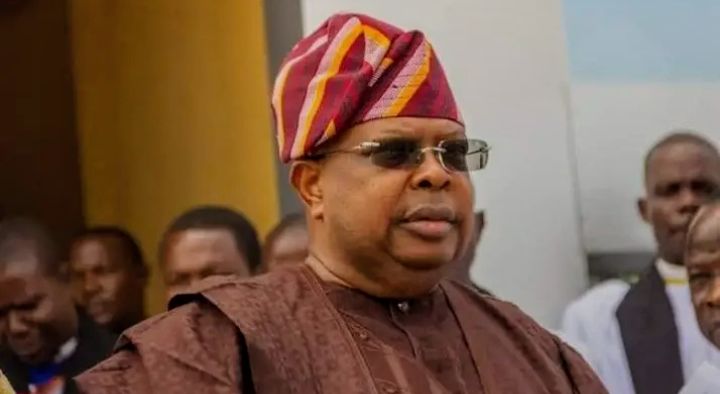
The Federal Government and the Lagos State Government have agreed to collaborate on the implementation of a 24/7 Energy Zones pilot aimed at delivering stable and reliable electricity to homes, businesses and industries across Lagos.
The agreement was reached during a high-level technical meeting between the Minister of Power, Joseph Tegbe, and Lagos State Governor, Babajide Sanwo-Olu, at the Lagos House, Marina.
The Federal Ministry of Power disclosed this in a statement on Monday, noting that the initiative was approved by President Bola Tinubu as part of efforts to improve electricity supply in major commercial and industrial centres across the country.
According to the ministry, Lagos will serve as the starting point for the Energy Zones pilot, which will subsequently extend to the Abuja-Kaduna-Kano and Enugu-Port Harcourt corridors.
The initiative is expected to provide a framework for addressing challenges across the electricity value chain and improving the reliability of power delivered to high-demand areas.
Tegbe said the Ministry of Power had engaged electricity distribution companies operating along the Lagos corridor and secured commitments from them to increase their power offtake and deliver more consistent electricity to consumers.
“The Ministry had engaged and secured commitments from the distribution companies to offtake more power and deliver steady and reliable electricity to customers along the Lagos corridor,” he said.
The minister also said the Federal Government was prepared to work closely with the Lagos State Government on four priority areas identified for the implementation of the initiative.
The areas include grid stabilisation, market liquidity, grid expansion, and governance and regulatory harmonisation.
The collaboration is expected to address technical, financial and regulatory challenges that have continued to affect electricity supply and the efficiency of the power market.
Sanwo-Olu commended the Federal Government delegation for its commitment to addressing challenges in the electricity sector.
The governor said Lagos was ready to support practical solutions aimed at improving the state’s electricity market, stressing the importance of collaboration between the Federal Government, the state government and other stakeholders.
“We need to work out pragmatic solutions to make the sector work for Nigerians, and Lagosians in particular, creating a bankable, collaborative and competitive electricity market in Lagos,” Sanwo-Olu said.
As part of efforts to move the initiative from planning to implementation, the meeting agreed to establish a joint technical committee.
The committee will be responsible for resolving outstanding technical and operational issues and recommending the next steps required to implement the 24/7 Energy Zones initiative.
The committee will report to a steering committee headed by Sanwo-Olu and co-chaired by Tegbe.
Other members of the steering committee include the Special Adviser to the President on Power, Dr Lanre Babalola; the Permanent Secretary of the Federal Ministry of Power, Alh Mahmuda Mamman; and the Lagos State Commissioner for Energy, Biodun Ogunleye.
The meeting was also attended by Lagos State Deputy Governor, Obafemi Hamzat; managing directors of the Transmission Company of Nigeria, Nigerian Independent System Operator and Rural Electrification Agency; as well as senior officials of the Federal Ministry of Power and Lagos State Government.
The development followed an earlier engagement between the Federal Government and electricity distribution companies over the proposed Energy Zones.
Last week, Tegbe held a closed-door meeting with the leadership of selected distribution companies to discuss the proposed zones, which are designed to deliver stable 24-hour electricity to homes, businesses and industries in the country’s major demand centres.
The targeted areas are the Lagos axis, Abuja-Kaduna-Kano corridor and Enugu-Port Harcourt corridor.
The Federal Government said the initiative was designed to tackle electricity distribution constraints and ensure that power generated and transmitted through the national grid reaches consumers more reliably, particularly in locations with high commercial and industrial demand.
For Lagos, the pilot is expected to bring together federal and state authorities, power distributors, transmission operators and other sector stakeholders to address the technical and operational issues limiting reliable electricity supply.
The establishment of the joint technical and steering committees is expected to provide the coordination structure for translating the government’s 24/7 electricity commitment into concrete implementation measures.
National Affairs
Adeleke Signs Osun Park Management Bill Into Law, Promises Immediate Implementation

Osun State Governor, Ademola Adeleke, has signed the Osun State Park Management Bill into law, describing the legislation as a major step towards reforming the state’s transportation system.
Adeleke signed the bill on Monday at the Government House, Osogbo, following its passage by the Osun State House of Assembly.
The development was disclosed in a statement signed by the governor’s spokesperson, Olawale Rasheed, who said Adeleke commended the lawmakers for what he described as their proactiveness and dynamism in addressing challenges in the state’s transport sector.
Speaking during the signing ceremony, the governor said the new law would help modernise the state’s transport system while improving the experience of both commuters and transport operators.
Adeleke said the legislation represented a practical response to the longstanding challenges affecting the management of motor parks across the state.
“I applaud the House Speaker and members of the House for always acting in the best interest of the state.
I have gone through the bill as passed by the House, and I am convinced that it is the best solution to the perennial crisis and challenges facing the Osun transportation park system,” the governor said.
The governor assured stakeholders that implementation of the law would begin immediately, stressing that the administration would ensure that the interests of residents and other relevant stakeholders were accommodated.
“Having signed this bill into law, I assure all stakeholders that implementation will commence in earnest.
In line with the law, we will ensure that Osun people and other interests are accommodated for efficient service delivery across the state,” Adeleke added.
Earlier, the Speaker of the Osun State House of Assembly, Adewale Egbedun, said the lawmakers followed the standing rules of the House in processing and finalising the bill.
Egbedun expressed confidence that the legislation would address concerns surrounding the management of transportation parks and provide solutions to some of the challenges confronting the sector.
He assured Governor Adeleke and residents of the state that the new law would provide answers to issues that had remained a source of concern to many Osun residents.
The legislation, known as the Osun State Integrated Transport, Traffic and Park Management System Bill, 2026, was earlier passed by the House of Assembly.
According to a statement by the Chief Press Secretary to the Speaker, Tiamiyu Olamide, the bill was sponsored by the Chairman of the House Committee on Works and Transport, Abiola Waheed.
One of the key provisions of the legislation is the introduction of a digitalised ticketing system aimed at ending the practice of multiple ticketing in motor parks.
The digital ticketing system is expected to streamline revenue collection and improve transparency within the state’s transport park management system.
The passage and signing of the legislation come against the backdrop of efforts to address persistent disputes and administrative challenges associated with motor park operations in Osun State.
With the governor’s assent, attention will now shift to the implementation of the law and how its provisions will affect transport operators, commuters and other stakeholders across the state.
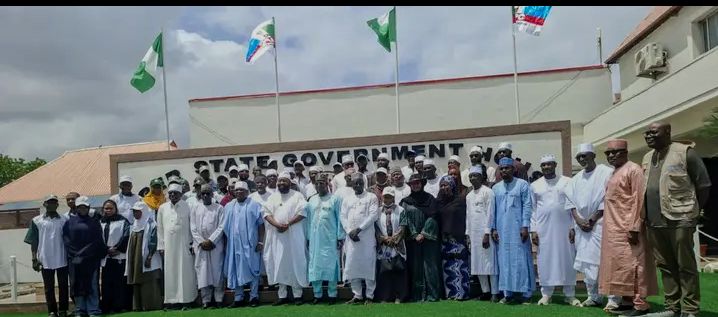
The Federal Government has announced plans to create about 10,000 jobs from each modern abattoir with a processing capacity of 500 cattle per day as part of efforts to transform Nigeria’s livestock sector.
The Minister of Livestock Development, Idi Maiha, disclosed this on Friday during a courtesy visit to Niger State Governor, Umaru Bago, in Minna.
Maiha was in the state as part of a two-day working visit to assess projects being implemented under the Livestock Productivity and Resilience Support Project, L-PRES.
The minister said the Federal Government was seeking to move Nigeria away from the transportation of live cattle over long distances to the transportation of processed meat under controlled and hygienic conditions.
He urged state governments to partner with private investors to establish modern abattoirs in their respective capitals, saying the facilities would create jobs while promoting value addition across the livestock value chain.
According to Maiha, a 500-cattle-per-day abattoir could generate about 10,000 direct and indirect employment opportunities.
He said the establishment of modern abattoirs would also stimulate investment in cattle fattening, pasture cultivation, feed production, animal health services and transportation.
“We need to pivot from the transportation of live animals into the transportation of processed meat, under cold environment, and that calls for abattoir operations,” the minister said.
Maiha explained that Nigeria had continued to transport live animals from the northern part of the country to the South, a practice he said contributed to loss of animal weight, road accidents, waste and limited value addition.
He said the livestock sector had the capacity to absorb thousands of unemployed young Nigerians through activities including egg production, poultry, milk production, goat processing and other agricultural enterprises.
The minister identified feed and fodder development, breed improvement and animal health management as the three major priorities of his ministry.
He added that the Federal Government would collaborate with state governments to establish livestock development centres where pastoralists could settle and develop different livestock value chains.
Maiha also argued that nomadism should not be viewed simply as a cultural practice, describing it instead as a survival mechanism through which herders move their animals from areas with limited resources to locations with sufficient pasture and water.
He said improved livestock breeding was necessary to increase domestic milk production and reduce Nigeria’s dependence on imported dairy products.
According to him, Nigeria spends about $1.5bn annually importing dairy products despite having an estimated 55 million cattle.
He therefore called for stronger collaboration among the Federal Government, state governments and private investors to improve livestock productivity and reduce the country’s reliance on imported dairy products.
Maiha commended Governor Bago for creating what he described as an enabling environment for livestock and agricultural investments in Niger State.
He also described Zaima Farm, which he visited during the working tour, as a centre of excellence.
The minister further commiserated with the Niger State Government and families of miners who died in recent incidents in the state.
He urged stakeholders to learn from the incidents and work towards formalising and better managing the mining sector for greater economic benefits.
Niger to boost pasture production
Responding, Governor Bago said Niger State would address pasture shortages by promoting the cultivation of animal feed.
He disclosed that the state had secured $100m from the Saudi Exim Bank, with an initial $10m being deployed to irrigation projects to support pasture production.
According to the governor, the initiative would provide water, feed, paddocks and veterinary services while creating incentives for pastoralists to settle and participate in organised livestock production.
Bago also disclosed that El-Presco had brokered an arrangement for Niger State to supply about 200 cattle daily to Niger Food and Abis in Abuja.
He said each production cycle under the arrangement was expected to accommodate between 18,000 and 20,000 cattle in feedlots.
The governor said the initiative was projected to generate about 20,000 direct and indirect jobs.
Bago also appealed to the Federal Ministry of Livestock Development to review its L-PRES investment plans to ensure that Niger State remained a beneficiary of the programme.
He further called for the activation of railway routes linking Niger State to Lagos to facilitate the movement of livestock and reduce pressure on roads.
According to him, efficient rail transportation would reduce wastage, ease the movement of animals and contribute to efforts to mitigate farmer-herder conflicts.
L-PRES boosts poultry processing
Earlier, the Chief Executive Officer of Zaima Farm, Hajiya Aisha Ahmed-Nasir, said the L-PRES intervention had significantly improved the farm’s poultry production and processing capacity.
Ahmed-Nasir said the intervention provided important infrastructure, including access roads and a broiler processing unit.
She explained that the processing facility had enabled the farm to process poultry in a cleaner and more hygienic environment.
She added that the facility had also created opportunities for farmers within and outside Niger State to access modern poultry processing services.
The News Agency of Nigeria reported that Maiha was received by Niger State Deputy Governor, Yakubu Garba, at the Bola Tinubu International Airport before commencing his working visit.
-
 Security3 months ago
NDLEA Declares Alleged Drug Kingpin, Three Associates Wanted, Freezes ₦9.8bn Linked to Syndicate
-

 Business/Finance2 months ago
How to Apply for Tunde Onakoya’s ₦250 Million Scholarship Programme and Free Laptop Offer
-
 National Affairs3 months ago
ICPC Uncovers 908 Suspected Ghost Workers Across 50 Federal MDAs, Recovers ₦942 Million
-

 Judiciary | Public Safety3 months ago
INEC Tells Court Voter Information Is Not Confidential in Emeka Ike’s ₦10bn Lawsuit
-

 Politics2 months ago
Atiku Challenges Tinubu to Reveal Details of ₦15.13bn SUV Procurement in 2026 Budget
-

 Judiciary | Public Safety3 months ago
Court to Rule Friday on NDLEA’s Bid to Destroy ₦480bn Meth Lab in Ogun
-
 Security2 months ago
Family Paid ₦50 Million Ransom to Secure Release of Abducted Kebbi Judge
-

 News2 months ago
2026 Budget: FG Earmarks ₦962.83bn for SUVs, Empowerment Projects Amid Debt Concerns