
Investigations/Anti-Corruption
Okpebholo Vows to Sign Kidnappers’ Death Warrants, Even If His Father Is Convicted


Edo State Governor, Monday Okpebholo, has vowed to sign the death warrants of convicted kidnappers, declaring that he would not spare anyone found guilty of the crime, regardless of their relationship with him.
The governor said he was prepared to approve the execution of any convicted kidnapper, even if the individual were his father or a close family member, insisting that those responsible for kidnapping and killing victims must face the full weight of the law.
Okpebholo made the declaration in a video shared by TheCable on Tuesday, amid his administration’s efforts to enforce the state’s law prescribing capital punishment for kidnapping offences resulting in the death of victims.
I pray our brothers are not involved because I will sign it. Even if it is my father, I will sign it. The truth is this: we just have to get some bad elements out of the system for the system to stand.
“Because somebody will die. But these people are the ones killing people. How many people have we killed?” he said.
The governor defended the proposed executions, citing the physical injuries, psychological trauma and emotional distress suffered by victims of kidnapping.
He recalled an incident involving a woman who was allegedly pushed during an abduction attempt, arguing that the fear and trauma she experienced could have resulted in her death.
“Just look at the way they were pushing that woman down there. Supposing she died at that, because of fear, only fear. It’s enough for her to die. People have gone through trauma,” he said.
Okpebholo also referred to an attack involving the state’s Chief Judge, who he said sustained serious injuries, including losing the use of one hand, during an encounter with kidnappers.
The governor disclosed that he had contacted the state Attorney-General to establish the status of the relevant documents required for the execution of convicted kidnappers.
He, however, maintained that his administration would pursue the cases through the appeal process, insisting that those convicted would not be allowed to escape punishment.
“But we still follow them up on the appeal. We won’t just let them go like that. So we will get to wherever they stop, we will take them from there. We will not spare anybody.
“I stand, if I see this paper today, now, I will sign it and I will even supervise the killing,” he added.
The governor’s remarks come against the backdrop of the Edo State Kidnapping Prohibition (Amendment) Law, 2025, which introduced the death penalty for kidnapping offences resulting in the death of victims.
The Edo State House of Assembly passed the amendment in February 2025, after which
Under the amended legislation, kidnapping offences in which victims survive attract life imprisonment, while individuals directly involved in abductions resulting in the deaths of victims face the death penalty.
The law also provides for punishment for individuals who aid, abet or provide support for kidnapping activities.
In September 2026, four men were sentenced to death by a special criminal court in Edo State over the abduction of a woman at the Vegetable Market along Airport Road in Benin City.
The convicts were identified as Marvellous Isaac, Wisdom Michael, Rufus Emete Michael and Gift Raphael.
They were found guilty of abducting the woman in an incident that occurred on June 14, 2026, alongside other related offences.
Okpebholo had earlier declared that he would sign the death warrants of convicted kidnappers who failed to appeal their sentences within the stipulated 30-day period.
As part of his administration’s security measures, the governor also established a special criminal court to accelerate the prosecution of kidnapping and cultism cases in the state.
The government has maintained that the measures are aimed at strengthening the fight against kidnapping and improving security across Edo State.
Investigations/Anti-Corruption
Police Arrest Four Suspected Armed Robbers Over Motorcycle Theft in Cross River

The Cross River State Police Command has arrested four suspected armed robbers in connection with two separate cases of motorcycle snatching in Akamkpa Local Government Area of the state.
The suspects, identified as Oyo Effiong Nakanda, 40; Udeme Bright Felix, 23; Saviour Victor Felicia, 18; and Moses Ernest Felicia, 17, were arrested following an intelligence-led operation along the Calabar–Ikom Highway.
The state Police Public Relations Officer, ASP Sunday Eitokpah, disclosed this in a statement issued in Calabar on Wednesday, November 18, 2026.
According to the statement, the arrest followed a credible tip-off from a member of the public, which led police operatives to a suspected criminal hideout before Ekomita Junction.
Eitokpah said the operation was carried out at about 5:47 a.m. on Wednesday by operatives of the Violent Crime Response Unit, Sector 2, Akamkpa.
He said the operatives mobilised to the identified location and successfully arrested the four suspects.
A machete and items suspected to be criminal charms were also recovered during the operation.
The police spokesman said the suspects were being investigated over two separate incidents of motorcycle snatching reported at Hitech Junction and Usang Road in Akamkpa Local Government Area.
He added that investigations were ongoing to establish their level of involvement in the reported incidents, recover other possible weapons and identify additional members of the suspected criminal network.
According to him, the police were also working to determine whether the suspects were connected to other criminal activities within and outside the state.
The Commissioner of Police, Cross River State Command, CP Ajo Ordue, commended the operatives for their prompt response and acknowledged the role played by the informant in facilitating the arrests.
Ordue reaffirmed the command’s commitment to intelligence-led policing and urged residents to continue providing credible and timely information to security agencies.
He assured residents that the investigation would be conducted professionally and that efforts would be sustained to identify and apprehend other individuals who might be involved in the crimes.
The police commissioner also encouraged members of the public to report suspicious movements and emergencies through the command’s control room numbers: 0704 177 7060 and 0705 335 5415.
The latest arrests come amid renewed police efforts to tackle motorcycle theft and related robbery incidents in Cross River State.
Earlier this month, the command reportedly dismantled a cross-border syndicate accused of stealing motorcycles and tricycles in Akwa Ibom State before selling them in Cross River.
Earlier this month, the command reportedly dismantled a cross-border syndicate accused of stealing motorcycles and tricycles in Akwa Ibom State before selling them in Cross River.
Similarly, in April, police operatives in Calabar arrested a 26-year-old man accused of attacking a commercial motorcyclist with a machete before escaping with his motorcycle and mobile phone.
The Calabar–Ikom Highway has also featured in previous police operations involving suspected robbery attacks on travellers, highlighting continued security concerns along the route.
The police said investigations into the latest arrests remained ongoing.
Investigations/Anti-Corruption
Fake Drugs: Reps Summon NAFDAC, Police, DSS, Demand Tougher Penalties
The House of Representatives has resolved to summon the National Agency for Food and Drug Administration and Control (NAFDAC), the Department of State Services (DSS) and the Nigeria Police Force over the growing circulation of fake drugs, unregistered herbal medicines and adulterated drinks across the country.
The lawmakers also called for tougher penalties against individuals and businesses involved in the manufacture and distribution of counterfeit and unsafe medicinal products, following reports that four people died after allegedly consuming a suspected poisonous herbal medicine in Obi/Oju Federal Constituency of Benue State.
The resolution followed the adoption of a motion of urgent public importance moved on Wednesday by the member representing Obi/Oju Federal Constituency, David Agada.
The motion, titled, “Urgent Need to Investigate the Alleged Distribution and Administration of Suspected Poisonous, Unregistered/Substandard Herbal Medicinal Products in Obi/Oju Federal Constituency, Benue State to Prevent Further Loss of Lives,” called for an urgent investigation into the incident and measures to prevent additional casualties.
Moving the motion, Agada reminded lawmakers of their constitutional responsibility to protect the lives and welfare of Nigerians.
He noted that the NAFDAC Act empowers the agency to regulate the manufacture, distribution, sale and use of drugs, herbal medicinal products and other regulated health-related products.
He also cited the Food and Drugs Act and the Counterfeit and Fake Drugs and Unwholesome Processed Foods (Miscellaneous Provisions) Act, which prohibit the production, distribution and sale of unsafe, adulterated, counterfeit and unwholesome products.
According to Agada, the incident occurred after three individuals allegedly introduced and distributed a herbal medicinal product in the constituency on October 31, 2026, claiming it could cure typhoid fever, waist pain and other ailments.
The individuals were identified as Muhammad Sani Adamu and Musa Alhaji Kala, who allegedly claimed to be from Sokoto State, and Alhaji Muhammad Sule, reportedly from Bauchi State.
He said several residents purchased and consumed the product but developed severe symptoms within hours, forcing them to seek emergency medical attention at different hospitals.
Agada identified the four deceased persons as Awugo Joseph Oyije, who died on November 2; James Ogah Onma, who died on November 4 after being referred for further treatment; Ode Friday Ogah, who died on November 5; and Agi Edugbeke, who died on November 11.
He added that 11 other residents were affected and were receiving medical attention, with two referred to hospitals in Makurdi, the Benue State capital.
The affected persons were identified as Otumala Ochele, Binta Sule, Onu Oboh, Adoga Onu, Upa James, Igbo Pius, Ochele Genesis, Otumala Amos, Uwa Baku, Ate Vivian Okpune and Roman Ehile.
The lawmaker warned that other residents might have consumed the suspected product without being identified, raising concerns about the possibility of additional casualties.
He also said the product’s composition, source, manufacturing conditions, NAFDAC registration status, dosage and possible adverse effects remained unverified.
Agada described the incident as a serious public health concern requiring immediate intervention by relevant federal and state authorities to establish the circumstances surrounding the deaths, prevent further exposure and ensure that anyone found culpable was brought to justice.
Contributing to the debate, the House Leader, Prof. Julius Ihonvbere, said the proliferation of fake drugs and adulterated drinks had become a nationwide challenge that required a comprehensive response beyond NAFDAC’s existing capacity.
He expressed concern over the agency’s manpower, arguing that its workforce of about 2,000 employees was inadequate to effectively monitor Nigeria’s extensive drug distribution network.
“This issue has gone beyond NAFDAC, which has only a staff strength of about 2,000 people. The agency requires at least 10,000 staff members to be able to execute its mandate,” Ihonvbere said.
He added that NAFDAC lacked sufficient presence across the country, warning that more Nigerians could die if urgent measures were not taken.
The House Leader urged lawmakers to recommend stiffer punishments, including life imprisonment or the death penalty, for individuals involved in the criminal trade, subject to the establishment of culpability.
Similarly, Ali Shettima, representing Yobe State, called for a nationwide approach to tackling the problem rather than limiting the response to the Benue incident.
He urged NAFDAC to intensify its regulation of herbal medicine producers and called for stronger legislation to ensure that those found guilty of selling counterfeit drugs and drinks faced appropriate punishment.
However, another Yobe lawmaker, Fatima Talba, urged the House to consider the economic and healthcare challenges driving some Nigerians to patronise unregulated herbal medicine sellers.
She argued that many consumers resorted to such products because they lacked access to affordable and reliable healthcare alternatives.
Talba maintained that the government must provide accessible alternatives before expecting vulnerable Nigerians to completely abandon unregulated medicinal products.
Meanwhile, Peter Uzoekwe, representing Anambra State, proposed holding market leadership accountable for the manufacture and sale of counterfeit drugs.
He suggested that executives of markets where fake drugs were produced or sold should be removed to encourage market associations to monitor and prevent such activities.
Also contributing, Ismaila Haruna, who represents Toro Federal Constituency of Bauchi State, called for investigations into reported deaths allegedly linked to sexual performance-enhancing drugs.
He questioned the enforcement of existing laws regulating herbal medicines and urged authorities to investigate cases of men reportedly dying after using such products.
At the end of the debate, the House resolved to invite the heads of NAFDAC, the Nigeria Police Force and the DSS to appear before its relevant committees and explain measures being taken to tackle the circulation of fake herbal medicines and adulterated drinks.
The lawmakers said a coordinated response was necessary to strengthen enforcement, protect consumers and prevent further loss of lives.
Investigations/Anti-Corruption
Army Arrests Suspected Ammunition Supplier, Recovers 300 Bullets in Kogi
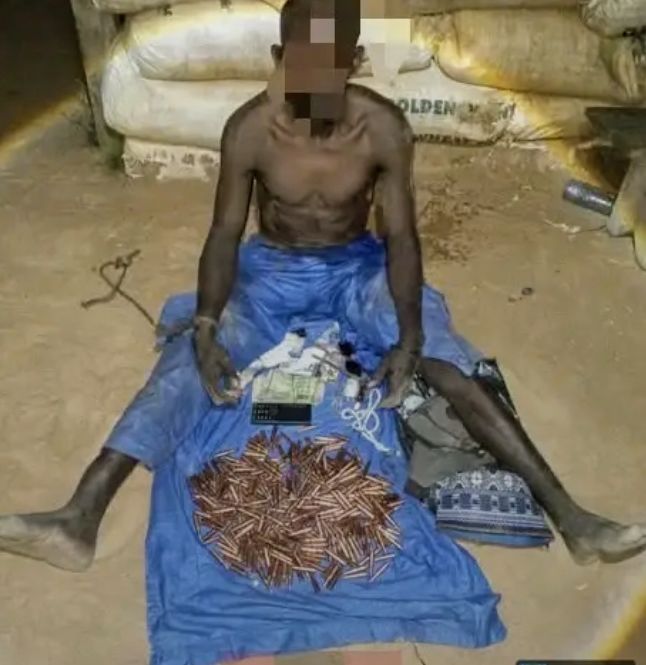
Troops of the Nigerian Army have arrested a suspected ammunition supplier and recovered 300 rounds of 7.62 x 39mm ammunition concealed in a sack of beans in Kogi State.
The operation was carried out at about 9:30 pm on Tuesday, November 17, 2026, following credible intelligence received by security operatives.
The soldiers, attached to the Atsawa Blocking Force, worked alongside local vigilantes to intercept the suspect, identified as 47-year-old Umaru Muhammad, a resident of Ashe Village.
A search conducted during the operation reportedly uncovered 300 rounds of 7.62 x 39mm ammunition carefully concealed inside a sack of beans.
Other items recovered from the suspect included a Bajaj motorcycle, a mobile phone and the sum of ₦30,500.
Preliminary interrogation reportedly indicated that the ammunition was allegedly intended for two individuals identified as Gimba and Dare, said to be residents of Gori Village along the River Niger corridor in Lokoja Local Government Area.
The two individuals were described as local vigilantes, although the allegation surrounding their alleged involvement in the ammunition transaction remains under investigation.
The arrested suspect is currently in military custody as investigators work to establish the full extent of the suspected ammunition supply network and identify other individuals who may be connected to the transaction.
In a statement issued on Wednesday, the Acting Director of Army Public Relations, Colonel Appolonia Anele, said the operation was part of the military’s ongoing efforts to disrupt the supply channels supporting criminal activities.
“The successful interception forms part of the Army’s sustained efforts to disrupt the logistics and ammunition supply chains that support banditry and other criminal activities,” Anele said.
The Army urged members of the public to remain vigilant and promptly report suspicious movements involving concealed firearms, ammunition and other prohibited items to the nearest security agency.
The military also reiterated the importance of cooperation between security agencies and local communities in tackling insecurity and preventing the movement of illegal weapons across the country.
-

 Security4 months ago
NDLEA Declares Alleged Drug Kingpin, Three Associates Wanted, Freezes ₦9.8bn Linked to Syndicate
-

 National Affairs4 months ago
ICPC Uncovers 908 Suspected Ghost Workers Across 50 Federal MDAs, Recovers ₦942 Million
-

 Business/Finance4 months ago
How to Apply for Tunde Onakoya’s ₦250 Million Scholarship Programme and Free Laptop Offer
-

 Judiciary | Public Safety4 months ago
INEC Tells Court Voter Information Is Not Confidential in Emeka Ike’s ₦10bn Lawsuit
-

 Politics4 months ago
Atiku Challenges Tinubu to Reveal Details of ₦15.13bn SUV Procurement in 2026 Budget
-

 Judiciary | Public Safety4 months ago
Court to Rule Friday on NDLEA’s Bid to Destroy ₦480bn Meth Lab in Ogun
-

 Security4 months ago
Family Paid ₦50 Million Ransom to Secure Release of Abducted Kebbi Judge
-

 News4 months ago
2026 Budget: FG Earmarks ₦962.83bn for SUVs, Empowerment Projects Amid Debt Concerns