
Government/Policies
Wike: I Chased Obi Out of PDP, He Ran From Labour Party, ADC

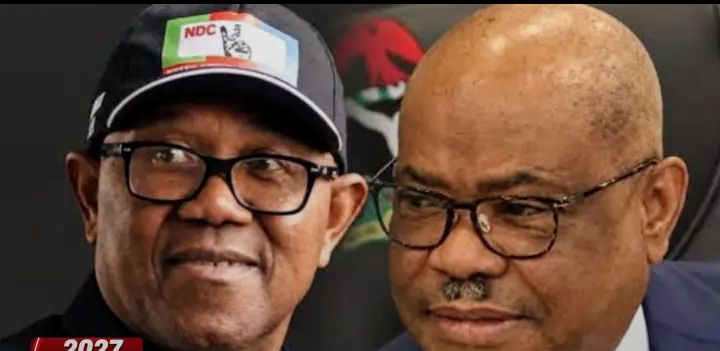
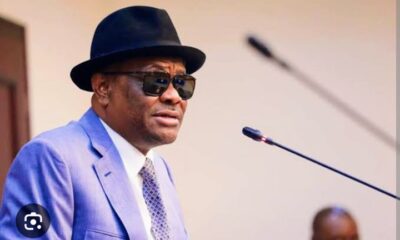
FCT Minister Nyesom Wike has accused former Anambra State Governor Peter Obi of abandoning political parties whenever they encounter internal crises, claiming he was responsible for driving him out of the Peoples Democratic Party (PDP).
Wike made the remarks on Tuesday, November 10, 2026, during the Abaji Area Council Rainbow Coalition and Stakeholders’ Meeting in Abuja, where he urged residents to support President Bola Tinubu’s re-election bid in the 2027 general election.
The minister accused Obi of repeatedly changing political parties whenever he encountered internal disagreements or challenges, citing his movement from the Peoples Democratic Party (PDP) to the Labour Party (LP), the African Democratic Congress (ADC) and subsequently the Nigeria Democratic Congress (NDC).
Claiming responsibility for Obi’s departure from the PDP, Wike said the former Anambra governor had continued moving between political platforms whenever circumstances became unfavourable.
I chased Peter Obi from PDP, he ran to Labour Party, LP had problems, he ran away, he ran to ADC, ADC didn’t give him ticket, he ran away again.
“One day if we have problems with Cameroon, he’ll run away from Nigeria. If it’s time to contest for social media president, vote for him,” Wike said.
The FCT minister also questioned Obi’s ability to manage Nigeria’s political and national challenges, arguing that leadership requires the determination to confront difficult situations rather than abandon them.
He maintained that managing a country as diverse and complex as Nigeria requires the capacity to navigate disagreements and overcome challenges.
Wike’s remarks come amid growing political activities and realignments ahead of the 2027 presidential election, with the minister openly campaigning for Tinubu’s re-election.
Obi, who contested the 2023 presidential election on the Labour Party platform, subsequently joined the ADC before leaving the party alongside former Kano State Governor Rabiu Kwankwaso for the NDC in May 2026.
The two politicians formally joined the NDC on May 3, 2026, receiving their membership cards at the party’s national secretariat in Abuja. Obi had cited internal disputes, litigation and divisions within the ADC as reasons for his departure.
Wike’s latest comments add to the exchanges between supporters of the ruling APC and opposition figures as political parties intensify preparations for the 2027 general election.






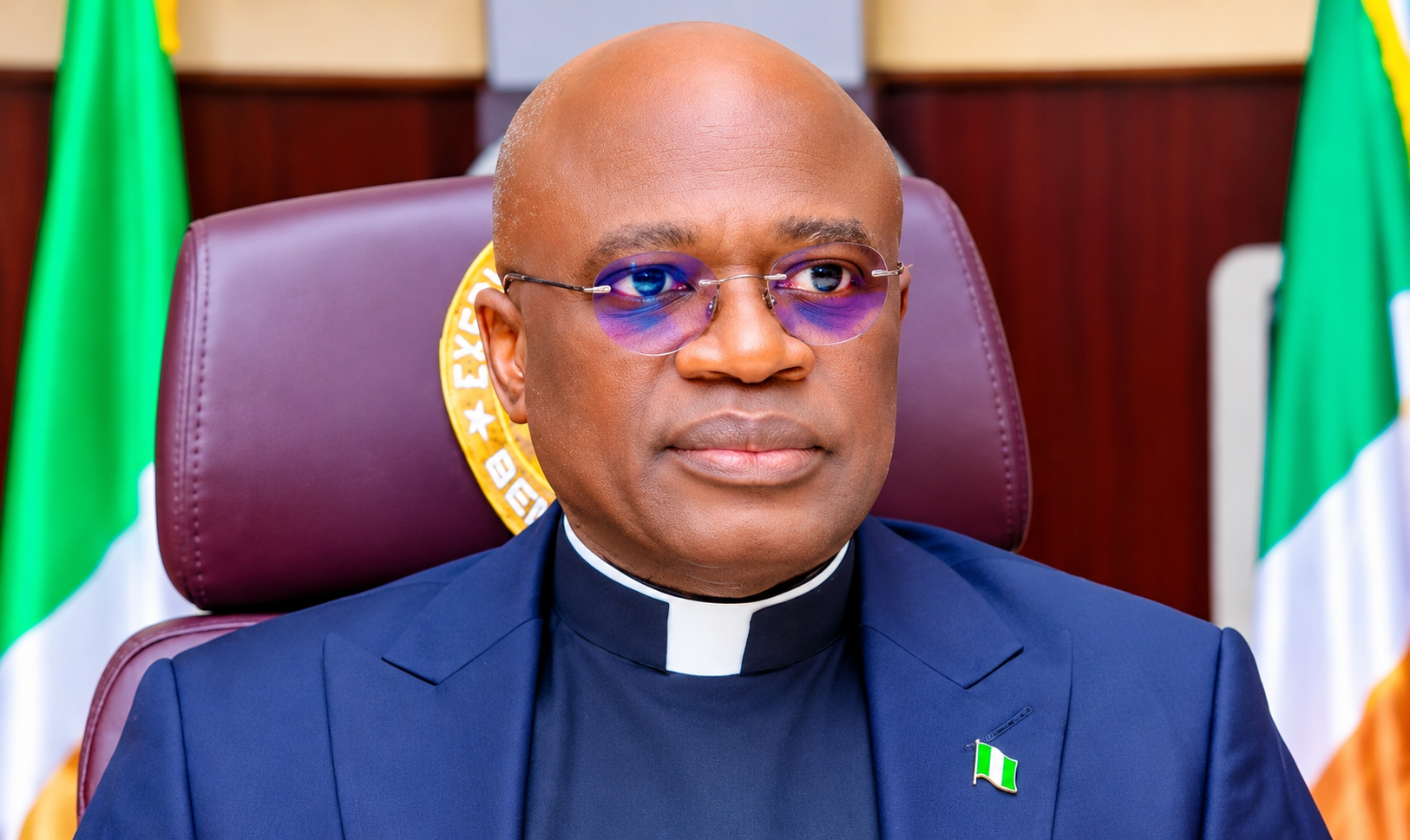
Benue State Governor Hyacinth Alia’s reform policies have unsettled members of the state’s old political establishment, creating resistance from individuals opposed to changes in the existing system, his spokesperson, Tersoo Kula, has said.
Kula made the disclosure during an interview with ARISE News on Friday, where he defended the governor’s performance since assuming office in 2023.
According to him, the governor’s efforts to reform governance and address longstanding challenges inherited from previous administrations have generated opposition from individuals who benefited from the old political order.
“When you bring reforms into a system, you are bound to have enemies. People of the old order will never allow you to rest,” Kula said.
The governor’s spokesperson explained that Alia inherited a state facing significant financial challenges, including domestic debts, unpaid salaries, pensions and gratuities.
He claimed that the administration had made considerable progress in reducing the inherited financial obligations, particularly domestic debts.
Kula, however, cited figures during the interview that appeared inconsistent, saying the state inherited domestic debts of about 100 billion within three years, while also claiming that the administration had paid 100 billion out of an outstanding debt burden he put at $380 billion.
He maintained that the relevant figures could be verified through the Directorate of the Debt Management Office.
On workers’ welfare, the spokesperson said the administration had cleared outstanding payments owed to retired workers and introduced reforms to the civil service pension system.
He further claimed that workers who retired from May 2023 to date were no longer owed outstanding entitlements.
“And nobody who has retired from May 2023 up to this point is owed a kobo. Are these not reforms? Are these not developments?” he asked.
Kula also highlighted an increase in the state’s internally generated revenue (IGR), claiming that monthly collections had risen from between ₦500 million and ₦600 million under the previous administration to between ₦2.5 billion and ₦3 billion under Alia.
He added that some months had recorded revenue as high as ₦3.5 billion.
On infrastructure development, the spokesperson said the administration had constructed more than 540 kilometres of roads across Benue State.
Meanwhile, Kula defended the emergence of Benjamin Omale as the chairman of the All Progressives Congress (APC) in the state, dismissing concerns about his residence outside Benue.
He argued that Omale’s place of residence did not disqualify him from leading the party, insisting that his emergence was recognised by the party’s National Executive Committee and the Independent National Electoral Commission.
The spokesperson also dismissed reports of a strained relationship between Governor Alia and the Secretary to the Government of the Federation, George Akume.
He maintained that the governor had no personal disagreement with the SGF, alleging that individuals around Akume were responsible for creating the impression of a rift between the two political figures.
Kula’s comments come amid political tensions within the Benue APC, with questions surrounding party leadership and the relationship between influential political figures in the state.
The spokesperson insisted that Alia remained focused on governance and implementing reforms despite opposition from elements of the state’s established political structure.
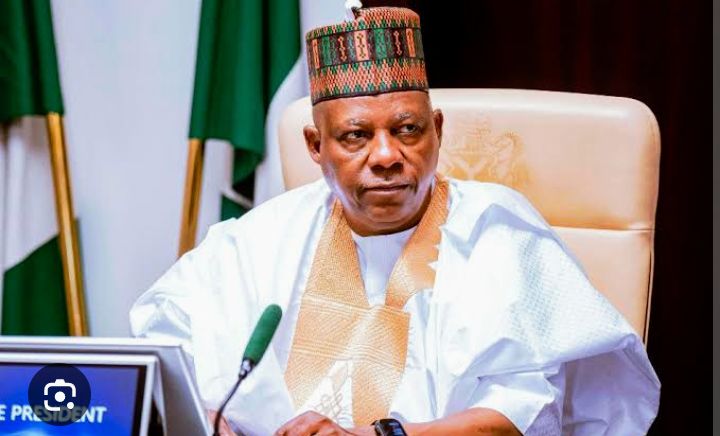
Vice-President Kashim Shettima has declared that the presidential candidate of the Nigeria Democratic Congress, Peter Obi, cannot surpass the popularity of former President Muhammadu Buhari, arguing that national support and strong regional alliances are crucial to winning presidential elections in Nigeria.
Shettima said a presidential candidate must build a solid support base across different parts of the country rather than rely solely on popularity in a particular region.
The Vice-President made the remarks on Thursday at Dr Alex Ekwueme Square in Awka, Anambra State, where he led a campaign rally for President Bola Tinubu alongside Governor Chukwuma Soludo.
The rally, tagged “SoluTinubu 2027,” attracted supporters of the All Progressives Congress (APC) and the All Progressives Grand Alliance (APGA), who gathered at the venue in colourful party outfits to demonstrate their support for Tinubu’s re-election bid.
Addressing the crowd, Shettima stressed the importance of the South-East to Nigeria’s political and economic development, insisting that the Igbo people remained an essential component of the country’s political structure.
He claimed that about 17 million Igbo people lived in Northern Nigeria, while another 10 million resided in Lagos, urging political leaders in the South-East to strengthen their engagement with Nigerians in other regions.
“Don’t let anyone tell you that Igbos are not an essential component of the Nigerian configuration. And I want to tell you, as someone who is close to this election, there are 17 million Igbos living in Northern Nigeria. There are 10 million Igbos living in Lagos alone.
“And I know that they have a lot of opportunities to come here. You have to reach out.
“Peter Obi cannot be more popular than Muhammadu Buhari,” he said.
Shettima recalled Buhari’s unsuccessful attempts to become Nigeria’s president in 2003, 2007 and 2011, despite having served as a military head of state and enjoying considerable support in Northern Nigeria.
According to him, Buhari’s electoral experience demonstrated that a strong regional following alone was insufficient to secure victory in a presidential election.
He argued that candidates needed to expand their political influence and build alliances across the country’s different regions to win national elections.
“Because having a strong base across the nation is what you need to win a presidential election in a country like Nigeria,” the Vice-President added.
Shettima also appealed to the people of the South-East to support Tinubu, describing the relationship between the region and the current administration as a partnership that should be strengthened.
He spoke about his personal relationships with Igbo people, saying some of his closest friends and aides were from the South-East.
The Vice-President further recalled his experience in the region while serving as governor and urged residents to recognise the longstanding relationships between the South-East and other parts of the country.
He said he had committed his personal resources to supporting Igbo interests after becoming Vice-President, although he did not provide further details of the intervention.
Shettima also acknowledged the political challenges facing the South-East, noting that Anambra would be an important state in the 2027 general election.
He urged educated and capable people from the region to become more actively involved in national politics, insisting that greater political participation would strengthen the South-East’s position within the federation.
The Vice-President assured the people that the Tinubu administration remained committed to the region and would not disappoint them if given another opportunity to govern.
He also acknowledged voters’ constitutional right to freedom of association, maintaining that political leaders could persuade Nigerians to support their preferred candidates but could not compel them to do so.
Reiterating his support for regional political alignment, Shettima said the objective was to ensure that the South-East became firmly connected to what he described as the country’s “national grid in the federation”.
He urged supporters to mobilise votes for Tinubu at polling units, regardless of their political party affiliations.
Earlier, several political leaders at the rally endorsed Soludo’s call for greater political integration of the South-East into the national political structure.
Those who spoke included Deputy Speaker of the House of Representatives, Benjamin Kalu; Imo State Governor, Hope Uzodimma; Minister of Works, Dave Umahi; former Anambra State Governor, Chris Ngige; and Senator Adams Oshiomhole.
They commended Soludo for bringing together political actors from different parties to mobilise support for Tinubu ahead of the 2027 presidential election.
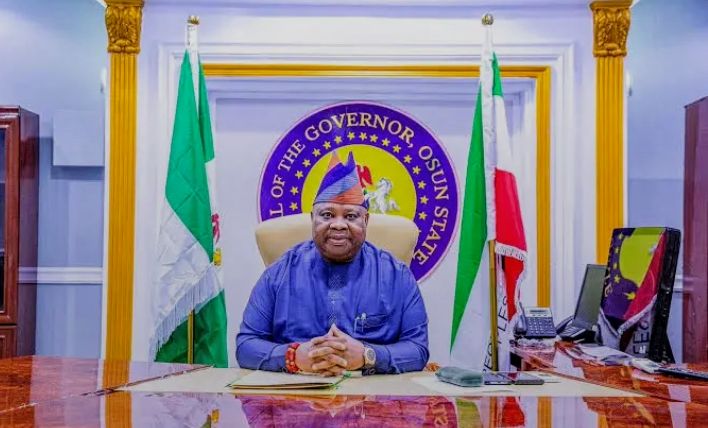
President Bola Tinubu, South-West governors, diplomats and other prominent political figures have been invited to the second-term inauguration of Osun State Governor, Ademola Adeleke, scheduled for November 27.
The Secretary to the State Government (SSG), Teslim Igbalaiye, who chairs the inauguration committee, disclosed this on Thursday during a press conference in Osogbo, where he unveiled activities lined up for the ceremony.
Igbalaiye said the Speaker of the House of Representatives, Tajudeen Abbas, federal lawmakers, ministers, senators and the governor’s friends and associates from across the world had also been invited.
According to him, about 15 ambassadors had already indicated interest in attending the event, while five ministers had expressed their intention to be part of the ceremony.
He added that several dignitaries who were not formally invited had also contacted the state government to indicate their willingness to attend.
“We have actually invited several dignitaries. We invited the President, Bola Tinubu. About 15 ambassadors contacted us and said they want to attend the inauguration. Senators, especially from the North, are coming for the inauguration.
“Also, members of the House of Representatives are coming. The Speaker of the House of Representatives: we are not certain yet if he will attend, but we invited him too. Five ministers have indicated interest in attending.
“A lot of dignitaries are coming into the state for the inauguration. South-West governors are coming. All of them want to associate with Imole,” Igbalaiye said.
The inauguration will take place at the Osogbo Township Stadium on November 27.
Unveiling the programmes, the SSG announced that activities would begin with a Jumat service on Friday at the Central Mosque, Oja Oba, Osogbo.
An interfaith prayer session is scheduled for Saturday at the open space in the parking lot of the Government House, Osogbo.
The final of the Ademola Adeleke Victory Soccer Tournament will also hold on Saturday afternoon at the Fakunle Comprehensive High School playground in Osogbo.
Other activities include a night of praise and worship at the banquet hall of the Governor’s House and visits by government delegations to orphanage homes across the state, where donations will be made.
The committee also announced an Osun Youth Summit focusing on innovation and enterprise as part of the inauguration activities.
Igbalaiye further disclosed that Adeleke would deliver a state broadcast to appreciate residents for their support.
The inauguration lecture will be delivered by former Kaduna Central Senator, Shehu Sani, with the theme, “Federalism Dilemma: Navigating Institutional Friction, Local Government Allocations, and Executive Overreach.”
The SSG appealed to stakeholders, particularly media organisations, to support the successful coverage of the activities, describing journalists as valued partners in communicating the event to audiences locally and internationally.
The PUNCH had earlier reported that Adeleke was re-elected in the August 15 Osun governorship election, defeating the All Progressives Congress candidate, Bola Oyebamiji, and 13 other contestants.
Adeleke was first elected governor on July 16, 2022, for a four-year term.
-
 Security4 months ago
NDLEA Declares Alleged Drug Kingpin, Three Associates Wanted, Freezes ₦9.8bn Linked to Syndicate
-
 National Affairs4 months ago
ICPC Uncovers 908 Suspected Ghost Workers Across 50 Federal MDAs, Recovers ₦942 Million
-

 Business/Finance4 months ago
How to Apply for Tunde Onakoya’s ₦250 Million Scholarship Programme and Free Laptop Offer
-
 Judiciary | Public Safety4 months ago
INEC Tells Court Voter Information Is Not Confidential in Emeka Ike’s ₦10bn Lawsuit
-
 Politics4 months ago
Atiku Challenges Tinubu to Reveal Details of ₦15.13bn SUV Procurement in 2026 Budget
-
 Judiciary | Public Safety4 months ago
Court to Rule Friday on NDLEA’s Bid to Destroy ₦480bn Meth Lab in Ogun
-
 Security4 months ago
Family Paid ₦50 Million Ransom to Secure Release of Abducted Kebbi Judge
-
 News4 months ago
2026 Budget: FG Earmarks ₦962.83bn for SUVs, Empowerment Projects Amid Debt Concerns