
News
Lumumba Identifies Unemployment, Poverty as Drivers of Xenophobia in Africa

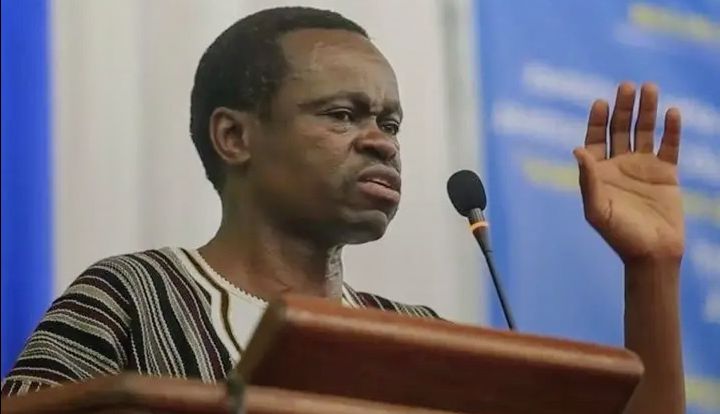
Kenyan scholar urges African leaders to tackle poverty, industrialise economies and create jobs instead of blaming migrants
Professor Patrick Loch Otieno Lumumba has identified unemployment, poverty and inadequate economic opportunities as major factors fuelling xenophobia across Africa, urging governments to address the continent’s economic challenges rather than turn against fellow Africans.
Lumumba, a renowned Kenyan legal scholar and public speaker, said xenophobia often thrived in societies experiencing economic hardship, where unemployment, inequality and pressure on public services encouraged citizens to perceive migrants as competitors for limited opportunities.
He spoke on Thursday as the keynote speaker at The Bridge Club’s grand end-of-year event in Lagos.
In his address, titled Africa Must Not Become Foreign to Itself: Xenophobia, Pan-Africanism and the Future of African Belonging, Lumumba argued that migrants were frequently.
scapegoated for economic problems resulting from poor governance, weak institutions and inadequate industrial development.
The foreign trader, worker or entrepreneur can be arrested. The failure to create productive employment over several decades cannot be arrested at a roadblock,” he said.
According to him, African governments must look beyond the presence of migrants and examine the structural weaknesses responsible for unemployment, poverty and economic competition.
He observed that the inability of many African countries to industrialise and create productive jobs had pushed millions of young people into informal economic activities, where competition for limited opportunities could generate resentment.
Lumumba also blamed Africa’s dependence on exporting raw materials while importing finished products for the loss of employment opportunities to other economies.
“We export crude oil and import refined petroleum. We export cocoa and import chocolate. We export minerals and import the machines, batteries and technologies manufactured from them,” he said.
He explained that the continent was effectively creating employment opportunities in other parts of the world while its growing youth population continued to struggle with limited economic prospects at home.
The legal scholar maintained that addressing the exploitation of migrant workers required enforcing labour laws against employers rather than encouraging hostility towards foreigners.
He said employers who engaged undocumented migrants and paid them below lawful wages contributed to resentment among local workers while benefiting from divisions within communities.
“The appropriate response is not violence against the migrant. It is enforcement of labour law against the employer,” he said.
Lumumba further highlighted what he described as a contradiction in the attitude of Africans who celebrate the achievements of their compatriots abroad but treat migrants from other African countries with hostility.
He noted that Nigerians travelling to London, Kenyans moving to Dubai, Ghanaians relocating to Canada and Zimbabweans seeking opportunities in South Africa were driven by the same desire to improve their living conditions.
We therefore understand perfectly well why human beings migrate when opportunity is scarce. We simply become less understanding when the migrant arrives at our own door,” he said.
He stressed that African governments had a responsibility to create jobs, protect wages, improve public services and enforce immigration laws without subjecting foreigners to humiliation or collective punishment.
According to him, the fight against xenophobia cannot be separated from the broader struggle for economic development, insisting that African economies must become sufficiently productive to accommodate their growing populations.
“The real enemy is therefore not the African who crosses the border in search of opportunity. The greater enemy is an economic order that creates too little opportunity and then invites Africans to quarrel over the little that exists,” he said.
He urged African leaders to prioritise industrialisation, agricultural transformation, infrastructure development, education and technology as sustainable measures for tackling economic hardship and reducing hostility towards migrants.
Lumumba also called for practical economic cooperation among African countries, arguing that Pan-Africanism must go beyond declarations of solidarity to initiatives that make the prosperity of one African country beneficial to others.
Earlier, the President of The Bridge Club, Abdulhakeem Mustapha (SAN), said continued discrimination against Africans in other African countries represented a fundamental contradiction of the ideals of continental unity.
Mustapha said Pan-Africanism should be reflected in everyday conduct, institutional practices and the treatment of citizens from other African nations.
“How can we preach Pan-Africanism while tolerating attitudes and practices that diminish the humanity and dignity of fellow Africans?” he asked.
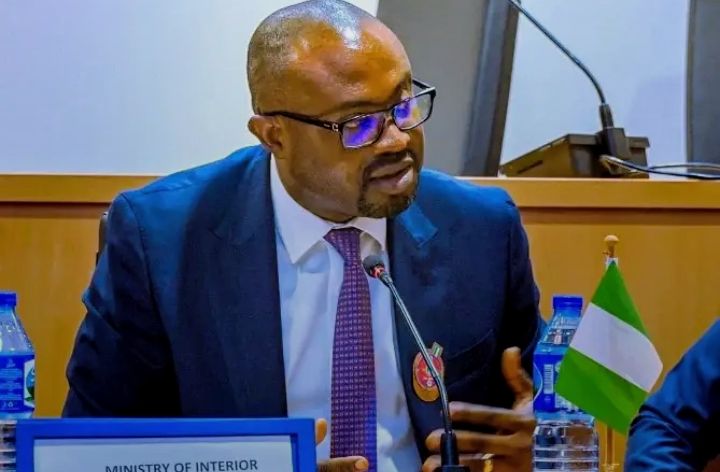
The Federal Government has announced plans to increase Nigeria’s passport production capacity to six million booklets annually by May 2027, as part of efforts to position the country as a major supplier of travel documents across Africa.
The Minister of Interior, Dr Olubunmi Tunji-Ojo, disclosed this on Friday in Abuja during the groundbreaking ceremony for the $70 million National Passport Booklet Production Centre at the Nigeria Immigration Service (NIS) headquarters.
According to the minister, the facility will initially have the capacity to produce six million passport booklets annually, with plans to increase production to 10 million booklets per year.
Tunji-Ojo said Nigeria currently requires between 1.8 million and two million passports annually, noting that the proposed production capacity would significantly exceed domestic demand and create opportunities for exports.
“The requirement of Nigeria is roughly between 1.8 to two million passports a year, but by May we will have the capacity for six million passports a year production, which we are going to scale to 10 million booklets a year,” he said.
He explained that the project, being developed in partnership with technology firm Iris Smart Technologies, was designed to produce passports that meet the travel document standards of the Economic Community of West African States (ECOWAS).
The minister said the facility would enable Nigeria to supply passports to other African countries currently relying on foreign manufacturers, particularly those in Europe and the Americas.
“What our partners Aresmart and we are doing is to build a passport that will be able to service ECOWAS and even be able to export to other countries,” he stated.
Tunji-Ojo described the initiative as a strategic economic opportunity, arguing that Nigeria should take advantage of its position as Africa’s largest economy to compete in the continental passport production market.
He noted that several African countries currently depend on European and American companies for their passport booklets, adding that Nigeria was determined to change the situation by developing local production capacity.
“All other countries in Africa, they are buying from Europe, from the Americas. But we believe Nigeria, being the giant of Africa, that is a market. Nigeria must lead,” the minister said.
He further disclosed that President Bola Tinubu was expected to commission the facility in May 2027.
“By May, by the grace of God, this project will be commissioned by Mr President in May 2027,” he added.
The groundbreaking ceremony marks another step in the Federal Government’s efforts to domesticate passport production and reduce Nigeria’s longstanding dependence on foreign printing companies.
For decades, Nigeria has relied on overseas printing arrangements to meet its annual passport requirements, a situation that has involved foreign procurement costs and logistical challenges.
The new production centre is expected to strengthen local manufacturing capacity, improve the security and availability of Nigerian travel documents and potentially generate foreign exchange through exports to other African countries.
If successfully implemented, the project could also position Nigeria as a key player in the supply of standardised travel documents within the ECOWAS region.
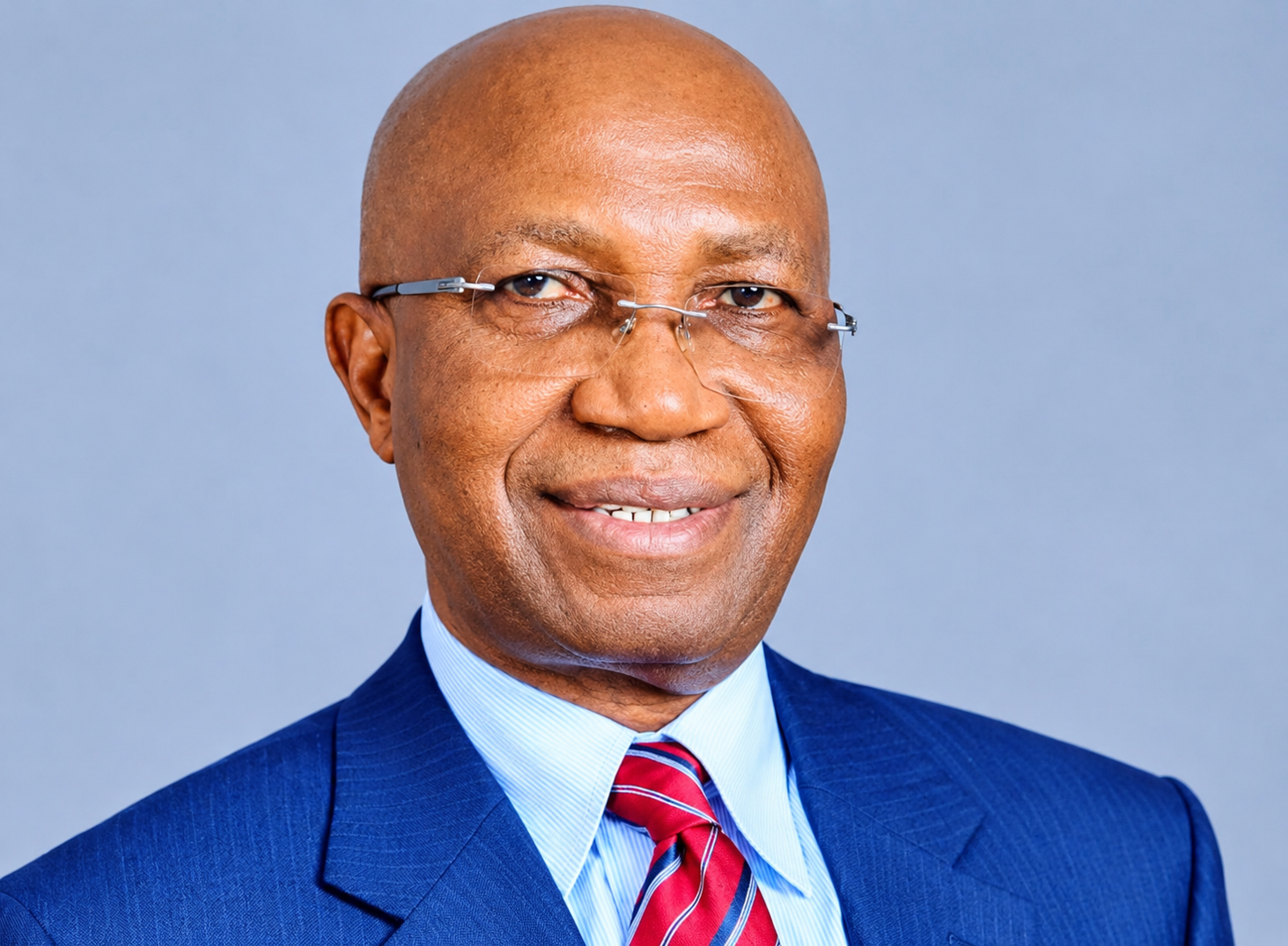
President Bola Tinubu expressed his ambition to govern Nigeria as far back as 1992, when he was serving as a senator during the military administration of former Head of State, General Ibrahim Babangida, Senior Advocate of Nigeria, Chief Wole Olanipekun, has revealed.
Olanipekun made the disclosure on Thursday while recounting his longstanding relationship with Tinubu at the presentation of his six-volume book, Wole Olanipekun Through the Cases, in Abuja.
The event, held at the Body of Benchers Complex, also marked Olanipekun’s 75th birthday, 50 years at the Nigerian Bar and 35 years as a Senior Advocate of Nigeria.
Tinubu attended the ceremony, unveiled the publication and conferred the Grand Commander of the Order of the Niger (GCON) on the senior lawyer.
Speaking at the event, Olanipekun recalled that Tinubu made the declaration during the inauguration of the National Assembly in 1992, when he was a member of the Senate.
According to him, Tinubu addressed his colleagues and told Babangida that members of the National Assembly had a personal interest in the survival of democracy because some of them hoped to govern the country in the future.
Olanipekun said the statement made a lasting impression on him, adding that Tinubu’s emergence as President in 2023 fulfilled the ambition he had expressed more than three decades earlier.
He said, “You said something that hit the card. You told President Babangida that you, every one of us in this country, particularly you senators, had an insurable interest in democracy because one day people like you wanted to govern this country. That was 1992.
“As God will have it, in 2023, you became President of Nigeria. And here you are, seated today as the President of Nigeria. You never knew then, but it is said, it is written, after the abundance of the heart, the mouth speaketh.
“You said it; it came to pass. We started. It was then I got attracted to you, Your Excellency.”
The senior lawyer also recalled Tinubu’s involvement in efforts to challenge the dissolution of the National Assembly following the 1993 military coup led by the late General Sani Abacha.
He said Tinubu and some other senators approached him and his senior colleague, the late Chief G.O.K. Ajayi, SAN, during a meeting at the residence of the late Senator Odi Adewumi on Agoro Doyin Street.
According to Olanipekun, the politicians briefed them to challenge the dissolution of the legislature in court.
He explained that although the lawyers filed an action, they later withdrew it because of the prevailing circumstances at the time.
“At that nocturnal meeting at Agoro Doyin Street, in the residence of late Senator Odi Adewumi, you briefed my boss, one of my bosses in the profession, G.O.K. Ajayi, and myself that we should challenge the dissolution.
“We did file an action, but later withdrew it for exigencies of that time. Shortly thereafter, we didn’t see you because we couldn’t locate our clients and couldn’t be fighting any cause on behalf of a client that we don’t see, because you had disappeared. You had to travel; you had to leave,” he said.
Olanipekun further disclosed that Tinubu later returned and engaged him and other lawyers to work alongside senior lawyer Chi Williams on his legal matters.
He described the President as someone who consistently appreciated the contributions of legal practitioners, recalling a letter Tinubu wrote to him in July 2003 after the conclusion of a legal case involving Mitchell Williams and Tinubu.
According to him, the letter contained commendations that deeply humbled him and would be included in his memoirs.
Olanipekun said, “I’m not doing any campaign, but I’m talking as a lawyer. I’m talking of what I’ve seen.
“I’m not talking of what I’ve witnessed or what I’ve experienced. At first hand, I did not only work for you, Mr President, but you’ve always appreciated lawyers. This is very important to our profession.”
He added that the letter was particularly significant because it reflected Tinubu’s appreciation of his professional contributions.
“You wrote me a letter in July 2003. That letter definitely will go into my memoirs. You said a lot about me.
“I was humbled. That was when we completed the case of Mitchell Williams and Tinubu. It’s in one of these volumes,” he added.
The senior advocate said his experiences working with Tinubu and other political figures reinforced the importance of defending democracy and upholding the rule of law.
He noted that the six-volume publication documented several legal cases handled by his firm, Wole Olanipekun & Co., including matters involving prominent political figures.
The book was unveiled at the ceremony attended by Tinubu and other dignitaries.

The leadership crisis rocking the African Democratic Congress (ADC) has takenOgun ADC Urges Members to Embrace Dialogue, Avoid Litigation Ahead of 2027 another turn, as the Nafiu Gombe-led Board of Trustees (BoT) has asked the Independent National Electoral Commission (INEC) to remove Senator David Mark and Rauf Aregbesola from its records as leaders of the party.
The board also called on the electoral commission to delist all candidates uploaded to its portal by the Mark-led leadership, insisting that such actions were inconsistent with the November 5, 2026, judgment of the Federal High Court in Abuja.
The BoT made the demands in a statement issued by its Chairman, Chief Rufus Ikanmi, who urged INEC to immediately enforce the court’s ruling on the leadership dispute.
Ikanmi maintained that the judgment delivered by Justice Peter Lifu in Suit No. FHC/ABJ/CS/1819/2025, filed by Hon. Nafiu Bala Gombe against the ADC and four others, remained valid, binding and enforceable.
According to him, the judgment had neither been stayed, varied nor set aside by any superior court, making it necessary for INEC to comply with its provisions.
He said, “The judgment of the Honourable Court is valid, binding, and subsisting. It has not been stayed, varied, or set aside by any superior court. INEC, as a statutory body bound by the rule of law, has a constitutional duty to give full effect to it without further delay.”
The BoT chairman specifically urged INEC to remove the names of the David Mark and Rauf Aregbesola-led leadership from its records and recognise only the leadership headed by Gombe.
The board also demanded the removal of all candidates uploaded to the commission’s portal by the Mark-led faction, arguing that the submissions violated the Nigerian Constitution, the Electoral Act 2022 and the ADC constitution.
It further called on INEC to recognise and deal exclusively with the leadership headed by Gombe, which it claimed had been affirmed by the Federal High Court.
Beyond its demands to the electoral commission, the board called on former Vice-President Atiku Abubakar and other individuals allegedly working with the Mark-led faction to suspend campaign activities, rallies and public engagements organised in the name of the ADC.
The BoT warned that continuing such activities without complying with the court judgment could amount to contempt of court.
“Any continued defiance of the judgment of the Federal High Court amounts to contempt of court and a direct assault on constitutional democracy and the rule of law,” Ikanmi said.
The board, however, appealed to ADC members and supporters to remain calm and law-abiding, assuring them of its commitment to peace, unity and the party’s constitutional order.
Background to ADC Leadership Crisis
The latest development follows the November 5, 2026, judgment of the Federal High Court in Abuja, where Justice Peter Lifu nullified the leadership of the ADC led by former Senate President David Mark.
The court also invalidated decisions taken by the party under the Mark-led leadership.
The judgment followed a suit instituted by Nafiu Bala Gombe, a former Deputy National Chairman of the ADC (North-East), who challenged the emergence of Mark and other members of the interim National Working Committee after the resignation of the party’s former National Chairman, Ralph Nwosu.
However, the Mark-led faction has challenged the ruling, filing an appeal against the judgment.
The faction also disclosed that it had submitted an application for a stay of execution pending the hearing and determination of the appeal.
Why INEC Has Yet to Change Its Records
Meanwhile, INEC has reportedly maintained its position on the matter amid the competing demands from the two factions.
Efforts to reach the Chief Press Secretary to the INEC Chairman, Dayo Oketola, for comments were unsuccessful as of the time of filing this report.
However, a report by Arise News on Thursday, citing a senior commission official, attributed INEC’s continued listing of the Mark-led leadership to the pending Notice of Appeal and application for a Stay of Execution relating to the court judgment.
The report added that the commission could not disregard the ongoing appellate proceedings while considering requests for recognition arising from the ruling.
The development has further complicated the ADC leadership dispute, with the Gombe-led BoT insisting on immediate enforcement of the Federal High Court judgment, while the Mark-led faction continues to pursue its appeal and stay application.
The dispute leaves the party’s leadership recognition and the status of candidates uploaded by the rival faction at the centre of the ongoing legal battle.
SEO Package – Nigeria Insight
SEO Headline: ADC Crisis: Gombe-Led BoT Asks INEC to Delist David Mark, Aregbesola, Candidates
Alternative Catchy Headline: ADC Leadership Tussle Deepens as Gombe Faction Demands Removal of Mark, Aregbesola from INEC Records
Meta Description: The Nafiu Gombe-led ADC Board of Trustees has asked INEC to remove David Mark, Rauf Aregbesola and candidates uploaded by the rival faction following a Federal High Court judgment.
Focus Keyphrase: ADC leadership crisis
SEO Keywords/Tags:
ADC leadership crisis
Nafiu Gombe
David Mark
Rauf Aregbesola
INEC
African Democratic Congress
ADC court judgment
Atiku Abubakar
Nigerian politics
ADC leadership dispute
-
 Security4 months ago
NDLEA Declares Alleged Drug Kingpin, Three Associates Wanted, Freezes ₦9.8bn Linked to Syndicate
-
 National Affairs4 months ago
ICPC Uncovers 908 Suspected Ghost Workers Across 50 Federal MDAs, Recovers ₦942 Million
-

 Business/Finance4 months ago
How to Apply for Tunde Onakoya’s ₦250 Million Scholarship Programme and Free Laptop Offer
-

 Judiciary | Public Safety4 months ago
INEC Tells Court Voter Information Is Not Confidential in Emeka Ike’s ₦10bn Lawsuit
-
 Politics4 months ago
Atiku Challenges Tinubu to Reveal Details of ₦15.13bn SUV Procurement in 2026 Budget
-
 Judiciary | Public Safety4 months ago
Court to Rule Friday on NDLEA’s Bid to Destroy ₦480bn Meth Lab in Ogun
-
 Security4 months ago
Family Paid ₦50 Million Ransom to Secure Release of Abducted Kebbi Judge
-
 News4 months ago
2026 Budget: FG Earmarks ₦962.83bn for SUVs, Empowerment Projects Amid Debt Concerns