
2027 Elections
SERAP Gives INEC 7 Days to Prosecute Electoral Violence Suspects

The Socio-Economic Rights and Accountability Project (SERAP) has given the Independent National Electoral Commission (INEC) seven days to initiate the prosecution of persons arrested over reported incidents of electoral and political violence ahead of the 2027 general elections.
The organisation warned that it would take legal action against INEC and its Chairman, Professor Joash Amupitan, if the commission failed to fulfil its statutory responsibilities within the stipulated period.
SERAP made the demand in a letter dated November 14, 2026, and signed by its Deputy Director, Kolawole Oluwadare.
It urged Amupitan to obtain case files and relevant investigation materials from the Nigeria Police Force concerning individuals arrested over reported incidents of electoral and political violence since the commencement of campaigns for the 2027 elections.
The organisation also called on INEC to review the files through its legal officers or appointed legal practitioners and promptly prosecute suspects where available evidence establishes violations of the Electoral Act 2026.
The demand follows several reported incidents of political violence across the country, including an attack on members and supporters of the Nigeria Democratic Congress (NDC) during a town hall meeting in Oregun, Lagos State, on November 12, 2026.
SERAP further urged INEC to press the police to intensify investigations into other reported attacks, identify and arrest suspected perpetrators and their sponsors, and forward relevant evidence to the commission for prosecution.
It also called on the electoral body to exercise its powers under Section 83 of the Electoral Act 2026 by demanding explanations from political parties suspected of involvement in or encouraging prohibited conduct.
According to the organisation, INEC should impose the prescribed fines on political parties that fail to respond to or comply with lawful directives.
SERAP maintained that prosecuting electoral offences was necessary not only to punish offenders but also to discourage further violations and prevent political violence from becoming normalised.
It stated that INEC had a statutory responsibility to prosecute electoral offences and ensure that those responsible were held accountable, irrespective of their political affiliations or positions.
The organisation warned that failure to prosecute suspects could encourage further attacks, deepen impunity and undermine citizens’ participation in the electoral process.
It added that political violence could prevent opposition parties from holding meetings, discourage candidates from reaching voters and expose journalists to intimidation while carrying out their professional duties.
Since campaigns for the 2027 general elections commenced on August 19, 2026, SERAP said several incidents involving attacks on political convoys, party secretariats, rallies and campaign meetings had been reported across the country.
Among the incidents cited were the reported obstruction of the convoy of the NDC presidential candidate, Peter Obi, in Benue State on September 8, and attacks on an NDC ward meeting and a separate Peoples Democratic Party (PDP) rally in Enugu State on September 12.
The organisation also listed the reported attack on the convoy of African Democratic Congress (ADC) senatorial candidate, Herberta Okonofua, in Edo State on October 6, as well as attacks on NDC supporters during the campaign activities of governorship candidate Chinyeaka Ohaa in Enugu State on October 10. One supporter reportedly died following the incident.
Other cases included an attack on supporters of Accord governorship candidate Oriyomi Hamzat during a procession in Ibadan on October 14, which reportedly resulted in one death.
SERAP also referenced an October 22 attack on the convoy of NDC candidate Rollins Offia-Nwali in Ebonyi State, which reportedly left one person dead and three others injured.
It further cited the attack on African Action Congress (AAC) presidential candidate Omoyele Sowore and members of his team in Ado-Ekiti on October 30.
More recent incidents included the reported attack on Obi’s convoy in Calabar on November 4 and an NDC political procession in Asaba on November 7, which reportedly left one person dead and five others injured.
The organisation also raised concerns over the November 12 incident in Lagos, during which suspected armed men allegedly disrupted an NDC town hall meeting.
Journalist Samuel Adebanjo was reportedly assaulted during the incident, while his equipment was seized as he covered the meeting.
SERAP said the reported incidents had resulted in deaths, injuries, destruction of property, attacks on journalists and disruptions of lawful political activities.
It acknowledged that the police had made arrests and taken investigative steps but stressed that arrests alone were insufficient to guarantee accountability.
The organisation insisted that suspects should be prosecuted whenever investigations and available evidence support criminal charges, adding that individuals who organise, finance, direct or sponsor political violence should also be held accountable.
The organisation further maintained that the Electoral Act 2026 provides specific legal provisions against political violence, intimidation and other forms of prohibited conduct.
It cited Section 96(5), which prohibits political parties, aspirants and candidates from retaining, organising, training or equipping individuals or groups to use physical force or coercion to advance political objectives.
Section 96(6), according to SERAP, also prohibits political parties, aspirants and candidates from maintaining or using armed private security organisations, vanguards or other groups to provide security or assist them during campaigns, rallies, processions and elections.
The organisation also referenced Section 97, which prohibits threats involving force or violence during political campaigns to compel individuals to support or oppose a political party or candidate.
It added that Section 120 criminalises disorderly conduct intended to disrupt political meetings, as well as the possession of offensive weapons or missiles at such gatherings.
SERAP argued that these provisions would have little impact if individuals arrested over electoral offences were not subsequently prosecuted.
It particularly highlighted Section 148(2) of the Electoral Act 2026, which provides that prosecutions under the Act must be undertaken by INEC’s legal officers or legal practitioners appointed by the commission.
The organisation said this provision required INEC to work closely with the police and other investigative authorities to ensure that suspects were brought before competent courts whenever sufficient evidence was available.
It also referred to Sections 150 and 151, which empower the commission to delegate its functions and issue regulations and guidelines for the effective implementation of the Act.
SERAP maintained that these provisions reinforced the need for INEC to establish effective arrangements for prosecuting electoral offences.
The organisation warned that without decisive enforcement, political violence could undermine the credibility and legitimacy of the 2027 general elections.
It urged Nigerian authorities to ensure that citizens could freely express political opinions, attend political meetings, support candidates of their choice and participate in campaign activities without fear of violence or intimidation.
SERAP said it expected INEC to implement its recommendations within seven days of receiving or the publication of the letter.
It warned that failure to receive a response within the stipulated period would leave it with no option but to pursue appropriate legal action to compel the commission and its chairman to discharge their statutory responsibilities in the public interest.
The demand places renewed attention on INEC’s enforcement responsibilities as political activities intensify ahead of the 2027 general elections.
2027 Elections
Shettima Says Peter Obi Cannot Match Buhari’s Popularity, Urges Igbos to Build National Alliances
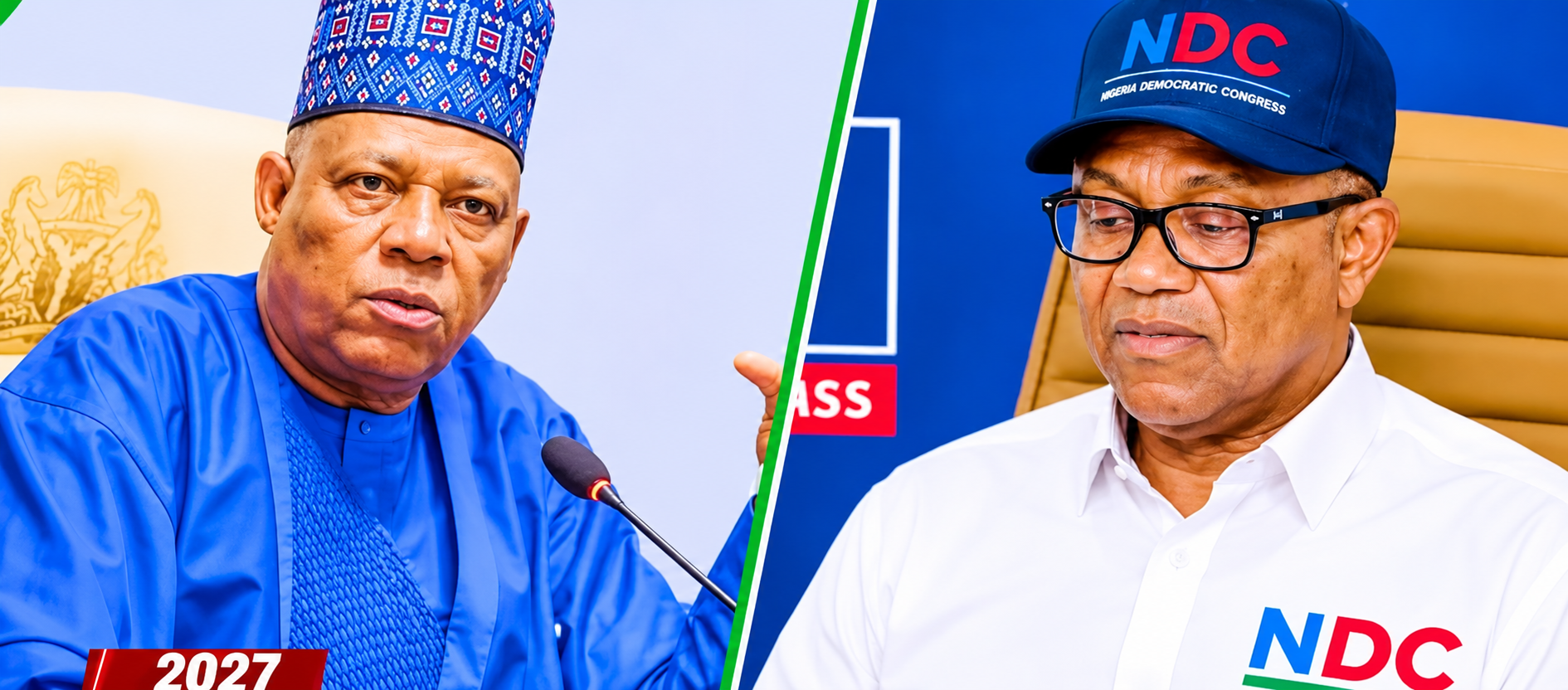
Vice-President Kashim Shettima has declared that former President Muhammadu Buhari enjoyed greater popularity than former Anambra State Governor and presidential candidate of the Nigeria Democratic Congress (NDC), Peter Obi.
Shettima made the remark on Thursday, November 19, 2026, during the All Progressives Congress (APC) presidential campaign rally in Awka, Anambra State, where he urged the people of the South-East to strengthen their political relationships with other regions of the country.
The Vice-President argued that Buhari’s political experience demonstrated that popularity within a particular region was insufficient to secure victory in Nigeria’s presidential elections.
According to Shettima, Buhari contested the presidency in 2003, 2007 and 2011 but failed to win despite enjoying considerable support in Northern Nigeria.
He said the former president had a strong electoral base of approximately 15 million votes in the North but still needed broader national support to achieve his presidential ambition.
“Again, he had a strong base of 15 million votes in Northern Nigeria. He tried again in 2011, he lost. Because having a strong base across the nation is what you need to win a presidential election in a country like Nigeria,” Shettima said.
The Vice-President also cautioned the Igbo people against allowing political disagreements to create divisions between the South-East and other parts of Nigeria.
He maintained that the region remained an important component of the country’s political and economic structure, urging its people to build stronger relationships across regional boundaries.
Shettima claimed that approximately 17 million Igbo people lived in Northern Nigeria, while another 10 million resided in Lagos.
He said the figures highlighted the importance of political engagement beyond the South-East, encouraging the people to take advantage of their widespread presence across the country.
“Don’t let anyone tell you that Igbos are not an essential component of the Nigerian configuration,” he said.
He further appealed to the people of the region to embrace political tolerance and make informed decisions ahead of the 2027 general elections.
Speaking about his personal relationship with the Igbo community, Shettima disclosed that some of his closest friends and aides were from the South-East.
He said he had maintained strong relationships with people from the region and had committed personal resources and time to issues affecting them since assuming office as Vice-President.
Shettima also recalled the political alliance that brought the APC to power in 2015, urging the South-East to strengthen its participation in national politics.
His comments come amid growing political realignments ahead of the 2027 general elections, with Peter Obi expected to remain one of the prominent opposition figures in the contest for national political support.
The remarks also place renewed attention on the debate surrounding regional political influence, national acceptance and the importance of building alliances across Nigeria’s geopolitical zones ahead of the next presidential election.
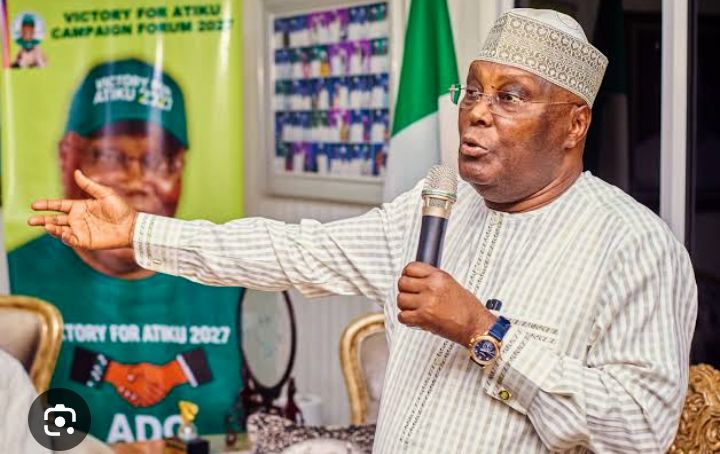
Former Vice-President Atiku Abubakar has called on the Independent National Electoral Commission (INEC) to subject its proposed Artificial Intelligence (AI) system to an independent audit before deploying the technology for managing election results in the 2027 general elections.
Atiku warned that using artificial intelligence in election result management without adequate transparency and safeguards could undermine public confidence in the electoral process.
He expressed concern that algorithms could potentially delay, reject or interfere with the transmission of polling unit results if their operations were not properly monitored.
The former vice-president made the demands in a petition addressed to the INEC Chairman on behalf of the African Democratic Congress (ADC) and other democratic stakeholders.
In a statement issued on Thursday by the Director of Strategic Communication of the ADC Presidential Campaign Council, Phrank Shaibu, Atiku called for the disclosure of the technical and operational details of the proposed system.
He specifically requested access to its source code, training data, discrepancy-detection criteria, as well as the identities of its developers and third-party vendors.
Atiku also urged INEC to grant independent cybersecurity experts, political party representatives and civil society technologists access to the system for a comprehensive assessment ahead of the nationwide mock accreditation exercise scheduled for November 28, 2026.
The former presidential candidate raised concerns over INEC’s planned integration of artificial intelligence and intelligent document processing into the process connecting its Data Verification and Authentication System with the INEC Result Viewing (IReV) portal.
According to him, Nigerians deserve to understand how the technology operates and the extent of its involvement in election result management.
“INEC cannot ask Nigerians to trust a system whose rules they are forbidden to see. If an algorithm can flag a polling unit result sheet, the public deserves to know what triggers that flag, who set the threshold, who can change it and what happens to the result afterward,” he said.
He warned that technical challenges such as poor lighting, unfamiliar handwriting and worn-out paper could cause genuine polling unit result sheets to be flagged or delayed.
Atiku maintained that such limitations should not become grounds for withholding valid election results, insisting that discrepancies must be handled consistently across polling units.
He consequently called on the commission to establish and publicly disclose a clear procedure for reviewing results flagged by the AI system.
He said INEC should explain who would be responsible for reviewing flagged results, how decisions would be documented, the process for notifying political parties and how errors could be challenged.
Atiku further insisted that artificial intelligence should serve strictly as an administrative tool under human supervision and should not be permitted to delete, alter or permanently block election results.
He also asked the electoral commission to reaffirm the legal status of Form EC8A, the polling unit result sheet completed and signed by presiding officers and party agents.
“The polling unit result sheet, Form EC8A, records what happened where the people voted. INEC must publicly reaffirm the legal status of the physical form completed and signed at the polling unit, and explain how it will resolve any conflict between that document and an AI assessment.
“A machine’s verdict cannot be allowed to quietly displace the evidence witnessed by voters and party agents,” he added.
The former vice-president also proposed that political parties be given real-time monitoring access through a dedicated dashboard or observer interface.
He said such access would enable parties to monitor results flagged by the system, upload delays and submissions that might be blocked during elections.
Atiku urged the National Assembly to summon INEC’s leadership and its Information and Communication Technology Directorate to explain the system’s design, operational safeguards and arrangements for an independent audit.
He also called on election observers and international partners to incorporate the digital handling and transmission of results into their election monitoring activities.
Similarly, he advised voters to document results as announced and displayed at their respective polling units to provide records that could be compared with electronically uploaded results.
Atiku linked the demand for transparency to his campaign’s promise of an affordable life, arguing that Nigerians must be allowed to determine their political future without technological interference.
“Voters must be free to accept or reject that promise at the ballot box. No hidden algorithm should stand between a struggling family’s vote and the change that family hopes to see,” he said.
He urged INEC to address the concerns before public mistrust surrounding the proposed technology escalated into an electoral crisis.
INEC’s IReV portal provides public access to scanned copies of polling unit result sheets. However, the portal is distinct from the statutory process through which election results are collated and declared.
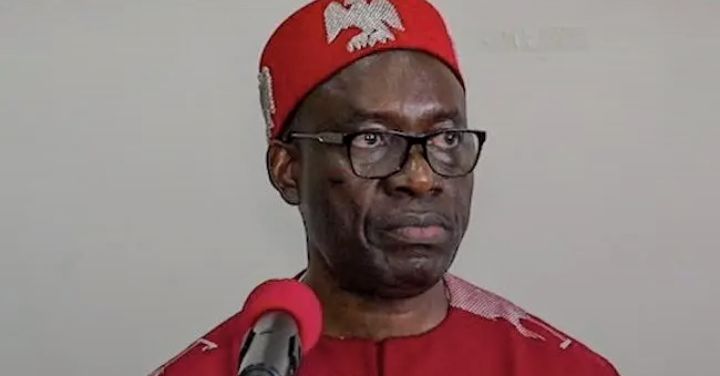
Anambra State Governor, Professor Chukwuma Soludo, has formally declared the support of the All Progressives Grand Alliance (APGA) for President Bola Tinubu’s re-election bid in the 2027 general election.
Soludo announced the party’s decision on Thursday while handing over the APGA flag to Vice-President Kashim Shettima during a joint presidential campaign rally organised by APGA and the All Progressives Congress (APC) in Awka, Anambra State.
The rally, held at Dr Alex Ekwueme Square, was tagged “SoluTinubu 2027” and attracted supporters of both political parties, who turned out in their respective party colours with flags and campaign materials.
Speaking at the event, the governor said APGA had maintained an alliance with the party at the centre since 2011, noting that the relationship had been sustained through cooperation between elected representatives of both parties.
Soludo explained that APGA lawmakers in the National Assembly had consistently worked with their APC counterparts, describing the relationship as an example of political cooperation.
“APGA has always been in solidarity with the party at the centre, and therefore, that partnership has meant that all the APGA members of the National Assembly in Abuja, they work with the caucus of the APC and the National Assembly,” he said.
The governor also disclosed that the Speaker of the House of Representatives had commended the cooperation between APGA and APC lawmakers.
He said the Speaker described the APGA caucus as one of the most cooperative groups in the House of Representatives.
Describing Thursday’s gathering as a joint rally, Soludo said the partnership between the two parties should continue in the interest of progress and national development.
“Now, I want to emphasise that this flag, we are handing it over in the spirit of progressives working together. Here in Anambra, we are united for one candidate, and that candidate is President Bola Tinubu and Vice-President Shettima,” he said.
However, Soludo clarified that the alliance would not prevent APGA and APC from fielding separate candidates for other elective positions, including the Senate, House of Representatives and State House of Assembly.
He explained that candidates who emerge victorious would cooperate with the caucus of the other party at their respective legislative levels.
According to him, APGA lawmakers elected into the National Assembly would work with the APC caucus, while APC lawmakers elected into the Anambra State House of Assembly would cooperate with the APGA caucus.
“That is in the spirit of progressives working together,” the governor added.
Soludo subsequently announced that APGA’s National Working Committee, National Executive Committee and the wider party membership had resolved to adopt Tinubu as their preferred candidate for the 2027 presidential election.
He urged APGA members across the country to mobilise support and votes for the President and his running mate, Shettima.
The governor said the decision was informed by the party’s commitment to national unity and its position that a Southern President should be allowed to complete his tenure before power returns to the North.
“APGA National Working Committee, National Executive Committee, and the entire APGA family, we have resolved to adopt, in the spirit of one Nigeria, united Nigeria, in the spirit of solidarity with a Southern President to complete his term before the presidency goes back to the North,” he said.
Soludo further linked the endorsement to the principles of progressivism, cooperative federalism and national unity.
He then formally handed over the party’s flag to Shettima, declaring APGA’s readiness to campaign and mobilise support for Tinubu and the Vice-President ahead of the 2027 election.
“In the spirit of progressivism, in the spirit of cooperative and competitive federalism, in the spirit of unity and progress of one indivisible united Nigeria, we hereby handing our flag that all APGA faithful all over Nigeria will campaign and mobilise votes for President Bola Tinubu and his vice-presidential candidate, Senator Kashim Shettima, GCON. Therefore, we hand over to you,” Soludo said.
-
 Security4 months ago
NDLEA Declares Alleged Drug Kingpin, Three Associates Wanted, Freezes ₦9.8bn Linked to Syndicate
-
 National Affairs4 months ago
ICPC Uncovers 908 Suspected Ghost Workers Across 50 Federal MDAs, Recovers ₦942 Million
-

 Business/Finance4 months ago
How to Apply for Tunde Onakoya’s ₦250 Million Scholarship Programme and Free Laptop Offer
-
 Judiciary | Public Safety4 months ago
INEC Tells Court Voter Information Is Not Confidential in Emeka Ike’s ₦10bn Lawsuit
-
 Politics4 months ago
Atiku Challenges Tinubu to Reveal Details of ₦15.13bn SUV Procurement in 2026 Budget
-
 Judiciary | Public Safety4 months ago
Court to Rule Friday on NDLEA’s Bid to Destroy ₦480bn Meth Lab in Ogun
-
 Security4 months ago
Family Paid ₦50 Million Ransom to Secure Release of Abducted Kebbi Judge
-
 News4 months ago
2026 Budget: FG Earmarks ₦962.83bn for SUVs, Empowerment Projects Amid Debt Concerns