
2027 Elections
Dickson Urges Abdulsalami, INEC to Convene Summit Over 2027 Election Violence

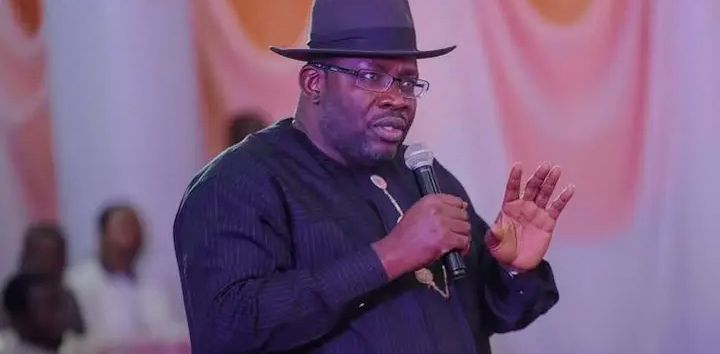
The National Leader of the Nigeria Democratic Congress (NDC), Senator Seriake Dickson, has called on the National Peace Committee, the Independent National Electoral Commission (INEC) and security agencies to urgently convene an all-party summit to address rising political violence ahead of the 2027 general elections.
Dickson warned that increasing attacks on NDC members, candidates and supporters could threaten the credibility and peaceful conduct of the forthcoming elections if decisive measures were not taken to address the situation.
The former Bayelsa State governor made the call in a statement issued on Sunday, urging the Inter-Party Advisory Council (IPAC) and the National Peace Committee, chaired by former Head of State, General Abdulsalami Abubakar, to work with INEC and security agencies to tackle growing political tensions.
He maintained that violence had no place in a democratic society, stressing that political disagreements should not degenerate into attacks, intimidation or other forms of hostility.
“I am deeply concerned about the increasing incidents of violence and attacks targeted against the Nigeria Democratic Congress and its candidates and supporters. Several party leaders and I have had cause to speak against this in the past.
“Whatever the circumstances, violence has no place in our democratic process.
“In view of this disturbing development, I call on the Inter-Party Advisory Council and the Gen Abdulsalami-led Peace Committee in conjunction with INEC and the security agencies to urgently convene an all-party summit to address this growing monster before it consumes our democracy,” he said.
Dickson explained that the proposed summit would provide an opportunity for political parties to reaffirm their commitment to peaceful, fair and transparent elections.
He further cautioned that continued political violence could create an atmosphere of tension and insecurity capable of undermining the 2027 electoral process even before voting begins.
The call comes about a month after the National Peace Committee raised concerns over increasing political tensions and cautioned President Bola Tinubu, former Vice-President Atiku Abubakar, Labour Party presidential candidate in the 2023 election, Peter Obi, and other political actors against inflammatory statements and incitement ahead of the 2027 polls.
The committee, chaired by Abubakar and convened by the Catholic Bishop of Sokoto Diocese, Most Rev. Matthew Kukah, had also disclosed that it recorded 60 election-related incidents across the country within one month.
The incidents reportedly included political violence, intimidation, threats, attacks on political activities and the spread of misinformation.
In a joint statement signed by Abubakar and Kukah, the committee urged political leaders to exercise restraint and promote peaceful political engagement as preparations for the elections gather momentum.
Meanwhile, Dickson disclosed that he had held discussions with party leaders over concerns recently raised by some NDC officials, directing that their grievances be addressed and their interests considered.
He said arrangements were also being made to appoint party members to committees and directorates of the National Campaign Council.
According to him, the party leadership had been directed to expedite the release of the lists and provide financial support to state chapters to strengthen their operations ahead of the elections.
The former governor also urged the party’s National Assembly, state assembly and governorship candidates to prioritise the recruitment, verification, identification and training of polling agents.
He said the party was working towards ensuring adequate representation at polling units nationwide, adding that candidates should collaborate with the presidential campaign team and other political parties, where necessary, to strengthen their network of polling agents.
Dickson stressed that candidates must take an active role in the process because they would be on the ballot and would ultimately be responsible for defending the party’s votes.
He added that the compilation and decentralisation of agents’ lists for uploading should be completed quickly to enable training to begin later in November and continue throughout December.
“The 2027 election is an agent-based election,” Dickson said.






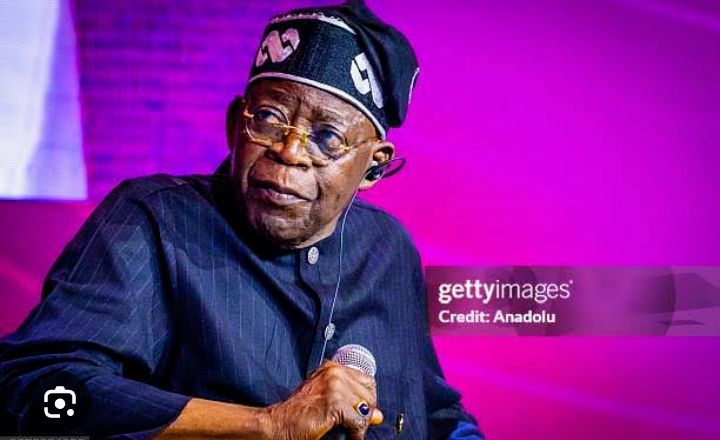
Leaders of the All Progressives Congress (APC) and the Presidential Campaign Council Support Group Directorate across the South-West have intensified grassroots mobilisation for President Bola Tinubu’s re-election ahead of the 2027 general elections.
The party leaders made the call on Friday during a town hall meeting held at Onirekere in Ibadan North-West Local Government Area of Oyo State, where they highlighted the achievements of the Tinubu administration and urged residents to support the President’s second-term ambition.
Speaking at the event, the Director-General of the President Bola Ahmed Tinubu Support Group and former Deputy Governor of Nasarawa State, Silas Agara, said the directorate had adopted interactive town hall meetings to engage citizens directly rather than relying solely on traditional solidarity walks.
Agara explained that the approach followed an earlier engagement in Awka, Anambra State, and was designed to provide opportunities for residents to assess the administration’s achievements through verifiable information.
He said, “This gathering is designed to give all our people there the conducive environment to be able to state clearly, in clear terms, what Mr President has done in every state.”
He urged residents and support groups across the South-West to intensify their mobilisation efforts to secure massive voter turnout for Tinubu in January 2027.
At the meeting, the Minister of Power, Joseph Tegbe, represented by Rasheed Adegboyega, highlighted the administration’s interventions in the electricity sector.
Tegbe said approximately 80 million Nigerians, representing about 40 per cent of the country’s population, lacked access to electricity when Tinubu assumed office in 2023.
He disclosed that the Federal Government had secured a $750m publicly funded facility through the Rural Electrification Agency to attract an additional $1.1bn in private-sector investment for 1,120 isolated mini-grids and 250 interconnected mini-grids nationwide.
According to him, another $500m had been earmarked for ongoing projects under the Ministry of Power.
He also disclosed that eight federal institutions, including the University of Ibadan, University College Hospital, University of Abuja and University of Maiduguri, had been removed from the national electricity grid under the second phase of the Energising Education Programme.
The initiative, he said, was aimed at reducing pressure on the country’s ageing electricity infrastructure.
Tegbe added that project compendiums covering all six geopolitical zones had been distributed to support groups to strengthen their door-to-door campaigns.
Oyo councils receive N26bn monthly allocations
Former Oyo State Commissioner for Local Government Affairs, Bimbo Kolade, also highlighted the increase in federal allocations to local government areas under the Tinubu administration.
Comparing allocations across three administrations, Kolade said Oyo State’s 33 local government councils received an average of N1.8bn monthly during the administration of former Governor Christopher Alao-Akala and N2.4bn under former Governor Abiola Ajimobi.
He, however, claimed that monthly allocations had increased to an average of N26bn under the current administration.
Kolade recalled that Alao-Akala executed five kilometres of roads in each local government, amounting to 165 kilometres across the state.
He added that Ajimobi tarred 637 kilometres of asphalt roads and opened 1,033 kilometres of earth roads across the councils.
Questioning how the current N26bn monthly allocations were being utilised in local government areas such as Oriire and Egbeda, Kolade urged residents to support Tinubu’s re-election bid, arguing that a second term would help entrench full local government autonomy.
NRC plans South-West rail expansion
Meanwhile, the Managing Director of the Nigerian Railway Corporation, Kayode Opeifa, described the Lagos-Ibadan standard-gauge railway as the country’s most functional rail corridor.
Opeifa said train frequency had increased since 2023, with services operating twice daily from Thursday to Sunday and once daily from Monday to Wednesday.
He also highlighted the contribution of container cargo operations at Moniya to economic activities in Oyo State.
The NRC chief disclosed that plans were underway to extend passenger rail services from Ibadan to Osogbo in Osun State and Ado-Ekiti in Ekiti State under a four-year South-West rail master plan.
He said the plan was being developed in partnership with the South-West Development Commission.
Opeifa further announced that a 50 per cent reduction in rail fares would soon be introduced for holiday travellers.
Tinubu’s reforms prevented financial collapse – Rahman
The Senior Special Assistant to the President on Media-Related Issues, Tunde Rahman, defended the administration’s economic policies, saying Tinubu’s reforms saved Nigeria from total financial collapse.
Rahman said the policies had helped stabilise the naira and increased the country’s Gross Domestic Product growth to approximately 4.2 per cent.
He also highlighted several social intervention programmes and infrastructure projects, including the Nigerian Education Loan Fund, which provides students with a monthly stipend of N20,000, and the clearance of N768bn in outstanding pension arrears.
On infrastructure, Rahman listed major federal road projects in Oyo State, including the N276bn Ilorin-Ogbomoso Highway and the N265bn Iseyin-Oyo-Ogbomoso Road.
Other projects mentioned were the Iwo township road, Ibadan-Ijaye-Ago-Are, Iseyin-Okeho-Kishi, Ogbomoso-Igbeti and Ibadan-Abeokuta corridors.
In their separate remarks, the Oyo State APC Chairman and former Deputy Governor, Moses Adeyemo, and the party’s governorship candidate, Senator Sharafadeen Alli, urged party members and residents to prepare for the 2027 elections.
They called on eligible voters to ensure their Permanent Voter Cards were ready, participate massively in the elections and protect their votes at polling units.
Alli also commended the Tinubu administration for its developmental initiatives.
Similarly, a presidential aide, Sunday Dare, highlighted ongoing federal road interventions across 12 routes in Oyo State and emerging opportunities for cargo rail operations between Omi Adio and Erunmu.
The meeting formed part of the APC’s broader efforts to strengthen its grassroots structures and build support for Tinubu’s re-election campaign across the South-West ahead of the 2027 general elections.
SEO package
SEO headline: 2027: APC Leaders Intensify South-West Mobilisation for Tinubu’s Re-election
Alternative captivating headlines:
2027: APC Leaders Rally South-West Voters Behind Tinubu’s Second-Term Bid
Tinubu’s Re-election: APC Begins Fresh Grassroots Mobilisation in South-West
APC Leaders Highlight Tinubu’s Achievements, Seek South-West Support for 2027
Meta description:
APC leaders in the South-West have intensified grassroots mobilisation for President Bola Tinubu’s 2027 re-election, highlighting power, roads, rail and economic reforms.
Focus keyphrase: Tinubu 2027 re-election
SEO keywords and tags:
Tinubu 2027
APC South-West
Tinubu re-election
2027 general elections
APC mobilisation
Oyo State politics
Nigerian politics
Tinubu administration
South-West development
Presidential Campaign Council
2027 Elections
Shettima Says Peter Obi Cannot Match Buhari’s Popularity, Urges Igbos to Build National Alliances
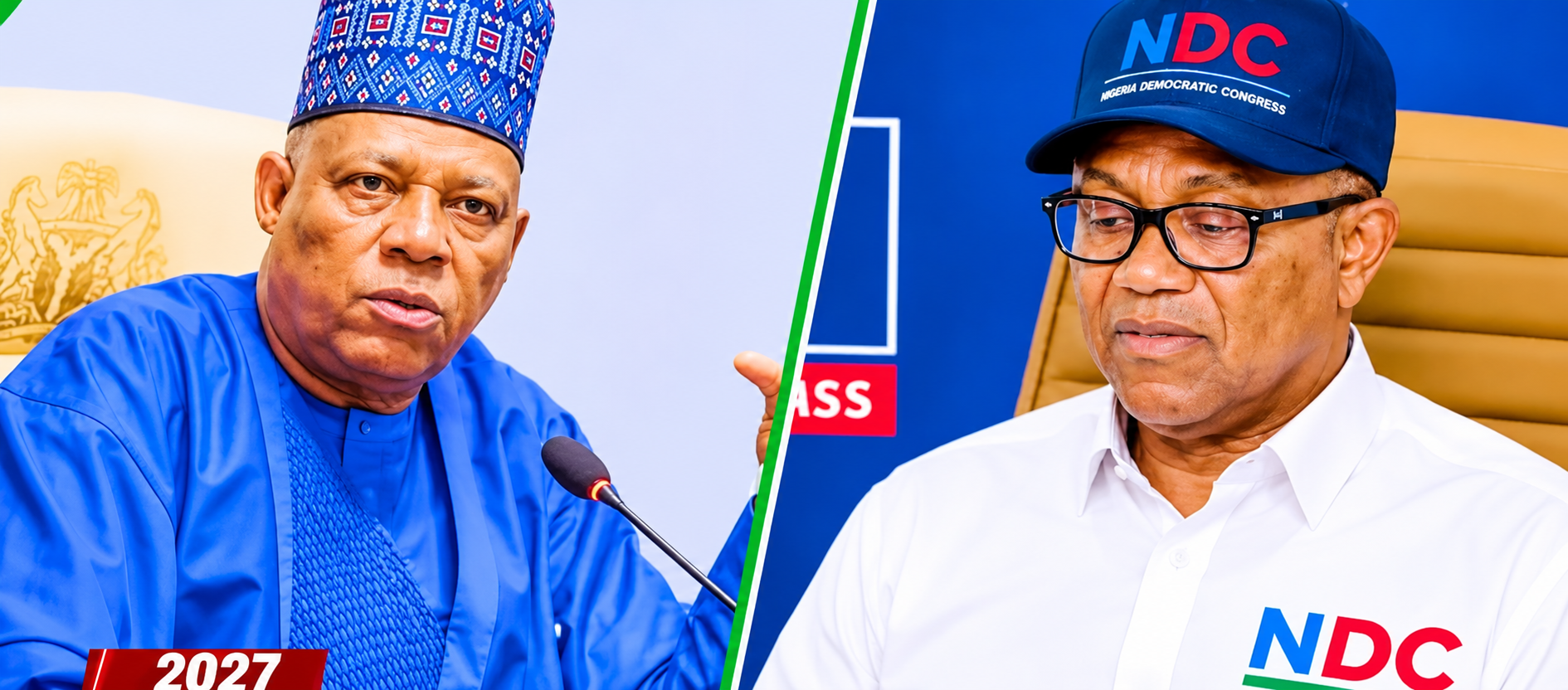
Vice-President Kashim Shettima has declared that former President Muhammadu Buhari enjoyed greater popularity than former Anambra State Governor and presidential candidate of the Nigeria Democratic Congress (NDC), Peter Obi.
Shettima made the remark on Thursday, November 19, 2026, during the All Progressives Congress (APC) presidential campaign rally in Awka, Anambra State, where he urged the people of the South-East to strengthen their political relationships with other regions of the country.
The Vice-President argued that Buhari’s political experience demonstrated that popularity within a particular region was insufficient to secure victory in Nigeria’s presidential elections.
According to Shettima, Buhari contested the presidency in 2003, 2007 and 2011 but failed to win despite enjoying considerable support in Northern Nigeria.
He said the former president had a strong electoral base of approximately 15 million votes in the North but still needed broader national support to achieve his presidential ambition.
“Again, he had a strong base of 15 million votes in Northern Nigeria. He tried again in 2011, he lost. Because having a strong base across the nation is what you need to win a presidential election in a country like Nigeria,” Shettima said.
The Vice-President also cautioned the Igbo people against allowing political disagreements to create divisions between the South-East and other parts of Nigeria.
He maintained that the region remained an important component of the country’s political and economic structure, urging its people to build stronger relationships across regional boundaries.
Shettima claimed that approximately 17 million Igbo people lived in Northern Nigeria, while another 10 million resided in Lagos.
He said the figures highlighted the importance of political engagement beyond the South-East, encouraging the people to take advantage of their widespread presence across the country.
“Don’t let anyone tell you that Igbos are not an essential component of the Nigerian configuration,” he said.
He further appealed to the people of the region to embrace political tolerance and make informed decisions ahead of the 2027 general elections.
Speaking about his personal relationship with the Igbo community, Shettima disclosed that some of his closest friends and aides were from the South-East.
He said he had maintained strong relationships with people from the region and had committed personal resources and time to issues affecting them since assuming office as Vice-President.
Shettima also recalled the political alliance that brought the APC to power in 2015, urging the South-East to strengthen its participation in national politics.
His comments come amid growing political realignments ahead of the 2027 general elections, with Peter Obi expected to remain one of the prominent opposition figures in the contest for national political support.
The remarks also place renewed attention on the debate surrounding regional political influence, national acceptance and the importance of building alliances across Nigeria’s geopolitical zones ahead of the next presidential election.
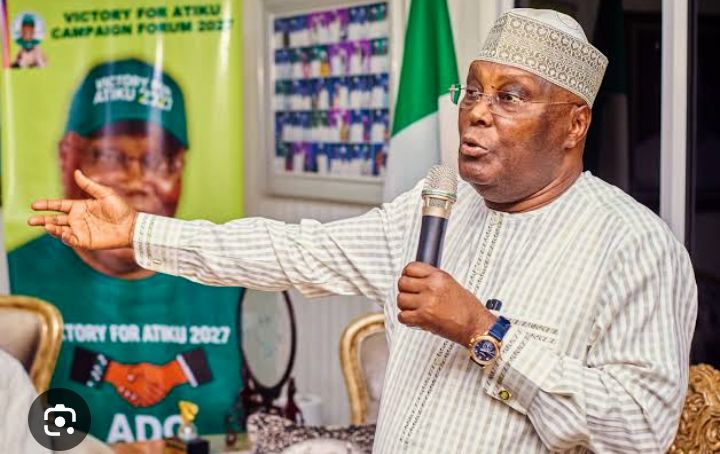
Former Vice-President Atiku Abubakar has called on the Independent National Electoral Commission (INEC) to subject its proposed Artificial Intelligence (AI) system to an independent audit before deploying the technology for managing election results in the 2027 general elections.
Atiku warned that using artificial intelligence in election result management without adequate transparency and safeguards could undermine public confidence in the electoral process.
He expressed concern that algorithms could potentially delay, reject or interfere with the transmission of polling unit results if their operations were not properly monitored.
The former vice-president made the demands in a petition addressed to the INEC Chairman on behalf of the African Democratic Congress (ADC) and other democratic stakeholders.
In a statement issued on Thursday by the Director of Strategic Communication of the ADC Presidential Campaign Council, Phrank Shaibu, Atiku called for the disclosure of the technical and operational details of the proposed system.
He specifically requested access to its source code, training data, discrepancy-detection criteria, as well as the identities of its developers and third-party vendors.
Atiku also urged INEC to grant independent cybersecurity experts, political party representatives and civil society technologists access to the system for a comprehensive assessment ahead of the nationwide mock accreditation exercise scheduled for November 28, 2026.
The former presidential candidate raised concerns over INEC’s planned integration of artificial intelligence and intelligent document processing into the process connecting its Data Verification and Authentication System with the INEC Result Viewing (IReV) portal.
According to him, Nigerians deserve to understand how the technology operates and the extent of its involvement in election result management.
“INEC cannot ask Nigerians to trust a system whose rules they are forbidden to see. If an algorithm can flag a polling unit result sheet, the public deserves to know what triggers that flag, who set the threshold, who can change it and what happens to the result afterward,” he said.
He warned that technical challenges such as poor lighting, unfamiliar handwriting and worn-out paper could cause genuine polling unit result sheets to be flagged or delayed.
Atiku maintained that such limitations should not become grounds for withholding valid election results, insisting that discrepancies must be handled consistently across polling units.
He consequently called on the commission to establish and publicly disclose a clear procedure for reviewing results flagged by the AI system.
He said INEC should explain who would be responsible for reviewing flagged results, how decisions would be documented, the process for notifying political parties and how errors could be challenged.
Atiku further insisted that artificial intelligence should serve strictly as an administrative tool under human supervision and should not be permitted to delete, alter or permanently block election results.
He also asked the electoral commission to reaffirm the legal status of Form EC8A, the polling unit result sheet completed and signed by presiding officers and party agents.
“The polling unit result sheet, Form EC8A, records what happened where the people voted. INEC must publicly reaffirm the legal status of the physical form completed and signed at the polling unit, and explain how it will resolve any conflict between that document and an AI assessment.
“A machine’s verdict cannot be allowed to quietly displace the evidence witnessed by voters and party agents,” he added.
The former vice-president also proposed that political parties be given real-time monitoring access through a dedicated dashboard or observer interface.
He said such access would enable parties to monitor results flagged by the system, upload delays and submissions that might be blocked during elections.
Atiku urged the National Assembly to summon INEC’s leadership and its Information and Communication Technology Directorate to explain the system’s design, operational safeguards and arrangements for an independent audit.
He also called on election observers and international partners to incorporate the digital handling and transmission of results into their election monitoring activities.
Similarly, he advised voters to document results as announced and displayed at their respective polling units to provide records that could be compared with electronically uploaded results.
Atiku linked the demand for transparency to his campaign’s promise of an affordable life, arguing that Nigerians must be allowed to determine their political future without technological interference.
“Voters must be free to accept or reject that promise at the ballot box. No hidden algorithm should stand between a struggling family’s vote and the change that family hopes to see,” he said.
He urged INEC to address the concerns before public mistrust surrounding the proposed technology escalated into an electoral crisis.
INEC’s IReV portal provides public access to scanned copies of polling unit result sheets. However, the portal is distinct from the statutory process through which election results are collated and declared.
-
 Security4 months ago
NDLEA Declares Alleged Drug Kingpin, Three Associates Wanted, Freezes ₦9.8bn Linked to Syndicate
-
 National Affairs4 months ago
ICPC Uncovers 908 Suspected Ghost Workers Across 50 Federal MDAs, Recovers ₦942 Million
-

 Business/Finance4 months ago
How to Apply for Tunde Onakoya’s ₦250 Million Scholarship Programme and Free Laptop Offer
-
 Judiciary | Public Safety4 months ago
INEC Tells Court Voter Information Is Not Confidential in Emeka Ike’s ₦10bn Lawsuit
-
 Politics4 months ago
Atiku Challenges Tinubu to Reveal Details of ₦15.13bn SUV Procurement in 2026 Budget
-
 Judiciary | Public Safety4 months ago
Court to Rule Friday on NDLEA’s Bid to Destroy ₦480bn Meth Lab in Ogun
-
 Security4 months ago
Family Paid ₦50 Million Ransom to Secure Release of Abducted Kebbi Judge
-
 News4 months ago
2026 Budget: FG Earmarks ₦962.83bn for SUVs, Empowerment Projects Amid Debt Concerns