
Politics
Wike Presents SUVs to FCT Traditional Rulers, Promises Palaces in 2027 Budgeting

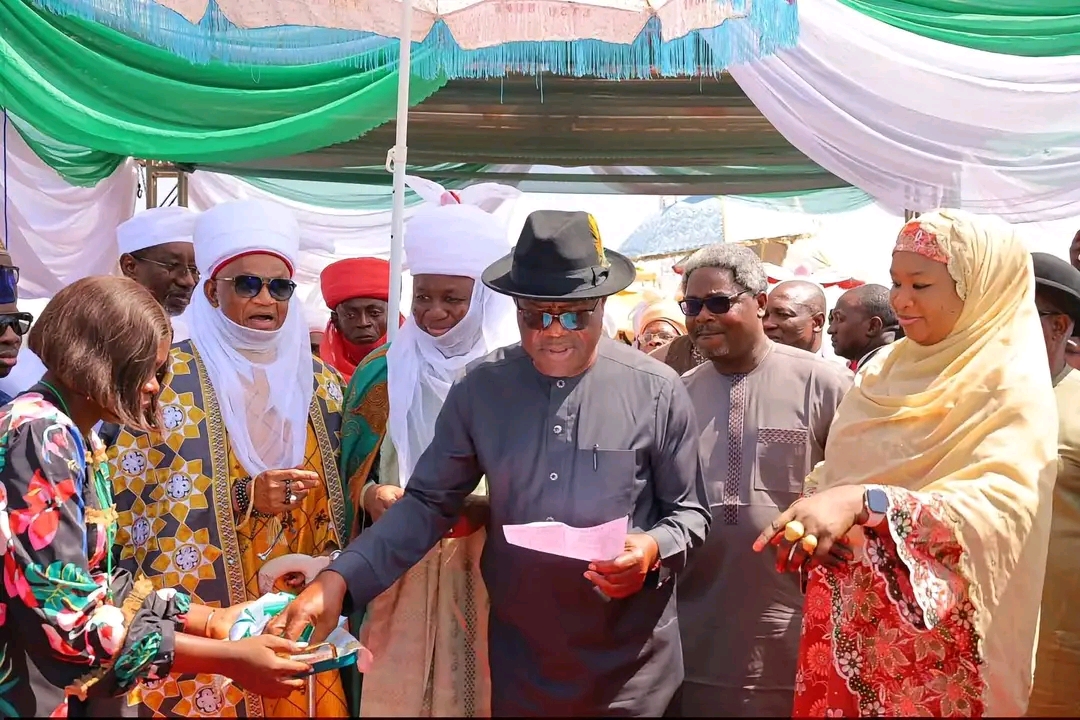
Federal Capital Territory (FCT) Minister Nyesom Wike has presented brand-new Sports Utility Vehicles (SUVs), certificates, letters and staffs of office to newly upgraded first- and second-class traditional rulers across 16 chiefdoms in the territory.
The presentation, held in Abuja on Friday, November 20, 2026, also marked the elevation of traditional stools after nearly 29 years, a development Wike attributed to President Bola Tinubu’s approval under the Renewed Hope Agenda.
 At the ceremony, the minister announced plans to upgrade additional chiefdoms in the coming months and provide befitting palaces for first-class traditional rulers through the 2027 budget, subject to available funds.
The development represents a significant change in the recognition and institutional support extended to traditional rulers in the FCT, where several communities have reportedly waited decades for their traditional leadership structures to receive higher official recognition.
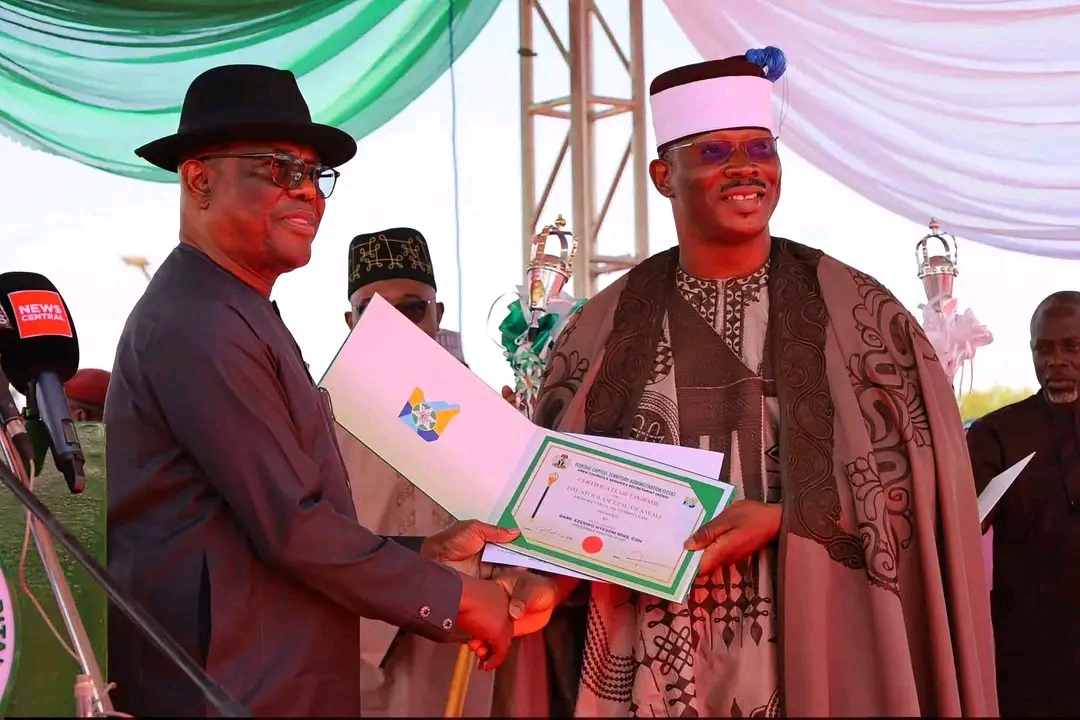 Wike described the elevation exercise as a historic development, recalling that since the establishment of the FCT Traditional Rulers Council in 1997, only the stool of the Ona of Abaji had previously been elevated.
He said the latest exercise addressed a longstanding demand by traditional rulers who had continued to serve their communities without the recognition they had sought.
According to the minister, the approval was granted by President Tinubu as part of the administration’s commitment to inclusive governance and closer engagement with traditional institutions.
The newly upgraded rulers received certificates, letters of office and staffs of office during the ceremony, alongside the official vehicles.
The Sarkin Karshi, Alhaji Ismaila Mohammed, who spoke on behalf of the newly upgraded first-class chiefs, described the development as the fulfilment of an agitation that began nearly three decades ago.
He recalled that some traditional rulers who participated in the struggle for recognition in 1997 had died without witnessing its outcome.
The exercise covers traditional rulers from 16 chiefdoms across the Federal Capital Territory.
Wike Promises Palaces Through 2027 Budget
Beyond the presentation of vehicles and official instruments of recognition, Wike announced plans to provide befitting palaces for first-class traditional rulers through the FCT Administration’s 2027 budget.
He said the administration would first prioritise first-class chiefs before extending the intervention to second-class traditional rulers.
The minister, however, made the commitment subject to the financial capacity of the administration and the resources available in the proposed budget.
“I do agree with you. By the grace of God, in the next 2027 budget, we’ll see what the funds can take and make sure that, at the end of the day, all the first-class chiefs are taken care of. Then we’ll move to the second class,” he said.
The promise followed an appeal by former senator Philip Aduda, who had called for the provision of befitting palaces for traditional rulers in the territory.
Wike also assured traditional rulers whose chiefdoms had not yet been upgraded that the exercise would continue in the coming months.
The proposed palace construction is therefore a budget commitment rather than an already funded or completed project. Its implementation will depend on the 2027 budgetary provisions and available resources.
The presentation of official vehicles also attracted attention following criticism in some quarters over the decision to provide SUVs to traditional rulers.
Responding to the criticism, Wike rejected suggestions that the vehicles amounted to political inducements or bribery.
He argued that traditional rulers deserved institutional support because of their responsibilities in community mobilisation, conflict resolution, maintaining peace and supporting grassroots development.
The minister questioned why government officials and political appointees enjoyed official vehicles while traditional rulers, who perform important functions within their communities, were expected to operate without similar logistical assistance.
He maintained that providing vehicles would improve the ability of monarchs to move around their domains, attend to community concerns and engage with government officials.
The minister also directed chairmen of the six FCT area councils to provide logistical support, particularly fuel, to ensure the vehicles are effectively utilised.
The instruction means the provision of SUVs is accompanied by an expectation that the area councils will support their day-to-day operation.
Wike said traditional institutions remained important to community stability and the implementation of government development programmes.
He recalled that shortly after the Tinubu administration assumed office in 2023, the President directed government officials to visit the six area councils, engage traditional rulers and identify the needs of local communities.
According to the minister, the administration subsequently addressed some of the concerns raised during those engagements, including rural road construction, the provision of police stations and residential accommodation for security personnel.
He argued that traditional rulers played an important role in organising communities and creating conditions that allow government projects to proceed.
The FCT Minister of State, Dr Mariya Mahmoud, also described the elevation and presentation of official instruments as an important step towards strengthening traditional institutions and promoting inclusive governance.
She urged the newly recognised rulers to promote peace, unity and harmonious relationships among the diverse communities under their leadership.
The ceremony attracted members of the National Assembly and other stakeholders, who commended the administration for recognising the traditional institutions.
Chairman of the Senate Committee on FCT, Senator Ibrahim Mohammed Bomai, congratulated the upgraded traditional rulers and urged them to justify the recognition through fair and inclusive leadership.
He particularly called on the monarchs to give women and young people greater opportunities to participate in decisions affecting their communities.
Bomai also assured the traditional rulers that the Senate Committee on FCT would continue working with the FCT Administration to address community needs and promote development.
Similarly, Senator David Jimkuta, Chairman of the Senate Committee on FCT Area Councils and Ancillary Matters, commended the recognition exercise and encouraged the monarchs to cooperate with the administration in advancing grassroots development.
The Etsu Nupe, Alhaji Yahaya Abubakar, who chairs the Coordinating Committee of the National Council of Traditional Rulers of Nigeria, welcomed the provision of official vehicles, saying they would help address mobility challenges facing traditional institutions.
He urged the newly upgraded rulers to match their elevated status with dedication, leadership capacity and commitment to serving their communities.
Speaking on behalf of the second-class chiefs, the Emir of Jiwa, Alhaji Idris Musa, also advised the monarchs to measure their relevance by their service to the people, maintenance of peace and contribution to community development rather than relying solely on their traditional titles.
What the Development Means for FCT Communities
The elevation of traditional stools and provision of official vehicles represent an expansion of formal recognition and institutional support for traditional rulers in the FCT.
Traditional institutions often serve as intermediaries between government and local communities, particularly in areas involving cultural preservation, communal disputes, public mobilisation and local security.
The latest intervention could strengthen that relationship if the promised support translates into improved community engagement and measurable development outcomes.
However, the announcement of palace construction also raises questions about implementation, funding priorities and the distribution of public resources.
The 2027 budget will provide a clearer indication of the administration’s capacity to fulfil the promise, including the number of palaces to be constructed, their proposed locations and the resources allocated to the projects.
For the newly upgraded traditional rulers, the recognition comes with expectations of greater responsibility.
Their ability to promote inclusive leadership, peaceful coexistence and community development will be an important measure of the value of the exercise.
The FCT Administration has indicated that further elevations and institutional interventions are planned. Whether these commitments are sustained will depend on their implementation in the coming months and years.


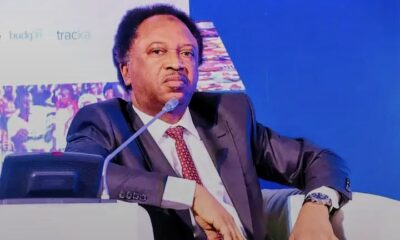





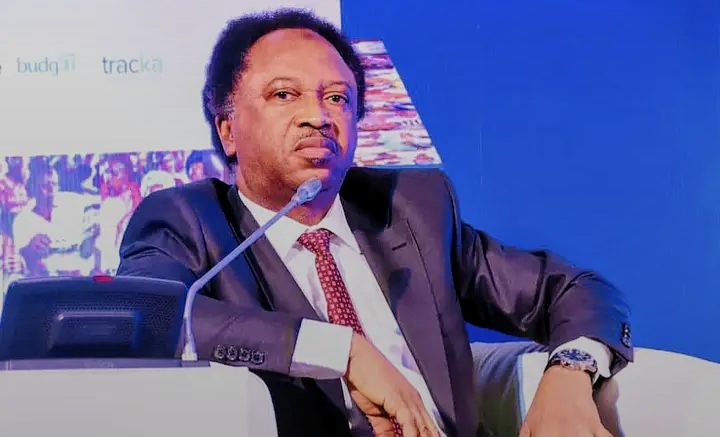
Former Kaduna Central Senator, Shehu Sani, has challenged opposition politicians criticising President Bola Tinubu and Kaduna State Governor, Uba Sani, to account for their achievements while they were in government.
Sani accused successive administrations of contributing to Nigeria’s worsening poverty and insecurity, insisting that politicians who previously held public offices should explain what they accomplished before condemning the current leadership.
He made the remarks on Thursday during the inauguration of the Kaduna State All Progressives Congress (APC) Presidential and Governorship Campaign Council and the flag-off of the party’s campaign ahead of the 2027 general elections.
The former lawmaker urged Kaduna residents to support the re-election bids of Tinubu and Governor Uba Sani, describing the large turnout at the event as evidence of confidence in the governor’s leadership.
According to him, politicians criticising the current administration should first account for their records in government.
“Most of those making noise and criticising the government should tell Nigerians what they achieved during the years they were in power. The poverty we are experiencing today is a consequence of their failures. The insecurity we are experiencing today is also a consequence of their failures,” he said.
Sani argued that politicians who had served under both the Peoples Democratic Party (PDP) and the APC had failed to transform the country despite having opportunities to do so.
“If they had the magic wand or miracle to transform Nigeria, they would have done so when they were in power. They were in the PDP, and they failed. They were in the APC, and they failed,” he added.
Highlighting what he described as the achievements of the Tinubu and Uba Sani administrations, the former senator mentioned the appointment of three ministers from Kaduna State, the establishment of four federal universities, road infrastructure projects and efforts to promote peaceful coexistence between Muslims and Christians.
He called on traders, civil servants, teachers, low-income earners and wealthy residents to support the two leaders, expressing confidence that the APC would retain Kaduna State in the 2027 elections.
APC Lists Uba Sani’s Achievements
Also speaking at the event, the Kaduna State APC Chairman, Atiku Isaac Sankey, said the inauguration of the campaign council provided an opportunity for the party to review its activities, showcase its achievements and strengthen its structures ahead of the 2027 elections.
Sankey maintained that the Tinubu administration and the Uba Sani-led government had demonstrated that effective governance should be measured by tangible improvements in people’s lives rather than merely occupying political offices.
He listed agriculture, rural development, infrastructure, healthcare and education among the areas where the Kaduna State Government had recorded progress during Uba Sani’s 42 months in office.
On agriculture, the APC chairman said the administration had consistently allocated more than 10 per cent of its annual budget to the sector, while thousands of smallholder farmers across the state’s 23 local government areas had benefited from fertiliser distribution.
He added that the government’s non-kinetic approach to conflict resolution had helped farmers reclaim more than 500 hectares of previously inaccessible farmland.
On infrastructure, Sankey said the administration had commissioned several road projects and constructed more than 1,400 kilometres of rural roads across Kaduna State.
He also highlighted the introduction of free compressed natural gas (CNG) bus services, claiming that the initiative had facilitated more than 52 million passenger trips and saved residents billions of naira.
Other achievements listed by the APC chairman included the recruitment and training of 1,000 personnel for the Kaduna State Vigilance Service, as well as the establishment of three vocational and skills acquisition centres across the state’s three senatorial districts.
He said more than 4,000 graduates had benefited from training programmes under the administration.
On workers’ welfare, Sankey disclosed that the state government had paid pensioners a total of N21bn over the last three and a half years.
He urged APC members and residents to remain united and support the administration, stressing that the party was committed to consolidating its achievements and building an inclusive and peaceful Kaduna State.
Uba Sani Seeks Second Term
The 2027 governorship election will be Governor Uba Sani’s first attempt to secure a second term in office.
He won the 2023 governorship election with 730,002 votes, narrowly defeating the Peoples Democratic Party candidate, Isa Ashiru, who secured 719,196 votes.
With the APC already mobilising support ahead of the 2027 general elections, the party is seeking to consolidate its political position in Kaduna State and secure another victory for the governor.
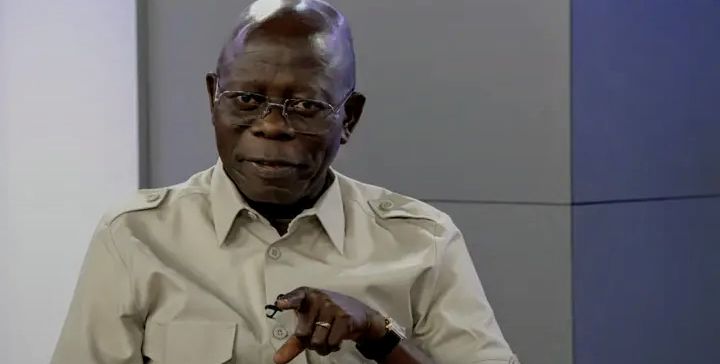
Senator Adams Oshiomhole has declared that any Nigerian president of Igbo extraction must serve a full eight-year tenure, insisting that the South-East should not accept a four-year or half-term presidency.
Oshiomhole made the declaration on Thursday during the All Progressives Congress (APC) presidential campaign rally in Anambra State, where he praised Governor Chukwuma Soludo’s administration and President Bola Tinubu’s policies on education and university funding.
“When Ndi Igbo will become president, it must be eight full years. No half cup. It will be full cup by those with brain, with courage, and fill the gaps,” the former Edo State governor said.
He described Anambra as the headquarters of intellectuals, citing the state’s historical contributions to Nigeria’s political and intellectual development.
According to him, Anambra produced prominent personalities, including Nigeria’s first president, Dr Nnamdi Azikiwe, popularly known as Zik of Africa.
Historically, it has been so. You produce the Zik of Africa, not just Zik of Nigeria,” Oshiomhole said.
Oshiomhole Praises Tinubu’s Education Policies
The senator also used the occasion to commend Tinubu’s administration for its education policies, particularly the financial assistance and student loan initiatives introduced by the Federal Government.
Reflecting on his childhood, Oshiomhole recalled growing up in a village without a hospital or school, explaining that he had to travel several kilometres to access primary education.
He said his personal experience made him appreciate leaders who prioritise educational opportunities for disadvantaged Nigerians.
“When I find a president who remembers people of my background, and say you shall not lack education; I will give you money. I will give you loan, which you can only pay when you get job,” he said.
Oshiomhole also praised the Federal Government’s handling of challenges in the university system, particularly the maintenance of academic calendars and improved remuneration for lecturers.
He claimed that Nigerian universities had recorded four years without industrial action, arguing that the development had strengthened confidence in the country’s public university system.
“Now, for four years, there has been no strike. This is a threat to those who live on primary ownership of a public university, because the only reason people say they are children there is because of the integrity of academic calendar,” he stated.
The former governor attributed previous disruptions in the university system to poor leadership, saying inadequate remuneration had contributed to the departure of experienced academics.
He said Tinubu was addressing the challenges through improved funding and remuneration aimed at attracting qualified professionals back to the university system.
“President Bola Tinubu is not only respecting that calendar by dealing with issues confronting us, but also ensuring that by proper remuneration, we bring back to academia the finest brains in our society,” Oshiomhole added.
He subsequently urged Anambra residents to support the President, expressing confidence that the state would benefit from the investments and policies of the Federal Government.
Soludo Backs Tinubu’s 2027 Re-election Bid
The rally was also attended by Anambra State Governor Chukwuma Soludo, who expressed support for Tinubu’s second-term ambition ahead of the 2027 presidential election.
Soludo argued that Tinubu did not need to manipulate the electoral process to secure re-election, insisting that the President could win based on his party’s political strength.
“This election, to the best of our knowledge, is already won and lost. The President doesn’t need to rig any election. President Tinubu doesn’t need to rig any election,” the governor said.
He also argued that opposition parties lacked the nationwide political reach of the APC, particularly when compared with the party’s presidential ticket featuring Tinubu and Vice-President Kashim Shettima.
Soludo further commended the administration’s economic and security policies, highlighting the Nigerian Education Loan Fund (NELFUND) as one of its initiatives.
Oshiomhole’s Position Amid Debate Over Igbo Presidency
Oshiomhole’s comments come amid renewed discussions about the South-East’s quest for Nigeria’s presidency and a proposed single-term arrangement involving former Anambra State Governor and Labour Party presidential candidate in the 2023 election, Peter Obi.
Obi, who is now the presidential candidate of the Nigeria Democratic Congress, has repeatedly pledged to serve only one four-year term if elected in 2027.
He has explained that his decision is intended to promote political stability and address concerns surrounding power rotation.
In an interview with News Central TV in May, Obi said he would not seek to remain in office beyond four years.
I want to be a one-term president because of stability. I would not stay a day longer than four years, even with a gun to my head,” he said.
His running mate, Rabiu Kwankwaso, subsequently confirmed that they had signed separate agreements committing Obi to a single four-year tenure, after which the presidency would return to the North.
Kwankwaso said the arrangement provided that “after his term of four years (2027-2031), it comes back to the North.”
Obi later described the arrangement as an agreement that should be respected.
The contrasting positions have added another dimension to discussions about the South-East’s presidential ambition, particularly regarding whether an Igbo president should serve one term or be entitled to the constitutionally permitted maximum of two four-year terms.
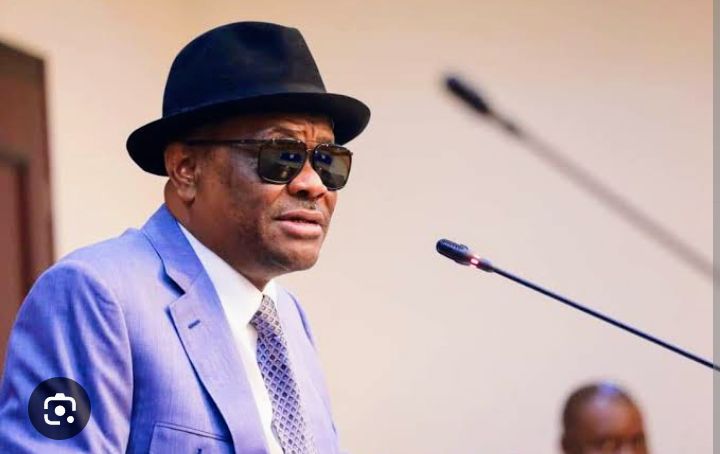
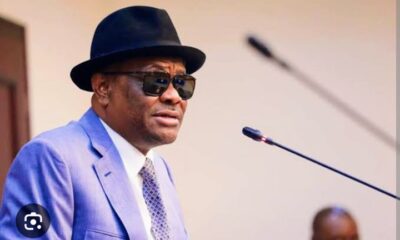
The Minister of the Federal Capital Territory (FCT), Nyesom Wike, has defended President Bola Tinubu’s economic reforms, saying the policies would deliver lasting prosperity to Nigerians if given enough time to produce results.
Wike also appealed to market traders across the FCT to support Tinubu’s re-election bid in the 2027 general election, cautioning against politicians promising to reverse the removal of fuel subsidy.
The minister made the appeal on Wednesday during an interactive town hall meeting with representatives of various market associations across the Federal Capital Territory.
Acknowledging the economic difficulties Nigerians have faced since the removal of fuel subsidy, Wike said previous administrations lacked the political will to confront the challenges associated with the subsidy regime.
He argued that Nigeria was approaching economic collapse before Tinubu introduced the reforms, insisting that difficult decisions were necessary to establish a foundation for sustainable economic growth.
“This country is nearly gone. For you to say that you must try to change what is happening means that you must lay a foundation first, and when you lay a foundation, you give it time to grow,” he said.
Wike maintained that the removal of fuel subsidy had produced several benefits, including increased revenue allocations to state and local governments, the clearance of pension arrears and an end to recurring strikes by the Academic Staff Union of Universities (ASUU).
He urged Nigerians to exercise patience with the administration, warning that reversing the policies could undermine the government’s ongoing economic adjustment efforts.
“If we allow these policies that the government has put in place to mature, what is going to happen in the next four years will be good. Forget about people coming to tell you stories,” he added.
The FCT minister also highlighted infrastructure development and institutional reforms undertaken by the Tinubu administration in Abuja, particularly road construction and rehabilitation projects across satellite towns and other districts.
According to him, improved road networks would reduce transportation costs, facilitate the movement of goods and services, and create a more conducive environment for commercial activities.
Wike further promised to sustain engagements with market associations and consider additional market development projects to expand business opportunities within the territory.
He listed the establishment of the FCT Civil Service Commission, the creation of Mandate Secretariats for Women and Youth, and the appointment of an indigene of the FCT to the Federal Executive Council as some of the institutional changes recorded under Tinubu’s administration.
The minister urged Nigerians to evaluate political leaders based on their performance and tangible achievements rather than ethnic or regional considerations.
Meanwhile, representatives of various market associations at the meeting expressed support for the Tinubu administration and pledged to mobilise traders ahead of the 2027 general election.
The Chairman of the Wuse Market Traders Association, Okorie Ikechukwu-Raphael, commended the FCT administration for its road improvement initiatives and market redevelopment projects.
He, however, appealed to Wike to approve the construction of additional shops and shopping malls in emerging districts, including Katampe and Kaura, to provide more business opportunities for traders.
In response, the minister urged market associations to nominate representatives from their respective state chapters to participate in the campaign mobilisation structure ahead of the 2027 elections.
The meeting formed part of Wike’s ongoing engagements with stakeholders across the FCT as political activities gradually intensify ahead of the 2027 general elections.
-

 Security4 months ago
NDLEA Declares Alleged Drug Kingpin, Three Associates Wanted, Freezes ₦9.8bn Linked to Syndicate
-

 National Affairs4 months ago
ICPC Uncovers 908 Suspected Ghost Workers Across 50 Federal MDAs, Recovers ₦942 Million
-

 Business/Finance4 months ago
How to Apply for Tunde Onakoya’s ₦250 Million Scholarship Programme and Free Laptop Offer
-

 Judiciary | Public Safety4 months ago
INEC Tells Court Voter Information Is Not Confidential in Emeka Ike’s ₦10bn Lawsuit
-

 Politics4 months ago
Atiku Challenges Tinubu to Reveal Details of ₦15.13bn SUV Procurement in 2026 Budget
-

 Judiciary | Public Safety4 months ago
Court to Rule Friday on NDLEA’s Bid to Destroy ₦480bn Meth Lab in Ogun
-

 Security4 months ago
Family Paid ₦50 Million Ransom to Secure Release of Abducted Kebbi Judge
-

 News4 months ago
2026 Budget: FG Earmarks ₦962.83bn for SUVs, Empowerment Projects Amid Debt Concerns