
National Affairs
Ekiti Farmers Commend FG as 4,000 Flood Victims Receive Farm Inputs

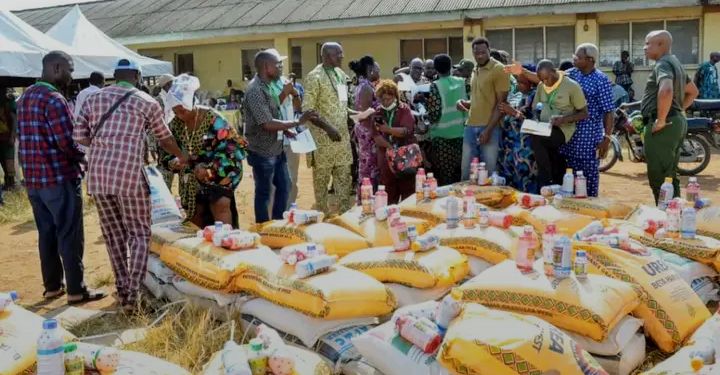
The All Farmers Association of Nigeria (AFAN) has commended the Federal Government for providing relief support to 4,000 farmers in Ekiti State whose farmlands were recently destroyed by flooding.
The AFAN Chairman in Ekiti State, Sunday Adekogbon, expressed appreciation to the Federal Government, the National Agricultural Development Fund (NADF) and the Ekiti State Government for supporting the affected farmers with agricultural inputs to help them recover from the disaster and resume production.
The intervention was implemented through the NADF at an event tagged, ‘NADF Intervention for Flood-Affected Farmers in Ekiti State’, held on Saturday.
The programme saw the distribution of emergency agricultural inputs to 4,000 smallholder farmers affected by flooding, with the aim of restoring damaged farmlands, supporting their livelihoods and improving food production.
Items distributed included 4,000 bags of NPK fertiliser, 4,000 bags of urea, 2,800 bags of rice seeds, 1,200 bags of maize seeds, 4,000 bottles of pre-plant chemicals, 4,000 bottles of pre-emergence herbicides, 4,000 bottles of early post-emergence herbicides and 4,000 bottles of insecticides.
Adekogbon urged the beneficiaries not to sell the farm inputs but to use them for their intended agricultural purposes.
Appreciating the NADF for the intervention, he said the support would strengthen farmers’ capacity to contribute to food security.
“The support will enable farmers to contribute more effectively to food security,” he said.
The affected farmers, represented by Ojo Falana, also expressed gratitude to the Federal Government and the NADF, pledging to use the materials judiciously to achieve the objectives of the intervention.
“We appreciate the NADF for this gesture, and we promise to use the agricultural inputs judiciously to improve our farming activities and achieve the programme’s objectives,” Falana said.
Speaking earlier, the NADF Executive Secretary and Chief Executive Officer, Muhammed Ibrahim, represented by the Head of Strategy, Planning, Evaluation, Monitoring and Learning, Adebanke Fajana, urged the beneficiaries to ensure that the materials were used strictly for their intended purposes.
He said the intervention was designed to help farmers recover from the devastating impact of flooding and prevent the disruption of agricultural activities across successive farming seasons.
“For many farmers, this loss is threatening not only the current production cycle, but also the ability to prepare for the next production cycle.
“Without timely intervention, this disaster can easily become a crisis that lasts for seasons. We are here to ensure that recovery is done,” Ibrahim said.
He encouraged the beneficiaries to view the intervention as an opportunity to rebuild their farms, restore their livelihoods and strengthen their communities against future agricultural shocks.
“We want you to see renewed opportunity. We encourage you to see farms being restored to productivity. We encourage you to see families regaining their livelihood, and we see communities strengthened against failure shocks. Above all, we see a pathway towards more resilient and food-secure Nigeria,” he added.
The NADF chief executive said the intervention aligned with President Bola Tinubu’s vision of protecting livelihoods, strengthening food security and building a resilient agricultural economy under the Renewed Hope Agenda.
Also speaking, the Special Adviser to Ekiti State Governor Biodun Oyebanji on Agriculture, Boluwade Ebenezer, said the intervention would restore the confidence of affected farmers, increase agricultural production and strengthen food security in Ekiti State and the country.
He described the support as an important step towards helping farmers overcome the effects of flooding and return to productive farming.







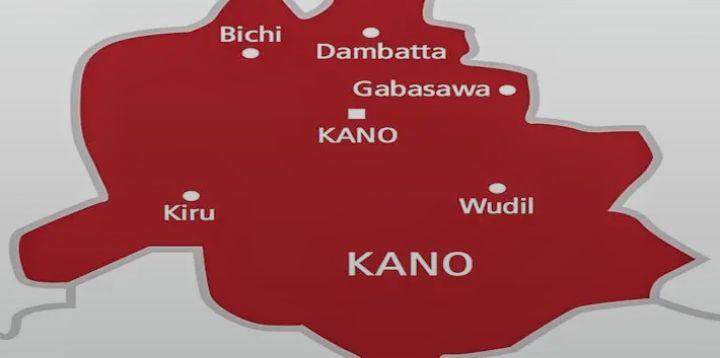
The Kano State Government has commenced the development of a 20-year Water Supply and Distribution Master Plan aimed at addressing persistent water shortages and ensuring sustainable access to potable water across urban and rural communities.
The Commissioner for Water Resources, Dr Dahiru Muhammad Hashim, disclosed this on Friday during a press conference in Kano, describing the initiative as a major step towards strengthening the state’s water infrastructure and improving service delivery.
Hashim said the proposed master plan was the second time such a long-term water development blueprint was being undertaken in Kano’s history, following the administration of the late Governor Audu Bako.
According to him, the plan will provide a framework for investment, infrastructure development and policy reforms to guarantee reliable access to safe drinking water across the state.
“This master plan is part of our broader efforts to address persistent water shortages, improve distribution infrastructure and ensure sustainable access to safe drinking water across the state,” he said.
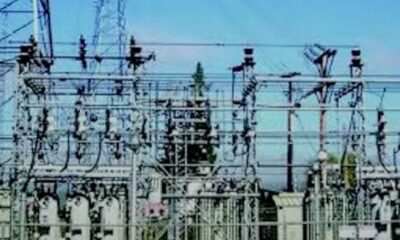
The commissioner also announced significant progress in restoring water supply to several communities within metropolitan Kano following the rehabilitation of the Challawa Water Treatment Plant and repairs to sections of the distribution network.
He explained that water pumped from Challawa Water Works had reached the Goron Dutse reservoirs, which have a combined capacity of 42.5 million litres, before being released into the distribution network.
Communities benefiting from the restored supply include Goron Dutse, Gwammaja, Kwanar Dala, Jakara, Kofar Mazugal, Muskwani, Aikawa, Dukurawa, Kabara, Darma, Agadasawa, Kofar Wambai, Dukawa, Mandawari, Daneji, Fagge, Tudun Wada, Gama, Kofar Ruwa and Alfindiki, among others.
Hashim noted that some communities, particularly Alfindiki, had endured between two and three decades without access to running tap water.
He described the restoration as a major relief for residents and businesses that had struggled for years to obtain reliable water supplies.
“The restoration has brought relief to households and businesses that have suffered for decades without access to running water,” he said.
The commissioner disclosed that rehabilitation of water facilities and distribution infrastructure was ongoing, with more than 45 repair and replacement interventions already completed in different locations.
He, however, explained that the restoration of water pressure had exposed weaknesses in some sections of the ageing distribution network, resulting in leakages and pipe bursts that required urgent attention.
“The restoration of water pressure has exposed weaknesses in parts of the old distribution infrastructure, resulting in leakages and pipe bursts that require immediate attention,” Hashim stated.
He added that rehabilitation work was also continuing at the Tamburawa Water Treatment Plant and other facilities to increase the volume of treated water available for distribution.
In another development, the commissioner announced the formal establishment of the Kano State Small Towns Water Supply Agency (KASSTOWA).
He said Engineer Sani Bala Danbatta had been appointed Acting Managing Director of the agency, while Aminu Mamman Yaro would serve as Acting Deputy Managing Director.
Hashim urged residents to protect public water infrastructure, warning against unauthorised pipeline connections, vandalism and indiscriminate drilling around major water lines.
He called on members of the public to report burst pipes, leakages and suspected acts of vandalism to the relevant authorities.
“Protecting water infrastructure is a shared responsibility. Residents must report burst pipes, leakages and suspected vandalism to the appropriate authorities,” he said.
The commissioner reaffirmed the state government’s commitment to expanding access to safe, reliable and sustainable drinking water, expressing confidence that the long-term master plan would provide direction for addressing Kano’s water supply challenges.
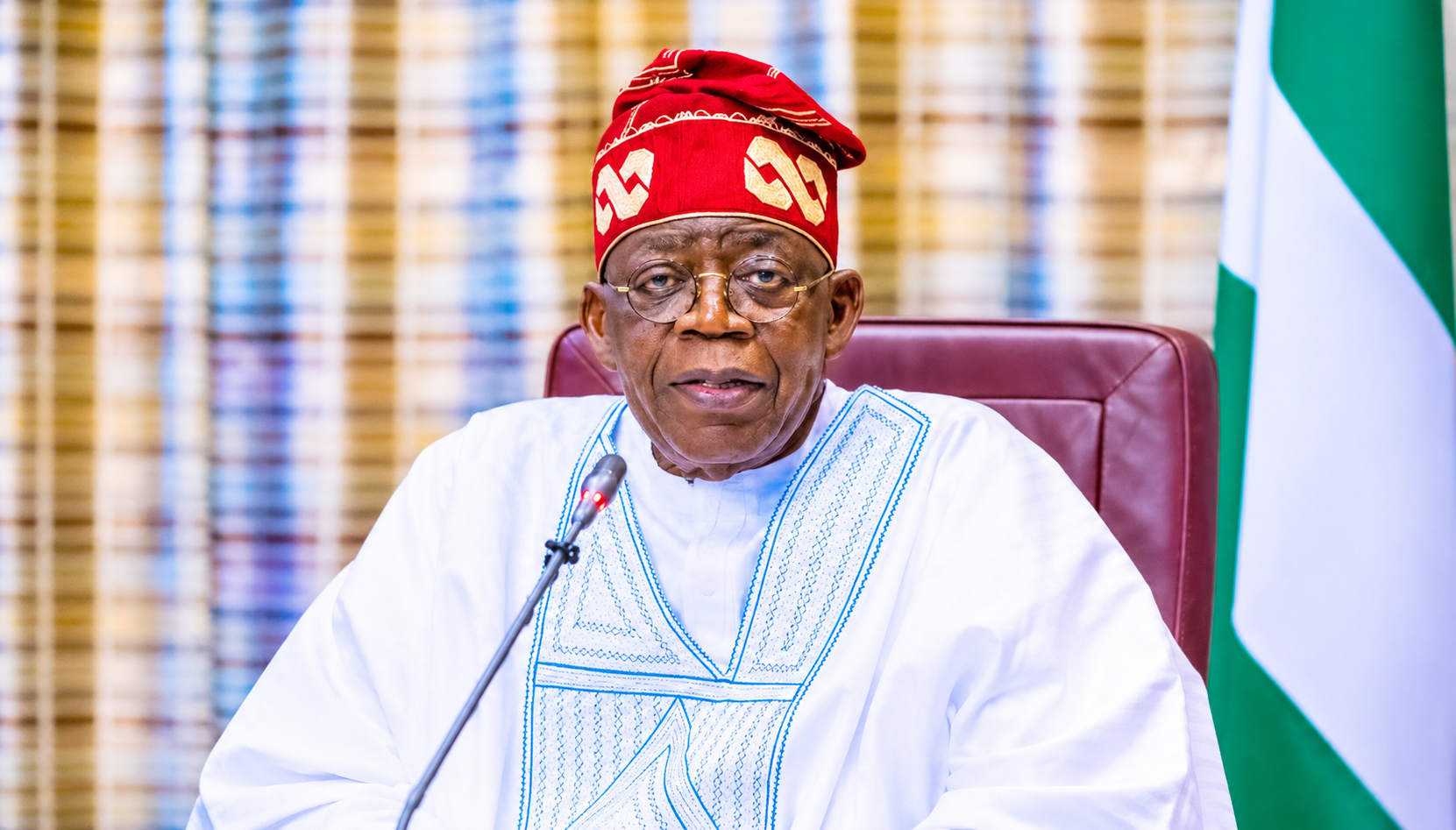
President Bola Tinubu has reaffirmed his administration’s commitment to ending the export of unprocessed solid minerals, declaring that Nigeria must develop local capacity to add value to its abundant mineral resources.
Tinubu said the country must move beyond exporting raw mineral resources and prioritise local beneficiation, processing and the development of integrated value chains capable of supporting industries, creating skilled jobs and boosting economic growth.
The President made the declaration on Thursday while delivering his keynote address at the Nigeria Now! Investing in Energy, Infrastructure and Mining Summit in Abuja.
The summit, themed “United Nigeria, New Horizons, One Investment Destination”, is scheduled to end on November 20, 2026.
Tinubu said developing the mining sector would require improved geological information, transparent licensing procedures, responsible exploration and increased investment in mineral processing.
He explained that the government was determined to ensure that Nigerian businesses played active roles in the mineral value chain rather than allowing the country to remain dependent on exporting raw materials.
“In mining, we’re equally determined to move beyond the export of unprocessed resources. Better geological information, transparent licensing, responsible exploration, and greater investment in beneficiation and processing must support Nigerian industries, skilled employment and meaningful benefits for host communities,” he said.
The President added that his administration was working to build integrated value chains that would strengthen domestic industries and expand opportunities for Nigerian enterprises.
“Our mission is to build integrated value chains in which Nigerian enterprises participate and in which domestic capabilities grow.
“We invite investors to bring technology, finance and commercial enterprise while we continue to strengthen the regulatory certainty and institutional support needed for sustainable returns,” Tinubu stated.
He urged investors to move beyond identifying opportunities and develop viable, bankable projects capable of delivering tangible economic benefits.
Tinubu also reiterated his administration’s commitment to creating an investment-friendly environment that would encourage private-sector participation and attract investments into critical sectors of the economy.
Earlier, the Minister of Solid Minerals Development, Dele Alake, disclosed that reforms introduced by the Tinubu administration had increased annual revenue from the solid minerals sector to more than N100 billion in 2026.
Alake said the sector generated approximately N6 billion annually when he assumed office, but revenue increased to N38 billion in 2024 and N70 billion in 2025.
According to him, the latest figure represents significant progress driven by the government’s local value-addition policy, digitisation of mining processes and efforts to sanitise operations in the sector.
“When I assumed office, the sector’s total annual revenue stood at just ₦6 billion. However, through reforms, the local value addition policy, the digitisation of mining processes, and efforts to sanitise operations within the sector, that figure increased from ₦6 billion to ₦38 billion by 2024,” he said.
“By 2025, it had risen to ₦70 billion. And just about a week ago, the Central Bank of Nigeria (CBN) informed us that we had crossed the ₦100 billion mark this year.”
The minister attributed the growth to deliberate government policies, institutional reforms and improved accountability in the mining industry.
Alake also highlighted the activities of the Mining Marshals, saying the security outfit had strengthened the government’s campaign against illegal mining.
He disclosed that more than 300 suspected illegal mining operators had been arrested, while over 100 mining sites previously controlled by illegal operators had been recovered and returned to their legitimate owners.
However, the minister alleged that some mining operators affected by the enforcement operations were sponsoring efforts to scrap the Mining Marshals.
“As I speak, there have been moves to scrap the Mining Marshals. These moves are sponsored by the operators whom the Mining Marshals have been deployed to bring to justice,” he said.
Alake also defended the removal of fuel subsidy, maintaining that savings from the policy had supported infrastructure development across Nigeria’s six geopolitical zones. He criticised calls for the restoration of the subsidy.
Meanwhile, the Minister of Marine and Blue Economy, Gboyega Oyetola, said the sector had recorded significant progress since the establishment of the ministry in 2023.
Oyetola identified improvements in maritime security, port reforms and the approval of Nigeria’s first National Policy on Marine and Blue Economy as major achievements.
He further disclosed that revenue generated by agencies under the ministry increased from N700.79 billion in 2023 to N1.83 trillion in 2025.
The minister urged investors to explore opportunities in ports, shipping, shipbuilding, fisheries, aquaculture, maritime tourism and logistics.
He said these areas offered significant investment opportunities capable of strengthening Nigeria’s maritime economy and contributing to national development.
The governors of Kano and Enugu states, Abba Kabir Yusuf and Peter Mbah, have accepted appointments as Deputy Grand Patrons of the Nigeria Forward Project, an organisation promoting national unity and citizens’ participation in governance.
The appointments are expected to strengthen the organisation’s leadership structure, nationwide mobilisation and engagement across Nigeria’s six geopolitical zones.
The National Secretary of Nigeria Forward, Abdulhafiz Garba, disclosed this in a statement obtained by The PUNCH on Tuesday, saying both governors had formally communicated their acceptance after receiving their appointment letters.
The letters were jointly signed by the organisation’s Convener, the Minister of Innovation, Science and Technology, Kingsley Tochukwu Udeh, and its Co-convener, the Kano State Commissioner for Youth and Sports Development, Ibrahim Abdullahi Waiya.
According to Garba, the governors were selected in recognition of their leadership qualities, contributions to good governance and commitment to encouraging citizens’ participation in Nigeria’s democratic process.
He described their acceptance as a significant development for the organisation’s ambition to establish a strong national platform built around unity, peaceful coexistence and inclusive participation.
“Their acceptance to serve in this capacity represents an important milestone for the organisation and further strengthens its commitment to building a formidable national platform anchored on unity, peace, social coexistence and inclusive citizens’ participation for national development,” Garba said.
He added that the appointments would provide additional leadership direction and institutional support as the organisation expands its engagement with stakeholders across the country.
Garba further noted that the governors’ decision to accept the positions demonstrated confidence in the project’s vision and was expected to encourage broader support for its programmes and activities.
The Nigeria Forward Project is seeking to establish a platform that will encourage Nigerians to participate more actively in governance and contribute to discussions and initiatives affecting national development.
With the acceptance of the appointments by the two governors, the organisation hopes to strengthen its nationwide presence and advance its objectives of promoting unity, peaceful coexistence and inclusive participation in the country’s democratic process.
-
 Security4 months ago
NDLEA Declares Alleged Drug Kingpin, Three Associates Wanted, Freezes ₦9.8bn Linked to Syndicate
-
 National Affairs4 months ago
ICPC Uncovers 908 Suspected Ghost Workers Across 50 Federal MDAs, Recovers ₦942 Million
-

 Business/Finance4 months ago
How to Apply for Tunde Onakoya’s ₦250 Million Scholarship Programme and Free Laptop Offer
-

 Judiciary | Public Safety4 months ago
INEC Tells Court Voter Information Is Not Confidential in Emeka Ike’s ₦10bn Lawsuit
-
 Politics4 months ago
Atiku Challenges Tinubu to Reveal Details of ₦15.13bn SUV Procurement in 2026 Budget
-
 Judiciary | Public Safety4 months ago
Court to Rule Friday on NDLEA’s Bid to Destroy ₦480bn Meth Lab in Ogun
-
 Security4 months ago
Family Paid ₦50 Million Ransom to Secure Release of Abducted Kebbi Judge
-
 News4 months ago
2026 Budget: FG Earmarks ₦962.83bn for SUVs, Empowerment Projects Amid Debt Concerns