
News
Akume Urges Police to Strengthen Preventive Policing Against Cultism

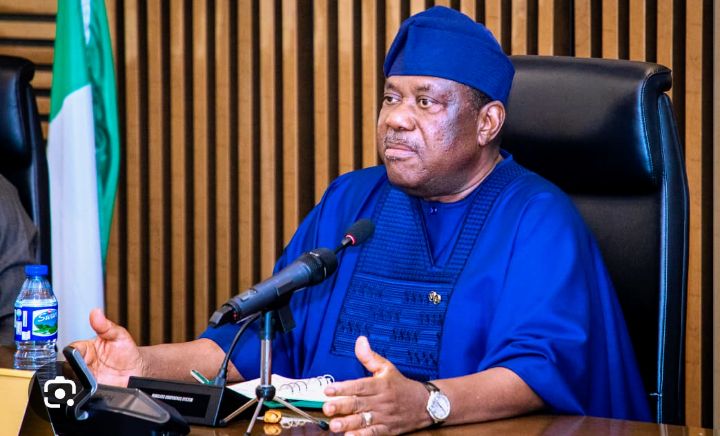
The Secretary to the Government of the Federation (SGF), George Akume, has called on the Nigeria Police Force to strengthen preventive policing and community partnerships to tackle cultism, youth-related crimes and other social vices threatening national security.
Akume said addressing cultism required a coordinated approach involving security agencies, traditional rulers, religious leaders, parents, teachers and civil society organisations, rather than relying solely on law enforcement.
The SGF made the call on Wednesday in Abuja during the first national conference of the Police Campaign Against Cultism and Other Vices, according to a statement issued by his Media Assistant, Yomi Odunuga.
He noted that cultism and other social vices had continued to undermine community safety, disrupt educational activities, destroy promising lives and weaken the future prospects of young Nigerians.
“These challenges demand a coordinated and proactive response that goes beyond law enforcement to address their underlying social and economic causes,” Akume said.
He described preventive policing as essential to tackling the menace, emphasising the need for early identification of security threats, intelligence-sharing and stronger trust between the police and the communities they serve.
“By identifying threats early, strengthening intelligence-sharing and building trust between the Police and communities, we can prevent crime before it occurs and create safer environments for all Nigerians,” he stated.
Akume urged traditional rulers, religious leaders, parents, teachers, civil society organisations and community associations to work closely with security agencies to promote vigilance, responsible citizenship and peaceful coexistence.
He also called for increased investment in youth development programmes, particularly education, mentorship, skills acquisition and entrepreneurship, as measures to discourage young people from engaging in criminal activities.
The SGF stressed that young Nigerians should be seen as important contributors to national development rather than merely beneficiaries of government programmes.
We must also recognise that our youth are not merely beneficiaries of national development; they are its greatest resource,” he said.
He added that providing young people with meaningful opportunities would help steer vulnerable youths away from destructive influences and encourage productive and responsible citizenship.
Akume further stated that the Federal Government, under President Bola Tinubu’s Renewed Hope Agenda, remained committed to strengthening national security, empowering young Nigerians and creating a safer society.
He assured that his office would continue to promote inter-agency coordination, policy coherence and collaboration among relevant institutions to address cultism and other social challenges.
The SGF also urged participants at the conference to develop practical recommendations that would improve preventive policing and strengthen community engagement in the fight against crime.
Cultism and youth-related crimes remain significant security and social concerns in Nigeria, particularly in educational institutions and communities where clashes between rival groups have resulted in deaths, injuries, intimidation and disruptions to academic activities.
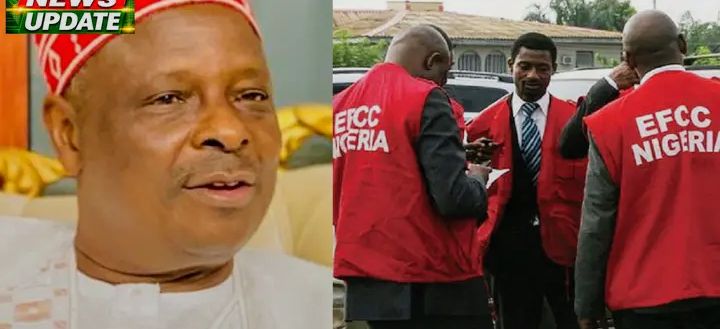
The Economic and Financial Crimes Commission (EFCC) has pledged to review a petition seeking an investigation into 10 properties allegedly linked to Rabiu Musa Kwankwaso, the Nigeria Democratic Congress (NDC) vice-presidential candidate.
The commission gave the assurance on Tuesday after receiving a petition from the Society for Anti-Corruption and Good Governance Initiative (SACGGI) at its headquarters in Abuja.
The petition followed a protest by members of the organisation, who called on the anti-graft agency to investigate the alleged property holdings and establish the sources of funds used to acquire them.
The group, led by its spokesperson, Muhammad Abdullahi, also requested an examination of Kwankwaso’s bank accounts, tax records and asset declarations to determine whether the alleged acquisitions were consistent with his legitimate earnings.
Responding on behalf of the EFCC chairman, the commission’s Chief of Staff, Michael Nzekwe, assured the protesters that the petition would be given due consideration.
“EFCC is apolitical. We are not partisan. We are just here to ensure that the mandate of the commission is fulfilled. We have seen what you have submitted, and the commission will look into it on its merits and handle it professionally,” Nzekwe said.
He added that the petition would be forwarded to the commission’s leadership for appropriate action, assuring the group that necessary steps would be taken promptly.
Earlier, Abdullahi explained that the petition followed the organisation’s review of the lifestyles and alleged property holdings of political office seekers ahead of the 2027 general elections.
He described SACGGI as a non-governmental, non-partisan and non-profit organisation comprising young professionals, including lawyers, accountants, engineers, journalists and community leaders committed to accountability and good governance.
“We are young professionals, lawyers, accountants, engineers, journalists and community leaders who believe public office is public trust and no one is above the law,” he said.
In the petition, the organisation listed 10 properties allegedly connected to the former Kano State governor and urged the EFCC to independently verify their ownership and status.
Among the properties identified are Key Science Academy along the Abuja-Keffi Expressway in Masaka, Nasarawa State; the former headquarters of the New Nigeria Peoples Party (NNPP) at No. 1 Mahatma Gandhi Street, Area 11, Abuja; and Plot 3060, CZ A06, Maitama District, Abuja.
Others include the former Clintonia Hotel in Apo, Abuja; Tidbe Plaza in the Central Business District; a building at No. 10 Port Harcourt Crescent, Area 11, Garki; and No. 28 Katsina Ala Crescent, Maitama.
The organisation also listed Nigeria-Egypt International School in Gwarinpa Estate, Abuja; Kano Mansion on Miller Road, Kano; and Hafsat Plaza on Constitution Avenue, Abuja.
SACGGI said it identified the properties through publicly available reports but stressed that their actual ownership must be established through an independent investigation by the EFCC.
It questioned whether the alleged acquisitions were consistent with Kwankwaso’s legitimate earnings and whether the properties were properly declared during his years in public service.
The group consequently urged the commission to conduct a lifestyle audit of the former governor and examine his asset declarations submitted to the Code of Conduct Bureau from 1999 to date.
It also called for forensic examinations of his bank accounts and tax records to establish the sources of funds allegedly used to acquire the properties.
Furthermore, the organisation asked the EFCC to verify the properties through the Abuja Geographic Information Systems, the Federal Capital Territory Administration, Kano State land authorities and the Corporate Affairs Commission.
It urged the commission to invite Kwankwaso for questioning if necessary, while emphasising that he must be given an opportunity to respond to the allegations in line with the principles of fair hearing and natural justice.
SACGGI also called for collaboration between the EFCC and other relevant agencies, including the Code of Conduct Bureau, the Independent Corrupt Practices and Other Related Offences Commission, the Federal Inland Revenue Service and the Nigerian Financial Intelligence Unit.
The organisation urged the commission to prosecute anyone found culpable and recover any public funds established to have been diverted or misappropriated.
It further requested that the outcome of the investigation be made public before the 2027 general elections.
Insisting that its action was not politically motivated, the group said the petition was driven by the need to promote accountability among individuals seeking public office.
“This protest is not borne out of malice or political witch-hunt. It is borne out of the desire to ensure that as Nigeria heads towards 2027, only persons with proven integrity are allowed to seek the highest offices. Public office is public trust,” the group stated.
It added: “If these properties are legitimately acquired, the candidate should have no difficulty proving the source, and if otherwise, the law should take its full course irrespective of political status.”
Kwankwaso has held several public offices, including Deputy Speaker of the House of Representatives between 1992 and 1993, governor of Kano State from 1999 to 2003 and 2011 to 2015, Minister of Defence from 2003 to 2007, and senator representing Kano Central from 2015 to 2019.
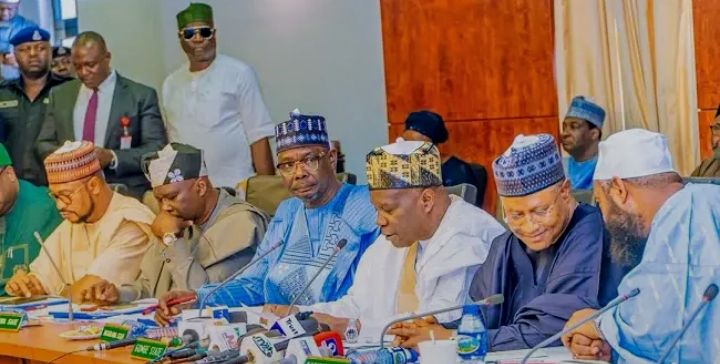
The governors of the 19 Northern states have dissolved the Board of Directors of the New Nigerian Development Company (NNDC) and ordered a comprehensive audit of its operations as part of efforts to reposition the company and strengthen its corporate governance.
The decision was reached on Tuesday during a Special General Meeting held in Kaduna, where the Secretaries to the Governments of the 19 Northern states represented their respective governments as shareholders of the company.
The shareholders resolved that a new board would be constituted, subject to the adoption of relevant ordinary resolutions at a duly convened general meeting and compliance with statutory requirements.
Addressing journalists after the meeting, the Secretary to the Gombe State Government, Prof. Ibrahim Abubakar Njodi, said the shareholders had agreed to undertake a comprehensive reorganisation of the company to improve its performance and restore confidence in its administration.
He explained that the restructuring was aimed at strengthening NNDC’s institutional capacity, improving corporate governance, enhancing operational efficiency and repositioning it as a viable investment and development institution serving the collective economic interests of the 19 Northern states.
Njodi said, “The shareholders have resolved to undertake a comprehensive reorganisation and repositioning of NNDC to strengthen its institutional capacity, improve its corporate governance, enhance operational efficiency and reposition it as a viable investment and development institution.”
He noted that the new board would provide strategic leadership, effective supervision, policy direction and corporate oversight to ensure improved management and performance.
According to him, the composition, nomination and appointment of the new directors would reflect the ownership interests of the participating states, the company’s Memorandum and Articles of Association, as well as the provisions of the Companies and Allied Matters Act 2020.
The shareholders shall subsequently approve the nominations and appointments of the new directors in accordance with the company’s constitutional documents and applicable law,” he said.
The Gombe SSG further disclosed that the incoming board would review the company’s existing management structure, personnel, administrative arrangements, operational framework and overall performance.
He said the review would provide an opportunity to strengthen the management system, promote accountability and professionalism, and improve the company’s corporate performance.
As part of the restructuring process, the incoming board would also conduct a comprehensive corporate governance, financial, administrative and operational audit of NNDC.
Njodi said the audit would examine the company’s financial position, assets and liabilities, existing investments, subsidiaries, joint ventures and other commercial interests.
The exercise is expected to provide a clearer picture of the company’s operations and financial standing while identifying areas requiring improvement as the Northern states seek to restore NNDC’s effectiveness as a regional investment and development institution.
The exercise is expected to provide a clearer picture of the company’s operations and financial standing while identifying areas requiring improvement as the Northern states seek to restore NNDC’s effectiveness as a regional investment and development institution.
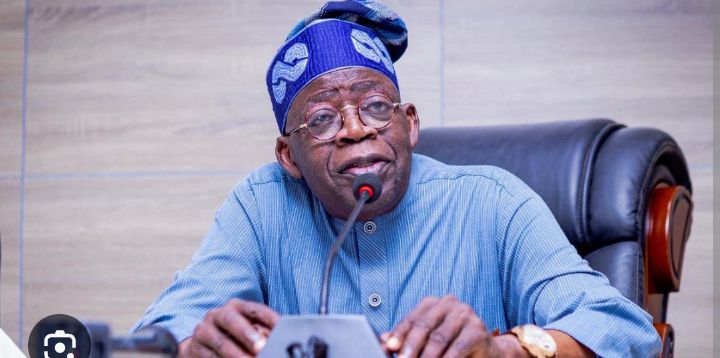
President Bola Tinubu has asked the House of Representatives to approve the revised and consolidated Laws of the Federation of Nigeria (LFN 2025), following a review that identified 268 obsolete, spent or repealed federal enactments for removal.
The exercise also recommended the retention of 664 principal laws as part of efforts to modernise Nigeria’s legal framework and make federal legislation more coherent, accessible and relevant to current realities.
The Speaker of the House of Representatives, Tajudeen Abbas, read the President’s letter, dated November 18, 2026, during plenary on Tuesday.
The letter, titled ‘Transmission of the Revised and Consolidated Compendium of the Laws of the Federation of Nigeria (LFN 2025) for Consideration and Approval’, was submitted following the recommendations of a technical committee established under the supervision of the Attorney-General of the Federation and Minister of Justice, Lateef Fagbemi.
Tinubu said the review was necessary because the last official consolidation of Nigeria’s federal laws was conducted in 2004, more than two decades ago.
He noted that the country had experienced significant legislative, constitutional, institutional and technological developments since then, resulting in the enactment of new laws, amendments to existing statutes and an increase in subsidiary legislation.
In the letter addressed to the Speaker, the President said the updated compendium would provide a more organised and reliable reference for federal laws.
“I write to formally inform you of the conclusion of the review, update and consolidation of the Laws of the Federation of Nigeria, and to forward herewith the proposed Revised compendium of the Laws of the Federation of Nigeria (LFN 2025) for the kind consideration and approval of the House of Representatives of the Federal Republic of Nigeria,” he stated.
The President disclosed that a specialised committee was established on October 24, 2024, to undertake a comprehensive review of federal legislation.
According to him, the committee was mandated to identify obsolete and spent enactments, address inconsistencies and overlaps in existing statutes, and produce an authoritative and updated edition of the country’s laws.
Tinubu said the committee examined 932 federal enactments and 731 subsidiary legislations before recommending 664 principal enactments for inclusion in the revised compendium, while identifying 268 enactments for removal.
He explained that the review involved extensive legal research, technical consultations, editorial scrutiny and quality assurance to ensure the accuracy and reliability of the revised laws.
The President further stressed that an updated and accessible collection of federal legislation was essential to Nigeria’s democratic and economic development.
“An updated, accurate, and easily accessible compendium of Federal laws is indispensable to our democratic and economic growth,” he said.
Tinubu added that upon approval, the LFN 2025 would serve as a reliable legal reference for the judiciary, legal practitioners, government institutions, domestic and foreign investors, as well as members of the public.
He said the revised compendium was expected to strengthen legal certainty, improve institutional efficiency and enhance public confidence in the justice system.
The President described the exercise as a major achievement under his administration’s Renewed Hope Agenda, particularly its commitment to justice sector reforms, strengthening the rule of law and creating a legal framework that supports national development.
He consequently urged the House of Representatives to expedite consideration and approval of the revised compendium, stressing its importance to effective governance and the administration of justice in the country.
-
 Security4 months ago
NDLEA Declares Alleged Drug Kingpin, Three Associates Wanted, Freezes ₦9.8bn Linked to Syndicate
-
 National Affairs4 months ago
ICPC Uncovers 908 Suspected Ghost Workers Across 50 Federal MDAs, Recovers ₦942 Million
-
 Judiciary | Public Safety4 months ago
INEC Tells Court Voter Information Is Not Confidential in Emeka Ike’s ₦10bn Lawsuit
-

 Business/Finance4 months ago
How to Apply for Tunde Onakoya’s ₦250 Million Scholarship Programme and Free Laptop Offer
-
 Politics4 months ago
Atiku Challenges Tinubu to Reveal Details of ₦15.13bn SUV Procurement in 2026 Budget
-
 Judiciary | Public Safety4 months ago
Court to Rule Friday on NDLEA’s Bid to Destroy ₦480bn Meth Lab in Ogun
-
 Security4 months ago
Family Paid ₦50 Million Ransom to Secure Release of Abducted Kebbi Judge
-
 News4 months ago
2026 Budget: FG Earmarks ₦962.83bn for SUVs, Empowerment Projects Amid Debt Concerns