
Politics
EFCC Defends Freezing Osun Government Accounts, Says Action Unrelated to Governorship Election

The Economic and Financial Crimes Commission (EFCC) has defended its decision to freeze bank accounts belonging to the Osun State Government, insisting the action was taken to prevent the alleged diversion of about ₦11 billion in public funds and was not influenced by the state’s forthcoming governorship election.
In a statement issued on Wednesday night by the Commission’s Head of Media and Publicity, Dele Oyewale, the anti-graft agency said it had been investigating the Osun State Government since March 2026 over the alleged mismanagement of Ecology Funds, Intervention Funds, and Federation Account Allocation Committee (FAAC) allocations.
According to the EFCC, the funds under investigation amount to approximately ₦11 billion.
The Commission disclosed that the Osun State Accountant-General and several other government officials had already appeared before investigators as part of the ongoing probe.
The EFCC explained that its decision to place a Post No Debit (PND) order on the state’s accounts followed the discovery of what it described as suspicious movements of large sums of money into several corporate accounts.
“The Commission cannot watch idly while a state government’s account is being pillaged,” the statement said.
According to the agency, the investigation itself would not have warranted the freezing of the accounts if not for what it described as unusual financial activities observed in recent days.
“These ongoing investigations of the state government would not have warranted any placement of Post No Debit order on its account but for the precipitate and unwarranted movement of funds from the accounts to different suspicious accounts since August 2, 2026.”
The EFCC said investigators detected substantial transfers from government accounts into multiple corporate entities, prompting immediate intervention to halt further transactions.
“The Commission noticed huge transfers of funds into different corporate entities and had to swiftly halt the trend by freezing the accounts from which such heavy funds are being moved,” the statement added.
Responding to concerns over the timing of the action, coming just days before the Osun State governorship election, the Commission maintained that its intervention was purely based on its statutory responsibility to safeguard public funds.
The EFCC insisted that the proximity of the election could not justify delaying enforcement actions where there were allegations of financial misconduct.
As of the time of filing this report, the Osun State Government had not issued a fresh response to the EFCC’s latest statement.
The investigation remains ongoing.







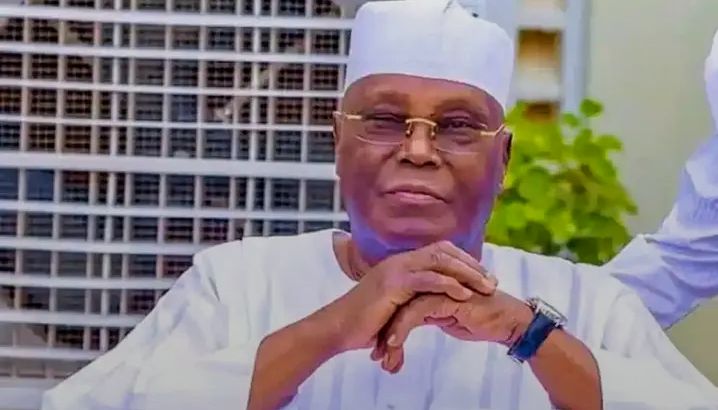
Former Vice-President and African Democratic Congress (ADC) presidential candidate Atiku Abubakar has cited a new survey by SBM Intelligence showing that 67.4 per cent of respondents support restoring petrol subsidy, as the debate over fuel pricing becomes a major issue ahead of the 2027 presidential election.
Atiku said the finding reflects the economic pressure being experienced by households and businesses as petrol prices continue to influence transportation and the cost of goods and services.
He made the comments in a statement issued on Tuesday by his Senior Special Assistant on Public Communication, Phrank Shaibu.
However, the survey figure refers to 1,103 eligible voters interviewed by SBM Intelligence, not all Nigerians. SBM also cautioned that the survey is a snapshot of stated sentiment and does not adjust for historical turnout, population projections or INEC voter-registration figures.
According to SBM Intelligence’s second-wave Nigeria 2027 Voter Sentiment Tracker, petrol has emerged as the second-most cited national problem, accounting for 18.2 per cent of responses.
The issue also received the lowest performance rating among the policy areas associated with the current administration, scoring 1.69 out of four.
On the question of the petrol-pricing policy, 67.4 per cent of respondents rejected the current direction, while 19.2 per cent supported it.
The findings come amid renewed increases in petrol prices and wider concerns about transportation and household costs.
Reuters reported on September 21 that petrol prices had reached about N1,400 per litre in Lagos and Abuja, with prices as high as N1,500 in parts of northern Nigeria.
Atiku also highlighted differences between rural and urban respondents.
He said 32.4 per cent of rural respondents identified petrol as their primary concern, compared with 11.7 per cent of urban respondents.
The survey also recorded regional differences. Petrol was identified as the leading concern by 30.5 per cent of respondents in the South-West and 29.1 per cent in the South-South, according to the figures cited by Atiku.
The regional variation is significant because fuel prices affect transportation, agricultural logistics and the distribution of food and other goods, particularly in communities where alternative transport and energy options are limited.
Atiku blames subsidy removal for economic pressure
Atiku attributed the economic difficulties associated with fuel prices to the removal of the petrol subsidy by the Tinubu administration.
He argued that the policy had contributed to higher transportation and food costs while reducing the purchasing power of households and businesses.
“President Tinubu removed subsidy with a slogan, not a strategy,” Atiku said, arguing that the reform was not accompanied by adequate measures covering domestic refining, mass transportation, wage protection and small businesses.
His comments form part of his broader argument that Nigeria needs a different approach to petrol pricing rather than a complete reliance on market-based pricing.
Atiku proposes production subsidy for local refineries
Atiku has clarified that his proposed intervention would not simply recreate the previous petrol subsidy system.
He said that, if elected in 2027, he would introduce a transparent production subsidy for petroleum products refined in Nigeria and sold to Nigerian consumers, beginning May 29, 2027.
Imported petroleum products, he said, would not qualify.
Under the proposal, the programme would operate within a fixed spending limit, require National Assembly approval and be subjected to independent audits.
Atiku said the objective would be to reduce petrol prices for consumers while simultaneously encouraging domestic refining.
The proposal follows his earlier call for measures to reduce petrol and diesel prices and has now become part of the ADC candidate’s economic message ahead of the election.
APC challenges Atiku to explain the proposal
The proposal has already attracted criticism from the ruling All Progressives Congress Presidential Campaign Council.
APC campaign spokesman Dele Alake has asked Atiku to provide details on the legal, fiscal and operational framework of the proposed production subsidy.
The campaign council questioned how the scheme would operate under the Petroleum Industry Act 2021, how much it would cost the government, what volume of petroleum products would qualify and how the policy would prevent diversion, smuggling and fraudulent claims.
The exchange illustrates the central policy disagreement emerging ahead of 2027: whether Nigeria should continue with market-based petrol pricing or introduce a targeted government intervention to reduce prices for consumers.
Fuel pricing becomes a 2027 election issue
The latest SBM findings suggest that petrol has moved beyond being solely an economic policy issue and has become an increasingly important political concern.
For the Tinubu administration, the challenge is to demonstrate that the long-term benefits it associates with subsidy removal can translate into tangible improvements in household welfare.
For opposition candidates such as Atiku, rising petrol prices provide an opportunity to argue that the costs of the reform have become excessive and that government should intervene more directly.
The debate is unlikely to be resolved simply by the question of whether subsidies should return.
It increasingly centres on who should bear the cost of keeping petrol affordable, how government intervention should be funded, whether domestic refining can reduce exposure to international crude prices, and what safeguards can prevent a return to the fiscal and market distortions associated with poorly targeted subsidies.
With petrol now ranking among voters’ leading concerns in the SBM survey, fuel pricing is set to remain an important part of the economic debate surrounding the 2027 presidential election.

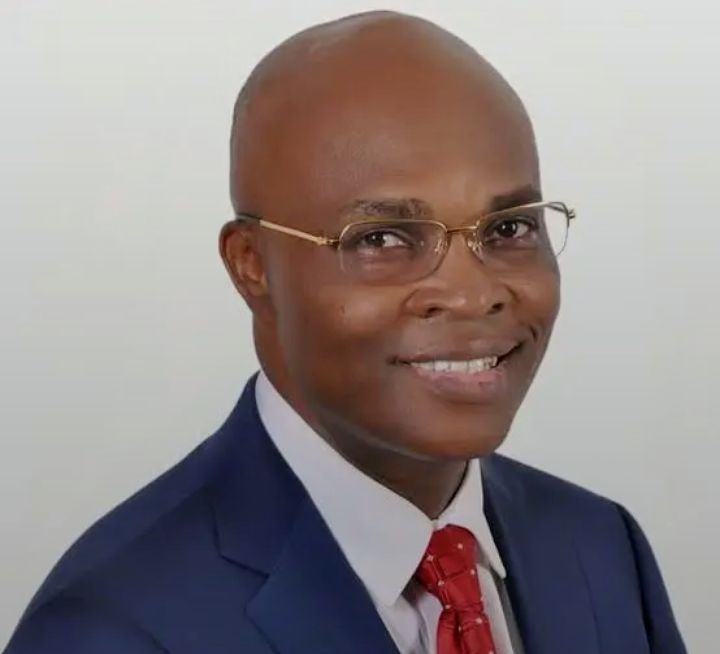
A stalwart of the African Democratic Congress (ADC) and former Edo State governorship aspirant, Kenneth Imasuagbon, has described the late former Peoples Democratic Party (PDP) National Chairman, Dan Orbih, as a courageous, compassionate and loyal politician whose death has created a deep vacuum in Edo State’s political landscape.
Imasuagbon, in a statement issued on Sunday, said he received news of Orbih’s death with shock and sadness, recalling the late politician’s contributions to democratic politics and his acts of kindness to people in times of difficulty.
According to him, Orbih was not only a consummate politician but also a kind-hearted man whose generosity touched many lives.
Imasuagbon particularly recalled Orbih’s support following an accident that left him receiving treatment at a hospital in London.
He said Orbih, alongside the late Chief Tony Anenih and Senator Clifford Ordia, provided financial and moral support to him during the difficult period.
“When I had an accident, Orbih was one of those who sent money to me on my hospital bed in London. He, alongside the late Chief Tony Anenih and Senator Clifford Ordia, stood by me during that difficult period.
“I will never forget that gesture. Some of us can only reciprocate such kindness today through prayers and honouring his memory,” Imasuagbon said.
The ADC chieftain also recalled their political activities during the administration of former Edo State Governor, Adams Oshiomhole, when he and Orbih jointly led the opposition in the state.
He described Orbih’s residence in Benin City as a major meeting point for party members, political associates and democracy advocates during periods of intense political contestation.
“Orbih was a man of uncommon courage. At the height of the political struggle, his house became our meeting point. He never wavered in defending democracy and standing by those he believed in,” he stated.
Imasuagbon further praised Orbih for his colourful personality and ability to connect with supporters during political campaigns, saying the late politician brought humour and entertainment into political activities.
He described Orbih as a committed party loyalist who was deeply passionate about Edo State and dedicated much of his life to the advancement of democracy.
“Under his leadership, we both toured the 192 wards campaigning. He was kind-hearted, loyal to his party and deeply committed to the people of Edo State,” he said.
Imasuagbon also recounted an incident surrounding the 2022 national delegate contest in Esan South-East Local Government Area, saying Orbih resisted pressure to have his name removed from the delegate list.
According to him, some political actors wanted his name removed because of his preferred presidential candidate in the 2023 election, but Orbih refused to yield to the pressure.
“During the 2022 national delegate contest in Esan South-East Local Government Area, which I defeated Giwa Agbomerere, Orbih faced intense pressure that my name should be dropped because I would vote for Atiku Abubakar instead of Wike, even at gunpoint.
“He resisted the pressure and kept my name on the list. I won the contest squarely, and he said his conscience would not allow him to remove my name from the delegate list,” Imasuagbon added.
He described the late politician as a fair and just individual whose political decisions were guided by his principles and conscience.
Imasuagbon extended his condolences to Orbih’s family, praying that God would grant his loved ones the strength to bear the loss.
The Orbih family had announced the death of the prominent Edo politician on September 1, 2026.
In a statement signed by his younger brother, Francis Orbih, the family said Dan Orbih died on Monday, August 31, 2026.
His death has continued to attract tributes from political associates and stakeholders who have acknowledged his long involvement in Edo State and national point.

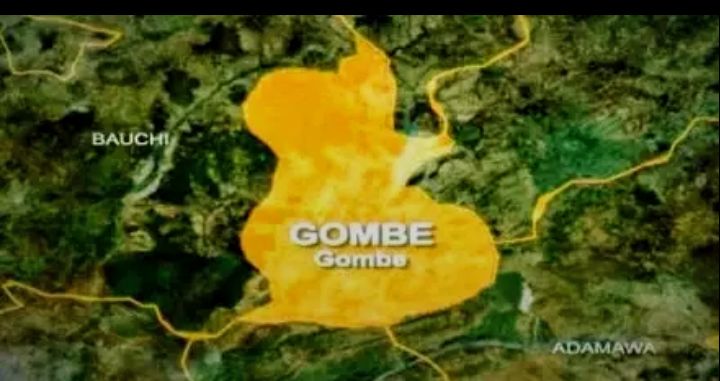
Residents of Gombe metropolis have commended the peaceful conduct of the ongoing Gombe/Kwami/Funakaye Federal Constituency by-election, describing the exercise as orderly and largely hitch-free.
The voters also praised the Independent National Electoral Commission (INEC) for its preparations for the poll, while commending security personnel and election officials for maintaining a calm atmosphere across polling units.
The residents spoke in separate interviews with the News Agency of Nigeria (NAN) in Gombe on Saturday.
One of the voters, Buhari Ibrahim, who is a person living with disability, said the professionalism displayed by electoral and security officials contributed significantly to the peaceful conduct of the election.
Ibrahim described the voting process as seamless, saying he did not experience discrimination or difficulty on account of his physical condition.
“I did not feel discriminated against at any point as a physically challenged person during the voting process,” he said.
Another voter, Dalhatu Boderi, also described the exercise as successful and hitch-free.
According to him, the atmosphere at his polling unit remained peaceful, while voters were able to participate in the process without disruption.
“The atmosphere is peaceful, the turnout in this polling unit is impressive and everything is going on well as expected,” Boderi said.
He also commended youths in the area for conducting themselves peacefully, expressing optimism that the same level of calm would be witnessed during the 2027 general elections.
At the Yakub Hassan Polling Unit, another voter, Maryam Salisu, said the peaceful atmosphere encouraged her to participate in the election.
Salisu commended INEC and security personnel for their roles in maintaining order, urging the electoral body and security agencies to sustain the arrangements during future elections.
She also called for the replication of the experience during the 2027 general elections, saying a peaceful electoral environment could encourage more women to participate in the democratic process.
Similarly, Zaliha Garba said women were increasingly recognising their role in elections and were becoming more involved in exercising their franchise.
“We realised that women are critical stakeholders in determining who rules us, so we are now embracing the process,” she said.
INEC Raises Concern Over Low Turnout
Despite the positive assessment by voters in some polling units, the INEC National Commissioner in charge of the North-East, Rear Admiral Jamila Mailafa (retd.), expressed concern over the low turnout recorded in several locations.
Mailafa, who was observing the election in Bauchi and Gombe States, said the electoral process had generally been seamless and peaceful but noted that the number of voters at several polling units was low.
“The election process is seamless, the environment is peaceful, people are out in some places but from my observation, there is a low turnout of voters,” she said.
According to her, voting commenced at 8:30 a.m., but only a small number of voters were present at most of the polling units she visited.
“Voting starts at 8.30 am, but voters were just few in most of the polling units I visited.
“Here I can see a lot of voters, probably they are just coming out. I think they are just taking their time,” Mailafa added.
The national commissioner, however, said there were no major operational problems with the electoral process, noting that both electoral officers and the Bimodal Voter Accreditation System (BVAS) machines were functioning as expected.
The Gombe/Kwami/Funakaye Federal Constituency by-election is being conducted to fill the vacant seat in the House of Representatives.
As voting continues, attention remains focused on voter participation, the performance of electoral officials and the security situation across the constituency, with residents and observers expected to monitor the process through the conclusion of voting and subsequent collation of results.
-
 Security2 months ago
NDLEA Declares Alleged Drug Kingpin, Three Associates Wanted, Freezes ₦9.8bn Linked to Syndicate
-
 National Affairs2 months ago
ICPC Uncovers 908 Suspected Ghost Workers Across 50 Federal MDAs, Recovers ₦942 Million
-

 Business/Finance2 months ago
How to Apply for Tunde Onakoya’s ₦250 Million Scholarship Programme and Free Laptop Offer
-
 Politics2 months ago
Atiku Challenges Tinubu to Reveal Details of ₦15.13bn SUV Procurement in 2026 Budget
-

 Judiciary | Public Safety2 months ago
INEC Tells Court Voter Information Is Not Confidential in Emeka Ike’s ₦10bn Lawsuit
-
 Judiciary | Public Safety2 months ago
Court to Rule Friday on NDLEA’s Bid to Destroy ₦480bn Meth Lab in Ogun
-
 Security2 months ago
Family Paid ₦50 Million Ransom to Secure Release of Abducted Kebbi Judge
-
 News2 months ago
2026 Budget: FG Earmarks ₦962.83bn for SUVs, Empowerment Projects Amid Debt Concerns