
2027 Elections
2027 Elections: Experts Warn of AI Deepfakes, Urge INEC to Clean Voters’ Register


As Nigeria prepares for the 2027 general elections, artificial intelligence experts have called on the Independent National Electoral Commission to strengthen the use of AI-powered systems to detect duplicate voter registrations, identify irregularities and improve the credibility of the voters’ register.
The experts also warned that artificial intelligence could be exploited to spread election-related misinformation, including fake announcements about the postponement or cancellation of voting, potentially discouraging eligible voters from participating in the electoral process.
They made the observations while speaking to The PUNCH ahead of the forthcoming PUNCH Media Foundation webinar on artificial intelligence, misinformation and Nigeria’s 2027 elections.
Their concerns follow the circulation of AI-generated images during the June 20, 2026 governorship election in Ekiti State, which falsely portrayed voters either queuing to sell their votes or participating in massive electoral turnout.
Fact-checkers at the Centre for Democracy and Development established that an image purportedly showing voters selling their votes was AI-generated. Another photograph circulated as evidence of massive voter turnout in Ado-Ekiti was also identified as artificial intelligence-generated by the Nigerian Fact-checkers’ Coalition.
The development has heightened concerns about the potential misuse of generative AI to manipulate public perception and undermine confidence in Nigeria’s electoral process.
Last week, INEC disclosed that its biometric verification system had flagged 268,000 records over suspected AI-generated photographs and other irregularities discovered in the voters’ register.
The commission also admitted that some internal and field registration officers allegedly used their authorised login credentials to introduce AI-generated images and other irregularities into the database.
INEC further acknowledged that some genuine photographs submitted by voters had been digitally enhanced using artificial intelligence-powered mobile applications.
Providing details of the flagged records, the commission’s Director of Information and Communication Technology, Dr Lawrence Bayode, told The PUNCH that the biometric system had identified 268,000 suspicious records but declined to disclose the number already reviewed.
Bayode explained that the Automated Biometric Identification System was designed to detect multiple registrations, underage voters and other irregularities.
He said the commission had commenced a human adjudication process to review and remove questionable records from the preliminary register.
“Human Adjudication exercise will remove them. Those that we have seen, we are cleaning up,” he stated.
However, he clarified that voters whose genuine photographs had been enhanced using AI-powered applications would not automatically be excluded from the register.
According to him, INEC distinguishes between authentic photographs improved with artificial intelligence tools and images generated entirely by AI.
Those we know it is the AI on the phone that helped enhance their pictures; we can’t exclude such people because it was the AI on the phone that did that.
“Such people will still be on the register, but those AI-generated photographs, all of these will be removed. We are already looking at them,” he said.
Bayode also disclosed that some individuals allegedly exploited a special registration option created for persons with disabilities, particularly those with incomplete or missing fingers, to generate questionable voter profiles.
He said the commission was investigating the loopholes and had begun removing affected records from the preliminary register.
The ICT director urged Nigerians to rely on INEC’s official communication channels to verify election-related announcements, particularly information concerning postponement or cancellation of elections.
“The platform where you can confirm if an election is postponed or cancelled is on INEC media platforms,” he said.
INEC Chairman, Prof. Joash Amupitan (SAN), had earlier defended the commission’s adoption of artificial intelligence in election management, insisting that the technology should not be considered a threat to democracy.
Speaking at the Beyond the Ballot Summit in Abuja on November 2, Amupitan said AI could improve electoral administration through more efficient voter registration, logistics planning, data analysis and management of large voter databases.
“AI is not an enemy of democracy,” he said.
However, he expressed concern over the increasing accessibility of generative AI tools, warning that malicious actors could exploit them to manipulate voters and circulate fabricated election information.
He noted that technologies previously requiring sophisticated intelligence resources, including voice cloning of public figures and realistic videos of election officials making false announcements, were now accessible at relatively low costs.
According to him, such capabilities could be deployed to exploit vulnerabilities at different stages of the electoral process.
Experts highlight benefits, dangers of AI in elections
Artificial intelligence experts who spoke to The PUNCH identified several ways the technology could strengthen Nigeria’s electoral system, including detecting irregularities in the voters’ register, improving voter education, monitoring electoral threats and tracking election materials.
They said AI-powered tools could also simplify access to electoral information by helping voters understand voting procedures and obtain reliable information in local languages.
The experts identified natural language processing as another useful technology that could help INEC and other stakeholders monitor public feedback, political speeches, social media conversations, voter complaints, security threats and election-related inquiries across the country.
A Professor of Computer Science and Artificial Intelligence at Babcock University, Remo, Ogun State, Oludele Awodele, however, warned that AI could also be used to create deepfake videos, fabricate audio recordings, impersonate public figures and spread false information.
He recommended the deployment of watermarking and deepfake detection technologies, alongside stronger collaboration between INEC and social media platforms to identify and remove misleading content.
Awodele said the electoral commission needed effective mechanisms for detecting and addressing AI-generated misinformation before it could influence voters.
“There should be a mechanism in place, like some of these detection tools that INEC should be able to use to ensure that they pull down that kind of AI-generated disinformation or misinformation,” he said.
He also called for appropriate sanctions against individuals and organisations responsible for creating, sponsoring and circulating misleading AI-generated content.
Meanwhile, the Acting Director of the Safeguarding Centre at the University of Lagos, Dr Abiola Akiyode-Afolabi, highlighted the potential impact of AI-generated abuse on women participating in politics.
She said artificial intelligence could be used to produce sexually explicit deepfake videos targeting female candidates, exposing them to harassment, reputational damage and other forms of technology-facilitated violence.
Akiyode-Afolabi noted that AI tools could also be deployed to protect women and persons with disabilities, provided adequate safeguards were introduced.
The women’s rights advocate identified the Violence Against Persons (Prohibition) Act 2015 as an existing legal framework that could offer protection against AI-facilitated violence, particularly where manipulated content is used to abuse or intimidate women.
She acknowledged, however, that the law did not specifically address artificial intelligence or technology-facilitated violence, although its provisions covering different forms of violence could provide some level of protection.
She stressed the need for safeguards before, during and after the elections to prevent the misuse of AI against vulnerable groups.
Also speaking, a certified information security professional, Precious Olives, recommended the deployment of natural language processing tools to monitor public feedback, political speeches, social media discussions, voter complaints, security threats and other election-related concerns.
Olives urged INEC, civil society organisations and security agencies to establish coordinated early-warning and rapid-response systems capable of identifying and debunking false information before it spreads widely.
He also called on technology companies and social media platforms to strengthen content moderation, improve the identification of AI-generated materials and introduce measures to limit the circulation of misleading election-related content.
PUNCH Foundation to host AI and 2027 elections webinar
The concerns raised by the experts will form part of discussions at the forthcoming PUNCH Media Foundation webinar titled, “AI, Misinformation and Nigeria’s 2027 Elections: Safeguarding the Truth, Protecting the Vote.”
The virtual event, scheduled for Wednesday, November 11, will hold on Zoom from 11 am to 1 pm West African Time.
It will bring together representatives of the media, electoral institutions, security agencies, civil society organisations and the technology sector to examine how Nigeria can maximise the benefits of artificial intelligence while preventing its misuse during the 2027 general elections.
Discussions will focus on the risks associated with AI-generated misinformation, the responsibilities of different stakeholders and possible strategies for protecting electoral integrity and public confidence.
Expected speakers include the Inspector-General of Police, Olatunji Disu; INEC National Commissioner and Chairman of its Information and Voter Education Committee, Mohammed Haruna; Director of Programmes at YIAGA Africa, Cynthia Mbamalu; Director of Projects at Cable Newspaper Journalism Foundation, Mayowa Tijani; and Founder of FactsMatterNG, Hannah Ajakaiye.
The webinar will be moderated by The PUNCH Metro Editor, Joel Nwokeoma.









2027 Elections
Shettima Says Peter Obi Cannot Match Buhari’s Popularity, Urges Igbos to Build National Alliances
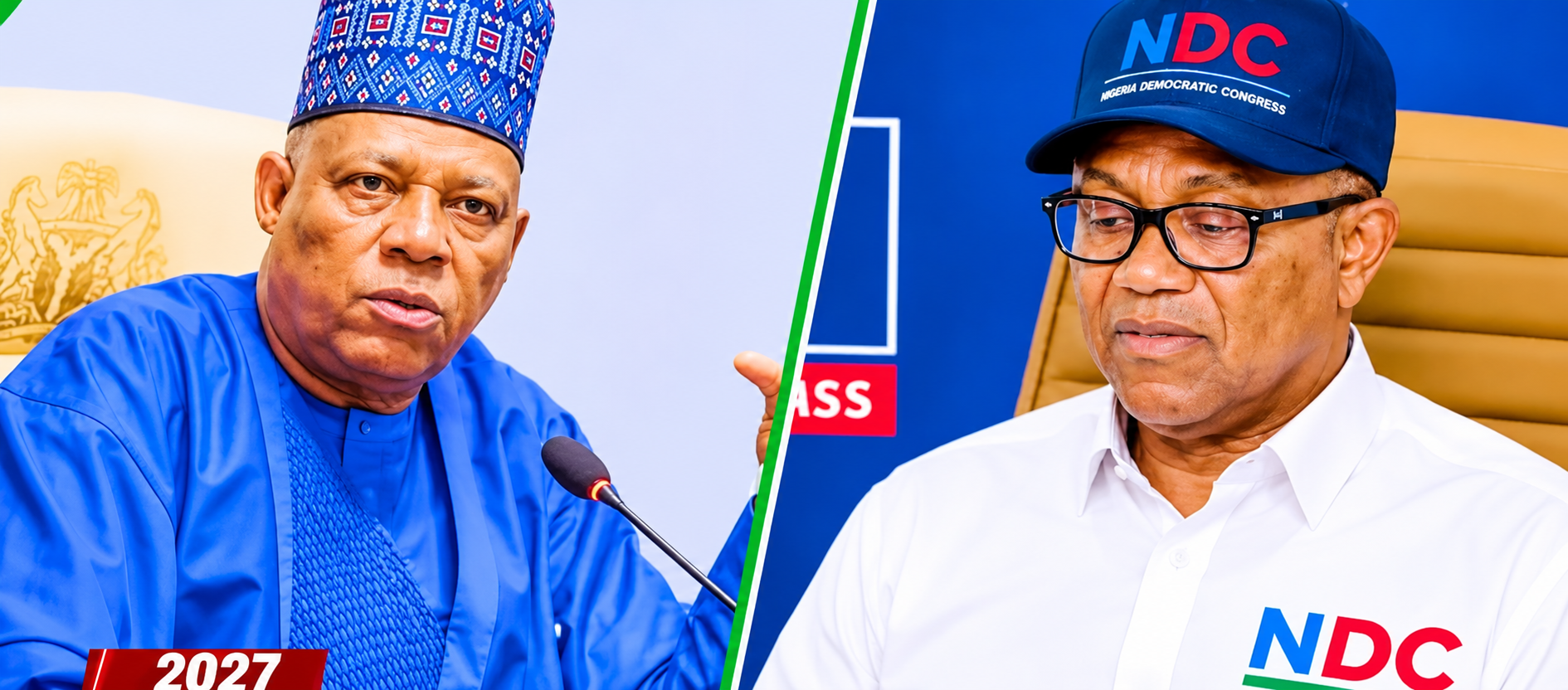
Vice-President Kashim Shettima has declared that former President Muhammadu Buhari enjoyed greater popularity than former Anambra State Governor and presidential candidate of the Nigeria Democratic Congress (NDC), Peter Obi.
Shettima made the remark on Thursday, November 19, 2026, during the All Progressives Congress (APC) presidential campaign rally in Awka, Anambra State, where he urged the people of the South-East to strengthen their political relationships with other regions of the country.
The Vice-President argued that Buhari’s political experience demonstrated that popularity within a particular region was insufficient to secure victory in Nigeria’s presidential elections.
According to Shettima, Buhari contested the presidency in 2003, 2007 and 2011 but failed to win despite enjoying considerable support in Northern Nigeria.
He said the former president had a strong electoral base of approximately 15 million votes in the North but still needed broader national support to achieve his presidential ambition.
“Again, he had a strong base of 15 million votes in Northern Nigeria. He tried again in 2011, he lost. Because having a strong base across the nation is what you need to win a presidential election in a country like Nigeria,” Shettima said.
The Vice-President also cautioned the Igbo people against allowing political disagreements to create divisions between the South-East and other parts of Nigeria.
He maintained that the region remained an important component of the country’s political and economic structure, urging its people to build stronger relationships across regional boundaries.
Shettima claimed that approximately 17 million Igbo people lived in Northern Nigeria, while another 10 million resided in Lagos.
He said the figures highlighted the importance of political engagement beyond the South-East, encouraging the people to take advantage of their widespread presence across the country.
“Don’t let anyone tell you that Igbos are not an essential component of the Nigerian configuration,” he said.
He further appealed to the people of the region to embrace political tolerance and make informed decisions ahead of the 2027 general elections.
Speaking about his personal relationship with the Igbo community, Shettima disclosed that some of his closest friends and aides were from the South-East.
He said he had maintained strong relationships with people from the region and had committed personal resources and time to issues affecting them since assuming office as Vice-President.
Shettima also recalled the political alliance that brought the APC to power in 2015, urging the South-East to strengthen its participation in national politics.
His comments come amid growing political realignments ahead of the 2027 general elections, with Peter Obi expected to remain one of the prominent opposition figures in the contest for national political support.
The remarks also place renewed attention on the debate surrounding regional political influence, national acceptance and the importance of building alliances across Nigeria’s geopolitical zones ahead of the next presidential election.

Former Vice-President Atiku Abubakar has called on the Independent National Electoral Commission (INEC) to subject its proposed Artificial Intelligence (AI) system to an independent audit before deploying the technology for managing election results in the 2027 general elections.
Atiku warned that using artificial intelligence in election result management without adequate transparency and safeguards could undermine public confidence in the electoral process.
He expressed concern that algorithms could potentially delay, reject or interfere with the transmission of polling unit results if their operations were not properly monitored.
The former vice-president made the demands in a petition addressed to the INEC Chairman on behalf of the African Democratic Congress (ADC) and other democratic stakeholders.
In a statement issued on Thursday by the Director of Strategic Communication of the ADC Presidential Campaign Council, Phrank Shaibu, Atiku called for the disclosure of the technical and operational details of the proposed system.
He specifically requested access to its source code, training data, discrepancy-detection criteria, as well as the identities of its developers and third-party vendors.
Atiku also urged INEC to grant independent cybersecurity experts, political party representatives and civil society technologists access to the system for a comprehensive assessment ahead of the nationwide mock accreditation exercise scheduled for November 28, 2026.
The former presidential candidate raised concerns over INEC’s planned integration of artificial intelligence and intelligent document processing into the process connecting its Data Verification and Authentication System with the INEC Result Viewing (IReV) portal.
According to him, Nigerians deserve to understand how the technology operates and the extent of its involvement in election result management.
“INEC cannot ask Nigerians to trust a system whose rules they are forbidden to see. If an algorithm can flag a polling unit result sheet, the public deserves to know what triggers that flag, who set the threshold, who can change it and what happens to the result afterward,” he said.
He warned that technical challenges such as poor lighting, unfamiliar handwriting and worn-out paper could cause genuine polling unit result sheets to be flagged or delayed.
Atiku maintained that such limitations should not become grounds for withholding valid election results, insisting that discrepancies must be handled consistently across polling units.
He consequently called on the commission to establish and publicly disclose a clear procedure for reviewing results flagged by the AI system.
He said INEC should explain who would be responsible for reviewing flagged results, how decisions would be documented, the process for notifying political parties and how errors could be challenged.
Atiku further insisted that artificial intelligence should serve strictly as an administrative tool under human supervision and should not be permitted to delete, alter or permanently block election results.
He also asked the electoral commission to reaffirm the legal status of Form EC8A, the polling unit result sheet completed and signed by presiding officers and party agents.
“The polling unit result sheet, Form EC8A, records what happened where the people voted. INEC must publicly reaffirm the legal status of the physical form completed and signed at the polling unit, and explain how it will resolve any conflict between that document and an AI assessment.
“A machine’s verdict cannot be allowed to quietly displace the evidence witnessed by voters and party agents,” he added.
The former vice-president also proposed that political parties be given real-time monitoring access through a dedicated dashboard or observer interface.
He said such access would enable parties to monitor results flagged by the system, upload delays and submissions that might be blocked during elections.
Atiku urged the National Assembly to summon INEC’s leadership and its Information and Communication Technology Directorate to explain the system’s design, operational safeguards and arrangements for an independent audit.
He also called on election observers and international partners to incorporate the digital handling and transmission of results into their election monitoring activities.
Similarly, he advised voters to document results as announced and displayed at their respective polling units to provide records that could be compared with electronically uploaded results.
Atiku linked the demand for transparency to his campaign’s promise of an affordable life, arguing that Nigerians must be allowed to determine their political future without technological interference.
“Voters must be free to accept or reject that promise at the ballot box. No hidden algorithm should stand between a struggling family’s vote and the change that family hopes to see,” he said.
He urged INEC to address the concerns before public mistrust surrounding the proposed technology escalated into an electoral crisis.
INEC’s IReV portal provides public access to scanned copies of polling unit result sheets. However, the portal is distinct from the statutory process through which election results are collated and declared.
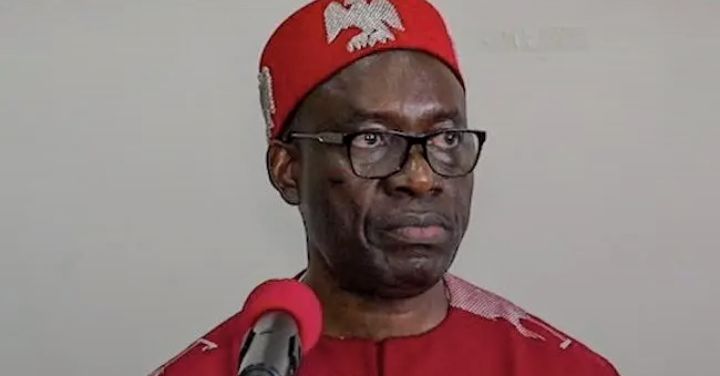
Anambra State Governor, Professor Chukwuma Soludo, has formally declared the support of the All Progressives Grand Alliance (APGA) for President Bola Tinubu’s re-election bid in the 2027 general election.
Soludo announced the party’s decision on Thursday while handing over the APGA flag to Vice-President Kashim Shettima during a joint presidential campaign rally organised by APGA and the All Progressives Congress (APC) in Awka, Anambra State.
The rally, held at Dr Alex Ekwueme Square, was tagged “SoluTinubu 2027” and attracted supporters of both political parties, who turned out in their respective party colours with flags and campaign materials.
Speaking at the event, the governor said APGA had maintained an alliance with the party at the centre since 2011, noting that the relationship had been sustained through cooperation between elected representatives of both parties.
Soludo explained that APGA lawmakers in the National Assembly had consistently worked with their APC counterparts, describing the relationship as an example of political cooperation.
“APGA has always been in solidarity with the party at the centre, and therefore, that partnership has meant that all the APGA members of the National Assembly in Abuja, they work with the caucus of the APC and the National Assembly,” he said.
The governor also disclosed that the Speaker of the House of Representatives had commended the cooperation between APGA and APC lawmakers.
He said the Speaker described the APGA caucus as one of the most cooperative groups in the House of Representatives.
Describing Thursday’s gathering as a joint rally, Soludo said the partnership between the two parties should continue in the interest of progress and national development.
“Now, I want to emphasise that this flag, we are handing it over in the spirit of progressives working together. Here in Anambra, we are united for one candidate, and that candidate is President Bola Tinubu and Vice-President Shettima,” he said.
However, Soludo clarified that the alliance would not prevent APGA and APC from fielding separate candidates for other elective positions, including the Senate, House of Representatives and State House of Assembly.
He explained that candidates who emerge victorious would cooperate with the caucus of the other party at their respective legislative levels.
According to him, APGA lawmakers elected into the National Assembly would work with the APC caucus, while APC lawmakers elected into the Anambra State House of Assembly would cooperate with the APGA caucus.
“That is in the spirit of progressives working together,” the governor added.
Soludo subsequently announced that APGA’s National Working Committee, National Executive Committee and the wider party membership had resolved to adopt Tinubu as their preferred candidate for the 2027 presidential election.
He urged APGA members across the country to mobilise support and votes for the President and his running mate, Shettima.
The governor said the decision was informed by the party’s commitment to national unity and its position that a Southern President should be allowed to complete his tenure before power returns to the North.
“APGA National Working Committee, National Executive Committee, and the entire APGA family, we have resolved to adopt, in the spirit of one Nigeria, united Nigeria, in the spirit of solidarity with a Southern President to complete his term before the presidency goes back to the North,” he said.
Soludo further linked the endorsement to the principles of progressivism, cooperative federalism and national unity.
He then formally handed over the party’s flag to Shettima, declaring APGA’s readiness to campaign and mobilise support for Tinubu and the Vice-President ahead of the 2027 election.
“In the spirit of progressivism, in the spirit of cooperative and competitive federalism, in the spirit of unity and progress of one indivisible united Nigeria, we hereby handing our flag that all APGA faithful all over Nigeria will campaign and mobilise votes for President Bola Tinubu and his vice-presidential candidate, Senator Kashim Shettima, GCON. Therefore, we hand over to you,” Soludo said.
-
 Security4 months ago
NDLEA Declares Alleged Drug Kingpin, Three Associates Wanted, Freezes ₦9.8bn Linked to Syndicate
-
 National Affairs4 months ago
ICPC Uncovers 908 Suspected Ghost Workers Across 50 Federal MDAs, Recovers ₦942 Million
-

 Business/Finance4 months ago
How to Apply for Tunde Onakoya’s ₦250 Million Scholarship Programme and Free Laptop Offer
-

 Judiciary | Public Safety4 months ago
INEC Tells Court Voter Information Is Not Confidential in Emeka Ike’s ₦10bn Lawsuit
-

 Politics4 months ago
Atiku Challenges Tinubu to Reveal Details of ₦15.13bn SUV Procurement in 2026 Budget
-
 Judiciary | Public Safety4 months ago
Court to Rule Friday on NDLEA’s Bid to Destroy ₦480bn Meth Lab in Ogun
-
 Security4 months ago
Family Paid ₦50 Million Ransom to Secure Release of Abducted Kebbi Judge
-
 News4 months ago
2026 Budget: FG Earmarks ₦962.83bn for SUVs, Empowerment Projects Amid Debt Concerns