
2027 Elections
2027: Gombe Women Mobilise Stakeholders, Unveil 10-Point Demands Charter


The Gombe Women Agenda has mobilised religious leaders, traditional rulers and other critical stakeholders to support greater inclusion of women in governance and decision-making ahead of the 2027 general elections.
The group, which comprises more than 100 registered women’s organisations in Gombe State, made the call during a stakeholders’ engagement held in Gombe on Wednesday, where it presented its proposed charter of demands for women in the state.
The convener of the Gombe Women Agenda, Ibrahim Yusuf, said the initiative was established to bring together the concerns of women’s groups and engage political aspirants on issues affecting women ahead of the 2027 elections.
Yusuf said the group intended to engage politicians who would contest the elections and present a harmonised set of concerns, recommendations and advocacy priorities developed by women across the state.
“We want to engage the incoming politicians for 2027 so that we can harmonise and work on their issues, challenges, resolutions, recommendations and advocacy engagement,” he said.
According to him, the involvement of men, religious leaders and traditional institutions was deliberate because the women could not achieve their objectives without the support of influential stakeholders across communities.
He explained that the group considered it important to secure the buy-in of community leaders before directly engaging political actors.
“We feel it is not necessarily just to engage politicians directly without getting the buy-in of men.
So, we mobilised all the stakeholders to adopt and share the document with them,” Yusuf said.
He disclosed that the proposed charter contained 10 major pillars and about 20 recommendations, with girl-child education, maternal mortality and women’s economic empowerment among its major priorities.
Yusuf said improving access to education for girls remained a key concern, stressing that efforts to advance women’s development must go beyond existing interventions.
“The issue of education, especially the education of the girl-child, should go beyond where it is.
There is also the issue of maternal mortality and economic empowerment because so many women are contributing to the micro-economy but they are not recognised or mentioned in any forum,” he said.
He added that improving the welfare and economic capacity of women would have a broader impact on families and communities because of the central role women play in household and community affairs.
“Women are more vulnerable because they take care of men, children and sometimes people with disabilities.
If you really want to touch the lives of everybody, if you touch the lives of women, definitely you are going to solve half of the problems of our community,” Yusuf said.
Religion, culture and women’s participation
The convener also highlighted the role of religious and traditional institutions in addressing barriers to women’s participation in governance and electoral activities.
He said the stakeholders had reviewed the proposed charter to ensure that it reflected the values and concerns of different religious communities in the state.
Yusuf said misconceptions surrounding women’s development could create barriers to their participation, adding that religious and traditional leaders could help the group communicate its demands to political leaders and other decision-makers.
He noted that traditional and religious leaders often had access to political office holders and could therefore serve as an important channel for advocacy.
“They have listening ears of the executive or politicians. So, if anybody emerges, definitely we are going to make use of them where we cannot reach those politicians.
We will make use of their platforms to reach out to them,” he said.
The group said it plans to formally launch and make the charter public within the next two to three weeks.
Yusuf also urged Nigerians to participate actively in the 2027 elections and resist intimidation during the electoral process.
“Our expectation is that people should come out and vote, but they should vote wisely. They should stop being intimidated by any politician,” he said.
He further urged voters not to allow inducements offered during campaigns to determine how they cast their ballots.
“They should collect whatever anybody brings because, after all, it is their property and their money. But during voting, they should use their conscience to vote wisely so that better people will emerge at different positions,” he said.
Gombe women demand stronger political inclusion
Also speaking, the Secretary of the Gombe Women Agenda, Ruth Abner, said the stakeholders’ meeting was important because the women could not achieve their objectives without the support of influential figures within their communities.
She described the religious and traditional leaders, as well as other stakeholders present, as the backbone of the movement.
“The stakeholders we have gathered today are the backbone of our movement.
Having gone through the process of bringing out the agenda of Gombe women, we realised that we cannot do this without their help and support,” Abner said.
She said the organisation, which brings together more than 100 registered women’s groups, was focused on ensuring that women’s concerns were recognised and that women had a voice in decision-making processes.
“We are expecting women to be carried along, women to be heard and women to be included at the decision-making table,” she said.
Abner identified inadequate support from men, domestic restrictions, electoral violence and insecurity around polling units as some of the factors limiting women’s participation in elections.
She said these challenges often discourage women from coming out to vote or reduce their confidence in participating in the electoral process.
“A lot of things are stopping women from coming out or distracting them or not giving them the confidence to come out and vote,” Abner said.
She stressed that adequate security would be essential to ensuring that women could participate freely in the 2027 elections.
“We first of all need to be secured and safe. We need security,” she said.
The secretary said the group would intensify grassroots advocacy and sensitisation ahead of the elections, particularly in rural communities.
According to her, the campaign would also focus on discouraging voters from exchanging their votes for immediate financial or material benefits.
Group not demanding women-only candidates
Abner clarified that the Gombe Women Agenda was not demanding that women must necessarily occupy all or specific positions on the ballot in 2027.
Rather, she said the group wanted political leaders who would listen to women’s concerns and take concrete steps to address them.
“We are not insisting that women must be on the ballot. If we can get a man that will listen to us and even solve the problem, we don’t have a problem,” she said.
“We are not competing. We are begging and laying down our problems to be solved. That’s just it.”
She said the group’s major objective ahead of 2027 was to achieve greater recognition of women’s concerns and increase their participation in decision-making across the state.
Abner added that grassroots mobilisation would remain central to the group’s strategy as it works to reach women in communities across Gombe.
The Gombe Women Agenda is expected to formally unveil its charter within the coming weeks, after which the group plans to use the document as a basis for engagement with political aspirants and other stakeholders ahead of the 2027 elections.
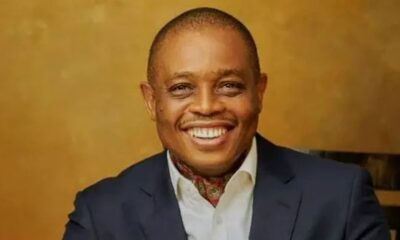




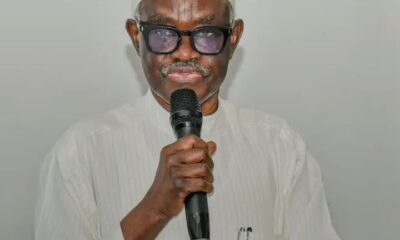


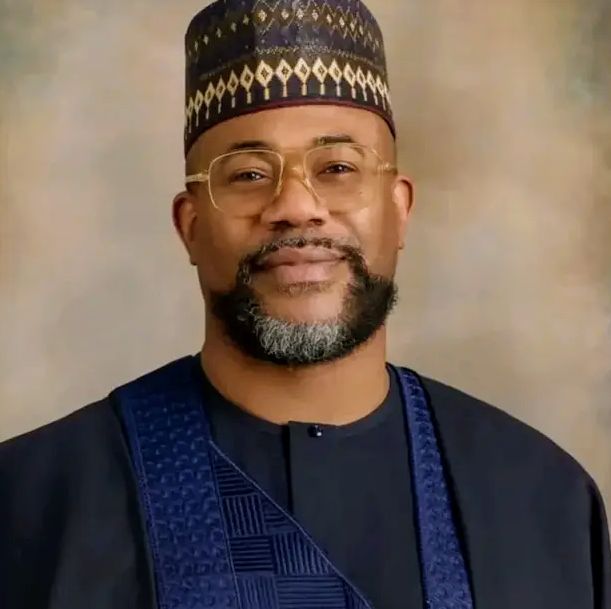
The Kwara State chapter of the Peoples Democratic Party has appointed a former governorship aspirant, Prince Omar Bolaji Gambari, as the Director-General of its campaign organisation for the 2027 governorship election.
Gambari’s appointment was unanimously approved at an expanded meeting of the party’s leadership and its 2027 governorship candidate, Bolakale Kawu.
The meeting was presided over by the state chairman of the party, Isa Adamu.
The appointment was disclosed in a statement issued in Ilorin on Wednesday by the PDP Publicity Secretary in the state, Olusegun Adewara.
According to the party, Gambari was selected based on his professional experience, organisational capacity, knowledge of Kwara’s political environment and his engagement with youths across the state.
The statement described the new campaign Director-General as bringing “a combination of professional experience, youthful energy, organisational exposure and an understanding of contemporary political communication” to the role.
The party said Gambari’s professional background spans international law, finance, entrepreneurship, real estate, agriculture and community development.
It added that his diverse experience would be useful in coordinating a campaign organisation involving people from different backgrounds and generations.
Gambari was among the aspirants who contested the PDP’s 2027 governorship ticket before the party adopted a consensus arrangement that produced Kawu as its candidate.
During the process, Gambari and other aspirants reportedly agreed to support the outcome of the consultations and work with whoever emerged as the party’s consensus candidate.
He subsequently stepped down from the contest in favour of Kawu.
Following Kawu’s emergence as the party’s governorship candidate, Gambari continued to participate in the PDP’s political activities in the state.
The party said his continued involvement, alongside his professional and political experience, contributed to the decision to appoint him as head of the campaign organisation.
“Our party believes his experience in the private sector, international legal practice, entrepreneurship and community engagement, combined with his familiarity with the political environment in Kwara, informed the decision to entrust him with the coordination of the party’s 2027 campaign organisation,” the statement said.
The PDP said the new campaign structure would coordinate the party’s activities across the different levels and constituencies of Kwara State ahead of the 2027 governorship election.
The appointment represents another step in the party’s preparations for the election, as political parties continue to strengthen their structures and mobilise supporters ahead of the 2027 electoral cycle.
The campaign organisation is expected to provide coordination among the party’s various structures and constituencies as the PDP intensifies preparations for the governorship contest in Kwara State.
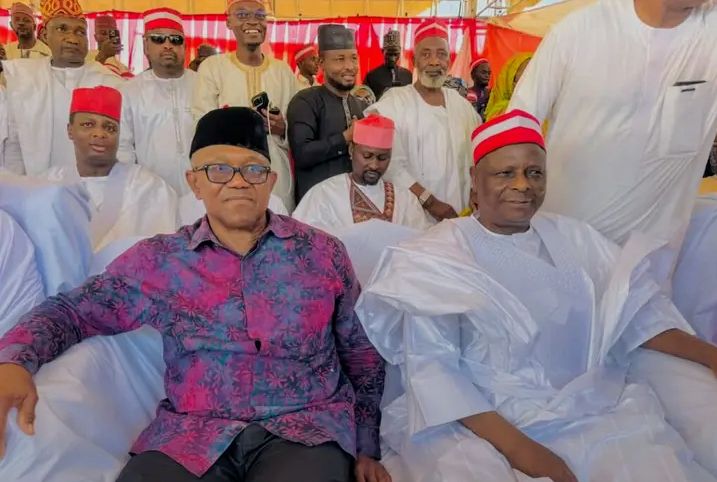
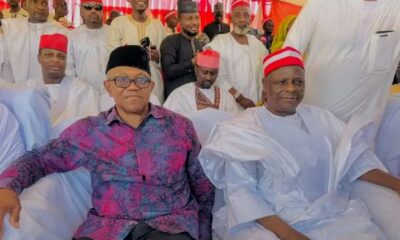
The Obi-Kwankwaso Movement, popularly known as the OK Movement, has vowed not to collapse, merge or surrender its organisational structures to the Nigeria Democratic Congress ahead of the 2027 general elections.
The Director-General of the movement, John Ughulu, made the position known on Wednesday while reacting to comments by the NDC National Leader, Senator Seriake Dickson, on the role of support groups in the party’s 2027 campaign.
Ughulu said the movement would retain its national, state, local government and ward structures, stressing that its cooperation with the NDC did not amount to organisational subordination.
Dickson had argued that political support groups should complement political parties rather than compete with them or operate as parallel structures.
The former Bayelsa State governor made the remarks on Tuesday at the unveiling of former Secretary to the Government of the Federation, Babachir Lawal, in Abuja.
Dickson said the existence of multiple support groups was normal during election campaigns but maintained that such groups should operate within their proper roles and support the political party sponsoring their candidates.
He also criticised the OK Movement’s decision to establish a presidential campaign council, describing the move as “unheard of” and “nonsensical”.
However, Ughulu disagreed with the characterisation, insisting that the OK Movement was not a conventional support group created as an appendage of a political party.
He said the movement was independently organised and comprised members of different political parties united by their support for the presidential ticket of Peter Obi and Rabiu Kwankwaso.
“For the avoidance of doubt, the OK Movement is not a support group created as an appendage of any political party or another movement.
It is independently organised, managed and structured through its own established movement mechanisms,” Ughulu said.
He argued that the movement’s decision to establish its own campaign council should not be regarded as an attempt to challenge the authority of the NDC.
According to him, the political landscape has evolved beyond the conventional party structures of previous years, making it possible for independent political organisations to mobilise support for candidates while retaining their own identities.
“The OK Movement comprises individuals and members from different political parties who share a common commitment to the ideals, values and political aspirations represented by the presidential candidate, Peter Obi and his running mate, Senator Rabiu Kwankwaso,” he stated.
Ughulu maintained that the movement would continue to mobilise support for the candidates while preserving its internal administration and organisational independence.
“The OK Movement remains an independent organisation. Its existence and internal administration are not subject to the internal management of the NDC.
“The OK Movement will not be collapsed, merged or subsumed into the NDC or any other organisation. Cooperation and political alignment do not extinguish the independent identity of the Movement,” he said.
He further insisted that the movement’s established structures remained under its control.
“Our organisational structure remains the property and responsibility of the OK Movement. We will not surrender our established national, state, local government and ward structures to any political party or external support group for management,” Ughulu added.
The OK Movement DG also argued that the organisation had the right to establish campaign and mobilisation structures in support of the NDC’s presidential candidates, saying he was not aware of any provision of the party’s constitution expressly prohibiting such an arrangement.
He, however, stressed that the movement was not seeking to usurp the authority of the NDC.
“Let us also make one important distinction absolutely clear.
The OK Movement does not claim supremacy over the NDC Party, nor does it seek to usurp the constitutional powers of the party.
“We respect the NDC and recognise the constitutional authority of the party over its own internal affairs.
Equally, the NDC and every other organisation must recognise the independent identity, structure and legitimate interests of the OK Movement,” he said.
Ughulu warned that the movement would resist any attempt to take over its structures or alter its identity without the approval of its legitimate organs.
He said the organisation had invested significant effort in building its structures and would not allow them to be dissolved or transferred without due process.
“We will resist, through lawful and democratic means, any attempt by any individual or group to disenfranchise members of the movement, appropriate its structures, or unilaterally redefine its identity.
“We did not build the OK Movement overnight.
Therefore, no individual can simply declare that structure dissolved, transferred or absorbed without the authority of the Movement’s legitimate organs.
We will not be intimidated, surrender our identity or abandon the structures we have built,” he warned.
The disagreement followed the NDC’s decision to dissociate itself from a 59-member Presidential Campaign Council constituted by the OK Movement to mobilise support for Obi and Kwankwaso ahead of the 2027 elections.
The NDC National Chairman, Senator Moses Cleopas, had said the party did not authorise the movement to constitute or announce a campaign council in its name.
The party also stated that no individual, presidential candidate or support group could establish a campaign structure on behalf of the NDC without approval from its National Working Committee.
In response, the OK Movement’s National Secretary, Saadatu Sani, demanded an apology from Cleopas, insisting that the movement remained an independent political organisation with its own leadership, structures and internal processes.
The latest exchange highlights an emerging disagreement over the relationship between the NDC and organisations mobilising support for its presidential candidates ahead of the 2027 general election
The National Democratic Congress (NDC) has commenced preparations for the 2027 general elections by directing its state and Local Government Area (LGA) chairmen to begin the compilation and harmonisation of party agents across the country.
The party gave its state and LGA executives two weeks to submit the final lists of nominated agents for scrutiny and approval by the party leadership.
The directive was contained in a statement issued on Tuesday by the NDC National Publicity Secretary, Osa Director.
Director said the state and LGA chairmen were expected to immediately convene meetings with candidates and other relevant stakeholders to compile comprehensive lists of party agents in accordance with the provisions of the Electoral Act, 2026.
According to him, the party would prepare two separate categories of agents to cover the different elections scheduled for 2027.
One list will comprise agents for the National Assembly elections, while the second will cover the governorship and State House of Assembly elections.
The party said the lists would subsequently undergo scrutiny and ratification by its leadership before the commencement of training for the selected agents.
The process will involve the participation of the party’s presidential candidate and running mate, alongside other members of the leadership.
The NDC also directed that the final lists must be counter-signed by the respective state chairmen and candidates.
The party said the requirement was intended to authenticate the nominations and establish clear ownership of the submitted lists.
It further stipulated that where disagreements arise between party leadership and candidates regarding the selection of agents, the choice made by the candidate would prevail.
The statement partly read, “That State and LGA Chairmen shall meet with candidates and stakeholders to generate a comprehensive list of two sets of party agents;
those for National Assembly elections and another set for governorship/State Assembly elections.
“These party agents shall be scrutinised and ratified by the party’s leadership, including the presidential candidate and his running mate, before training commences.”
Director said the mobilisation was part of the party’s broader preparations for the 2027 elections, assuring members and supporters that its organisational structures were already being put in place for the campaign.
“The leadership of the party wishes to reassure all members, supporters and stakeholders that the National Democratic Congress is fully prepared and ready for a robust, issue-based campaign, with all necessary structures firmly in place for victory,” he said.
The commencement of agent mobilisation marks an early organisational step by the party ahead of the 2027 general elections, with the exercise expected to provide the framework for the selection and subsequent training of representatives who will monitor proceedings at polling units on election day.
-
 Security2 months ago
NDLEA Declares Alleged Drug Kingpin, Three Associates Wanted, Freezes ₦9.8bn Linked to Syndicate
-
 National Affairs2 months ago
ICPC Uncovers 908 Suspected Ghost Workers Across 50 Federal MDAs, Recovers ₦942 Million
-

 Business/Finance2 months ago
How to Apply for Tunde Onakoya’s ₦250 Million Scholarship Programme and Free Laptop Offer
-
 Politics2 months ago
Atiku Challenges Tinubu to Reveal Details of ₦15.13bn SUV Procurement in 2026 Budget
-

 Judiciary | Public Safety2 months ago
INEC Tells Court Voter Information Is Not Confidential in Emeka Ike’s ₦10bn Lawsuit
-
 Judiciary | Public Safety2 months ago
Court to Rule Friday on NDLEA’s Bid to Destroy ₦480bn Meth Lab in Ogun
-
 Security2 months ago
Family Paid ₦50 Million Ransom to Secure Release of Abducted Kebbi Judge
-
 News2 months ago
2026 Budget: FG Earmarks ₦962.83bn for SUVs, Empowerment Projects Amid Debt Concerns