
News
Ondo Assembly Impeachment Crisis Deepens as Spokesperson Insists Speaker Must Go


The impeachment crisis rocking the Ondo State House of Assembly has deepened, with the Assembly’s spokesperson, Olatunji Ifabiyi, insisting that the process to remove Speaker Olamide Oladiji remains ongoing.
Ifabiyi, who spoke with the News Agency of Nigeria (NAN) in a telephone interview on Thursday, dismissed reports that lawmakers had abandoned moves to impeach the Speaker.
He described such reports as misinformation, maintaining that members of the Assembly remained committed to removing Oladiji from office despite ongoing reconciliation efforts involving Governor Lucky Aiyedatiwa and other political stakeholders.
“We have been hearing reports that we have stopped the process; that is not correct. It is misinformation. We are still on it. He cannot continue as our Speaker,” Ifabiyi said.
According to him, the intervention by Governor Aiyedatiwa has not halted the lawmakers’ plans, stressing that there was no going back on the impeachment move.
“Although Gov. Lucky Aiyedatiwa has been speaking with some of us, that does not stop the impeachment process. There is no going back,” the Assembly spokesperson said.
The development has heightened uncertainty within the state legislature as political leaders continue efforts to resolve the disagreement between members of the Assembly and the Speaker.
However, Oladiji has rejected claims that an impeachment process is underway, saying the issues responsible for the disagreement had already been resolved following interventions by the governor and leaders of the All Progressives Congress (APC).
“There is nothing like an impeachment process because the issues have been resolved. There is no impeachment,” the Speaker said in a statement.
Oladiji said the governor and other party leaders had intervened in the matter and that lawmakers were expected to hold their parliamentary meeting.
“Mr Governor and other leaders of the party have intervened, and today we are expected to hold our parliamentary meeting,” he said.
The Speaker also addressed an earlier incident involving three youth leaders who were seen within the Assembly complex on Thursday.
According to Oladiji, the youths had visited the Assembly to collect recruitment forms and were questioned by some lawmakers about their presence.
He explained that he subsequently came out of his office to inform the lawmakers that the individuals were his guests and had previously visited the Assembly premises.
“I came out of my office and explained to the members that they were my guests and had visited the Assembly on previous occasions,” he said.
Oladiji maintained that the visitors did not harass anyone and that the disagreement was eventually resolved after some lawmakers insisted that they leave the premises.
“We were able to resolve the matter, and there was nothing like an impeachment notice or impeachment process,” he added.
The conflicting positions from the Assembly spokesperson and the Speaker leave the status of the alleged impeachment move unclear, even as efforts continue to reconcile the lawmakers and prevent the political dispute from escalating.






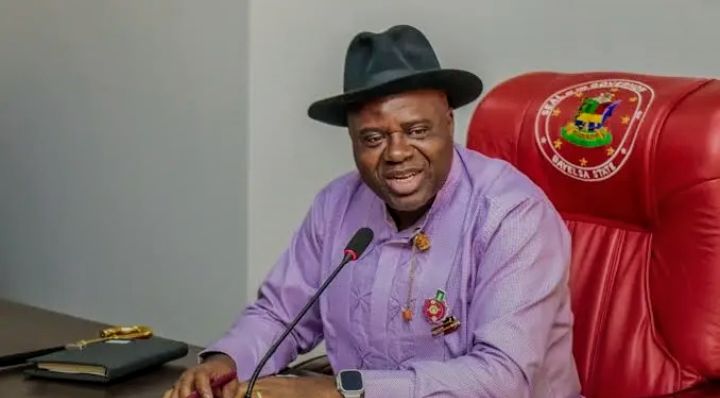
Bayelsa State Governor, Senator Douye Diri, has revealed that the death of a prominent Ijaw leader in a boat accident, alongside years of transportation difficulties in Southern Ijaw, inspired his administration’s decision to construct roads and bridges linking communities in the area.
Diri said the tragic incident involving his kinsman, late Chief F.K. Agara, who died from injuries sustained in a boat mishap at Oporoma, strengthened his resolve to address the long-standing challenge of poor road connectivity in the oil-rich local government area.
The governor spoke on Thursday at his country home in Sampou while hosting a delegation of Southern Ijaw women and his former students from the 1986 set of Government Secondary School, Amassoma.
The delegation included the Acting Paramount Ruler of Amassoma, Chief Godswill Akedesuo, and the Commissioner for Women, Children Affairs, Empowerment and Social Development, Joanah Gigi, who were also among his former students.
Recalling the incident, Diri explained that Agara, a prominent Ijaw leader and politician, sustained fatal injuries after falling from a boat during a political campaign at Oporoma before the creation of Bayelsa State in 1996.
According to him, the boat’s propeller injured Agara, and despite being taken to Port Harcourt for medical attention, he eventually died.
Diri said the tragedy reinforced the need to establish reliable road connections between rural communities and the state capital, adding that he made it a priority after becoming governor.
He said, “One of my kinsmen died in a boat mishap at Oporoma when him and others were on a campaign. He fell off the boat and the propeller injured him. By the time he was taken back to Port Harcourt, he gave up. And I decided that I was going to break that jinx.”
The governor recalled that during his first-term campaign in 2019, residents of Southern Ijaw identified the construction of a road linking Oporoma, the local government headquarters, as one of their major demands.
He noted that the area had remained inaccessible by road for years, making transportation and access to essential services difficult for residents.
Diri said road infrastructure was crucial not only for connecting communities but also for stimulating economic activities, creating opportunities and accelerating development.
He acknowledged that the financial implications of constructing roads and bridges across the state, particularly in riverine communities, could have discouraged previous administrations.
However, he maintained that the high cost of the projects would not stop his government from pursuing its development agenda.
The governor expressed satisfaction with the completion of the bridges at Aguobiri and Angiama, as well as the extension of the road to Oporoma, describing the projects as significant milestones in opening up Southern Ijaw.
“On behalf of government, I thank you for your show of love and support for my administration. When the cost of constructing the bridges at Aguobiri and Angiama and the road to Oporoma was given, it was fearful and anybody could have chickened out.
“One of the features that brings about civilization is road infrastructure. Many communities like mine, Sampou, suffered the same fate because then they were not connected by road.
“I am as elated as you are that we completed the bridges and have taken the road to the Southern Ijaw local government headquarters. We can now drive to that place and to several other communities,” he said.
Diri further highlighted the improvement in transportation between communities following the projects, noting that travelling by boat from Oporoma to Olugbobiri now takes about 15 minutes, while the journey from Oporoma to Ekowe takes approximately five minutes.
He added that significant progress was also being made on the road project leading to Eniwari.
The governor said the recognition and support shown by the women would encourage his administration to pursue more infrastructure projects across the state.
Beyond infrastructure development, Diri also used the occasion to endorse Hon. Rodney Ambaiowei, the All Progressives Congress (APC) candidate for Southern Ijaw Federal Constituency.
He urged residents of Southern Ijaw to support President Bola Tinubu and other APC candidates at all levels in the forthcoming elections, arguing that the President had supported Bayelsa State’s development efforts.
Diri maintained that improved road infrastructure would strengthen connectivity, expand economic opportunities and help communities that had remained isolated for decades become more accessible.
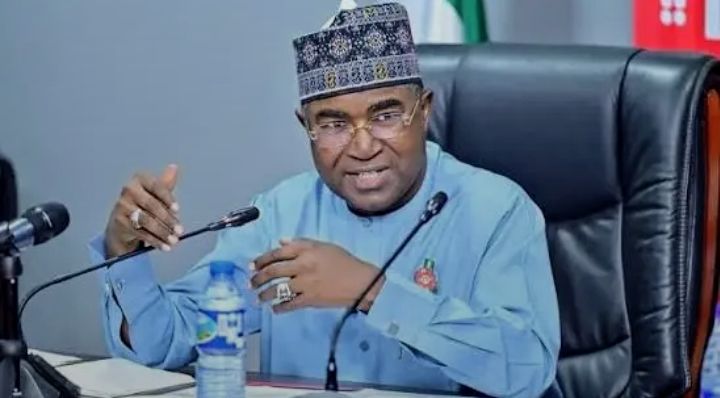
The Chairman and Chief Executive Officer of the National Drug Law Enforcement Agency (NDLEA), Brig. Gen. Mohamed Buba Marwa (retd.), has declared a renewed war against drug abuse and trafficking in Edo State, calling for stronger collaboration among security agencies, religious organisations, parents and community leaders.
Marwa made the declaration on Thursday during an interactive stakeholder engagement in Benin, where he urged residents and relevant institutions to join forces with the agency to tackle the growing challenge of illicit drug use and trafficking.
The engagement, themed ‘Addressing the Drug Problem in Edo State’, attracted representatives of the Nigerian Army, Nigeria Police Force, Nigerian Air Force, National Youth Service Corps, civil society organisations, non-governmental organisations and community leaders, among others.
Speaking at the event, the NDLEA boss stressed that the fight against illicit drugs required a collective effort, noting that the agency could not effectively address the problem without the support of other stakeholders.
“I am here personally to declare war against drug abuse and trafficking in Edo State. Even though the NDLEA is the lead agency in the country for the enforcement of drug laws, we cannot do it alone,” he said.
He urged stakeholders to collaborate in tackling the menace, insisting that religious institutions, families, schools and community organisations all had important roles to play.
Marwa particularly called on parents and guardians to lead by example, monitor their children and intervene early whenever they notice signs of drug-related problems.
He also encouraged families to seek professional assistance for children already involved in drug abuse, stressing that there should be no stigma attached to seeking help.
“We must, as parents, engage early and seek help for our children. There is no shame in it. This is very important for our children and for the future of our country. Each of us must play our part,” he added.
The NDLEA chairman further linked illicit drug use to several criminal activities, warning that addressing substance abuse was essential to improving public safety and protecting communities.
As part of efforts to strengthen public awareness, Marwa disclosed that he would meet with the Christian Association of Nigeria (CAN) and the Islamic Council in Benin to secure their support in educating worshippers and communities about the dangers of drug abuse.
He said religious leaders could use their platforms to discourage illicit drug consumption and encourage community participation in prevention efforts.
The NDLEA boss also called on schools across the state to establish drug-free and counselling clubs to educate students and provide support for those facing drug-related challenges.
He urged students to report to their teachers and school authorities whenever anyone offered them illicit substances.
In addition, Marwa disclosed that he had directed members of the National Union of Road Transport Workers (NURTW) to stop the sale of drugs and alcohol in motor parks across Edo State.
According to him, the union members had agreed to comply with the directive as part of efforts to prevent motor parks from becoming centres for illicit drug activities.
Earlier, the Edo State NDLEA Commander, Mitchell Ofoyeju, emphasised the importance of cooperation among security agencies in tackling drug abuse and trafficking.
Ofoyeju said the agency could not win the fight in isolation, noting that sustained collaboration was necessary to strengthen enforcement operations across the state.
He appreciated the Nigerian Army, Nigeria Police Force and other security agencies for their continued support, adding that the arrests and seizures recorded by the NDLEA over the years would not have been possible without their cooperation.
The engagement forms part of efforts to strengthen stakeholder participation in preventing drug abuse, disrupting trafficking networks and building safer communities in Edo State.
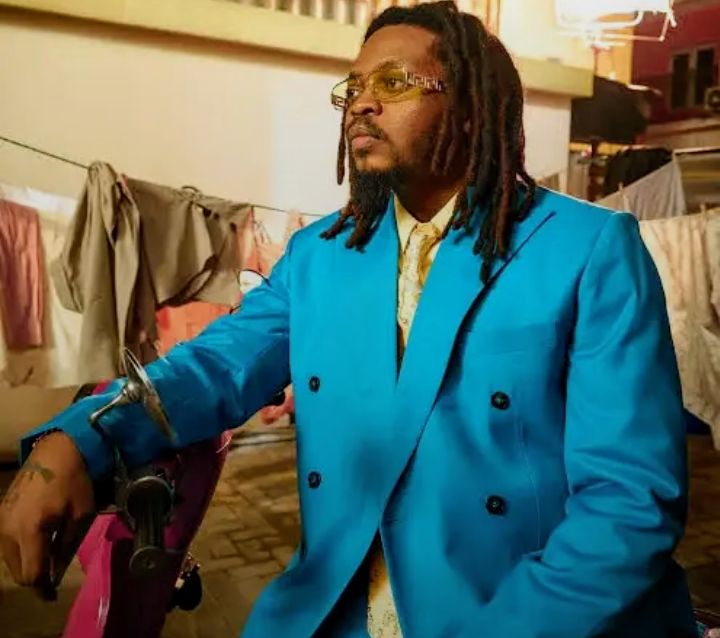
Nigerian rapper and YBNL record label boss, Olamide Adedeji, popularly known as Badoo, has urged Nigerians to embrace their cultural heritage, insisting that African traditions should not be demonised or treated as something to be ashamed of.
The music star made the remarks while expressing pride in his Yoruba roots and calling for greater appreciation of Nigerian culture, traditions and indigenous practices.
Speaking at an event on Tuesday, November 3, at The Pod by Nile Luxury Cinemas, Olamide said African cultural practices should not automatically be associated with evil or superstition.
“Our culture and tradition are not diabolical, and they are not to be demonised. We’re proud of who we are, where we’re coming from and everything about our heritage, tradition and culture,” he said.
Switching to Yoruba, the rapper used black soap, locally known as ose dudu, to illustrate his point about cultural identity and acceptance.
“I’m a Yoruba boy,” he said. “If you give me black soap, I’ll gladly collect it and use it.”
Dressed in a colourful adire outfit, Olamide spoke about the need for Africans to appreciate their cultural backgrounds rather than allow negative perceptions to shape how they view their traditions.
A video of his remarks was shared on Sotayo’s Instagram page on Wednesday, drawing attention to his comments on the relationship between African identity, traditional practices and spirituality.
Olamide has consistently incorporated Yoruba language, expressions and indigenous sounds into his music, blending traditional storytelling with contemporary hip-hop and Afrobeats.
Through his music and influence in the Nigerian entertainment industry, the rapper has contributed to the visibility of indigenous-language music among younger audiences.
Other Nigerian entertainers associated with his YBNL music label, including Adekunle Gold, Lil Kesh and Asake, have also incorporated indigenous languages, traditional sounds and cultural expressions into their musical styles.
His remarks have further highlighted broader conversations about how African traditions are perceived, particularly where indigenous cultural practices are sometimes viewed through the lens of superstition or spirituality.
Black soap, known among the Yoruba as ose dudu, is a traditional skincare product commonly made from ingredients such as plantain skins, cocoa pods and palm kernel oil.
Although widely used for skincare, the product is also associated with certain traditional beliefs and practices in some communities.
Olamide’s comments underscore the importance of cultural identity and the need to appreciate indigenous heritage without automatically attaching negative meanings to traditional African practices.
-

 Security4 months ago
NDLEA Declares Alleged Drug Kingpin, Three Associates Wanted, Freezes ₦9.8bn Linked to Syndicate
-

 National Affairs4 months ago
ICPC Uncovers 908 Suspected Ghost Workers Across 50 Federal MDAs, Recovers ₦942 Million
-

 Business/Finance4 months ago
How to Apply for Tunde Onakoya’s ₦250 Million Scholarship Programme and Free Laptop Offer
-

 Judiciary | Public Safety4 months ago
INEC Tells Court Voter Information Is Not Confidential in Emeka Ike’s ₦10bn Lawsuit
-

 Politics3 months ago
Atiku Challenges Tinubu to Reveal Details of ₦15.13bn SUV Procurement in 2026 Budget
-

 Judiciary | Public Safety4 months ago
Court to Rule Friday on NDLEA’s Bid to Destroy ₦480bn Meth Lab in Ogun
-

 News3 months ago
2026 Budget: FG Earmarks ₦962.83bn for SUVs, Empowerment Projects Amid Debt Concerns
-

 Security3 months ago
Family Paid ₦50 Million Ransom to Secure Release of Abducted Kebbi Judge