
Security
Niger Miners’ Deaths: Panel Says Detention Scene Was Washed Before Probe


The chairman of the investigative committee probing the deaths of 33 miners in the custody of the Nigeria Security and Civil Defence Corps (NSCDC) in Niger State, Jonathan Kure, has disclosed that the scene was washed before medical investigators could examine evidence that might have helped determine the cause of the deaths.
Kure made the disclosure while recounting the circumstances surrounding the incident at an NSCDC detention facility on September 17, 2026.
Speaking in an interview with ARISE News on Wednesday, he said the removal of bloodstains and other evidence from the scene had complicated efforts by the medical and pathological teams to establish what led to the deaths.
According to him, the investigators needed physical evidence from the scene to support autopsies and toxicology tests, which could have provided important clues about the circumstances surrounding the incident.
“And remember, there was this claim of either spray or disease and all that. Before we got there, all these had been washed up,” Kure said.
He explained that the medical team required such evidence to determine whether the deaths resulted from exposure to a substance, an illness or another cause.
“Our pathological team, the medical team, when they went, we all needed all these things because when you do the autopsy, when you do the toxicology and all that, these are things that will give you signals as to what precisely led to the death,” he added.
The committee chairman said 75 people were detained during an operation conducted on September 15 and 16, including 24 women.
He explained that one of the detainees subsequently took ill and was kept outside the cell, leaving 74 people inside the detention facility.
According to him, the 24 women were held in a separate cell, while 50 men were confined in a single cell measuring 12 by 12 metres.
Kure said the male detainees began complaining about the heat and asking for water from the evening of September 16.
However, the cell guard allegedly refused to open the door after receiving instructions from a superior not to do so under any circumstances.
He said only one guard was on duty at the cell at the time and that the officer acted strictly on the instruction without exercising discretion.
“The cell guard — only a single cell guard on duty — was told by one of his superiors when he was closing, ‘Don’t on no circumstance should you open this cell.’
“And he was acting strictly on that order; he refused to use discretion. These people were dropping dead one after the other in the cell,” Kure said.
He added that when the cell was eventually opened in the early hours of September 17, 33 of the 50 men were found dead, while the remaining 17 survived.
The committee chairman stressed that the incident occurred entirely within the NSCDC facility, making the circumstances of the miners’ detention and the handling of the detainees central to the investigation.
The investigative committee is examining the events leading to the deaths, including the conditions in which the miners were held, the actions of officers on duty and the available medical evidence.
The alleged washing of the scene before the arrival of investigators has raised questions about the preservation of potential evidence and the challenges facing efforts to establish the precise cause of the deaths.
The committee was established following the incident to investigate the circumstances surrounding the miners’ detention and deaths and determine the factors that contributed to the tragedy.
Its findings are expected to provide further clarity on what happened at the detention facility and help establish accountability where wrongdoing is established.











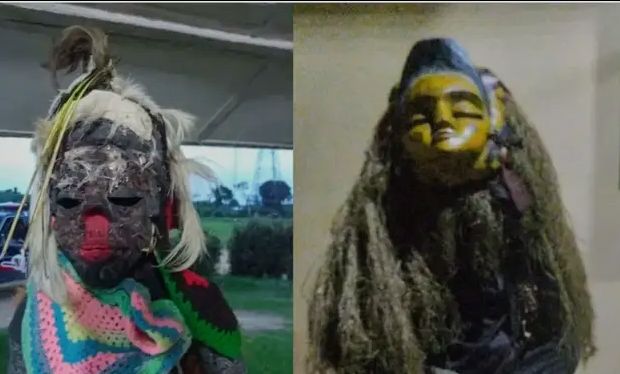
The arrest was disclosed in a statement issued on Thursday by the Police Public Relations Officer, Timfom John.
According to the statement, police operatives apprehended the suspects at about 6pm on Monday, October 26, along the Ukana/Abak Highway during an operational show of force.
The suspects were identified as Ine Isong, 29, of Ukana Ikot Esoh Village, and Emmanuel Ekpenyong, 20, from Ikono Local Government Area.
John said the suspects were allegedly found in possession of Ekpo masquerade costumes and attire, machetes, spears and arrows at the time of their arrest.
Preliminary reports indicated that the suspects and other individuals allegedly involved in the activities had been terrorising residents and extorting money from unsuspecting members of the public.
The police spokesperson added that some innocent persons, particularly women, were allegedly assaulted during the incidents.
“Reports further indicate that some innocent persons, particularly women, were assaulted in the process.
Investigations were continuing to establish the circumstances surrounding the incident and identify other people who might be connected to the alleged offences,” the statement read.
The police said investigations were ongoing to determine the full circumstances of the alleged offences and identify other individuals who might have participated in the activities.
The Commissioner of Police in Akwa Ibom State, Baba Azare, warned against the misuse of cultural practices and masquerade activities to intimidate, extort or assault members of the public.
Azare stressed that cultural traditions should not be used as a cover for criminal activities, including violence and other unlawful acts.
The police command reiterated its commitment to protecting residents and maintaining public order, while investigations into the case continue.

Ochogwu, has said that state policing could help tackle farmer-herder conflicts and rural banditry in Nigeria by improving intelligence gathering, strengthening community engagement and ensuring faster responses to security threats.
Ochogwu, however, warned that decentralised policing must operate under professional standards and effective oversight to prevent political interference, human rights abuses and the persecution of minority groups.
He spoke in Abuja on Thursday while delivering the keynote address at a conference on peace and conflict resolution in Nigeria, organised by the Rosa Luxemburg Foundation-West Africa.
The conference, themed “Peace and Conflict Resolution in Nigeria: Rethinking Strategies for Sustainable Peace,” featured discussions on farmer-herder conflicts in North-Central Nigeria, rural banditry and strategies for achieving lasting peace in communities affected by violence.
The debate over state policing has gained momentum following progress on a proposed constitutional amendment to establish a dual policing system. On October 23, the Presidential Working Group on the National Policing Bill announced that 24 state Houses of Assembly had approved the amendment, meeting the constitutional threshold for it to proceed towards presidential assent.
State Police Could Improve Local Intelligence
Speaking on the potential benefits of decentralised policing, Ochogwu said security personnel who understand the communities they serve could be better positioned to gather intelligence, identify emerging threats and respond promptly to incidents.
He noted that Nigeria’s peace and security challenges were closely linked to governance failures, institutional weaknesses and the inability of public institutions to resolve grievances through legitimate channels.
According to him, disputes over land, identity and political representation can escalate into wider communal violence when affected communities perceive public institutions as unfair or unresponsive.
He stressed that security operations must be accompanied by justice, accountability, humanitarian assistance and measures to restore the livelihoods of affected residents.
“Decentralisation must bring security closer to citizens without exposing them to local political coercion,” he said.
Farmer-Herder Conflicts Persist in North-Central Nigeria
One of the conference’s panel sessions examined the recurring violence associated with disputes over land, access to water, grazing routes, livelihoods and relations between farming and herding communities.
States such as Benue and Plateau have experienced repeated attacks, communal clashes and displacement, disrupting agricultural activities, separating families from their homes and heightening tensions among affected communities.
Participants emphasised the need to move beyond reactive security operations towards approaches that address the underlying causes of conflict.
They identified stronger early-warning and response mechanisms, dialogue between affected communities, impartial law enforcement and the resolution of disputes over land and natural resources as important measures for reducing violence.
Ochogwu cited the June 2025 attack on Yelewata community in Benue State, where more than 200 people were reportedly killed and over 3,000 residents displaced, as an example of the devastating consequences of rural insecurity.
He maintained that lasting peace would require government institutions to respond more effectively to community grievances before they develop into violent confrontations.
Rural Banditry Threatens Livelihoods
Another panel session focused on rural banditry and the search for sustainable peace,
examining how armed groups threaten lives, livelihoods, freedom of movement and economic activities.
Banditry and kidnapping have contributed to displacement in parts of North-Central and North-West Nigeria, forcing residents to abandon their homes and farms and weakening their ability to earn a living.
The discussions highlighted the importance of protecting civilians while addressing the conditions that enable armed criminal groups to operate.
Ochogwu argued that military and policing operations alone could not guarantee lasting peace if communities continued to experience weak governance, economic exclusion and ineffective justice systems.
He also identified unemployment, economic inequality, weak public services and the proliferation of small arms as factors that could worsen insecurity when grievances were not properly managed.
The IPCR director-general called for stronger grassroots institutions and more responsive governance, stressing that local authorities must be equipped to address community concerns before they escalate into violence.
Foundation Calls for Sustainable Peace
In her welcome remarks, Angela Odah of the Rosa Luxemburg Foundation-West Africa said insecurity had made ordinary activities, including road travel and visits to rural markets, increasingly dangerous.
She said the foundation had organised dialogues and supported initiatives aimed at promoting democratic participation, peaceful coexistence and practical responses to Nigeria’s political, economic and social challenges.
Odah explained that the conference was designed to review the country’s security situation and develop recommendations for sustainable peace.
She added that the foundation planned to sustain the dialogue annually over the next three years.
The event brought together academics, civil society activists, government representatives and peacebuilding practitioners, including activist Ene Obi and Professor Plangshak Suchi of the University of Jos.
Participants examined ways to address the underlying causes of conflict, strengthen community-level responses and improve the prospects for lasting peace across Nigeria.
The discussions underscored the need for a comprehensive security strategy that combines effective policing with accountable governance, economic opportunities, justice and sustained engagement with affected communities.

Vice President Kashim Shettima has reunited with security personnel he fondly describes as his “Fullo cousins” during a visit to Kashim Ibrahim University Teaching Hospital in Maiduguri, Borno State.
Shettima shared the development in a post on his official Facebook page on Friday, expressing delight at reconnecting with the men responsible for safeguarding the hospital.
The Vice President said he had missed their warmth, humour and friendly conversations, describing the reunion as an opportunity to reconnect with the security personnel.
“I reunited with my Fullo cousins, who are entrusted with the safety and security of Kashim Ibrahim University Teaching Hospital, in Maiduguri today.
“How I’ve missed their warmth, wit and good-natured banter!” he wrote.
The meeting took place during Shettima’s visit to Borno State, where he participated in the commissioning of a 400-bed teaching hospital at the state-owned Kashim Ibrahim University and the Yerwa Practice Mega School in Maiduguri.
During the commissioning ceremony, the Vice President commended the Borno State Government for completing the projects, describing them as significant investments in the future of the state and its residents.
He said the newly commissioned facilities reflected the progress Borno had made in rebuilding its institutions and restoring essential public services after more than a decade of insurgency.
“The ultra-modern Kashim Ibrahim Teaching Hospital and the schools in Maiduguri and across the state are evidence that Borno is recovering,” Shettima said.
Borno State has endured years of insurgency, which disrupted education, healthcare delivery, economic activities and other aspects of public life, particularly in communities affected by attacks and displacement.
The establishment of modern healthcare and educational facilities is expected to strengthen access to essential services and support the state’s long-term recovery efforts.
The 400-bed teaching hospital is also expected to contribute to healthcare delivery and medical training, while the school project forms part of efforts to improve educational infrastructure in the state.
Shettima’s reunion with the hospital’s security personnel added a personal touch to his official engagements in Maiduguri, highlighting his familiarity with the men responsible for protecting the institution.
His remarks on the hospital and school projects also underscored the Federal Government’s recognition of ongoing efforts to rebuild Borno and improve public infrastructure following years of security challenges.
The Vice President’s visit came as the state continued efforts to strengthen public institutions and provide services to residents affected by the prolonged insurgency.
-

 Security4 months ago
NDLEA Declares Alleged Drug Kingpin, Three Associates Wanted, Freezes ₦9.8bn Linked to Syndicate
-

 Business/Finance3 months ago
How to Apply for Tunde Onakoya’s ₦250 Million Scholarship Programme and Free Laptop Offer
-

 National Affairs3 months ago
ICPC Uncovers 908 Suspected Ghost Workers Across 50 Federal MDAs, Recovers ₦942 Million
-

 Judiciary | Public Safety3 months ago
INEC Tells Court Voter Information Is Not Confidential in Emeka Ike’s ₦10bn Lawsuit
-

 Politics3 months ago
Atiku Challenges Tinubu to Reveal Details of ₦15.13bn SUV Procurement in 2026 Budget
-

 Judiciary | Public Safety3 months ago
Court to Rule Friday on NDLEA’s Bid to Destroy ₦480bn Meth Lab in Ogun
-

 Security3 months ago
Family Paid ₦50 Million Ransom to Secure Release of Abducted Kebbi Judge
-

 News3 months ago
2026 Budget: FG Earmarks ₦962.83bn for SUVs, Empowerment Projects Amid Debt Concerns