
Politics
Gombe By-Election: Residents Praise Peaceful Exercise as INEC Raises Concern

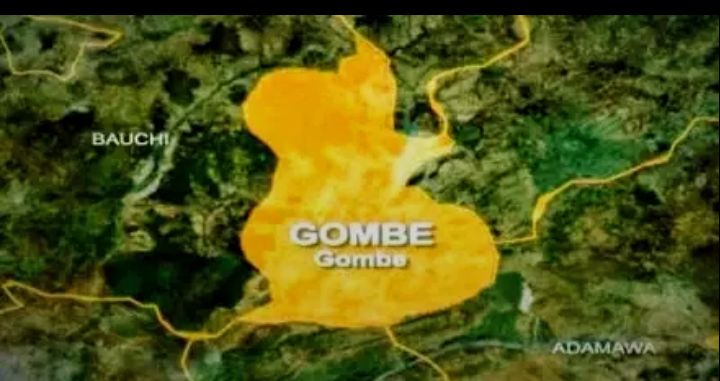
Residents of Gombe metropolis have commended the peaceful conduct of the ongoing Gombe/Kwami/Funakaye Federal Constituency by-election, describing the exercise as orderly and largely hitch-free.
The voters also praised the Independent National Electoral Commission (INEC) for its preparations for the poll, while commending security personnel and election officials for maintaining a calm atmosphere across polling units.
The residents spoke in separate interviews with the News Agency of Nigeria (NAN) in Gombe on Saturday.
One of the voters, Buhari Ibrahim, who is a person living with disability, said the professionalism displayed by electoral and security officials contributed significantly to the peaceful conduct of the election.
Ibrahim described the voting process as seamless, saying he did not experience discrimination or difficulty on account of his physical condition.
“I did not feel discriminated against at any point as a physically challenged person during the voting process,” he said.
Another voter, Dalhatu Boderi, also described the exercise as successful and hitch-free.
According to him, the atmosphere at his polling unit remained peaceful, while voters were able to participate in the process without disruption.
“The atmosphere is peaceful, the turnout in this polling unit is impressive and everything is going on well as expected,” Boderi said.
He also commended youths in the area for conducting themselves peacefully, expressing optimism that the same level of calm would be witnessed during the 2027 general elections.
At the Yakub Hassan Polling Unit, another voter, Maryam Salisu, said the peaceful atmosphere encouraged her to participate in the election.
Salisu commended INEC and security personnel for their roles in maintaining order, urging the electoral body and security agencies to sustain the arrangements during future elections.
She also called for the replication of the experience during the 2027 general elections, saying a peaceful electoral environment could encourage more women to participate in the democratic process.
Similarly, Zaliha Garba said women were increasingly recognising their role in elections and were becoming more involved in exercising their franchise.
“We realised that women are critical stakeholders in determining who rules us, so we are now embracing the process,” she said.
INEC Raises Concern Over Low Turnout
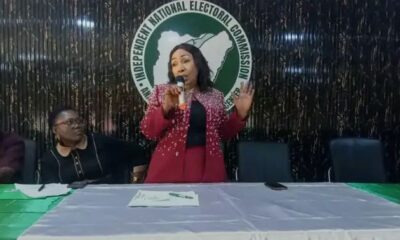
Despite the positive assessment by voters in some polling units, the INEC National Commissioner in charge of the North-East, Rear Admiral Jamila Mailafa (retd.), expressed concern over the low turnout recorded in several locations.
Mailafa, who was observing the election in Bauchi and Gombe States, said the electoral process had generally been seamless and peaceful but noted that the number of voters at several polling units was low.
“The election process is seamless, the environment is peaceful, people are out in some places but from my observation, there is a low turnout of voters,” she said.
According to her, voting commenced at 8:30 a.m., but only a small number of voters were present at most of the polling units she visited.
“Voting starts at 8.30 am, but voters were just few in most of the polling units I visited.
“Here I can see a lot of voters, probably they are just coming out. I think they are just taking their time,” Mailafa added.
The national commissioner, however, said there were no major operational problems with the electoral process, noting that both electoral officers and the Bimodal Voter Accreditation System (BVAS) machines were functioning as expected.
The Gombe/Kwami/Funakaye Federal Constituency by-election is being conducted to fill the vacant seat in the House of Representatives.
As voting continues, attention remains focused on voter participation, the performance of electoral officials and the security situation across the constituency, with residents and observers expected to monitor the process through the conclusion of voting and subsequent collation of results.







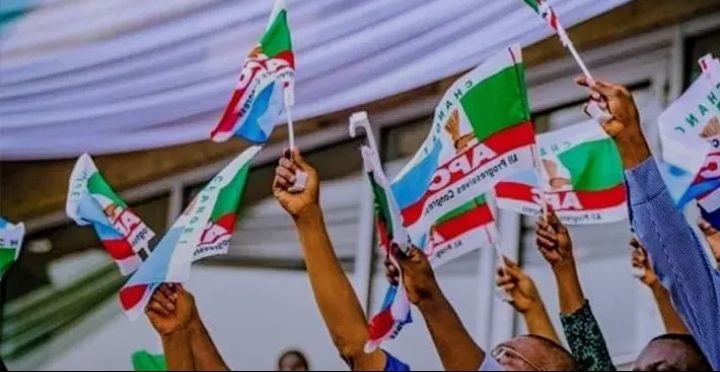
The reported donation of seven brand-new Toyota Prado Sports Utility Vehicles (SUVs) to selected youth leaders of the All Progressives Congress (APC) has sparked questions about political spending, campaign financing and transparency amid widespread economic hardship in Nigeria.
The vehicles, reportedly worth more than N1 billion, were presented to selected APC youth leaders to support election mobilisation ahead of the 2027 general elections.
The party’s National Youth Leader, Dayo Israel, shared a video of the presentation on social media, thanking the First Lady, Oluremi Tinubu, for her support.
However, the video, which was later deleted, generated public reactions, with critics questioning the propriety of distributing expensive luxury vehicles while millions of Nigerians continue to grapple with rising living costs, food prices and transportation expenses.
Each Toyota Prado was estimated to cost approximately N150 million, although the reported total value and source of funding for the vehicles have not been independently established.
The controversy comes against the backdrop of worsening concerns about poverty and living conditions, despite the Federal Government’s claims of improvements in key macroeconomic indicators.
According to the National Bureau of Statistics’ November 2021 to February 2022 survey, 133 million Nigerians, representing 63 per cent of the population at the time, were living in multidimensional poverty.
Similarly, the World Bank’s April 2026 Nigeria Development Update estimated that approximately 140 million Nigerians were living below the poverty line.
The report also indicated that 33 per cent of Nigerians were ultra-poor and food-insecure, while 79 per cent were either poor or vulnerable to falling into poverty.
PwC Nigeria’s Economic Outlook 2026 projected that about 141 million people, representing 62 per cent of the population, would be living in poverty this year.
The International Monetary Fund’s 2026 Article IV assessment also reported that 27 million Nigerians were experiencing severe food insecurity, driven by high transportation costs, rising food prices and supply-chain disruptions.
While the administration has recorded some improvements in foreign reserves, government revenue, crude oil production and infrastructure development, concerns remain over the extent to which these gains have translated into improved living conditions for ordinary Nigerians.
The burden of debt servicing, increasing public borrowing and the high cost of essential goods continue to weigh heavily on households.
Against this background, the reported distribution of luxury vehicles to party officials has intensified scrutiny of political spending as parties begin preparations for the 2027 elections.
Across the political landscape, support groups and political stakeholders have increasingly announced donations of vehicles, buses and other resources to strengthen party structures and mobilisation activities.
These developments have raised questions about the sources of political funding, the declaration of donations and the enforcement of existing electoral regulations.
Under the Electoral Act, political parties are required to comply with financial disclosure and contribution limits.
In particular, donations in kind, including vehicles, buses and other valuable assets, should be properly assessed and declared to ensure that political contributions are not concealed through non-cash arrangements.
The Independent National Electoral Commission, the Economic and Financial Crimes Commission and the Independent Corrupt Practices and Other Related Offences Commission have also been urged to pay closer attention to political financing and investigate possible breaches of relevant laws.
Their responsibility includes ensuring that political donations are traceable and that electoral regulations are enforced without favour.
Ultimately, the controversy surrounding the seven Toyota Prado SUVs raises a broader question about the relationship between political spending and public accountability.
While political parties are entitled to mobilise resources for their activities, such contributions must comply with the law and be subjected to appropriate transparency requirements.
As Nigeria approaches another election cycle, the sources of campaign funds, the value of political donations and the financial activities of political parties will remain important issues for public scrutiny.
The reported SUV donations may strengthen the mobilisation capacity of selected APC officials, but they have also renewed debate about political privilege, economic hardship and the need for greater accountability in Nigeria’s democratic process.
The Inter-Party Advisory Council (IPAC) in Yobe State has removed its Chairman, Umaru Jajere, and Secretary, Mustapha Gado, over allegations of mismanagement, lack of transparency and unilateral decision-making.
The council announced their removal in a statement signed by its Acting Secretary, Habiba Umaru, following an emergency meeting held on Thursday at its secretariat along Potiskum Road, Damaturu.
According to the statement, the decision followed a vote of no confidence in the two officials, who were accused of failing to consult member political parties on key decisions and neglecting regular meetings of the council’s executive committee and general assembly.
IPAC also accused the former leadership of allegedly using the council’s name to receive quarterly palliatives from the North-East Development Commission (NEDC), as well as other government and non-governmental organisations, without the knowledge or involvement of member parties.
Similarly, Umaru assured members that the council would work closely with the Independent National Electoral Commission (INEC), Yobe State Government, security agencies and the media to promote peaceful political activities and credible elections.
IPAC also called on its national secretariat, INEC, the state government, security agencies and the NEDC to recognise the newly appointed acting leadership.
The council further urged stakeholders to disregard anyone claiming to occupy the positions of chairman and secretary of the Yobe State chapter outside the newly constituted leadership.
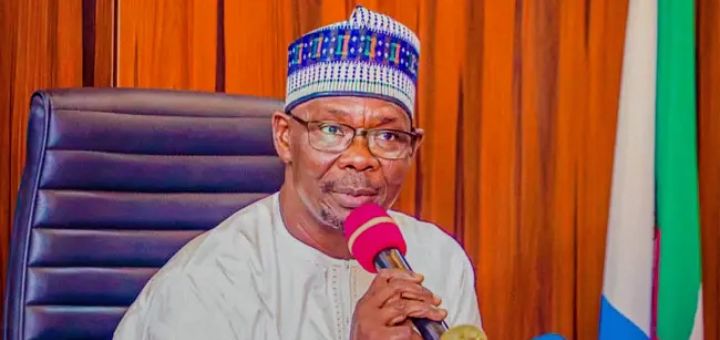
Governor Abdullahi Sule of Nasarawa State has ordered security agencies to investigate the disruption of activities at the All Progressives Congress (APC) presidential campaign rally in Lafia, insisting that all those responsible, including alleged sponsors and masterminds, must be identified and brought to justice.
The governor gave the directive on Thursday during an expanded security meeting at the Government House, Lafia, following Wednesday’s disruption of the rally and the reported obstruction of the convoy of Vice President Kashim Shettima during his visit to the Emir of Lafia.
Sule described the incidents as a serious embarrassment, noting that the Vice President attended the rally on behalf of President Bola Tinubu.
According to him, the disruption was not merely an embarrassment to the state government or the Presidential Campaign Council but also to the country’s highest political leadership.
“The embarrassment was not to the state or the Presidential Campaign Council alone. It was an embarrassment to the Vice President on behalf of the President of the Federal Republic of Nigeria. That is the reason why we cannot take it lightly,” he said.
The governor directed security agencies to invite and question everyone suspected of involvement, regardless of their former positions or social status.
He particularly warned against limiting the investigation to the arrest of a few youths, stressing that those who allegedly organised, planned and sponsored the disruption must also be exposed.
“We cannot, at the end of the day, after having such an embarrassment, just go and arrest five or six Almajiris and say that is the end of it. It will not work. The people responsible for this must be called to order,” Sule stated.
The governor also expressed concern over reports that some individuals had planned to disrupt the rally before it took place.
He further raised questions about the attack on the Vice President’s convoy and the throwing of an object suspected to be a shoe towards the podium where Shettima and other governors were standing.
Sule also demanded an explanation over the reported use of tear gas at the rally venue, particularly around the podium, and called for an investigation into the conduct of security personnel deployed for the event.
While commending the military, the Department of State Services (DSS) and the Nigeria Security and Civil Defence Corps (NSCDC) for their intervention, he said the expanded security meeting was necessary to ensure that all concerns surrounding the incident were properly examined.
The governor cautioned political actors against allowing disagreements to escalate into violence, warning that such developments could undermine peace and security in the state.
“I don’t want us to behave like them. If we behave like them, believe me, the state will become ungovernable. That is how Boko Haram started,” he warned.
Earlier, the Secretary to the Government of Nasarawa State, Labaran Shuaibu Magaji (SAN), said the meeting was convened to review the security lapses and incidents surrounding the APC presidential campaign rally.
Magaji recalled that Sule had convened an expanded meeting of the local organising committee on Monday, November 2, where security chiefs briefed the government on preparations for the event.
He said the security agencies had assured the government that adequate arrangements were in place to guarantee safety before, during and after the rally.
According to him, the governor also maintained regular communication with security chiefs and monitored preparations to ensure that the event proceeded peacefully.
The SGN explained that the Vice President’s visit to the palace of the Emir of Lafia was not initially included in the Presidential Campaign Council’s programme but was undertaken at Shettima’s request in recognition of the traditional institution.
Magaji alleged that some suspected opposition supporters disguised themselves in APC-branded T-shirts to gain access to the rally venue, where they reportedly chanted opposition slogans and threw an object towards the podium occupied by the governor and other dignitaries.
He also questioned the police response to the disturbance, alleging that officers deployed tear gas at the venue instead of removing those responsible for the disruption, affecting the podium where governors were addressing the gathering.
He said the intervention of the military, DSS and NSCDC was instrumental in restoring order.
The Secretary to the State Government further drew attention to reports of an alleged meeting held before the rally to plan its disruption, alongside videos circulating on social media which he said raised questions about the involvement of certain individuals.
He called for a comprehensive investigation to establish who planned the disruption, whether security agencies ignored prior intelligence, who attacked the Vice President’s convoy and who threw the object towards the dignitaries.
Magaji said the state government had already requested security agencies to activate their investigative machinery to establish the circumstances surrounding the incidents and ensure that anyone found culpable is held accountable.
-
 Security4 months ago
NDLEA Declares Alleged Drug Kingpin, Three Associates Wanted, Freezes ₦9.8bn Linked to Syndicate
-
 National Affairs4 months ago
ICPC Uncovers 908 Suspected Ghost Workers Across 50 Federal MDAs, Recovers ₦942 Million
-

 Business/Finance3 months ago
How to Apply for Tunde Onakoya’s ₦250 Million Scholarship Programme and Free Laptop Offer
-
 Judiciary | Public Safety4 months ago
INEC Tells Court Voter Information Is Not Confidential in Emeka Ike’s ₦10bn Lawsuit
-
 Politics3 months ago
Atiku Challenges Tinubu to Reveal Details of ₦15.13bn SUV Procurement in 2026 Budget
-
 Judiciary | Public Safety4 months ago
Court to Rule Friday on NDLEA’s Bid to Destroy ₦480bn Meth Lab in Ogun
-
 Security3 months ago
Family Paid ₦50 Million Ransom to Secure Release of Abducted Kebbi Judge
-
 News3 months ago
2026 Budget: FG Earmarks ₦962.83bn for SUVs, Empowerment Projects Amid Debt Concerns