
2027 Elections
2027: Gombe Women Mobilise Stakeholders, Unveil 10-Point Demands Charter


The Gombe Women Agenda has mobilised religious leaders, traditional rulers and other critical stakeholders to support greater inclusion of women in governance and decision-making ahead of the 2027 general elections.
The group, which comprises more than 100 registered women’s organisations in Gombe State, made the call during a stakeholders’ engagement held in Gombe on Wednesday, where it presented its proposed charter of demands for women in the state.
The convener of the Gombe Women Agenda, Ibrahim Yusuf, said the initiative was established to bring together the concerns of women’s groups and engage political aspirants on issues affecting women ahead of the 2027 elections.
Yusuf said the group intended to engage politicians who would contest the elections and present a harmonised set of concerns, recommendations and advocacy priorities developed by women across the state.
“We want to engage the incoming politicians for 2027 so that we can harmonise and work on their issues, challenges, resolutions, recommendations and advocacy engagement,” he said.
According to him, the involvement of men, religious leaders and traditional institutions was deliberate because the women could not achieve their objectives without the support of influential stakeholders across communities.
He explained that the group considered it important to secure the buy-in of community leaders before directly engaging political actors.
“We feel it is not necessarily just to engage politicians directly without getting the buy-in of men.
So, we mobilised all the stakeholders to adopt and share the document with them,” Yusuf said.
He disclosed that the proposed charter contained 10 major pillars and about 20 recommendations, with girl-child education, maternal mortality and women’s economic empowerment among its major priorities.
Yusuf said improving access to education for girls remained a key concern, stressing that efforts to advance women’s development must go beyond existing interventions.
“The issue of education, especially the education of the girl-child, should go beyond where it is.
There is also the issue of maternal mortality and economic empowerment because so many women are contributing to the micro-economy but they are not recognised or mentioned in any forum,” he said.
He added that improving the welfare and economic capacity of women would have a broader impact on families and communities because of the central role women play in household and community affairs.
“Women are more vulnerable because they take care of men, children and sometimes people with disabilities.
If you really want to touch the lives of everybody, if you touch the lives of women, definitely you are going to solve half of the problems of our community,” Yusuf said.
Religion, culture and women’s participation
The convener also highlighted the role of religious and traditional institutions in addressing barriers to women’s participation in governance and electoral activities.
He said the stakeholders had reviewed the proposed charter to ensure that it reflected the values and concerns of different religious communities in the state.
Yusuf said misconceptions surrounding women’s development could create barriers to their participation, adding that religious and traditional leaders could help the group communicate its demands to political leaders and other decision-makers.
He noted that traditional and religious leaders often had access to political office holders and could therefore serve as an important channel for advocacy.
“They have listening ears of the executive or politicians. So, if anybody emerges, definitely we are going to make use of them where we cannot reach those politicians.
We will make use of their platforms to reach out to them,” he said.
The group said it plans to formally launch and make the charter public within the next two to three weeks.
Yusuf also urged Nigerians to participate actively in the 2027 elections and resist intimidation during the electoral process.
“Our expectation is that people should come out and vote, but they should vote wisely. They should stop being intimidated by any politician,” he said.
He further urged voters not to allow inducements offered during campaigns to determine how they cast their ballots.
“They should collect whatever anybody brings because, after all, it is their property and their money. But during voting, they should use their conscience to vote wisely so that better people will emerge at different positions,” he said.
Gombe women demand stronger political inclusion
Also speaking, the Secretary of the Gombe Women Agenda, Ruth Abner, said the stakeholders’ meeting was important because the women could not achieve their objectives without the support of influential figures within their communities.
She described the religious and traditional leaders, as well as other stakeholders present, as the backbone of the movement.
“The stakeholders we have gathered today are the backbone of our movement.
Having gone through the process of bringing out the agenda of Gombe women, we realised that we cannot do this without their help and support,” Abner said.
She said the organisation, which brings together more than 100 registered women’s groups, was focused on ensuring that women’s concerns were recognised and that women had a voice in decision-making processes.
“We are expecting women to be carried along, women to be heard and women to be included at the decision-making table,” she said.
Abner identified inadequate support from men, domestic restrictions, electoral violence and insecurity around polling units as some of the factors limiting women’s participation in elections.
She said these challenges often discourage women from coming out to vote or reduce their confidence in participating in the electoral process.
“A lot of things are stopping women from coming out or distracting them or not giving them the confidence to come out and vote,” Abner said.
She stressed that adequate security would be essential to ensuring that women could participate freely in the 2027 elections.
“We first of all need to be secured and safe. We need security,” she said.
The secretary said the group would intensify grassroots advocacy and sensitisation ahead of the elections, particularly in rural communities.
According to her, the campaign would also focus on discouraging voters from exchanging their votes for immediate financial or material benefits.
Group not demanding women-only candidates
Abner clarified that the Gombe Women Agenda was not demanding that women must necessarily occupy all or specific positions on the ballot in 2027.
Rather, she said the group wanted political leaders who would listen to women’s concerns and take concrete steps to address them.
“We are not insisting that women must be on the ballot. If we can get a man that will listen to us and even solve the problem, we don’t have a problem,” she said.
“We are not competing. We are begging and laying down our problems to be solved. That’s just it.”
She said the group’s major objective ahead of 2027 was to achieve greater recognition of women’s concerns and increase their participation in decision-making across the state.
Abner added that grassroots mobilisation would remain central to the group’s strategy as it works to reach women in communities across Gombe.
The Gombe Women Agenda is expected to formally unveil its charter within the coming weeks, after which the group plans to use the document as a basis for engagement with political aspirants and other stakeholders ahead of the 2027 elections.






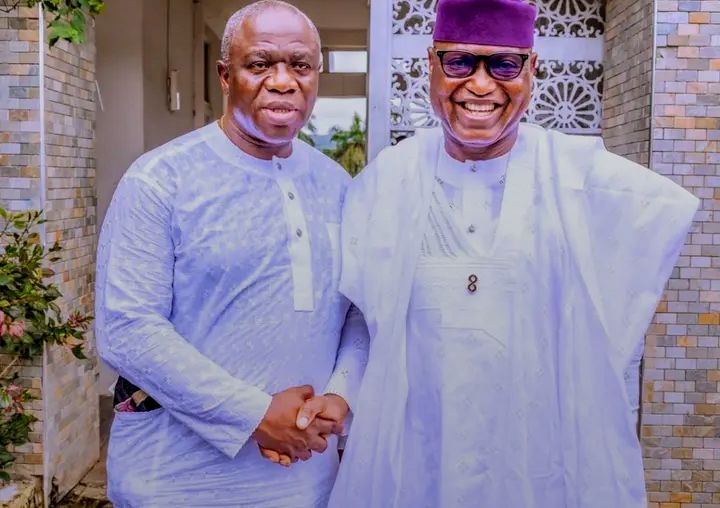
The Peoples Democratic Party (PDP) governorship candidate in the June 20 Ekiti State governorship election, Dr Oluwole Oluyede, has pledged to work with Governor Biodun Oyebanji to secure a landslide victory for President Bola Tinubu in the 2027 general election.
Oluyede, who is also the convener of the Oluyede Progressive Alliance for Renewed Hope Agenda, made the commitment when Oyebanji paid him a courtesy visit at his hometown, Ikere Ekiti, on Friday.
The PDP chieftain said his collaboration with the governor was driven by a shared commitment to the development and progress of Ekiti State.
He also expressed support for continuity at the federal level, saying Tinubu should be allowed to continue with what he described as his “good works.”
Oluyede commended Oyebanji for his efforts in improving security, infrastructure and human capital development across the state.
He described the governor as “a fantastic gentleman, kind and generous,” while acknowledging his contributions to the development of Ekiti.
“He is working hard for a greater and more prosperous Ekiti. I commended him about three days ago. He is working hard on security in the state, and his investment in infrastructure is commendable,” Oluyede said.
He added that his meeting with Oyebanji was also aimed at strengthening efforts to ensure peaceful, free, fair and credible elections.
“Apart from that, our meeting today is to secure the state further. We want to have free, fair and credible general elections.
“We are also working together to deliver a landslide victory for the President, who is doing a fantastic job. The governor is also doing a fantastic job in Ekiti,” he said.
Oluyede attributed the relative peace and security in Ekiti to the state government’s sustained investment in the security sector.
He noted that his relationship with Oyebanji had remained cordial despite their political differences.
“Myself and Governor Oyebanji have been friends for a long time. We were in the same party, we diverged but we stuck together,” he said.
Oyebanji, in his remarks, commended Oluyede for his continued interest in the development of Ekiti State.
The governor said their collaboration was based on a shared desire to promote sustainable development and improve the welfare of residents.
Oyebanji thanked the PDP chieftain for what he described as his “good spirit” and commitment to the state.
He said discussions between them had consistently focused on finding solutions to the challenges facing Ekiti and maintaining peace across the state.
“Anytime I see Dr Oluyede, he is always talking about the development of the state, and that is what binds us together:
the spirit of developing the state, finding solutions to all the problems and working together in maintaining peace in the state,” Oyebanji said.
The governor described Oluyede as one of the most committed Ekiti indigenes he had encountered.
He expressed optimism that their collaboration would produce visible results for the people of the state.
“And I am sure in the next few days, Ekiti people will see the result of our collaboration,” Oyebanji said.
The development comes as political activities and alignments intensify ahead of the 2027 general election, with politicians and political groups across the country beginning to announce their positions and alliances.
2027 Elections
2027: Delta NDC Candidate Rejects Monarchs’ Endorsement of Oborevwori, Says ‘I Will Not Step Down’
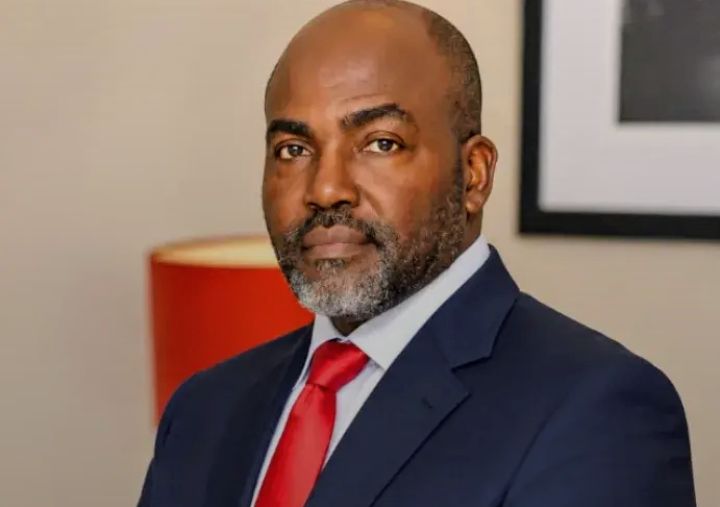
The governorship candidate of the Nigeria Democratic Congress (NDC) in Delta State, Deacon Chris Iyovwaye, has rejected the endorsement of Governor Sheriff Oborevwori as the “sole candidate” of the Urhobo Nation for the 2027 governorship election.
Iyovwaye said he would not withdraw from the race, insisting that the choice of who governs Delta State remains the constitutional right of the electorate.
His position followed the endorsement of Oborevwori for a second term by the Ukoko R’Ivie R’Urhobo, a forum of Urhobo traditional rulers.
Reacting to the development in a statement issued on Saturday, Iyovwaye said he respected the traditional rulers and the institutions they represent but maintained that their endorsement could not replace the electoral process.
“I hold our royal fathers and the exalted institutions they represent in the highest esteem. They are sacred custodians of our history, culture, customs and communal values.
“However, under the 1999 Constitution of the Federal Republic of Nigeria, the electorate alone has the authority to elect the Governor of Delta State through the ballot box.
“An endorsement, no matter how dignified its source, cannot supersede or extinguish Deltans’ democratic right to choose their leaders,” he said.
The NDC candidate, who described himself as a “dutiful son of Urhobo land”, argued that the governorship of Delta State could not be determined through an ethnic consensus because the state is home to several ethnic groups.
“As an Urhobo man, I deeply understand the value of unity. But Delta State belongs to all of us — Urhobo, Ijaw, Itsekiri, Isoko, Anioma, and every community that calls this state home.
“The governorship is a sacred trust sought from all Deltans, not a title conferred by an ethnic consensus,” Iyovwaye said.
He also urged voters to scrutinise the performance of the incumbent administration rather than base their decisions solely on political endorsements and alignments.
According to him, the focus should be on how the state’s resources have translated into tangible economic and social benefits for residents.
“Accordingly, the central question should no longer simply be: ‘How much revenue does Delta State receive?’
“The more important question is: ‘What measurable economic transformation are Deltans receiving in return for these substantial resources?’” he said.
Iyovwaye further argued that Deltans should be presented with measurable evidence of the benefits of the state’s political relationships and alignment with the Federal Government.
“Deltans should not be asked to celebrate political alignment when what they require is meaningful economic transformation.
“If alignment with the Federal Government is presented as an advantage, then the people are entitled to ask: Where are the measurable benefits?
“These are not partisan questions. They are questions every responsible government should be prepared to answer,” he said.
The NDC candidate acknowledged the state government’s reported investments in roads, bridges and other infrastructure, but said government expenditure should ultimately be assessed based on its impact on the people.
“Those projects should be acknowledged where they serve the people. But expenditure is not the same thing as transformation,” he said.
Iyovwaye said the 2027 governorship election should therefore be centred on the performance, programmes and capacity of candidates rather than endorsements or political arrangements.
“That is why the 2027 election should be a referendum not merely on endorsements, personalities or political arrangements, but on performance, accountability, competence and vision,” he said.
He reaffirmed his commitment to the 2027 contest, saying he would continue his campaign across Delta State and would not step down.
“Performance must be the standard.
Development must be the measure.
Accountability must be non-negotiable. And the people must remain the final judge,” Iyovwaye said.
He added: “I respect our royal fathers. I respect Governor Oborevwori’s right to run. And above all, I respect the sacred right of every Deltan to choose.
“I will continue to campaign peacefully, constructively and firmly. I will not step down.
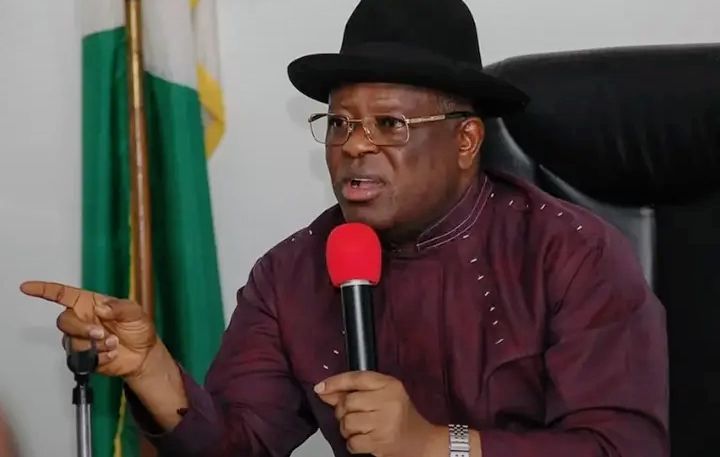
Minister of Works and former Ebonyi State Governor, David Umahi, has declared that there is no “Rainbow Coalition” in Ebonyi State, insisting that the state remains firmly aligned with the All Progressives Congress (APC) and its candidates ahead of the 2027 elections.
Umahi made the clarification on Friday, September 25, 2026, while inspecting Section Two of the Calabar-Abuja Superhighway in Ado, Benue State.
His comments came amid political disagreements involving the Minister of the Federal Capital Territory, Nyesom Wike, and some APC governors over political arrangements ahead of the 2027 general elections.
The Rainbow Coalition is a multi-party political platform promoted by Wike to mobilise support for President Bola Tinubu’s re-election in 2027.
Wike has maintained that the platform operates separately from the APC and allows politicians from different political parties to support Tinubu for president while retaining the freedom to pursue their interests in other elections.
However, Umahi dismissed reports suggesting that a similar political arrangement was taking shape in Ebonyi.
“If Wike has candidates here, he has not told me. And his candidate cannot break our relationship, but his candidate is not part of our relationship. There is no rainbow coalition in Ebonyi State,” Umahi said.
A statement issued on Saturday by the Senior Special Assistant to the Minister of Works on Media, Francis Nwaze, said Umahi also directed contractors handling the Calabar-Abuja Superhighway to accelerate construction work.
Umahi revisits PDP exit
The former governor also revisited his decision to leave the Peoples Democratic Party (PDP), saying he took the decision because he believed the party had failed to adequately recognise the interests of the South-East.
According to him, people in the region supported the PDP and voted for its presidential candidates but were disappointed when they expected the party to reciprocate their support.
“We supported PDP. We voted for presidents in PDP. And when it was our time for them to honour us, they did not honour us. They maltreated us,” he said.
Umahi said political actors were free to campaign in Ebonyi but warned against hate speech and activities capable of causing instability in the state.
“Anybody that wants to campaign, come and campaign. But don’t dish out hate speeches and you want to take those speeches, and you want that we should lay a red carpet for you.
We will not do that,” he said.
“Nobody can foment crisis in Ebonyi State,” the minister added.
Umahi defends Tinubu’s infrastructure programme
Umahi also defended his support for President Bola Tinubu, linking his political position to the Federal Government’s infrastructure programme.
He rejected allegations that he had concentrated federal projects in the South-East because of his position as Minister of Works.
“I saw on social media where they say I cornered all projects to Southeast. That is very wonderful.
But we have the publication of all projects ongoing by President Bola Ahmed Tinubu, so they darken counsel without knowledge,” he said.
Umahi stressed that he was implementing projects under the direction of the President.
“I’m not on my own. The President is my boss. So where will he be when I corner all projects to Southeast?” he asked.
The minister said infrastructure projects in the South-East were part of the Federal Government’s broader development programme, adding that although the region might not rank first, second or third in terms of project distribution, it would not be left behind.
“Definitely they will not be the last,” he said.
Umahi urged Nigerians to assess the Tinubu administration based on projects already being implemented rather than campaign promises.
“We tell our story. It’s not a question of saying, ‘I will do this, I’ll do this.’
What about the one that the person is doing? Let us compare the past with the present,” he said.
Calabar-Abuja highway project
The minister cited the Calabar-Abuja Superhighway as one of the major infrastructure projects being executed by the Federal Government.
According to Umahi, Section Two of the highway covers approximately 173.6 kilometres and has a contract value of about N683 billion, while Section One is valued at about N454 billion.
During the inspection in Benue State, the minister directed contractors not to demolish buildings located along the current alignment of the road until the Federal Government completes its review and determines whether adjustments to the route are necessary.
“My directive is that no building should be touched.
Even if it’s within the alignment, I have to come and realign it. So you just have to continue your work and go around those buildings until we come to look at it,” Umahi said.
He also instructed contractors to speed up construction and open additional sections of the highway while engineers work on challenges surrounding the Ado Bridge.
“I do not believe in engineering that anything is impossible,” the minister said.
Why Umahi supports Tinubu
Umahi further explained his support for Tinubu ahead of the 2027 presidential election, saying it was based on the President’s policies and infrastructure agenda.
“What gave rise to this is because I believe in President Bola Tinubu. I believe that he’s the one called by God. I believe in his vision.
I believe in his reforms. I believe he’s the best person that I have worked with and for, and I’m very proud of working for him and working with him,” he said.
The minister argued that continuity was necessary for major infrastructure projects that require several years to complete.
“If, God forbid, another person says he’s President, all these projects will be stalled. And I don’t think Ebonyi wants their projects to be stalled,” Umahi said.
Umahi speaks on son’s council nomination
On the nomination of his son as chairman of Ohaozara Local Government Area, Umahi said the decision was made by Ebonyi State Governor Francis Nwifuru and not by him.
He said he had advised his son to ensure that development was distributed fairly across the 11 wards in the council area.
“I have advised him, don’t do anything for the people of Uburu because you are from Uburu.
It has to be equitably distributed among the eleven council wards in Ohaozara Local Government,” he said.
Umahi’s comments come as political parties and emerging alliances continue to position themselves ahead of the 2027 elections, with the role of the Rainbow Coalition and its relationship with the APC remaining a subject of political debate.
-
 Security2 months ago
NDLEA Declares Alleged Drug Kingpin, Three Associates Wanted, Freezes ₦9.8bn Linked to Syndicate
-

 National Affairs2 months ago
ICPC Uncovers 908 Suspected Ghost Workers Across 50 Federal MDAs, Recovers ₦942 Million
-

 Business/Finance2 months ago
How to Apply for Tunde Onakoya’s ₦250 Million Scholarship Programme and Free Laptop Offer
-
 Politics2 months ago
Atiku Challenges Tinubu to Reveal Details of ₦15.13bn SUV Procurement in 2026 Budget
-
 Judiciary | Public Safety2 months ago
INEC Tells Court Voter Information Is Not Confidential in Emeka Ike’s ₦10bn Lawsuit
-
 Judiciary | Public Safety2 months ago
Court to Rule Friday on NDLEA’s Bid to Destroy ₦480bn Meth Lab in Ogun
-
 Security2 months ago
Family Paid ₦50 Million Ransom to Secure Release of Abducted Kebbi Judge
-
 News2 months ago
2026 Budget: FG Earmarks ₦962.83bn for SUVs, Empowerment Projects Amid Debt Concerns