
National Affairs
Dougha Tamarkuro Initiative Supports 50 Police Officers, 20 Children of Fallen Heroes in Bayelsa

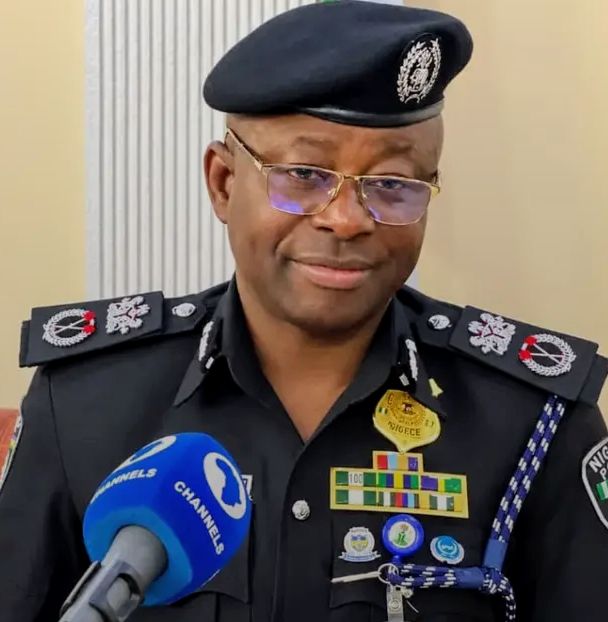
The Dougha Tamarkuro Humanitarian Initiatives (DTHI) has provided welfare and educational support to 50 serving police officers and 20 children of officers who died in active service in Bayelsa State.
The intervention was carried out on Monday at the Police Officers’ Mess in Yenagoa under the organisation’s National Police Welfare and Resilience Programme.
Tagged “The Police Are Our Friends,” the programme was designed to promote the psychological well-being and resilience of police personnel while also supporting the educational needs of children of fallen officers.
The 50 police beneficiaries, drawn from junior, mid-level and senior ranks, participated in a mental health and resilience workshop as part of the programme.
They also received welfare food support aimed at providing additional assistance to personnel serving in the state.
Twenty children of deceased police officers benefited from DTHI’s Fallen Heroes Education Support Scheme, which focuses on supporting the educational needs of children whose parents lost their lives while serving the country.
Speaking at the event, the Bayelsa State Commissioner of Police, CP Ajao Adewale, described the intervention as a significant gesture of support for police personnel and families of officers who died in the line of duty.
Adewale said the initiative complemented the welfare efforts of the Inspector-General of Police, IGP Olatunji Rilwan Disu, towards improving the well-being of police officers and their families.
He stressed the importance of addressing the mental and emotional health of police personnel, noting that the demanding nature of police work required adequate support for officers to effectively perform their duties.
“The mental and emotional well-being of police personnel is essential to effective, professional and compassionate policing. Officers who are adequately supported are better positioned to discharge their responsibilities with renewed commitment and resilience,” the commissioner said.
Adewale commended DTHI for extending its intervention beyond serving officers to include children of fallen police personnel.
He described the support as a recognition of the sacrifices made by police officers who lost their lives while serving the country.
According to him, providing assistance to the families of deceased officers was important to ensure that the sacrifices of fallen personnel continued to be recognised and appreciated.
The commissioner also said humanitarian interventions targeted at police personnel could help strengthen the relationship between the police and members of the public.
He expressed appreciation to DTHI for its commitment to supporting police officers and families of fallen personnel in Bayelsa State.
The intervention underscores the importance of welfare and psychosocial support for security personnel, particularly officers working in demanding environments, while providing assistance to families left behind by personnel who died in active service.





Kano State Government has recruited 2,037 health personnel to address manpower shortages in public health facilities across the state.
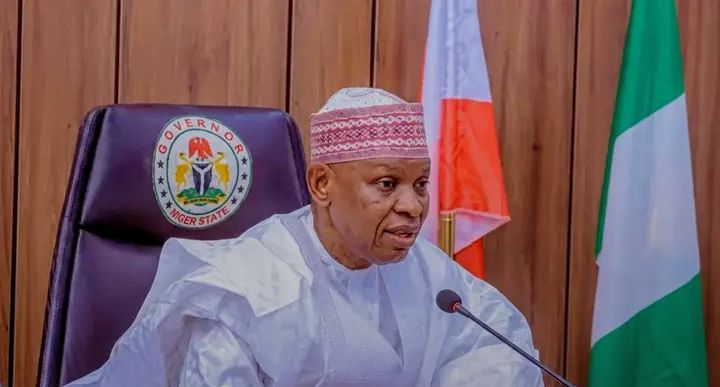
Governor Abba Yusuf disclosed this on Wednesday while presenting appointment letters to the newly recruited workers, saying the exercise was part of efforts to strengthen healthcare delivery and improve access to quality medical services.
The governor said the new recruits comprised professionals across different cadres, including 250 medical doctors, 40 pharmacists, 250 nurses, 250 midwives, 150 Community Health Officers, 50 Junior Community Health Extension Workers and 50 medical laboratory scientists, among others.
According to Yusuf, the recruitment became necessary because of persistent shortages of healthcare workers in the state, a situation he said had been worsened by the migration of doctors, nurses and other medical professionals to other locations in search of better opportunities.
He charged the newly employed workers to approach their responsibilities with compassion, integrity, discipline and professionalism.
Yusuf also warned the health workers against maltreating patients or demanding money before providing medical consultation or emergency care in government-owned health facilities.
“No patient should be denied timely medical attention or subjected to unnecessary hardship because of inability to pay before receiving care,” the governor said.
He stressed that patients must be treated with dignity and respect regardless of their social status, religion, ethnicity or political affiliation.
The governor urged the beneficiaries to see their appointments not merely as employment opportunities but as a responsibility to serve the people of Kano State and contribute to improving the quality of healthcare delivery.
“Your appointments should be seen as a responsibility to serve the people of Kano State and contribute to improving the quality of healthcare delivery across the state,” he said.
Yusuf further directed the new employees to remain dedicated to their duties and uphold professional standards in their interactions with patients and other healthcare workers.
He said the state government would continue to take measures to strengthen the health sector and respond to manpower requirements as they arise.
The latest recruitment forms part of the Kano State Government’s broader efforts to address workforce gaps in its healthcare system and increase the number of medical personnel available to residents.
The state had previously outlined a multi-year recruitment plan aimed at filling identified vacancies and ensuring that public health facilities have adequate personnel to provide essential services.

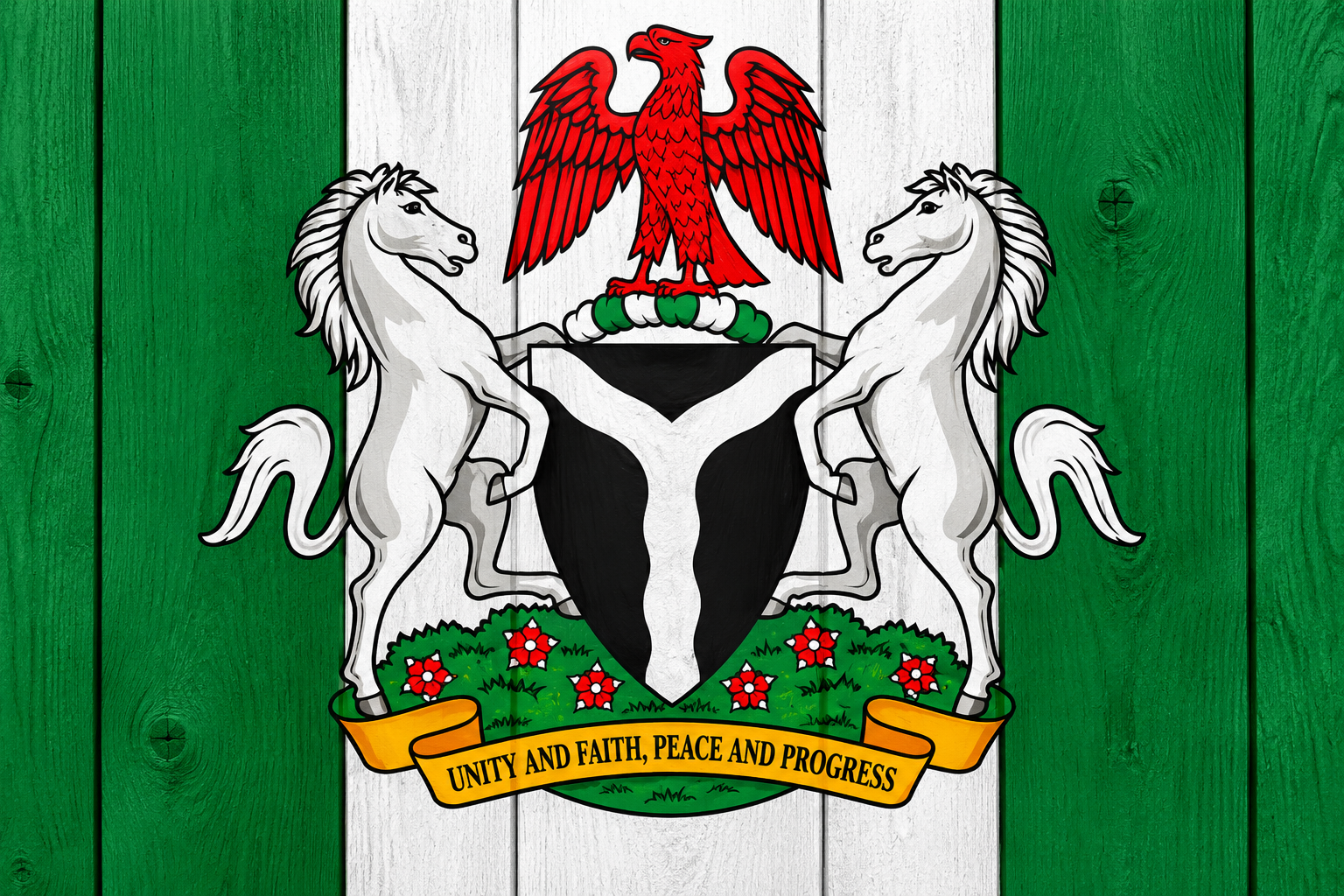
On October 1, 1960, Nigeria became an independent sovereign nation, ending British colonial rule and beginning a new chapter in the country’s history.
Sixty-six years later, Nigeria will once again raise the green-white-green flag to mark its Independence Day.
But beyond the ceremonies, speeches and patriotic messages, the 66th anniversary offers something more important: an opportunity to ask what independence has meant to Nigerians, how far the country has travelled since 1960, and what kind of Nigeria the next generation will inherit.
Nigeria’s 66th Independence Anniversary is being marked under the theme “From Reforms to Stability: Consolidating Nigeria’s Renewed Hope for Shared Prosperity.”
The Federal Government says the theme reflects a transition from economic reforms and stabilisation towards growth, production and broader prosperity. (Fed Min Info & Nat Orientation)
For many Nigerians, however, the meaning of independence extends beyond economic indicators or government programmes. It is ultimately about whether citizens can experience freedom through opportunity, security, dignity, accountable institutions and a reasonable quality of life.
October 1, 1960: The Beginning of a New Nigeria
Nigeria’s independence was the culmination of decades of political mobilisation, constitutional negotiations and nationalist activism.
On October 1, 1960, the British Union Jack was lowered and Nigeria’s green-white-green flag was raised as the country assumed sovereign status. Abubakar Tafawa Balewa became the country’s first Prime Minister, leading a parliamentary government, while Nnamdi Azikiwe became Governor-General. (Fed Min Info & Nat Orientation)
The generation that inherited political power from the colonial administration was expected to transform a newly independent country into a stable, prosperous and united nation.
Nigeria entered independence with enormous natural resources, agricultural potential, a growing educated class and a population spread across diverse regions, ethnic groups and religious communities.
The challenge was always going to be how to turn that diversity into national strength.
66 Years of Promise, Progress and Setbacks
Nigeria’s post-independence history has not followed a straight line.
The country experienced the political crises of the First Republic, military interventions, the civil war, prolonged periods of military rule, economic difficulties and repeated struggles over the structure of the federation.
Yet the story is not simply one of failure.
Nigeria has also experienced democratic restoration, institutional development, expansion in education, the growth of private enterprise, technological transformation, a vibrant creative industry and the emergence of a globally influential Nigerian diaspora.
Since the return to democratic rule in 1999, the country has sustained the longest uninterrupted period of civilian government in its history.
That continuity matters.
It has provided a platform for democratic institutions to develop, even though questions about electoral credibility, accountability, corruption, insecurity and the quality of governance continue to shape public debate.
Independence, therefore, cannot be measured only by comparing today’s Nigeria with the country of 1960.
It must also be measured by the distance between the country’s potential and the lived experience of its citizens.
The Nigeria of 2026
Nigeria enters its 66th year at another important moment.
The country is undergoing significant economic reforms under President Bola Ahmed Tinubu’s administration, including changes to the petroleum sector, foreign-exchange policy and public finances.
The Federal Government says these reforms are beginning to produce greater macroeconomic stability and are laying the foundation for stronger production, investment and employment. At the September 24 launch of the 66th anniversary programme, SGF George Akume said the next phase should be about translating reform gains into jobs, higher incomes, lower costs and wider economic opportunities. (Fed Min Info & Nat Orientation)
The government’s official position is therefore that Nigeria is moving from a period of difficult adjustment towards greater stability.
But independence celebrations should also make room for another perspective: the experience of ordinary citizens.
Economic reform is ultimately judged not only by government statistics but by whether families can afford food, whether young people can find meaningful employment, whether businesses can operate sustainably and whether citizens can live with greater security.
That is where the country’s 66th anniversary carries particular significance.
The Cost of the Journey
For many Nigerians, the years surrounding the 66th anniversary have been marked by economic pressure.
The removal of petrol subsidies, changes in the foreign-exchange market and other reforms have produced significant adjustments for households and businesses.
Fuel prices, transportation costs and food prices have remained central issues in public discussion.
The debate over petrol policy has also become increasingly political ahead of the 2027 elections, with competing political actors proposing different approaches to affordability, domestic refining and government intervention.
That debate illustrates an important principle of democracy: independence gave Nigerians the right to determine their political direction, but democracy requires that those choices be informed by facts, competing policy proposals and accountability.
The country should therefore be able to debate its economic future without turning every disagreement into a contest over patriotism.
Security and the Value of Life
Another measure of national progress is security.
For decades, Nigerians have confronted different forms of insecurity, including terrorism, banditry, communal violence, kidnapping, cult violence and criminality.
The persistence of insecurity affects far more than security statistics.
It affects whether farmers can cultivate their land, whether children can attend school safely, whether businesses can transport goods and whether communities can plan for the future.
A country can possess enormous natural resources and still struggle to realise its potential if citizens do not feel secure.
The 66th anniversary should therefore renew the conversation about the fundamental responsibility of the state: protecting lives and property and creating conditions in which citizens can pursue legitimate livelihoods without fear.
Independence and the Question of Good Governance
Perhaps the most enduring question of Nigeria’s independence is not simply who governs the country, but how the country is governed.
The nationalists who fought for independence sought political self-determination. That principle remains incomplete if citizens have little influence over how public resources are managed or if public institutions are not sufficiently accountable.
Good governance requires functioning institutions.
It requires credible elections, an independent judiciary, effective legislatures, professional public services, responsible security agencies and a media environment in which public officials can be questioned.
It also requires citizens who are willing to participate beyond election day.
Democracy cannot be sustained by government alone.
The Responsibility of Citizens
Independence is sometimes discussed as though it were achieved once and permanently completed in 1960.
But nation-building is continuous.
Every generation inherits Nigeria from the previous one and makes choices that affect those who come after it.
That responsibility extends to politicians, civil servants, business leaders, religious institutions, traditional authorities, journalists, professionals and ordinary citizens.
It includes rejecting political violence.
It includes demanding accountability without spreading misinformation.
It includes paying legitimate taxes, obeying laws, protecting public infrastructure and refusing to normalise corruption simply because it has become familiar.
It also means recognising that Nigeria’s problems cannot always be reduced to one region, one ethnic group, one religion or one political party.
The country is a shared national project.
What Does Independence Mean to a Young Nigerian?
For the young Nigerian, Independence Day may carry a different meaning from the symbolism understood by those who witnessed 1960.
A young person born after 1999 has never experienced military rule.
For many young Nigerians, questions about independence are therefore less about colonialism and more about opportunity.
Can education provide a pathway to a decent career?
Can talent be rewarded without political connections?
Can entrepreneurship flourish without excessive barriers?
Can young Nigerians participate meaningfully in government?
Can the country create enough productive employment to keep its young population economically engaged?
Can Nigerians build successful lives at home without feeling that emigration is the only route to a better future?
These are modern questions about the meaning of freedom.
From Independence to Interdependence
Nigeria’s future will also depend on how effectively it engages the rest of the world.
The country remains one of Africa’s most significant economies and most populous nations, with substantial oil and gas resources, agricultural potential, a large consumer market, a powerful creative industry and an increasingly influential technology ecosystem.
But global influence is not guaranteed by population or natural resources.
It has to be earned through productivity, education, infrastructure, institutional credibility and the ability to create value.
The Nigeria of the future cannot depend solely on exporting raw materials and importing finished products.
A more productive Nigeria will need to process more of what it produces, manufacture more of what it consumes and develop human capital capable of competing globally.
1960 and 2026: Two Moments, One Country
The Nigeria of 1960 and the Nigeria of 2026 are vastly different countries.
The population is much larger.
The economy is more complex.
Technology has transformed communication and commerce.
The political system has changed repeatedly.
The country has experienced both extraordinary achievements and painful setbacks.
Yet one thing remains constant: the Nigerian project is unfinished.
The founders of independent Nigeria could not have predicted many of the challenges facing the country today.
They could not have anticipated social media, artificial intelligence, modern globalisation, digital finance, cybercrime, climate pressures or the scale of Nigeria’s contemporary population.
But they understood something fundamental—the country would ultimately be defined by the quality of the society Nigerians build for themselves.
A National Anniversary, Not Just a Public Holiday
The Federal Government has announced a relatively low-key programme for this year’s anniversary, including religious services, a public lecture and the President’s nationwide broadcast on October 1. President Tinubu is expected to mark the anniversary in Lagos. (Fed Min Info & Nat Orientation)
That provides an opportunity to look beyond the ceremonies.
Independence Day should not simply be a day for flying flags, exchanging greetings and repeating patriotic slogans.
It should also be a day for national reflection.
What has worked?
What has failed?
What should be preserved?
What needs to change?
And what responsibilities do today’s Nigerians have towards those who will celebrate Nigeria’s 70th, 80th and 100th anniversaries?
The Nigeria We Want to Leave Behind
At 66, Nigeria has survived more than six decades of extraordinary change.
It has survived political crises, military interventions, civil conflict, economic shocks, institutional weaknesses and deep disagreements over its direction.
Yet survival should not become the highest national ambition.
Nigeria should aspire to thrive.
The ultimate measure of independence is not simply that Nigerians replaced colonial administrators with Nigerian leaders.
It is whether the country can provide its citizens with the freedom and opportunity to live secure, productive and dignified lives.
That responsibility belongs to every generation.
As Nigeria marks 66 years of independence on October 1, 2026, the appropriate question is therefore not only how far have we come?
It is also:
What kind of Nigeria are we prepared to build next?
The answer will not be written in an anniversary speech alone.
It will be written in the decisions Nigerians make—in government, in business, in communities, in schools, in the media and at the ballot box.
Sixty-six years after independence, the Nigerian story remains unfinished.
And the next chapter belongs to Nigerians.
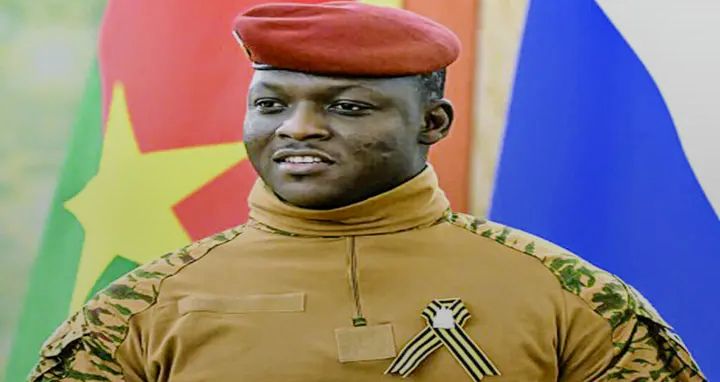
Burkina Faso has inaugurated its first-ever gold refinery as the West African country intensifies efforts to process its mineral resources locally and gain greater control over the lucrative gold industry.
The refinery was officially opened on Monday in the capital, Ouagadougou, by the country’s military leader, Captain Ibrahim Traore, who has made economic sovereignty and domestic industrialisation central to his administration.
Burkina Faso is one of Africa’s major gold producers, ranking third on the continent and producing more than 94 tonnes of gold in 2025, according to figures from the World Gold Council.
However, the country has faced longstanding difficulties in regulating its informal gold mining sector, which has been affected by smuggling and insecurity linked to jihadist groups operating across the Sahel.
The presidency described the inauguration of the refinery as a “historic milestone” in Burkina Faso’s efforts to achieve greater economic independence.
Traore, who seized power in a 2022 coup, said the country’s objective was to move beyond exporting unprocessed minerals and establish a complete domestic value chain.
“Our ambition is no longer to be a country that simply extracts and ships our raw materials abroad,” the presidency quoted Traore as saying.
“We want to refine all our metals locally… we want to have the entire value chain here.”
The development is part of a broader push by Traore’s administration to increase state involvement in the mining sector and revive domestic industrial production.
Under his leadership, Burkina Faso has nationalised several gold mines while also promoting local production in sectors including cotton, tomatoes and textiles.
Authorities have also taken measures to tighten control over gold produced by informal miners.
In 2024, the government suspended gold exports from informal mining operations, with Mines Minister Yacouba Zabre Gouba saying the measure was intended to help authorities better organise the sector.
Traore has previously warned that significant quantities of Burkina Faso’s gold were being smuggled out of the country, arguing that illicit trade could contribute to the financing of armed groups.
Burkina Faso has been battling jihadist insurgencies for years, with armed groups controlling or operating in large parts of the country and carrying out frequent attacks.
The government has mobilised civilian volunteers to support the military in its fight against the insurgents.
Gold has become increasingly valuable as international prices have reached record levels in recent months, making the precious metal an important source of revenue while also contributing to trafficking networks across the Sahel.
According to the presidency, the newly inaugurated National Gold Refinery of Burkina Faso, known as RAFFINOR-BF, has an annual production capacity of 164 tonnes of gold.
The refinery, which has been under construction since 2023, is expected to eventually increase its capacity to as much as 515 tonnes annually.
The facility was built at a cost of 11 billion CFA francs, equivalent to about $19 million, with funding provided by the Burkinabe state in partnership with domestic private-sector investors.
The government expects the refinery to strengthen its ability to monitor gold production and commercialisation while retaining more of the economic value generated from the country’s mineral resources.
The inauguration represents another step in Burkina Faso’s effort to shift from exporting raw materials towards domestic processing and industrialisation.
-
 Security2 months ago
NDLEA Declares Alleged Drug Kingpin, Three Associates Wanted, Freezes ₦9.8bn Linked to Syndicate
-

 Business/Finance2 months ago
How to Apply for Tunde Onakoya’s ₦250 Million Scholarship Programme and Free Laptop Offer
-
 National Affairs2 months ago
ICPC Uncovers 908 Suspected Ghost Workers Across 50 Federal MDAs, Recovers ₦942 Million
-
 Politics2 months ago
Atiku Challenges Tinubu to Reveal Details of ₦15.13bn SUV Procurement in 2026 Budget
-
 Judiciary | Public Safety2 months ago
INEC Tells Court Voter Information Is Not Confidential in Emeka Ike’s ₦10bn Lawsuit
-
 Judiciary | Public Safety2 months ago
Court to Rule Friday on NDLEA’s Bid to Destroy ₦480bn Meth Lab in Ogun
-
 Security2 months ago
Family Paid ₦50 Million Ransom to Secure Release of Abducted Kebbi Judge
-
 News2 months ago
2026 Budget: FG Earmarks ₦962.83bn for SUVs, Empowerment Projects Amid Debt Concerns