
National Affairs
: WLH Leadership Fellowship: How Women Leaders Can Transform Global Health

I recently became a Global Fellow of the WomenLift Health Leadership program, marking the completion of a transformative 12-month journey designed to equip women in public health with the competencies, strategic skills and allyship required to thrive in the global health space.
It was an intensive and deeply reflective year that fundamentally reframed how I understand leadership, influence and the responsibility that comes with occupying spaces where decisions about health systems and communities are made.
The need for such leadership development cannot be separated from the persistent gender gap in health leadership.
According to the World Economic Forum’s Global Gender Gap Report 2025, women constitute 58.5 per cent of the workforce in the healthcare and care sector, making them a major force in the delivery and execution of health services globally. Yet, this numerical strength has not translated proportionately into positions of senior leadership.
The familiar “sticky floor and glass ceiling” phenomenon remains evident, with women accounting for only 28.8 per cent of top management positions across the broader global economy.
In global health systems, the imbalance is equally striking. While women make up nearly 70 per cent of the global health and social care workforce, World Health Organisation data estimates that they occupy only about 25 per cent of senior roles.
This disparity presents a fundamental leadership challenge.
The people who constitute the majority of the workforce responsible for delivering health services remain significantly underrepresented at the tables where policies, investments and institutional priorities are determined.
It is against this backdrop that the WomenLift Health Leadership program was established to provide exceptional women in public health with the mentorship, executive coaching, strategic skills and networks required to advance into positions of greater influence.
A year of self-discovery and leadership growth
Over the 12 months, members of my cohort used diagnostic tools from the Centre for Creative Leadership to examine different dimensions of our professional capabilities and leadership styles.
We explored leadership presence, agility, resilience and adaptability, while also examining conflict resolution, influencing styles and other elements that shape how leaders operate within complex institutions.
Before joining the fellowship, I had never experienced formal executive coaching. I initially approached the process with some unease and uncertainty about the value it would ultimately add to my professional journey.
That scepticism did not last long.
The coaching sessions became one of the most valuable aspects of the programme because they required us to confront our assessment results honestly and translate them into meaningful personal and professional growth.
The sessions created a safe environment for rigorous self-reflection.
Coming prepared for each conversation meant confronting some of my core professional challenges directly.
More importantly, I consistently walked away with a clearer understanding of myself, my leadership style and the direction I wanted to take.
The internal work was complemented by small-group mentoring sessions facilitated by established female leaders in public health.
These conversations provided a rare, judgment-free environment where we could discuss systemic workplace barriers, acknowledge hidden apprehensions and develop practical approaches to becoming more authentic and effective leaders within our organisations.
Turning leadership lessons into action
A defining component of the fellowship is the implementation of a strategic leadership project aligned with one of WomenLift Health’s core themes:
centering women and girls in health, catalysing institutional change, optimising pathways to leadership, or building integrated and resilient health systems.
My project, “Advocacy for Body Safety Skills and Sexual and Reproductive Health Empowerment Integration into School Health Curriculum for Key Stage 2 and 3 Female Students in Nigeria,” focuses on centering women and girls.
The project seeks to equip young schoolgirls with essential reproductive health knowledge and body-safety skills, with the broader objective of contributing to improved health outcomes, reducing maternal mortality in the long term and advancing the United Nations Sustainable Development Goals 3, 4 and 5.
Implementing the project also provided an opportunity to take a long-standing passion project to a broader, national level while applying the leadership methodologies I was learning throughout the fellowship.
During the early advocacy stages, members of my cohort became immediate allies, helping to create connections with key public and private stakeholders within Nigeria’s school health ecosystem.
The journey has not been without challenges. Navigating institutional bureaucracy can be daunting, particularly when attempting to introduce ideas that require coordination across multiple sectors.
Yet, every strategic conversation has reinforced my conviction that protecting and educating the Nigerian girl child must remain a priority.
The power of a leadership community
Perhaps the most treasured asset I gained from the fellowship is the extraordinary network of women I now call colleagues, collaborators and friends.
Many of us were complete strangers before the programme.
Some of us met physically for the first time during the Immersion and Lift-Off events. Yet, over the course of the fellowship, we developed a profound and enduring bond.
We lifted one another, leaned on one another and showed up for one another.
In a competitive professional environment where the misconception persists that women do not support one another, this fellowship offered a powerful counterexample.
It demonstrated that women can create communities founded on growth, warmth, collaboration and mutual elevation.
The facilitators from the Centre for Creative Leadership and the team at the Women in Leadership Advancement Network played an important role in creating and sustaining that environment.
For someone operating an independent global health consulting firm, the professional journey can sometimes feel solitary.
That reality has been made more pronounced by local health workforce shortages and the difficult global funding environment.
The fellowship therefore arrived at an important moment, providing not only leadership development but also a community that offered connection, encouragement and renewed professional purpose.
Going further, together
An African proverb says: “If you want to go fast, go alone. If you want to go far, go together.”
That principle captures an important lesson from the fellowship.
The complex challenges confronting global public health are too interconnected to be solved by individuals working in isolation.
They require collaboration across disciplines, institutions, communities and borders.
As Helen Keller famously observed, “Alone we can do so little; together we can do so much.”
Progress becomes possible when people with courage, expertise and a shared sense of purpose come together to pursue meaningful change.
Now officially inducted as Global Fellows, my cohort joins an international community of more than 600 women leaders around the world.
Our journey does not end with the completion of the fellowship.
If anything, it marks the beginning of a new phase—one in which we take the knowledge, relationships and leadership capabilities gained through the programme into our institutions, communities and health systems.
We will continue to contribute to progressive health policies, develop innovative clinical and development frameworks, strengthen health systems and pursue pathways that enable more women to occupy senior decision-making positions.
The leadership gap in global health will not disappear overnight.
But programmes such as WomenLift Health demonstrate the value of intentionally investing in women, building networks of support and creating pathways through which leadership potential can translate into institutional influence.
For me, the greatest lesson from the past year is simple: leadership is not merely about occupying a position. It is about using influence responsibly, creating space for others and building systems that allow more people to thrive.
And when women are given the opportunity, support and platforms to lead, the benefits extend beyond individual careers.
They can translate into stronger health systems, better-informed communities and healthier societies.
When women lead, better health follows.










The Nigerian Veterinary Medical Association (NVMA), Kogi State chapter, has called on the state government to employ a minimum of two veterinary doctors in each of the 21 Local Government Areas to strengthen rabies surveillance and improve the state’s One Health response.
The state chairman of the association, Dr Tolu Omotugba, made the call on Monday in Lokoja during a news conference organised to commemorate the 2026 World Rabies Day at the NVMA Secretariat.
Omotugba said Kogi could not afford to be complacent about rabies, given its large population of dogs used for hunting and security purposes, as well as its porous borders.
He described rabies as a disease that is 99.9 per cent fatal once symptoms appear but 100 per cent preventable, stressing the importance of vaccination, surveillance and prompt medical intervention.
According to him, veterinary officers in the Kogi State civil service were doing their best, but their numbers remained grossly inadequate to effectively monitor and control diseases of public health importance.
“We have about 28 to 30 veterinary officers currently in the Kogi civil service, which is not enough. Some LGAs do not even have the presence of a veterinary officer,” he said.
Omotugba said the state should employ at least two veterinary doctors per LGA, adding that the number could be increased to five per LGA if the government had the capacity.
“We are suggesting a minimum of two per LGA so that they can at least do disease reporting, especially for diseases of public health concern. If the state can do well, they can have as many as five per LGA,” he said.
The NVMA chairman recalled the reported deaths linked to rabies in Bassa Local Government Area of Plateau State in 2025, including three members of the same family.
He warned that dog bites and scratches should not be treated casually because of the potentially fatal consequences of rabies infection.
“A single dog bite, a single scratch, can end a family,” he said.
‘Stronger Together’ requires One Health approach
Speaking on the 2026 World Rabies Day theme, “Stronger Together”, Omotugba said effective rabies control required coordinated action by government agencies, professionals and communities.
He called for stronger collaboration among the Ministries of Health, Environment, Education and Livestock, as well as veterinary and medical doctors, environmental health officers and community leaders.
The veterinary association chairman also commended the Federal Government, through the Federal Ministry of Livestock Development, for its target of achieving 70 per cent annual dog vaccination coverage and zero human deaths from rabies by 2030.
He said 26,000 doses of rabies vaccines were deployed to eight high-risk states in 2025, while the Federal Capital Territory recently commenced the vaccination of 20,000 dogs.
Association seeks modern rabies legislation
Omotugba also criticised the continued reliance on what he described as outdated legislation for rabies and dog population management in Kogi State.
He cited the Rabies Act of 1935 and the Dogs Law, Cap 36 of Northern Nigeria, saying the laws provided for measures such as seizure and licensing but did not adequately address modern dog population management, responsible ownership and enforcement.
He disclosed that less than five per cent of dogs in Lokoja, Okene, Anyigba and Ankpa were licensed.
“We cannot eliminate a 21st-century disease with 20th-century laws,” Omotugba said.
He therefore urged the Kogi State Government to domesticate the Kogi State Rabies Control and Responsible Dog Ownership Bill 2026.
According to him, the proposed legislation should make annual rabies vaccination compulsory, establish a dog registry, prescribe penalties for stray dogs and replace the practice of shooting dogs on sight with humane population management measures.
Call for dedicated funding, One Health task force
The association also called for the creation of a dedicated budget line for rabies control under the Livestock Productivity and Resilience Support (L-PRES) Project.
Omotugba said the funding should support free mass dog vaccination, public sensitisation and the provision of post-exposure prophylaxis in state hospitals.
He further proposed the establishment of a Kogi One Health Rabies Task Force to coordinate surveillance, prevention, vaccination, public education and response activities across relevant sectors.
The NVMA chairman said stronger investment in veterinary manpower, vaccination and legislation would help the state reduce the risk of human deaths and improve responsible dog ownership.
“Let Kogi lead as the first state in North-Central to be rabies-free,” he said.

The Ekiti State Government has intensified efforts to position tourism as a major driver of economic growth, employment creation and investment, with a renewed focus on attracting private-sector investment into the state’s tourism assets.
Governor Biodun Oyebanji, who called on investors to explore opportunities in the sector, also expressed the government’s readiness to partner with communities seeking to transform their tourism potentials into sustainable economic ventures.
Oyebanji spoke on Sunday through the Director-General of the Ekiti State Bureau of Tourism Development, Wale Ojo-Lanre, during the 2026 World Tourism Day celebration held at Arinta Waterfall in Ipole-Iloro.
The celebration, which had traditional rulers, tourism enthusiasts, youths, students, government officials and community leaders in attendance, focused on the potential of Arinta Waterfall and the use of digital technology and artificial intelligence to promote tourism destinations in Ekiti to a global audience.
The 2026 World Tourism Day theme, “Digital Agenda and Artificial Intelligence to Redesign Tourism”, provided the platform for stakeholders to examine how emerging technologies could be deployed to improve tourism promotion, visitor experiences and investment opportunities.
Ekiti opens tourism sector to investors
Oyebanji said Ekiti was open to tourism investments, stressing that the state offered significant opportunities for investors because of the growing demand for recreational and tourist destinations.
The governor particularly highlighted the large population of students in the state’s tertiary institutions as part of the potential market for tourism attractions such as Arinta Waterfall.
He said the government was prepared to work with investors to develop the waterfall into a world-class tourist centre, assuring potential investors of the viability of tourism investments in the state.
“Ekiti is open for tourism investment, and the return on investment is very high because there is demand. We have many tertiary institutions here in Ekiti, and the students are always enthusiastic to visit tourist sites.
Arinta Waterfall is one of them. We are very open to investment,” the governor said.
Oyebanji also expressed willingness to partner with host communities and other stakeholders to unlock the economic potential of tourism sites across the state.
Arinta Waterfall positioned for global visibility
Ojo-Lanre described Arinta Waterfall as one of Nigeria’s notable waterfalls, noting that its seven waterfalls within the site made it a distinctive tourism attraction.
He explained that the decision to host the 2026 World Tourism Day celebration at Arinta Waterfall was deliberate, as the event was expected to increase the site’s visibility and attract the attention of tourists and prospective investors.
According to him, digital platforms and artificial intelligence could significantly change how communities promote their tourism destinations by enabling them to reach wider audiences beyond their immediate locations.
He said the technologies could also improve the experiences of visitors by providing better access to information about tourist sites and available services.
The Technical Adviser to the Governor on Youth Inclusion, Ayo Ojo, similarly described the celebration as an opportunity to showcase Arinta Waterfall and other tourism assets in Ekiti to the world.
Ojo said the state had effectively “unlocked” the waterfall and designated it as a tourism laboratory where digital and artificial intelligence technologies could be deployed to promote the destination internationally.
He noted that the presence of other attractions, including the Ikogosi Warm Springs axis, could complement the development of Arinta Waterfall and strengthen Ekiti’s position as a tourism destination.
Monarch seeks infrastructure, private investment
The Olupole of Ipole-Iloro Kingdom, Oba Ezekiel Oladele, commended the state government for choosing Arinta Waterfall as the venue for the celebration.
The monarch appealed for sustained government support and increased private-sector participation to transform the waterfall into a major ecotourism destination.
He said adequate infrastructure, professional management, environmental protection and private investment would enable the site to attract more visitors, create employment opportunities for youths, increase income for residents and stimulate economic activities within the community.
Oba Oladele also called for the deployment of digital maps, virtual tours, online booking platforms, social media and artificial intelligence tools to promote Arinta Waterfall both within Nigeria and internationally.
While advocating greater investment in the site, the monarch stressed the need to ensure that tourism development did not damage the environment or undermine the cultural heritage of the host community.
Media pledges support for tourism promotion
The Chairman of the Nigeria Union of Journalists, Ekiti State Council, Kayode Babatuyi, pledged continued media support for the promotion of Arinta Waterfall and other tourism attractions across the state.
Babatuyi urged journalists to maximise digital platforms to tell compelling stories about Ekiti’s natural and cultural heritage.
He said sustained media coverage would improve the visibility of Arinta Waterfall and other tourist destinations while helping to attract visitors and potential investors.
The renewed focus on Arinta Waterfall comes as Ekiti seeks to diversify its economic opportunities by leveraging its natural attractions, cultural heritage and growing digital infrastructure.
With government, communities and private investors working together, stakeholders believe tourism assets such as Arinta Waterfall and Ikogosi Warm Springs could play a greater role in creating jobs, generating local income and positioning Ekiti as a destination for domestic and international tourists.
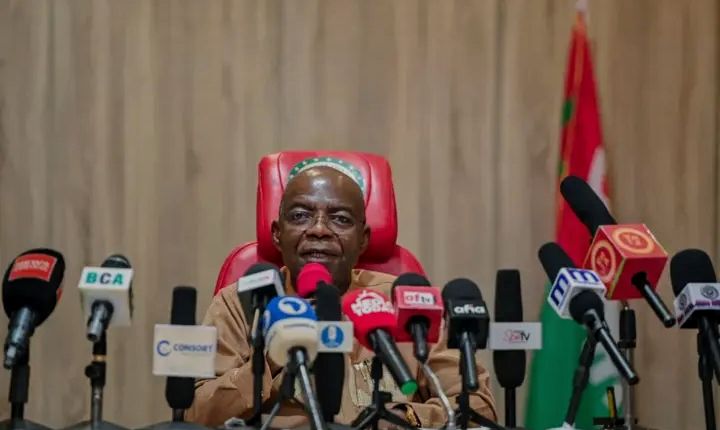
Abia State has emerged as Nigeria’s second-highest-performing state in the revised 2026 State Performance Index Report released by Phillips Consulting, recording the biggest improvement in ranking across the three editions of the assessment.
The revised report placed Abia second nationally with a composite score of 0.55, behind Jigawa State, which ranked first in the 2026 performance snapshot.
The Commissioner for Information in Abia State, Prince Okey Kanu, disclosed this in a statement on Monday, describing the latest ranking as a significant improvement in the state’s performance trajectory.
According to the statement, Abia climbed from 36th position in the 2024 edition to 10th in 2025 before rising to second in the revised 2026 assessment.
The movement represents a 34-place improvement across the three editions, described as the largest overall gain among the 33 states ranked in the 2026 edition.
Phillips Consulting had initially released its 2026 National Assessment Report on July 23, 2026, using a single Momentum Index to rank states based on a blended score.
However, following a comprehensive review and audit of its methodology, the consulting firm corrected identified issues and recalculated the results.
The revised methodology now separates current state performance from progress over time, providing both a 2026 performance snapshot and a rank trajectory showing how states have changed across the three editions.
Under the revised system, momentum is measured by changes in performance ranking rather than differences between scores generated using different scales.
For Abia, its movement from 36th to 10th and then second position translates to a net gain of 34 places.
The report also identified Abia as the leading state in the South-East and one of the strongest-performing states nationally.
Citizen satisfaction
According to the assessment, citizen satisfaction was Abia’s strongest-performing pillar, with a standardised score of +1.78 and an absolute score of 3.92, classified as “Good”.
The citizen satisfaction assessment was based on 770 responses.
Residents gave the highest ratings to government support for businesses, which scored 4.45, followed by roads at 4.42 and publicity of government policies at 4.33.
However, some areas received comparatively lower ratings.
Finding employment scored 3.12, access to clean water received 3.22, while law-enforcement conduct was rated 3.56.
Fiscal performance
The revised report also assessed Abia’s fiscal indicators, including revenue generation, debt and capital expenditure.
The state recorded 27 per cent revenue self-reliance, while its Internally Generated Revenue per capita stood at approximately N13,100.
Debt per capita was put at about N31,300, with a debt-to-revenue ratio of 36 per cent.
The state also recorded a capital expenditure share of 70 per cent.
On transparency, Phillips Consulting revised its assessment to reflect the date on which states published their audited accounts relative to the statutory deadline.
States without qualifying accounts were left unscored rather than automatically receiving zero.
Abia’s transparency score stood at 0.38 in the revised assessment, with the firm adopting the state’s FY2025 audited accounts in place of the FY2024 figures used in the initial report.
Revised debt sustainability assessment
The commissioner said Phillips Consulting had also revised its approach to measuring debt sustainability.
The new assessment considers both debt per capita and debt relative to revenue, providing a broader picture of the fiscal position of each state.
The revised report also highlighted the performance of states in the South-East, with the region accounting for some of the biggest improvements nationally.
Abia ranked second nationally, while Enugu occupied third position.
Jigawa retained the top spot in the 2026 performance snapshot.
According to Phillips Consulting, the distinction between performance and momentum is important.
The performance ranking shows where states stand in the current edition of the assessment, while the momentum measure tracks how their positions have changed over time.
The revised assessment therefore provides a broader picture of Abia’s performance by combining citizen experience, fiscal sustainability, revenue performance, transparency and the state’s trajectory across the three editions.
The latest ranking places Abia among the leading states nationally while highlighting the substantial change in its position from 2024 to 2026.
-
 Security2 months ago
NDLEA Declares Alleged Drug Kingpin, Three Associates Wanted, Freezes ₦9.8bn Linked to Syndicate
-
 National Affairs2 months ago
ICPC Uncovers 908 Suspected Ghost Workers Across 50 Federal MDAs, Recovers ₦942 Million
-

 Business/Finance2 months ago
How to Apply for Tunde Onakoya’s ₦250 Million Scholarship Programme and Free Laptop Offer
-

 Judiciary | Public Safety2 months ago
INEC Tells Court Voter Information Is Not Confidential in Emeka Ike’s ₦10bn Lawsuit
-
 Politics2 months ago
Atiku Challenges Tinubu to Reveal Details of ₦15.13bn SUV Procurement in 2026 Budget
-
 Judiciary | Public Safety2 months ago
Court to Rule Friday on NDLEA’s Bid to Destroy ₦480bn Meth Lab in Ogun
-
 Security2 months ago
Family Paid ₦50 Million Ransom to Secure Release of Abducted Kebbi Judge
-

 News2 months ago
2026 Budget: FG Earmarks ₦962.83bn for SUVs, Empowerment Projects Amid Debt Concerns