
Business/Finance
NNPC profit rises 33% to N7.2tn, remits N22.3tn to government

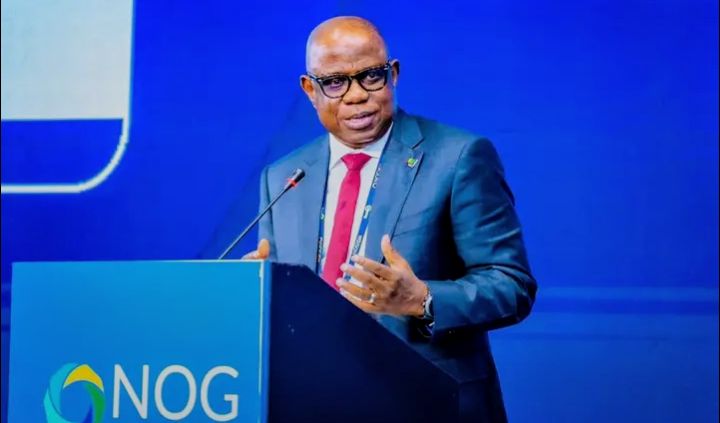
The Nigerian National Petroleum Company Limited (NNPC Ltd) recorded a 33 per cent increase in profit after tax to N7.2tn in 2025, despite pressure on its revenue from lower crude oil prices and reduced product volumes.
The Group Chief Executive Officer of NNPC Ltd, Bayo Ojulari, disclosed this on Tuesday in Abuja while presenting the company’s 2025 audited financial results, operational achievements and strategic outlook.
Ojulari said the company’s profit after tax increased by N1.8tn from N5.4tn recorded in 2024 to N7.2tn in 2025.
According to him, NNPC generated N34.5tn in revenue during the year, while earnings per share stood at N35.9.
He also disclosed that the company’s taxes, royalties and other remittances to the Federal Government rose by 39 per cent to N22.3tn in 2025.
“We have released the NNPC Limited 2025 audited financial results. I want to explain what they mean, what drove them and where we go from here,” Ojulari said.
“The central result is clear. Profit after tax rose 33 per cent, from N5.4tn in 2024 to N7.2tn in 2025. Revenue was N34.5tn. While taxes, royalties and other remittances to government rose 39 per cent to N22.3tn.”
Lower crude prices, product volumes affect revenue
Explaining the financial performance, Ojulari said NNPC’s revenue came under pressure during the year as international crude oil prices declined and product volumes fell following changes in Nigeria’s domestic petroleum market.
He said the reduction in revenue was also linked to developments following the removal of fuel subsidy.
“Revenue declined as crude oil prices fell for those, as you recall, in 2025.
But we also had some decline that resulted from a wide product volume reduction. Following the market regulation, as you know, with the removal of subsidy,” he said.
Despite the revenue pressures, the NNPC chief executive said the company was able to improve its profitability through operational improvements and tighter financial discipline.
“Yet, profit grew because we improved the way we operate. And we maintained discipline across our businesses,” Ojulari said.
Oil production hits five-year high
Beyond its financial performance, NNPC also reported an improvement in crude oil and condensate production during the year.
According to Ojulari, the company’s crude oil and condensate output peaked at 1.77 million barrels per day, representing the highest level recorded in five years.
He also said Nigeria’s gas supply reached a three-year high of 7.2 billion standard cubic feet per day.
“These gains reflect sustained attention to our assets, infrastructure and our focus on delivering visible results,” Ojulari said.
The production figures point to improved output from the company’s upstream operations at a time when increasing oil production remains important to Nigeria’s fiscal position and energy security.
NNPC remittances to government rise
The increase in NNPC’s remittances also featured prominently in the company’s 2025 results.
Taxes, royalties and other remittances to government increased by 39 per cent to N22.3tn, according to the figures presented by Ojulari.
The development means that the company’s contribution to government revenue increased alongside its profit, despite the pressure on its overall revenue.
Ojulari said the stronger performance would provide NNPC with greater capacity to invest in its businesses, contribute to public revenue and support Nigeria’s energy security.
“The numbers matter because of what they enable. Stronger performance gives NNPC Limited more capacity to invest, more capacity to contribute to public revenue and strengthen Nigeria’s energy security,” he said.
He, however, acknowledged that the improved results had raised expectations for the company and would require NNPC to build stronger capacity to sustain the performance.
“It also gives us higher standards to meet. As we deliver exceptional results, the following year we strive to even beat those records,” he added.
Ojulari sets higher performance target
The NNPC boss said recording stronger results would not reduce the pressure on the company, but instead raise the standard it would be expected to meet in subsequent years.
“So having a good performance is not just easy. It means that the bar has been set one level higher. So we now need to focus on building the capacity to deliver,” Ojulari said.
The 2025 results show that NNPC increased its bottom-line performance despite a decline in revenue.
However, the company did not provide a detailed breakdown of the contribution of its individual business segments to the increase in profit in the figures presented.
The results come as NNPC continues its transition from a state-owned corporation to a commercially oriented limited liability company under the Petroleum Industry Act, with profitability, operational efficiency and increased investment capacity forming key parts of its strategy.

The National Agency for Food and Drug Administration and Control (NAFDAC) has destroyed more than 50,000 empty branded alcoholic beverage bottles uncovered at Iyana Oba in Lagos State during an enforcement operation targeting the circulation of counterfeit alcoholic products.
The agency said the bottles, which were allegedly stockpiled for supply to counterfeiters, bore labels of several popular alcoholic beverage brands, raising concerns about the possible illegal production and packaging of fake alcoholic drinks.
Some of the affected brands included Jack Daniel’s, William Lawson’s, Johnnie Walker Red Label and Blue Label, Action Bitters, Lord’s Dry Gin and Hennessy.
NAFDAC Investigation and Enforcement officers who uncovered the stockpile also discovered raw ethanol stored in a drum at the location, further heightening suspicions of possible illegal alcohol production using the branded containers.
According to the agency, more than 50,000 assorted bottles were destroyed to prevent them from being recycled or reused by criminal operators involved in the production and distribution of counterfeit alcoholic beverages.
The operation forms part of NAFDAC’s efforts to clamp down on the activities of counterfeiters who exploit the reputation of established alcoholic beverage brands to deceive unsuspecting consumers.
The agency expressed concern over the dangers associated with the practice, noting that counterfeiters often use original branded packaging to make fake products appear genuine.
Such activities pose significant public health risks because consumers may unknowingly purchase and consume adulterated alcoholic products whose ingredients, composition and production conditions cannot be verified.
The discovery of raw ethanol alongside the stockpiled bottles has also raised concerns about the possibility of unauthorised alcohol production and repackaging.
NAFDAC warned Nigerians against participating in the illegal trade, storage or use of branded packaging materials for counterfeiting, stressing that such practices undermine consumer safety and public health.
The agency urged members of the public to remain vigilant and report suspicious activities involving the stockpiling, sale or distribution of branded bottles and other packaging materials.
It said public cooperation would help enforcement officers identify illegal operations and take appropriate action against individuals involved in the production and circulation of counterfeit products.
NAFDAC reiterated its commitment to protecting public health through sustained surveillance, enforcement operations and the removal of fake, adulterated and unwholesome products from the Nigerian market.
The agency also emphasised the importance of collective efforts in tackling counterfeiting and preventing dangerous products from reaching unsuspecting consumers.

Flour Mills of Nigeria Plc (FMN), through its agricultural subsidiary, Great Agri Input Limited (GAIL), has targeted the cultivation of 10,000 hectares of wheat across approximately 13 states during the 2026/2027 planting season as part of efforts to boost domestic production and reduce reliance on imported wheat.
The company disclosed this in a statement made available to PUNCH Online on Tuesday, saying the initiative was formally launched in Taura Maje, Jigawa State, with the distribution of agricultural inputs to farmers.
The launch was attended by community leaders, farmers, cooperative societies, representatives of FMN and the Bank of Agriculture, as well as other stakeholders in the agricultural sector.
The programme, implemented in partnership with the Bank of Agriculture, is designed to expand local wheat production, support smallholder farmers and strengthen domestic sourcing across Nigeria’s wheat value chain.
Speaking at the launch, the Managing Director of FMN Agro and Group Director, Strategic Engagement and Partnership, Sadiq Usman, said the company had sustained its commitment to local content development for more than two decades.
He explained that FMN’s investments in local agricultural production extended beyond wheat to include maize, soybean, sugar cane, cassava and palm trees.
According to him, wheat remains a critical raw material in the company’s production activities, making investments in local cultivation essential to food security and reducing dependence on imported agricultural inputs.
Usman said Great Agri Input Limited was supporting farmers through the provision of high-yielding seeds, agronomic assistance, strategic partnerships and guaranteed market opportunities for locally cultivated wheat.
He added that the new initiative would build on existing partnerships and experience to reach more farmers, expand cultivated land and strengthen Nigeria’s domestic wheat value chain.
The company said the 2026/2027 planting season builds on five years of progress in local wheat cultivation, which has influenced more than 50 per cent of Nigeria’s wheat cultivation and aggregation.
It disclosed that over 170,000 farmers had benefited from training, agricultural inputs, produce offtake and extension services, while the initiative had contributed to the creation of more than 300,000 direct and indirect youth jobs.
Under its outgrower model, FMN connects smallholder farmers to essential agricultural inputs, technical training, extension services and market opportunities to improve productivity and ensure a reliable supply of locally produced wheat to millers.
The General Manager of Great Agri Input Limited, Tayo Ilori, emphasised the importance of quality seeds, fertilisers and technical assistance in improving agricultural productivity.
He said access to quality inputs must be complemented by adequate knowledge and agronomic support throughout the farming cycle to achieve better yields.
Ilori added that the company remained committed to providing farmers and other stakeholders across the agricultural ecosystem with the resources and solutions needed to strengthen local cultivation.
The Bank of Agriculture is providing financial support for the programme, while the Flour Millers Association of Nigeria is also collaborating with the initiative.
Speaking on behalf of the bank’s Managing Director and Chief Executive Officer, Ayo Sotinrin, the North-West Zonal Manager, Abdulrazaq Datti Salihi, said the partnership would improve farmers’ access to financing and other essential resources.
He said the bank was committed to supporting domestic wheat production through financing interventions that would strengthen agricultural value chains and create more opportunities for farmers.
Salihi commended FMN Agro for its continued investment in local wheat cultivation, noting that combining financial support, agricultural expertise and farmer-focused interventions was important to improving production and strengthening food security.
The company also highlighted progress in local seed production, which increased from 572 metric tonnes during the 2021/2022 farming season to 6,500 metric tonnes in 2025/2026.
It further disclosed that more than 30 mechanisation partners had serviced over 8,000 hectares of farmland within the last three years.
According to FMN, the Borlaug wheat variety and three additional high-yielding varieties suitable for Nigeria’s climatic conditions had also been introduced to improve local production.
The company said it would sustain its support for farmers through agricultural inputs, training and technical assistance to increase domestic wheat production and improve Nigeria’s self-sufficiency in the commodity.

The National Insurance Commission (NAICOM) has warned that Nigeria’s insurance industry may struggle to achieve lasting financial stability if operators fail to strengthen corporate governance, risk management and accountability, despite ongoing recapitalisation efforts.
The commission stressed that raising additional capital alone would not guarantee the resilience of insurance companies, noting that their ability to protect, manage and effectively deploy the funds would determine their long-term sustainability.
The Commissioner for Insurance and Chief Executive of NAICOM, Olusegun Omosehin, gave the warning at the eighth Annual Insurance Directors’ Conference, organised by the College of Insurance and Financial Management in collaboration with NAICOM in Lagos on Thursday.
The conference was themed, ‘Recapitalisation to Resilience: Leading the Risk-Based Capital Era’.
Omosehin said recapitalisation was only the first step towards building financially stronger insurance institutions, urging operators to move beyond meeting minimum regulatory capital requirements to developing businesses capable of withstanding economic shocks, technological disruptions and emerging risks.
He explained that the Minimum Capital Requirement represents the minimum funds an insurance company must maintain to operate its licensed business, while Risk-Based Capital takes into account the nature, size and complexity of the risks carried by individual institutions.
According to him, an insurance company could satisfy its prescribed minimum capital requirement but still lack sufficient capital to support its actual risk exposure.
He said NAICOM would consequently intensify its focus on the quality of capital, corporate governance structures, risk management systems, financial reporting and insurers’ capacity to meet claims obligations.
The commissioner warned that successful recapitalisation would not exempt insurance operators from continuous regulatory scrutiny, emphasising the need for accurate financial records and timely submission of reliable information to the commission.
He also identified poor underwriting decisions, excessive operating expenses, inappropriate investments and uncontrolled business expansion as factors capable of eroding insurers’ capital.
Speaking at the conference, the President of the Chartered Insurance Institute of Nigeria, Akinjide Orimilade, said the new regulatory environment would place greater responsibility on directors, chief executives and other key management personnel.
Orimilade maintained that insurance companies must move beyond simply satisfying statutory requirements, warning that directors could be held accountable where poor oversight and failure to exercise reasonable care exposed their institutions to significant risks.
He identified directors’ qualifications, professional experience, character, board independence, effectiveness of board committees and related-party transactions as critical areas requiring attention under the new regulatory framework.
He also stressed the importance of regular board assessments and compliance with NAICOM’s fit-and-proper requirements, cautioning that membership of an insurance company’s board should not be treated as an honorary position.
According to him, the Nigerian Insurance Industry Reform Act, signed into law on July 31, 2025, represents a major overhaul of the country’s insurance legislation and provides the foundation for the sector’s transition.
Orimilade disclosed that approximately 50 insurance operators had met the new recapitalisation thresholds, with NAICOM reporting statutory capital of about N715bn.
Meanwhile, the Special Adviser to the President on Economic Affairs, Tope Fasua, said the insurance industry must prioritise public confidence, improve insurance penetration and strengthen operational efficiency as it enters the post-recapitalisation era.
He noted that changing customer expectations, technological innovation, emerging risks and evolving regulatory requirements required insurance companies to rethink their business models and improve their institutional capacity.
Fasua urged industry leaders to use the conference to develop practical strategies for strengthening governance, expanding insurance coverage and positioning Nigerian insurance operators for long-term sustainability.
Similarly, the Minister of Finance, Taiwo Oyedele, represented by his Special Adviser on Public Finance, Greg Ezeilo, described a resilient insurance industry as essential to Nigeria’s economic development.
He said the sector played an important role in mobilising long-term capital, protecting businesses and households, and supporting productive investments.
According to him, insurance companies could make greater contributions to infrastructure financing, agriculture, manufacturing and trade if they developed the financial and institutional capacity to underwrite emerging risks.
Oyedele identified stronger corporate governance, wider insurance access, technology adoption, improved risk management and investment in human capital as key priorities for the sector.
He also called for the development of affordable and accessible insurance products for households, small businesses, farmers and underserved communities.
The minister stressed that insurance should become an everyday financial protection mechanism accessible to a wider segment of the population rather than a privilege enjoyed by a limited group.
-

 Security4 months ago
NDLEA Declares Alleged Drug Kingpin, Three Associates Wanted, Freezes ₦9.8bn Linked to Syndicate
-
 National Affairs4 months ago
ICPC Uncovers 908 Suspected Ghost Workers Across 50 Federal MDAs, Recovers ₦942 Million
-

 Business/Finance4 months ago
How to Apply for Tunde Onakoya’s ₦250 Million Scholarship Programme and Free Laptop Offer
-

 Judiciary | Public Safety4 months ago
INEC Tells Court Voter Information Is Not Confidential in Emeka Ike’s ₦10bn Lawsuit
-

 Politics4 months ago
Atiku Challenges Tinubu to Reveal Details of ₦15.13bn SUV Procurement in 2026 Budget
-

 Judiciary | Public Safety4 months ago
Court to Rule Friday on NDLEA’s Bid to Destroy ₦480bn Meth Lab in Ogun
-

 Security4 months ago
Family Paid ₦50 Million Ransom to Secure Release of Abducted Kebbi Judge
-

 News4 months ago
2026 Budget: FG Earmarks ₦962.83bn for SUVs, Empowerment Projects Amid Debt Concerns