
Business/Finance
CBN Cuts MPR to 23%: What It Means for Investment, Borrowing and Nigeria’s Economy

The Monetary Policy Committee (MPC) of the Central Bank of Nigeria (CBN) took a significant step last week by reducing the Monetary Policy Rate (MPR) from 26 per cent to 23 per cent.
The 350-basis-point reduction, announced at the 370th meeting of the MPC, was larger than many observers had anticipated.
The CBN justified the decision with improvements in key economic indicators, including moderating inflation, exchange-rate stability, improved liquidity in the foreign exchange market and growth in the country’s external reserves.
Alongside the MPR reduction, the committee narrowed the Standing Facility Corridor to +50/-300 basis points around the MPR.
It, however, retained the Cash Reserve Ratio at 45 per cent for deposit money banks, 16 per cent for merchant banks and 75 per cent for non-Treasury Single Account (TSA) public-sector deposits.
Explaining the decision, the CBN governor said the adjustments represented an “operational realignment” aimed at restoring the MPR as the primary signal for monetary policy and improving the transmission of monetary policy decisions to market interest rates.
The CBN also cautioned that the reduction should not be interpreted simply as monetary easing. According to the apex bank, the adjustment is part of efforts to sustain the disinflation process and gradually transition the country towards an inflation-targeting framework.
The bank said the large gap that previously existed between the official policy rate and prevailing money-market rates had weakened the effectiveness of monetary policy.
However, the adoption of the Nigerian Overnight Financing Rate (NIBOR) as a transaction-based benchmark has, according to the CBN, improved transparency in money-market operations and created better conditions for the latest policy adjustment.
What the MPR cut means for investment
The reduction has potentially important implications for domestic investment.
The MPR is not simply an interest rate that individuals or businesses directly pay to the CBN. Rather, it is a key policy rate that influences the broader cost of money in the financial system and serves as a signal for other market interest rates.
When the cost of funds declines, banks can potentially reduce lending rates, although the extent and speed of such reductions depend on several other factors, including banks’ funding costs, risk assessments, liquidity conditions and operating expenses.
In principle, lower interest rates can encourage businesses to borrow for expansion, equipment purchases and working capital. Households may also face lower borrowing costs. Increased credit to productive sectors can, in turn, support investment, production and employment.
The latest policy action could therefore provide some relief to businesses that have struggled with exceptionally high borrowing costs.
There could also be implications for government finances. If market borrowing costs decline, the government could eventually face lower debt-servicing costs, depending on the structure and maturity of its outstanding obligations and the rates at which it refinances its debt.
Funds that would otherwise go towards servicing debt could potentially be redirected towards infrastructure and other public investments.
However, these benefits are not automatic. The reduction in the policy rate must eventually translate into lower effective lending rates and greater access to credit before its full impact can be felt by businesses and consumers.
Avoiding the crowding-out effect
As the CBN moves towards a less restrictive monetary stance, it must remain vigilant about liquidity and credit conditions.
One major concern is the possibility of a crowding-out effect, where heavy government borrowing absorbs funds that could otherwise be available to private businesses.
There is persistent competition between the public and private sectors for credit in the financial market. Where financial institutions perceive government securities as relatively attractive or less risky than private-sector lending, banks and other investors may prefer to allocate a greater proportion of available funds to government.
That can leave businesses, particularly small and medium-sized enterprises, with limited access to affordable credit.
This would undermine one of the objectives of lowering the MPR.
The coordination between the CBN and the Ministry of Finance is therefore important. Monetary policy cannot achieve its desired effect in isolation if fiscal policy simultaneously creates intense competition for available credit.
The government should be encouraged to reduce unnecessary reliance on domestic financial institutions, particularly where such borrowing places pressure on the same pool of funds needed by businesses to finance their operations and investments.
Inflation remains the critical test
The CBN’s decision has come against the backdrop of moderating inflation.
Headline inflation reportedly declined from 15.43 per cent in July to 15.39 per cent in August 2026. Food inflation also fell from 20.31 per cent to 19.57 per cent over the same period, while core inflation reportedly dropped from 14.97 per cent to 13.29 per cent.
The CBN has attributed the moderation partly to the impact of its previous contractionary monetary policy.
But monetary policy is only one of the factors influencing prices in Nigeria.
The effect of fuel-price changes, transportation costs, electricity costs, logistics, insecurity, production constraints and other supply-side factors means that inflation cannot necessarily be explained entirely by the amount of money circulating in the economy.
The recent increase in fuel prices, for instance, illustrates how a supply-side shock can put upward pressure on prices even when monetary conditions remain tight.
This means the CBN faces a delicate balancing act. It needs to support economic activity and investment without allowing the recent moderation in inflation to reverse.
Manufacturers need consumers
Another important dimension is weak consumer demand.
According to figures cited from the Manufacturers Association of Nigeria (MAN), manufacturers invested about N4.54 trillion in the Nigerian economy in 2025, while goods worth more than N2 trillion reportedly remained unsold because of weak consumer spending.
If businesses are producing goods but consumers cannot afford to buy them, additional investment alone may not be enough to generate sustainable economic growth.
This is where monetary policy becomes particularly important.
A prolonged period of expensive credit can constrain business expansion and household spending.
Businesses may postpone investments, reduce inventories and limit hiring, while consumers may reduce purchases because of declining disposable income and high borrowing costs.
The resulting weakness in demand can feed back into production decisions and employment.
There is, however, a need to distinguish between monetary constraints and the wider structural problems affecting Nigeria’s economy.
Weak purchasing power is also linked to food prices, energy costs, transportation expenses, unemployment, exchange-rate movements and other factors.
Liquidity must reach the productive economy
The latest reduction in the MPR therefore represents only one stage in the process.
The real test will be whether the policy eventually produces cheaper and more accessible credit for productive businesses without triggering renewed inflationary pressure.
There are also concerns about the timing of increased liquidity in the economy and the possibility that political spending ahead of the 2026 and 2027 electoral cycles could affect monetary conditions.
Such concerns require careful monitoring and evidence-based assessment rather than assumptions about where liquidity is ultimately held or spent.
The CBN must therefore continue to monitor money supply, bank lending, inflation, exchange-rate conditions, asset prices and credit allocation.
The effectiveness of the policy should be assessed against measurable outcomes: Are lending rates falling? Is credit reaching manufacturers and small businesses? Is private investment increasing? Is consumer demand recovering? Is inflation continuing to moderate? And are exchange-rate gains being sustained?
The answers to these questions will determine whether the MPR reduction translates into broader economic benefits.
The CBN’s latest decision provides an opportunity to move away from exceptionally tight monetary conditions while maintaining attention to price stability. But lower interest rates by themselves cannot solve Nigeria’s economic challenges.
For the policy to have its intended impact, monetary and fiscal authorities will need to work together to ensure that liquidity supports productive investment rather than excessive public-sector borrowing.
Regular monitoring of the policy’s results against its expected objectives will therefore be essential in determining whether the outcome is positive, negative or neutral for investment, production, employment and the wider Nigerian economy.










The Nigerian National Petroleum Company Limited (NNPC Ltd) recorded a 33 per cent increase in profit after tax to N7.2tn in 2025, despite pressure on its revenue from lower crude oil prices and reduced product volumes.
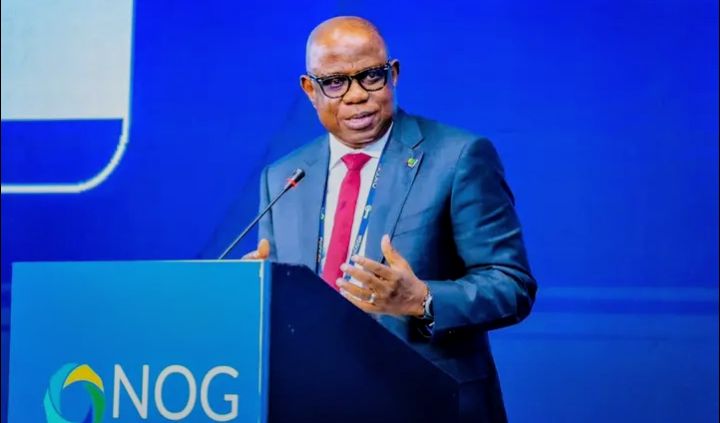
The Group Chief Executive Officer of NNPC Ltd, Bayo Ojulari, disclosed this on Tuesday in Abuja while presenting the company’s 2025 audited financial results, operational achievements and strategic outlook.
Ojulari said the company’s profit after tax increased by N1.8tn from N5.4tn recorded in 2024 to N7.2tn in 2025.
According to him, NNPC generated N34.5tn in revenue during the year, while earnings per share stood at N35.9.
He also disclosed that the company’s taxes, royalties and other remittances to the Federal Government rose by 39 per cent to N22.3tn in 2025.
“We have released the NNPC Limited 2025 audited financial results. I want to explain what they mean, what drove them and where we go from here,” Ojulari said.
“The central result is clear. Profit after tax rose 33 per cent, from N5.4tn in 2024 to N7.2tn in 2025. Revenue was N34.5tn. While taxes, royalties and other remittances to government rose 39 per cent to N22.3tn.”
Lower crude prices, product volumes affect revenue
Explaining the financial performance, Ojulari said NNPC’s revenue came under pressure during the year as international crude oil prices declined and product volumes fell following changes in Nigeria’s domestic petroleum market.
He said the reduction in revenue was also linked to developments following the removal of fuel subsidy.
“Revenue declined as crude oil prices fell for those, as you recall, in 2025.
But we also had some decline that resulted from a wide product volume reduction. Following the market regulation, as you know, with the removal of subsidy,” he said.
Despite the revenue pressures, the NNPC chief executive said the company was able to improve its profitability through operational improvements and tighter financial discipline.
“Yet, profit grew because we improved the way we operate. And we maintained discipline across our businesses,” Ojulari said.
Oil production hits five-year high
Beyond its financial performance, NNPC also reported an improvement in crude oil and condensate production during the year.
According to Ojulari, the company’s crude oil and condensate output peaked at 1.77 million barrels per day, representing the highest level recorded in five years.
He also said Nigeria’s gas supply reached a three-year high of 7.2 billion standard cubic feet per day.
“These gains reflect sustained attention to our assets, infrastructure and our focus on delivering visible results,” Ojulari said.
The production figures point to improved output from the company’s upstream operations at a time when increasing oil production remains important to Nigeria’s fiscal position and energy security.
NNPC remittances to government rise
The increase in NNPC’s remittances also featured prominently in the company’s 2025 results.
Taxes, royalties and other remittances to government increased by 39 per cent to N22.3tn, according to the figures presented by Ojulari.
The development means that the company’s contribution to government revenue increased alongside its profit, despite the pressure on its overall revenue.
Ojulari said the stronger performance would provide NNPC with greater capacity to invest in its businesses, contribute to public revenue and support Nigeria’s energy security.
“The numbers matter because of what they enable. Stronger performance gives NNPC Limited more capacity to invest, more capacity to contribute to public revenue and strengthen Nigeria’s energy security,” he said.
He, however, acknowledged that the improved results had raised expectations for the company and would require NNPC to build stronger capacity to sustain the performance.
“It also gives us higher standards to meet. As we deliver exceptional results, the following year we strive to even beat those records,” he added.
Ojulari sets higher performance target
The NNPC boss said recording stronger results would not reduce the pressure on the company, but instead raise the standard it would be expected to meet in subsequent years.
“So having a good performance is not just easy. It means that the bar has been set one level higher. So we now need to focus on building the capacity to deliver,” Ojulari said.
The 2025 results show that NNPC increased its bottom-line performance despite a decline in revenue.
However, the company did not provide a detailed breakdown of the contribution of its individual business segments to the increase in profit in the figures presented.
The results come as NNPC continues its transition from a state-owned corporation to a commercially oriented limited liability company under the Petroleum Industry Act, with profitability, operational efficiency and increased investment capacity forming key parts of its strategy.

The Coca-Cola System in Nigeria has announced plans to invest an additional $1 billion in the country over the next five years, subject to the availability of a predictable and enabling policy environment.
The company disclosed this in a statement shared with PUNCH Online on Saturday, following a new socio-economic assessment of its operations in Nigeria conducted by global consultancy, Steward Redqueen, in 2024.
The assessment examined the economic contributions of the Coca-Cola System, comprising Coca-Cola Nigeria Limited and its authorised bottler, Nigerian Bottling Company.
The study used the Leontief input-output economic model, an economic framework used to assess how activities in one sector affect other parts of an economy.
According to the report, the Coca-Cola System supported approximately 160,200 jobs across its value chain during the period under review.
Of the figure, 2,989 were direct employees, while more than 157,200 additional jobs were sustained indirectly across sectors including agriculture, logistics, retail, hospitality and distribution.
The study found that for every job created directly by the company, an additional 53 jobs were supported elsewhere in the Nigerian economy, highlighting the multiplier effect of its operations and supply chain.
Beyond employment, the assessment estimated that the Coca-Cola System generated approximately $1 billion in value-added economic activity in Nigeria during the period examined.
It also revealed that the company spent about $601 million annually on goods and services sourced from local suppliers.
The report said a significant proportion of the ingredients, packaging materials and other production inputs used by the Coca-Cola System are sourced, produced and distributed locally.
According to the assessment, the local sourcing model has strengthened the company’s links with Nigeria’s agricultural, manufacturing and logistics sectors while creating economic opportunities for businesses and individuals.
Coca-Cola highlights sustainability investments
The assessment also highlighted Coca-Cola’s investments in environmental sustainability, particularly waste management and water stewardship.
It cited the launch of a packaging collection hub in Apapa, Lagos, with the capacity to process 13,000 metric tonnes of PET plastic annually.
The facility is expected to support approximately 1,000 informal waste collectors while contributing to the development of Nigeria’s recycling ecosystem.
According to the study, the hub is designed to improve plastic recovery and strengthen livelihoods connected to waste collection and recycling.
The report also highlighted a $25 million Africa-wide water stewardship initiative covering 20 markets, including Nigeria.
It said communities in Borno and Imo states have benefited from interventions including borehole rehabilitation, sanitation infrastructure and riverbank restoration.
The projects were reported to have impacted more than 2.6 million people.
The assessment concluded that the Coca-Cola System’s contribution to Nigeria extends beyond beverage production, with its activities spanning employment, local procurement, environmental sustainability and community development.
It said continued alignment between the company’s global expertise and local ambitions would be important in expanding its economic impact, strengthening supply chains and creating broader opportunities for Nigerians.
The Coca-Cola System said its planned additional $1 billion investment over the next five years would depend on the existence of a predictable and enabling policy environment in Nigeria.

Veteran Yoruba actor, Peter Fatomilola, has recounted how popular skit maker and actor, Debo Adedayo, better known as Mr Macaroni, surprised him with a payment of ₦1 million after they worked together on a film.
Fatomilola said the payment came as a surprise because he had not negotiated or agreed on any fee with Mr Macaroni before taking part in the production.
The veteran actor made the revelation in an upcoming interview with African A-List, also known as AfricanaList, while reflecting on his experiences and relationships within the Nigerian entertainment industry.
Fatomilola recalled an earlier encounter with Mr Macaroni at a film location in Fiditi, Oyo State, where he had completed two scenes.
According to him, he was paid ₦50,000 by the person who engaged him for the job. However, as he prepared to leave the location, Mr Macaroni gave him ₦200,000 to cover fuel expenses.
He said the gesture left a strong impression on him.
“Help me greet Mr Macaroni, Debo Macaroni, Daddy Wa. Since I started working in the industry, for example in Oyo, at a Fiditi location, I finished quickly.
“He asked, ‘Uncle Fat, are you done?’ I said yes, and that I was leaving.
“It was just two scenes. He escorted me to the car and said, ‘Let me give you money for fuel.’
The money wasn’t less than ₦200,000. The person I came to work for paid me ₦50,000.”
Fatomilola said the encounter was followed by another invitation from Mr Macaroni to work on a film project in Lekki, Lagos.
He explained that Mr Macaroni contacted him and asked him to come to Lagos for the production.
“He contacted me and said, ‘I’ll be expecting you in Lekki tomorrow for a job.’ So I had to go,” the actor recalled.
Fatomilola said that after arriving at the location, he initially waited to be assigned a role, unaware of the significance of the casting arrangement.
He later discovered that he would be acting alongside another veteran actor, Pete Edochie.
“When we got there, I was waiting for them to give me a role, to call me on set, not knowing I was only called to play one role.
“What I saw was Peter to Peter — Pete Edochie and Peter Fatomilola. We both did the film, and he said we were done. He said I had satisfied him. I said okay.”
After the production, Fatomilola said Mr Macaroni gave ₦100,000 to his son and ₦50,000 to his grandchild.
The payments made him begin to suspect that Mr Macaroni might also give him money, although there had been no prior agreement on his fee for the production.
“Then he called my son and gave him ₦100,000. My grandchild, the other person’s child, he gave him ₦50,000. That was when I became suspicious that I’d be given money. That I’d be given money,” he said.
When asked whether the money given to his son and grandchild was part of his payment for the film, Fatomilola clarified that he and Mr Macaroni had never negotiated a fee for his appearance.
He said he only learnt how much had been sent to him after they had left the Lekki location.
Fatomilola recalled asking, “How much did he send?”
According to the actor, the response was ₦1 million.
“₦1m!” he exclaimed, expressing his surprise at the amount.
The veteran actor’s account highlights what he described as an unexpected gesture from Mr Macaroni after their collaboration, coming on top of the financial assistance he had previously received from the actor at the Fiditi film location.
-
 Security2 months ago
NDLEA Declares Alleged Drug Kingpin, Three Associates Wanted, Freezes ₦9.8bn Linked to Syndicate
-
 National Affairs2 months ago
ICPC Uncovers 908 Suspected Ghost Workers Across 50 Federal MDAs, Recovers ₦942 Million
-

 Business/Finance2 months ago
How to Apply for Tunde Onakoya’s ₦250 Million Scholarship Programme and Free Laptop Offer
-
 Politics2 months ago
Atiku Challenges Tinubu to Reveal Details of ₦15.13bn SUV Procurement in 2026 Budget
-

 Judiciary | Public Safety2 months ago
INEC Tells Court Voter Information Is Not Confidential in Emeka Ike’s ₦10bn Lawsuit
-

 Judiciary | Public Safety2 months ago
Court to Rule Friday on NDLEA’s Bid to Destroy ₦480bn Meth Lab in Ogun
-
 Security2 months ago
Family Paid ₦50 Million Ransom to Secure Release of Abducted Kebbi Judge
-

 News2 months ago
2026 Budget: FG Earmarks ₦962.83bn for SUVs, Empowerment Projects Amid Debt Concerns