
News
African Newsrooms Earn Global Trust as Nigeria, Kenya Top 2026 Media Trust Rankings


level since global measurements began, but new findings from the Reuters Institute show that two African countries are bucking the trend.
The Reuters Institute’s Digital News Report 2026, based on responses from 48 markets, found that trust in news declined in 29 countries, with the global average falling to 37 per cent — the lowest level recorded since the institute began tracking the measure in 2015.
Kenya and Nigeria, however, recorded an overall news trust level of 68 per cent each, placing both countries jointly at the top of the 48 markets surveyed.
The figure puts the two African countries significantly ahead of the United States, where overall trust in news stood at 25 per cent.
For Felix Imoh, Global PR Manager at Legit, the development raises an important question about the changing relationship between African audiences and digital newsrooms.
“The story worth telling” is not only that trust in news is falling globally, but that some African newsrooms are managing to build credibility with audiences despite difficult economic and technological conditions.
South Africa records decline
The picture is different in South Africa, where overall trust in news fell by five percentage points to 50 per cent.
The decline moved the country from second place among all markets surveyed in 2022 to ninth in the 2026 report.
The decline in audience trust has coincided with pressure on the country’s traditional media industry.
According to the Reuters Institute, the Mail & Guardian reduced its workforce by 12 employees from an already small newsroom of 25 permanent staff.
The development came against the backdrop of wider changes in South Africa’s print media industry, including Media24’s print shutdowns that began in 2024.
The developments highlight the relationship between newsroom capacity and public confidence at a time when media organisations across the world are struggling with declining advertising revenues, audience fragmentation and competition from social media platforms.
Digital-first newsrooms gaining ground
The Reuters Institute data also points to the growing influence of digital-first news organisations in Africa.
In Kenya’s online news category, TUKO.co.ke recorded a weekly reach of 62 per cent, ahead of Citizen TV online, Kenyans.co.ke and Daily Nation online.
In Nigeria, Legit.ng is identified by the Reuters Institute as one of the digital-born brands continuing to grow, particularly among younger audiences.
The growth is taking place despite wider challenges facing Nigeria’s media industry, including pressure on press freedom, advertising economics and laws affecting online activity.
Unlike traditional broadcasters and long-established newspapers, digital-first newsrooms operate in an environment where audiences can move between multiple platforms and competing sources within seconds.
For such organisations, retaining an audience requires more than publishing frequently.
Accuracy, verification and transparency have become central to maintaining credibility.
AI changes newsroom verification
Technology is also changing how newsrooms approach accuracy.
At TUKO.co.ke, editorial decisions are supported by EditorialEye, an in-house artificial intelligence assistant trained on the organisation’s editorial guidelines, search-engine optimisation standards and ethical frameworks.
The system checks and flags content and makes recommendations, but does not write stories. Final editorial decisions remain with human editors.
The distinction is significant as artificial intelligence-generated content becomes increasingly difficult for audiences to identify.
The Media Council of Kenya’s State of the Media 2025 report found that 63 per cent of Kenyan media consumers said they could not distinguish AI-generated content from traditional reporting.
This places additional responsibility on newsrooms to establish clear editorial processes around verification and the use of AI.
Fact-checking and the value of verification
At Legit.ng, the emphasis on verification has also been reflected in stories that became the subject of online misinformation.
One example involved a claim that South Africa had denied BUA Group Chairman Abdul Samad Rabiu a visa.
FactCheckAfrica rated the claim misleading, explaining that Rabiu had been refused entry because the visa he held had expired the previous day, rather than having his visa application rejected.
The verification identified Legit.ng among the outlets that had accurately reported the circumstances from the outset.
Another case emerged in September after a Facebook post distorted the name and figures associated with a pledge by SDP presidential candidate Adewole Adebayo.
FactCheckAfrica subsequently confirmed that the pledge was genuine. Adebayo had proposed an 11-to-15-kilowatt solar commitment for every Nigerian roof within 11 months.
The fact-check also listed Legit.ng’s report alongside reports by PUNCH, Vanguard and Pulse Nigeria as accounts that had accurately captured the pledge.
For digital newsrooms, such examples demonstrate why verification cannot be treated merely as a response to mistakes after publication.
Instead, accuracy has to be incorporated into the reporting process before a story reaches the audience.
A wider African trend
Other digital news organisations, including Briefly News and YEN.com.gh, are also operating within markets where audiences increasingly consume news through digital platforms.
Their experiences reinforce the need to examine Africa’s media landscape beyond the traditional distinction between established newspapers and newer digital publications.
The changing media environment suggests that audience trust can be built by organisations willing to demonstrate how they verify information, disclose the role of technology and correct errors when they occur.
However, the Reuters Institute’s findings also come with an important qualification.
The institute notes that the samples in both Kenya and Nigeria are skewed towards younger, urban and English-speaking respondents. The figures therefore should not be interpreted as fully representative of the entire populations of the two countries.
Even with that limitation, the findings provide an important indication of how digitally engaged audiences in both countries view their news media.
For news organisations operating in an increasingly fragmented information environment, trust is becoming closely tied to transparency, verification and consistency.
The broader lesson is that established media brands cannot rely solely on institutional history to maintain audience confidence.
Newsrooms increasingly have to demonstrate credibility through their journalism — one verified report, transparent correction and clearly explained editorial decision at a time.
As misinformation, artificial intelligence and rapidly changing digital platforms continue to reshape the news industry, the African experience offers an important case study in how digital-first journalism is competing for public trust.








The Federal Government has announced plans to increase Nigeria’s passport production capacity to six million booklets annually by May 2027, as part of efforts to position the country as a major supplier of travel documents across Africa.
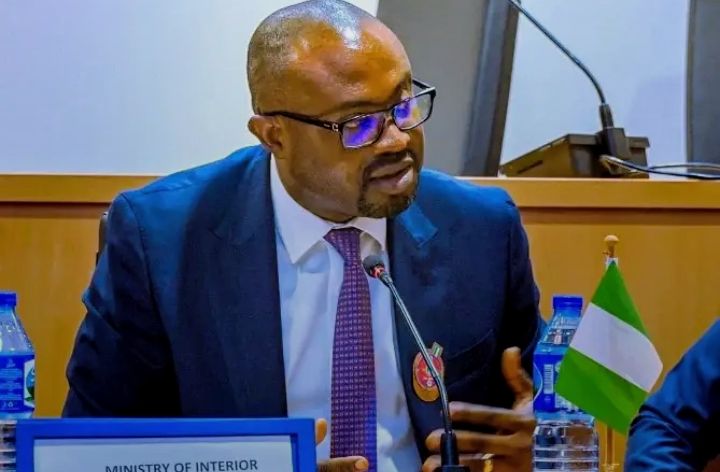
The Minister of Interior, Dr Olubunmi Tunji-Ojo, disclosed this on Friday in Abuja during the groundbreaking ceremony for the $70 million National Passport Booklet Production Centre at the Nigeria Immigration Service (NIS) headquarters.
According to the minister, the facility will initially have the capacity to produce six million passport booklets annually, with plans to increase production to 10 million booklets per year.
Tunji-Ojo said Nigeria currently requires between 1.8 million and two million passports annually, noting that the proposed production capacity would significantly exceed domestic demand and create opportunities for exports.
“The requirement of Nigeria is roughly between 1.8 to two million passports a year, but by May we will have the capacity for six million passports a year production, which we are going to scale to 10 million booklets a year,” he said.
He explained that the project, being developed in partnership with technology firm Iris Smart Technologies, was designed to produce passports that meet the travel document standards of the Economic Community of West African States (ECOWAS).
The minister said the facility would enable Nigeria to supply passports to other African countries currently relying on foreign manufacturers, particularly those in Europe and the Americas.
“What our partners Aresmart and we are doing is to build a passport that will be able to service ECOWAS and even be able to export to other countries,” he stated.
Tunji-Ojo described the initiative as a strategic economic opportunity, arguing that Nigeria should take advantage of its position as Africa’s largest economy to compete in the continental passport production market.
He noted that several African countries currently depend on European and American companies for their passport booklets, adding that Nigeria was determined to change the situation by developing local production capacity.
“All other countries in Africa, they are buying from Europe, from the Americas. But we believe Nigeria, being the giant of Africa, that is a market. Nigeria must lead,” the minister said.
He further disclosed that President Bola Tinubu was expected to commission the facility in May 2027.
“By May, by the grace of God, this project will be commissioned by Mr President in May 2027,” he added.
The groundbreaking ceremony marks another step in the Federal Government’s efforts to domesticate passport production and reduce Nigeria’s longstanding dependence on foreign printing companies.
For decades, Nigeria has relied on overseas printing arrangements to meet its annual passport requirements, a situation that has involved foreign procurement costs and logistical challenges.
The new production centre is expected to strengthen local manufacturing capacity, improve the security and availability of Nigerian travel documents and potentially generate foreign exchange through exports to other African countries.
If successfully implemented, the project could also position Nigeria as a key player in the supply of standardised travel documents within the ECOWAS region.
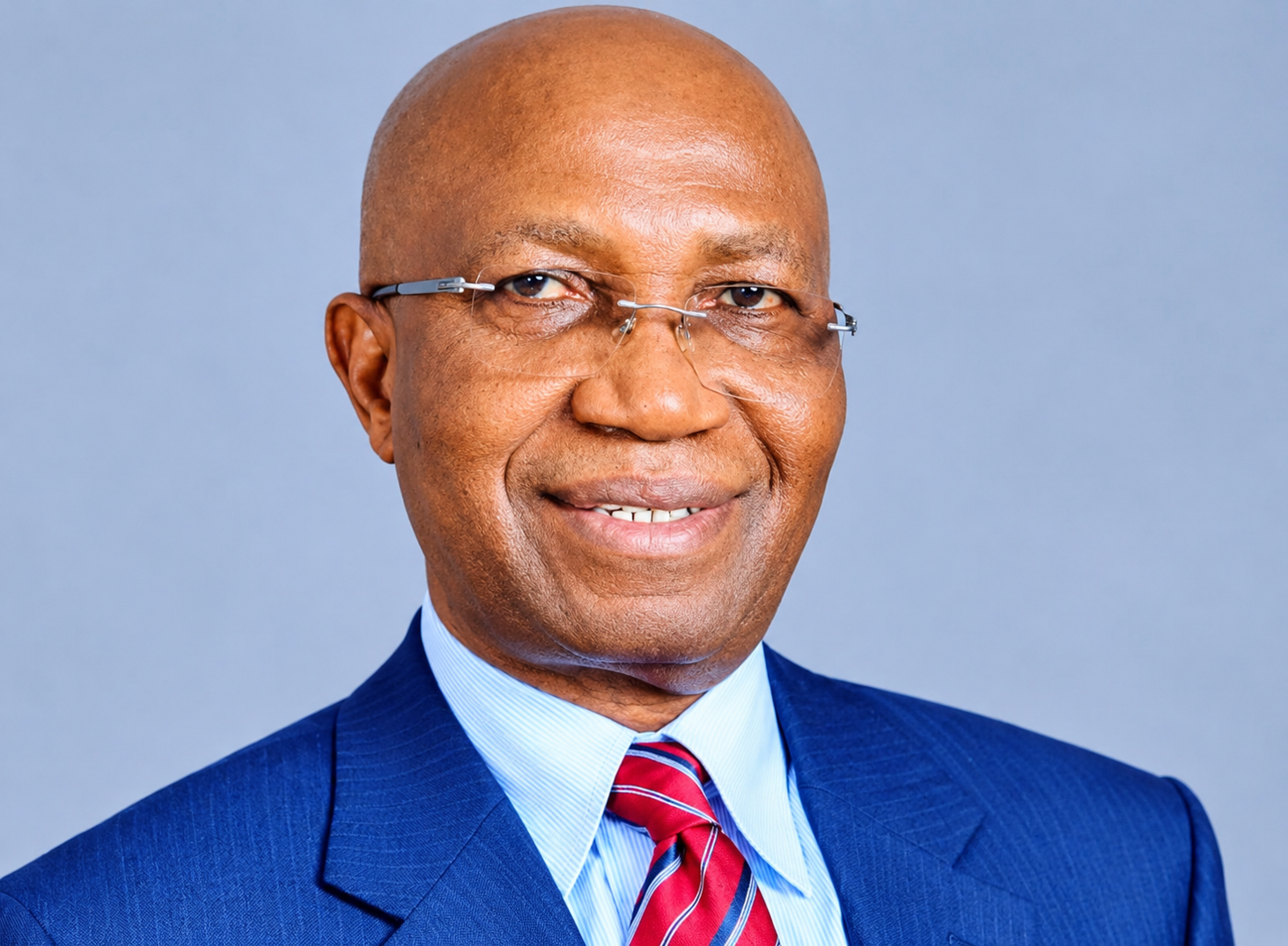
President Bola Tinubu expressed his ambition to govern Nigeria as far back as 1992, when he was serving as a senator during the military administration of former Head of State, General Ibrahim Babangida, Senior Advocate of Nigeria, Chief Wole Olanipekun, has revealed.
Olanipekun made the disclosure on Thursday while recounting his longstanding relationship with Tinubu at the presentation of his six-volume book, Wole Olanipekun Through the Cases, in Abuja.
The event, held at the Body of Benchers Complex, also marked Olanipekun’s 75th birthday, 50 years at the Nigerian Bar and 35 years as a Senior Advocate of Nigeria.
Tinubu attended the ceremony, unveiled the publication and conferred the Grand Commander of the Order of the Niger (GCON) on the senior lawyer.
Speaking at the event, Olanipekun recalled that Tinubu made the declaration during the inauguration of the National Assembly in 1992, when he was a member of the Senate.
According to him, Tinubu addressed his colleagues and told Babangida that members of the National Assembly had a personal interest in the survival of democracy because some of them hoped to govern the country in the future.
Olanipekun said the statement made a lasting impression on him, adding that Tinubu’s emergence as President in 2023 fulfilled the ambition he had expressed more than three decades earlier.
He said, “You said something that hit the card. You told President Babangida that you, every one of us in this country, particularly you senators, had an insurable interest in democracy because one day people like you wanted to govern this country. That was 1992.
“As God will have it, in 2023, you became President of Nigeria. And here you are, seated today as the President of Nigeria. You never knew then, but it is said, it is written, after the abundance of the heart, the mouth speaketh.
“You said it; it came to pass. We started. It was then I got attracted to you, Your Excellency.”
The senior lawyer also recalled Tinubu’s involvement in efforts to challenge the dissolution of the National Assembly following the 1993 military coup led by the late General Sani Abacha.
He said Tinubu and some other senators approached him and his senior colleague, the late Chief G.O.K. Ajayi, SAN, during a meeting at the residence of the late Senator Odi Adewumi on Agoro Doyin Street.
According to Olanipekun, the politicians briefed them to challenge the dissolution of the legislature in court.
He explained that although the lawyers filed an action, they later withdrew it because of the prevailing circumstances at the time.
“At that nocturnal meeting at Agoro Doyin Street, in the residence of late Senator Odi Adewumi, you briefed my boss, one of my bosses in the profession, G.O.K. Ajayi, and myself that we should challenge the dissolution.
“We did file an action, but later withdrew it for exigencies of that time. Shortly thereafter, we didn’t see you because we couldn’t locate our clients and couldn’t be fighting any cause on behalf of a client that we don’t see, because you had disappeared. You had to travel; you had to leave,” he said.
Olanipekun further disclosed that Tinubu later returned and engaged him and other lawyers to work alongside senior lawyer Chi Williams on his legal matters.
He described the President as someone who consistently appreciated the contributions of legal practitioners, recalling a letter Tinubu wrote to him in July 2003 after the conclusion of a legal case involving Mitchell Williams and Tinubu.
According to him, the letter contained commendations that deeply humbled him and would be included in his memoirs.
Olanipekun said, “I’m not doing any campaign, but I’m talking as a lawyer. I’m talking of what I’ve seen.
“I’m not talking of what I’ve witnessed or what I’ve experienced. At first hand, I did not only work for you, Mr President, but you’ve always appreciated lawyers. This is very important to our profession.”
He added that the letter was particularly significant because it reflected Tinubu’s appreciation of his professional contributions.
“You wrote me a letter in July 2003. That letter definitely will go into my memoirs. You said a lot about me.
“I was humbled. That was when we completed the case of Mitchell Williams and Tinubu. It’s in one of these volumes,” he added.
The senior advocate said his experiences working with Tinubu and other political figures reinforced the importance of defending democracy and upholding the rule of law.
He noted that the six-volume publication documented several legal cases handled by his firm, Wole Olanipekun & Co., including matters involving prominent political figures.
The book was unveiled at the ceremony attended by Tinubu and other dignitaries.
The leadership crisis rocking the African Democratic Congress (ADC) has takenOgun ADC Urges Members to Embrace Dialogue, Avoid Litigation Ahead of 2027 another turn, as the Nafiu Gombe-led Board of Trustees (BoT) has asked the Independent National Electoral Commission (INEC) to remove Senator David Mark and Rauf Aregbesola from its records as leaders of the party.
The board also called on the electoral commission to delist all candidates uploaded to its portal by the Mark-led leadership, insisting that such actions were inconsistent with the November 5, 2026, judgment of the Federal High Court in Abuja.
The BoT made the demands in a statement issued by its Chairman, Chief Rufus Ikanmi, who urged INEC to immediately enforce the court’s ruling on the leadership dispute.
Ikanmi maintained that the judgment delivered by Justice Peter Lifu in Suit No. FHC/ABJ/CS/1819/2025, filed by Hon. Nafiu Bala Gombe against the ADC and four others, remained valid, binding and enforceable.
According to him, the judgment had neither been stayed, varied nor set aside by any superior court, making it necessary for INEC to comply with its provisions.
He said, “The judgment of the Honourable Court is valid, binding, and subsisting. It has not been stayed, varied, or set aside by any superior court. INEC, as a statutory body bound by the rule of law, has a constitutional duty to give full effect to it without further delay.”
The BoT chairman specifically urged INEC to remove the names of the David Mark and Rauf Aregbesola-led leadership from its records and recognise only the leadership headed by Gombe.
The board also demanded the removal of all candidates uploaded to the commission’s portal by the Mark-led faction, arguing that the submissions violated the Nigerian Constitution, the Electoral Act 2022 and the ADC constitution.
It further called on INEC to recognise and deal exclusively with the leadership headed by Gombe, which it claimed had been affirmed by the Federal High Court.
Beyond its demands to the electoral commission, the board called on former Vice-President Atiku Abubakar and other individuals allegedly working with the Mark-led faction to suspend campaign activities, rallies and public engagements organised in the name of the ADC.
The BoT warned that continuing such activities without complying with the court judgment could amount to contempt of court.
“Any continued defiance of the judgment of the Federal High Court amounts to contempt of court and a direct assault on constitutional democracy and the rule of law,” Ikanmi said.
The board, however, appealed to ADC members and supporters to remain calm and law-abiding, assuring them of its commitment to peace, unity and the party’s constitutional order.
Background to ADC Leadership Crisis
The latest development follows the November 5, 2026, judgment of the Federal High Court in Abuja, where Justice Peter Lifu nullified the leadership of the ADC led by former Senate President David Mark.
The court also invalidated decisions taken by the party under the Mark-led leadership.
The judgment followed a suit instituted by Nafiu Bala Gombe, a former Deputy National Chairman of the ADC (North-East), who challenged the emergence of Mark and other members of the interim National Working Committee after the resignation of the party’s former National Chairman, Ralph Nwosu.
However, the Mark-led faction has challenged the ruling, filing an appeal against the judgment.
The faction also disclosed that it had submitted an application for a stay of execution pending the hearing and determination of the appeal.
Why INEC Has Yet to Change Its Records
Meanwhile, INEC has reportedly maintained its position on the matter amid the competing demands from the two factions.
Efforts to reach the Chief Press Secretary to the INEC Chairman, Dayo Oketola, for comments were unsuccessful as of the time of filing this report.
However, a report by Arise News on Thursday, citing a senior commission official, attributed INEC’s continued listing of the Mark-led leadership to the pending Notice of Appeal and application for a Stay of Execution relating to the court judgment.
The report added that the commission could not disregard the ongoing appellate proceedings while considering requests for recognition arising from the ruling.
The development has further complicated the ADC leadership dispute, with the Gombe-led BoT insisting on immediate enforcement of the Federal High Court judgment, while the Mark-led faction continues to pursue its appeal and stay application.
The dispute leaves the party’s leadership recognition and the status of candidates uploaded by the rival faction at the centre of the ongoing legal battle.
SEO Package – Nigeria Insight
SEO Headline: ADC Crisis: Gombe-Led BoT Asks INEC to Delist David Mark, Aregbesola, Candidates
Alternative Catchy Headline: ADC Leadership Tussle Deepens as Gombe Faction Demands Removal of Mark, Aregbesola from INEC Records
Meta Description: The Nafiu Gombe-led ADC Board of Trustees has asked INEC to remove David Mark, Rauf Aregbesola and candidates uploaded by the rival faction following a Federal High Court judgment.
Focus Keyphrase: ADC leadership crisis
SEO Keywords/Tags:
ADC leadership crisis
Nafiu Gombe
David Mark
Rauf Aregbesola
INEC
African Democratic Congress
ADC court judgment
Atiku Abubakar
Nigerian politics
ADC leadership dispute
-
 Security4 months ago
NDLEA Declares Alleged Drug Kingpin, Three Associates Wanted, Freezes ₦9.8bn Linked to Syndicate
-
 National Affairs4 months ago
ICPC Uncovers 908 Suspected Ghost Workers Across 50 Federal MDAs, Recovers ₦942 Million
-

 Business/Finance4 months ago
How to Apply for Tunde Onakoya’s ₦250 Million Scholarship Programme and Free Laptop Offer
-

 Judiciary | Public Safety4 months ago
INEC Tells Court Voter Information Is Not Confidential in Emeka Ike’s ₦10bn Lawsuit
-
 Politics4 months ago
Atiku Challenges Tinubu to Reveal Details of ₦15.13bn SUV Procurement in 2026 Budget
-
 Judiciary | Public Safety4 months ago
Court to Rule Friday on NDLEA’s Bid to Destroy ₦480bn Meth Lab in Ogun
-
 Security4 months ago
Family Paid ₦50 Million Ransom to Secure Release of Abducted Kebbi Judge
-
 News4 months ago
2026 Budget: FG Earmarks ₦962.83bn for SUVs, Empowerment Projects Amid Debt Concerns