
Education
Maduka University Wins 2026 South-East Business Plan Competition


Maduka University has emerged winner of the South-East zone of the 2026 National Business Plan Competition, outperforming more than 21 federal, state and private universities in the region.
The competition was organised by the Association of Directors of Entrepreneurship Centres in Nigerian Universities in partnership with the National Universities Commission (NUC).
The university secured first place in its debut participation, earning a place among the three institutions selected to represent the South-East at the National Enterprise Competition scheduled to hold in Abuja in November 2026.
Maduka University was represented by Chinonso Josuha Ezema, a 400-Level Mechatronics Engineering student, and Caleb Nwabo, a 300-Level Nursing Science student.
The duo are co-founders of Agricept Foods, a student-led enterprise focused on transforming locally sourced agricultural produce into value-added food products.
Their winning business plan focuses on the processing, packaging and marketing of Ose Nsukka, popularly known as Nsukka Yellow Pepper, for local consumption and international export.
The proposal highlights the economic potential of locally available agricultural resources, particularly the opportunities for value addition, enterprise development and job creation through the processing and marketing of indigenous farm produce.
By developing a business model around Nsukka Yellow Pepper, the students demonstrated how university-based entrepreneurship initiatives can help transform local agricultural commodities into commercially viable products with broader market opportunities.
Nigeria-British University finished in second place, while Nnamdi Azikiwe University, Awka, came third.
The three universities will now advance to the national stage of the competition, where they will compete with representatives from other geopolitical zones for national recognition.
Congratulating the students in a statement on Wednesday, Maduka University Chancellor, Dr Samuel Maduka Onyishi, described the achievement as a source of pride for the institution.
He said the first-place finish reflected the creativity, entrepreneurial spirit and determination of the university’s students and staff.
“It’s a wonderful feat for the institution but, most importantly, for participating students. This is a true reflection of our creativity and entrepreneurial spirit,” Onyishi said.
He expressed confidence that the achievement would be the beginning of more successes for the university, commending the students and staff for their contributions.
“The win is certainly one of many to come in no distant time. I am proud of the students and staff. They should keep the flag of our beautiful university flying,” he added.
The Vice-Chancellor, Prof. Charles Ogbulogo, also congratulated the students, describing their success as a validation of the institution’s commitment to entrepreneurship, innovation and research.
According to him, the achievement reflects the university’s efforts to equip students with the knowledge and practical skills required to develop innovative ideas into sustainable business ventures.
He noted that promoting entrepreneurship among students remains important to generating practical solutions to societal challenges, creating employment opportunities and supporting economic development.
“The achievement reinforces Maduka University’s commitment to nurturing entrepreneurial talent and equipping students to transform innovative ideas into sustainable business ventures,” Ogbulogo said.
The university’s performance in the regional competition underscores the growing role of student-led enterprises in promoting innovation and exploring business opportunities within Nigeria’s agricultural sector.
With their qualification for the national competition, Ezema and Nwabo will have another opportunity to showcase their business idea and demonstrate the commercial potential of Nsukka Yellow Pepper beyond the South-East.
Their venture, Agricept Foods, also highlights how students from different academic disciplines can collaborate to develop business solutions that connect agriculture, food processing and entrepreneurship.
The National Enterprise Competition in Abuja in November will provide the three South-East representatives with an opportunity to compete nationally and further showcase their entrepreneurial proposals.








Development is a continuous process that requires visionary leadership, purposeful governance, commitment and collective responsibility. For decades, Kebbi State has pursued meaningful development across critical sectors, with the ultimate goal of improving living standards and creating better opportunities for future generations.
Under the leadership of Governor Nasir Idris, the state government says it is intensifying efforts to transform the state through infrastructure development, investment in human capital and policies aimed at improving the welfare of residents.
Since assuming office, the administration has embarked on several development projects, completed various initiatives and introduced programmes targeting the state’s developmental needs.
While government policies and programmes should always be subjected to objective assessment, genuine achievements should also receive recognition, irrespective of political affiliations.
In every democratic society, criticism is necessary for accountability and improved governance. However, political differences should not prevent citizens from.
acknowledging initiatives that contribute positively to the development of their communities.
Kebbi State deserves constructive political engagement rather than unnecessary divisions.
Development should never be treated as a competition between political parties or individuals. Its real purpose is to improve the lives of ordinary citizens, create opportunities for young people, empower women, strengthen institutions and establish an environment where businesses and communities can thrive.
Education: The Foundation of Sustainable Development
Among the various responsibilities of government, investment in human capital development remains one of the most important.
Roads, bridges, hospitals and other infrastructure are essential to economic growth, but education provides the knowledge, skills and opportunities required to sustain development across generations.
Education remains a critical foundation for Kebbi State’s future. Investing in schools, improving learning conditions, supporting teachers, expanding access to quality education and providing opportunities for students are necessary steps towards preparing the next generation for leadership and productive participation in society.
The future of Kebbi cannot be separated from the quality of education available to its children and young people.
A well-educated population is better positioned to contribute to economic development, embrace innovation, address social challenges and compete in an increasingly knowledge-driven world.
Consequently, sustained investment in education should remain a priority for the Idris administration and successive governments in the state.
Healthcare is equally important to sustainable development. A healthy population is more productive and better equipped to contribute to economic and social progress.
Government attention to healthcare infrastructure, medical services and other health-related interventions is therefore essential to improving the well-being of citizens.
Youth Empowerment, Employment and Economic Opportunities
Young people represent one of Kebbi State’s greatest assets. Their energy, creativity and potential can become important drivers of economic growth if properly harnessed.
This makes youth empowerment, skills acquisition, entrepreneurship and employment opportunities critical areas of government responsibility.
An administration that invests in its young population is laying the groundwork for long-term economic growth and social stability.
Beyond providing employment, government should continue creating an enabling environment for young entrepreneurs, farmers, artisans and professionals to contribute meaningfully to the state’s economy.
Agriculture also remains a major component of Kebbi’s economic potential. Supporting farmers through improved access to agricultural inputs, infrastructure, modern farming techniques and markets can strengthen food production, create jobs and improve rural livelihoods.
These sectors demonstrate why sustainable development requires a comprehensive approach that addresses both physical infrastructure and the human capacity needed to maintain it.
Security and Collective Responsibility
Security remains one of the most important responsibilities of government. Without peace and stability, meaningful development becomes difficult.
Businesses struggle to operate, farmers face difficulties accessing their farmlands, and communities experience uncertainty.
Like several other states in Nigeria, Kebbi has faced security challenges requiring sustained attention and cooperation among relevant stakeholders.
The protection of lives and property must therefore remain a priority for the state government, security agencies and communities.
Government efforts to support security operations and strengthen collaboration with relevant institutions are important. However, security cannot be achieved by government alone.
Traditional rulers, religious leaders, community organisations and residents all have important roles to play through credible information sharing, peaceful coexistence and support for lawful security initiatives.
Preserving peace and protecting communities should remain a collective responsibility.
Inclusive Governance and Political Tolerance
Another important principle of democratic leadership is inclusiveness.
A governor, upon assuming office, becomes the leader of the entire state, regardless of the political parties, ethnic groups, religious backgrounds or geographical communities to which residents belong.
The people of Kebbi deserve equal opportunities and access to government programmes and public services.
Inclusive governance recognises the contributions of different groups, accommodates diverse opinions and encourages citizens to participate in the development process.
Political differences should never become barriers preventing people from benefiting from government policies and programmes.
Kebbi’s development requires the contributions of everyone, including members of the ruling party, opposition parties, traditional institutions, religious organisations, civil society groups, business communities and ordinary residents.
Constructive Criticism, Not Political Hostility
One concern in the state’s political environment is the increasing use of social media for political attacks, allegations and narratives that may not always be supported by verifiable evidence.
Democracy guarantees the right to criticise government, question public policies and present alternative political ideas.
Indeed, a responsible opposition is essential to democratic governance because it promotes accountability and provides alternative approaches to addressing public challenges.
However, there is an important distinction between constructive criticism and deliberate attempts to mislead the public.
Political parties and stakeholders should concentrate on presenting their programmes, policies and alternative visions for Kebbi State rather than engaging in personal attacks and unsubstantiated allegations.
Where genuine concerns exist about government projects or policies, they should be raised with facts, evidence and practical recommendations.
Social media should serve as a platform for informed discussions, credible information and public engagement, not an instrument for spreading misinformation or deepening divisions.
Governor Nasir Idris, like every other political leader, is not above criticism. But criticism should be fair, responsible and based on verifiable information.
Preserving Kebbi’s Unity and Cultural Identity
Kebbi State has a rich history of community relations, respect for traditional institutions, cultural values and peaceful coexistence.
These values remain important to the state’s identity and should be protected regardless of political developments.
Political competition should not destroy the unity that binds residents together.
Elections will come and go. Political parties will compete, and individuals will express different opinions. However, Kebbi State will remain the common home of its people.
No political ambition should be greater than the collective interest of the state.
Citizens must learn to disagree without becoming enemies and allow political differences to strengthen democratic participation rather than create unnecessary hostility.
The responsibility for Kebbi’s development belongs to everyone, irrespective of political affiliation.
2027: The Case for Continuity and Consolidation
As political activities gradually gather momentum ahead of the 2027 general elections, residents of Kebbi State have an opportunity to reflect on the direction of governance, the achievements recorded so far and the developmental priorities of the present administration.
Leadership should ultimately be assessed through vision, commitment, accountability and the ability to translate promises into tangible results.
In my assessment, Governor Comrade Dr Nasir Idris has demonstrated a commitment to the development of Kebbi State through his administration’s various interventions across critical sectors.
The people must, however, continue to assess government performance objectively, examining not only completed projects but also their impact on communities and the sustainability of policies.
Continuity in leadership, where justified by satisfactory performance and supported by the democratic choice of the electorate, can provide an opportunity to consolidate ongoing projects, strengthen existing policies and pursue additional developmental initiatives.
However, continuity should always be accompanied by accountability, transparency and a clear commitment to addressing areas requiring improvement.
Ultimately, the future of Kebbi State should not be determined by political sentiments alone but by a careful assessment of leadership, performance and the aspirations of its people.
Conclusion
The sustainable development of Kebbi State requires more than political promises and infrastructure projects. It requires consistent investment in education, healthcare, agriculture, security, youth empowerment and strong public institutions.
Education, in particular, must remain at the centre of the state’s development agenda because the quality of today’s investment in human capital will determine the opportunities available to future generations.
Governor Nasir Idris and his administration have an important responsibility to sustain development efforts, strengthen public services and ensure that government programmes produce measurable improvements in the lives of residents.
At the same time, citizens, political parties and other stakeholders must embrace constructive engagement, peaceful coexistence and collective responsibility.
Kebbi’s development should be a shared ambition that rises above political affiliations.
The ultimate measure of leadership is not simply the number of projects announced or completed, but the lasting positive impact of governance on the lives of the people.

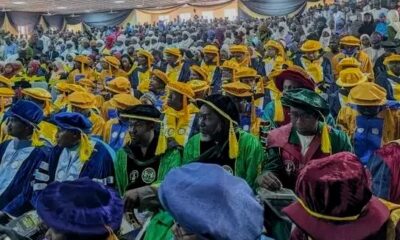
Vice-Chancellors of Bowen University, Prof. Jonathan Babalola, and Kola Daisi University, Prof. Olajumoke Morenikeji, have urged the Federal Government to extend the Nigerian Education Loan Fund (NELFUND) scheme to eligible students in private universities.
The two university administrators made the appeal on Monday at separate press conferences organised ahead of their institutions’ forthcoming convocation ceremonies.
They argued that students attending private universities should not be automatically considered wealthy or excluded from government-supported educational financing because of the ownership status of their institutions.
Babalola described the exclusion of private university students from NELFUND as unfair, insisting that many families sponsoring their children’s education in private institutions were not financially buoyant.
“The children in private institutions are also Nigerians,” she added.
The appeals come amid continuing discussions about access to affordable higher education and the role of government-backed financial assistance in reducing the cost of university education.
The 21st convocation ceremonies of Bowen University, Iwo, Osun State, are scheduled to hold from November 2 to 7, while Kola Daisi University’s convocation activities in Ibadan, Oyo State, run from October 26 to November 5, 2026.

Ondo State Governor, Lucky Aiyedatiwa, has called on financially capable alumni and other education stakeholders to partner with the government in addressing infrastructure challenges facing public schools across the state.
The governor said collaboration between government, old students’ associations and other stakeholders was necessary to improve educational standards and provide students with a conducive learning environment.
Aiyedatiwa made the appeal on Saturday in Akure, the state capital, during the 50th anniversary celebration of Omoluorogbo Grammar School.
He was represented at the event by the Commissioner for Physical Planning and Urban Development, Sunday Olajide.
The governor noted that government alone could not shoulder the financial responsibility of developing the education sector, urging former students to contribute meaningfully to the growth of their alma mater.
Public schools across Nigeria continue to face challenges, including deteriorating classroom buildings, inadequate learning facilities and insufficient funding.
Against this backdrop, alumni associations have increasingly complemented government efforts by renovating school infrastructure, providing educational materials, supplying equipment and offering financial assistance to students from disadvantaged backgrounds.
-

 Security4 months ago
NDLEA Declares Alleged Drug Kingpin, Three Associates Wanted, Freezes ₦9.8bn Linked to Syndicate
-

 Business/Finance3 months ago
How to Apply for Tunde Onakoya’s ₦250 Million Scholarship Programme and Free Laptop Offer
-
 National Affairs3 months ago
ICPC Uncovers 908 Suspected Ghost Workers Across 50 Federal MDAs, Recovers ₦942 Million
-

 Judiciary | Public Safety3 months ago
INEC Tells Court Voter Information Is Not Confidential in Emeka Ike’s ₦10bn Lawsuit
-

 Politics3 months ago
Atiku Challenges Tinubu to Reveal Details of ₦15.13bn SUV Procurement in 2026 Budget
-
 Judiciary | Public Safety3 months ago
Court to Rule Friday on NDLEA’s Bid to Destroy ₦480bn Meth Lab in Ogun
-
 Security3 months ago
Family Paid ₦50 Million Ransom to Secure Release of Abducted Kebbi Judge
-

 News3 months ago
2026 Budget: FG Earmarks ₦962.83bn for SUVs, Empowerment Projects Amid Debt Concerns