
Government/Policies
Amaechi: Atiku govt will cut fuel, food costs within one year

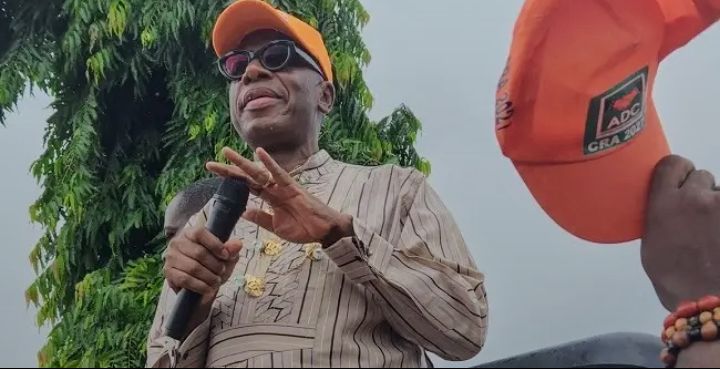
Former Minister of Transportation and African Democratic Congress vice-presidential candidate, Rotimi Amaechi, has said an administration led by the party’s presidential candidate, Atiku Abubakar, would reduce the cost of fuel, transportation and food within its first year in office.
Amaechi made the statement on Friday while appearing on Channels Television’s Politics Today, where he criticised the economic policies of President Bola Tinubu’s administration and outlined some of the measures he said the ADC would implement if elected in the 2027 presidential election.
He argued that the removal of petrol and electricity subsidies had increased the financial burden on households, with many Nigerians struggling to afford basic necessities.
“Everybody is suffering, everybody is looking for food to eat. People can’t buy fuel or travel. The airlines are threatening to increase the cost of transportation; everything is skyrocketing,” Amaechi said.
The former Rivers State governor also criticised the Tinubu administration over its electricity policies, saying Nigerians were yet to see the level of improvement in power supply that he claimed the President had promised.
“For Christ’s sake, President Tinubu does not have the right to speak; he doesn’t.
He promised power and said if he doesn’t give power, they should not vote for him. Nigerians are waiting to vote him out,” he said.
Amaechi backs Atiku’s production subsidy plan
Amaechi said Atiku had pledged to reintroduce government intervention in the petroleum sector as part of measures to reduce the cost of living.
“Atiku said I should tell you people that he will bring back the subsidy,” he said, adding that the proposed intervention would also address electricity costs.
He cited his personal electricity bill as an example of what he described as the impact of the current electricity tariff structure.
“My house electricity bill was N500,000; now I pay N4 million. Atiku said if he comes, I will go back to N500,000. No more Band A and B because government will subsidise it,” Amaechi said.
However, Amaechi clarified that the ADC’s proposal was not necessarily a return to the former petrol subsidy arrangement but what the party describes as a production subsidy.
“The greatest asset you have is that the presidential candidate has said, I will bring back subsidy. We are not saying we are putting back consumer subsidy. We say we are putting back production subsidy,” he said.
Atiku has previously explained that his proposed model would focus on supporting locally refined petroleum products rather than subsidising imported petrol.
The ADC presidential candidate said the proposed intervention would be capped, budgeted and independently audited, with imported petrol excluded from the scheme.
The proposal has also drawn questions from the All Progressives Congress Presidential Campaign Council, which has asked Atiku to explain the legal, fiscal and operational framework for the proposed production subsidy.
Fuel subsidy removal blamed for rising costs
Amaechi linked the rise in transportation and food prices to the removal of petrol subsidy under the Tinubu administration.
“He just held microphone and didn’t care. He just said remove subsidy. Since he removed subsidy, transportation increased, food prices increased, tomatoes, corn, everything,” he said.
He maintained that restoring government intervention in the petroleum sector would have a wider effect on the economy.
“Atiku said he will bring back subsidy. If Atiku brings back subsidy, everything will come down,” Amaechi added.
Atiku has repeatedly criticised the removal of petrol subsidy and said he would introduce a production-focused model if elected president in 2027.
In September, the ADC presidential candidate said his proposal would support crude refined in Nigeria and was intended to reduce fuel costs while encouraging domestic refining.
Amaechi raises concern over education, insecurity
The ADC vice-presidential candidate also raised concerns about education and insecurity, claiming that the number of out-of-school children had increased under the Tinubu administration.
“The number of out-of-school children has risen from 12 million to 20 million under Tinubu,” he said, while putting the number of illiterate Nigerians at 92 million.
Amaechi also linked insecurity to the inability of farmers to access their farmlands.
“Insecurity also increased. You no even fit go farm, and government doesn’t care,” he said.
The former minister said the combination of insecurity, rising transportation costs and high food prices had created additional difficulties for Nigerians whose livelihoods depend on agriculture and movement between rural communities and markets.
Why I am contesting, Amaechi explains
Explaining his decision to contest the 2027 presidential election on the ADC platform, Amaechi said his motivation was his understanding of the challenges confronting the country.
“I don’t care who else is running. I’m running because I’m a Nigerian candidate.
Because I know the Nigerian problem. And I can solve the Nigerian problem,” he said.
He also expressed confidence in the ADC’s prospects if the party appears on the ballot in the 2027 election.
“Whether free and fair or not free, if we [ADC] are on the ballot, President Bola Tinubu will lose the election,” Amaechi said.
The statement comes as political parties and presidential aspirants intensify preparations for the 2027 general elections, with economic hardship, fuel prices, food costs, electricity tariffs and insecurity emerging as major issues in the political debate.
While Atiku has outlined a production-subsidy model aimed at supporting domestic refining, the APC has questioned the cost, funding mechanism and legal basis of the proposal.






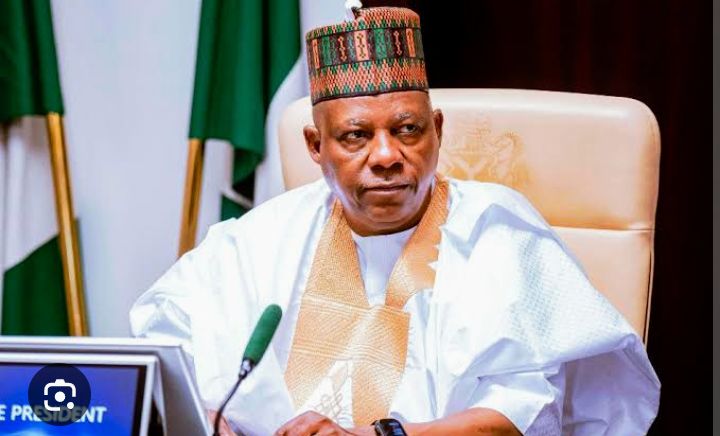
Vice-President Kashim Shettima has declared that the presidential candidate of the Nigeria Democratic Congress, Peter Obi, cannot surpass the popularity of former President Muhammadu Buhari, arguing that national support and strong regional alliances are crucial to winning presidential elections in Nigeria.
Shettima said a presidential candidate must build a solid support base across different parts of the country rather than rely solely on popularity in a particular region.
The Vice-President made the remarks on Thursday at Dr Alex Ekwueme Square in Awka, Anambra State, where he led a campaign rally for President Bola Tinubu alongside Governor Chukwuma Soludo.
The rally, tagged “SoluTinubu 2027,” attracted supporters of the All Progressives Congress (APC) and the All Progressives Grand Alliance (APGA), who gathered at the venue in colourful party outfits to demonstrate their support for Tinubu’s re-election bid.
Addressing the crowd, Shettima stressed the importance of the South-East to Nigeria’s political and economic development, insisting that the Igbo people remained an essential component of the country’s political structure.
He claimed that about 17 million Igbo people lived in Northern Nigeria, while another 10 million resided in Lagos, urging political leaders in the South-East to strengthen their engagement with Nigerians in other regions.
“Don’t let anyone tell you that Igbos are not an essential component of the Nigerian configuration. And I want to tell you, as someone who is close to this election, there are 17 million Igbos living in Northern Nigeria. There are 10 million Igbos living in Lagos alone.
“And I know that they have a lot of opportunities to come here. You have to reach out.
“Peter Obi cannot be more popular than Muhammadu Buhari,” he said.
Shettima recalled Buhari’s unsuccessful attempts to become Nigeria’s president in 2003, 2007 and 2011, despite having served as a military head of state and enjoying considerable support in Northern Nigeria.
According to him, Buhari’s electoral experience demonstrated that a strong regional following alone was insufficient to secure victory in a presidential election.
He argued that candidates needed to expand their political influence and build alliances across the country’s different regions to win national elections.
“Because having a strong base across the nation is what you need to win a presidential election in a country like Nigeria,” the Vice-President added.
Shettima also appealed to the people of the South-East to support Tinubu, describing the relationship between the region and the current administration as a partnership that should be strengthened.
He spoke about his personal relationships with Igbo people, saying some of his closest friends and aides were from the South-East.
The Vice-President further recalled his experience in the region while serving as governor and urged residents to recognise the longstanding relationships between the South-East and other parts of the country.
He said he had committed his personal resources to supporting Igbo interests after becoming Vice-President, although he did not provide further details of the intervention.
Shettima also acknowledged the political challenges facing the South-East, noting that Anambra would be an important state in the 2027 general election.
He urged educated and capable people from the region to become more actively involved in national politics, insisting that greater political participation would strengthen the South-East’s position within the federation.
The Vice-President assured the people that the Tinubu administration remained committed to the region and would not disappoint them if given another opportunity to govern.
He also acknowledged voters’ constitutional right to freedom of association, maintaining that political leaders could persuade Nigerians to support their preferred candidates but could not compel them to do so.
Reiterating his support for regional political alignment, Shettima said the objective was to ensure that the South-East became firmly connected to what he described as the country’s “national grid in the federation”.
He urged supporters to mobilise votes for Tinubu at polling units, regardless of their political party affiliations.
Earlier, several political leaders at the rally endorsed Soludo’s call for greater political integration of the South-East into the national political structure.
Those who spoke included Deputy Speaker of the House of Representatives, Benjamin Kalu; Imo State Governor, Hope Uzodimma; Minister of Works, Dave Umahi; former Anambra State Governor, Chris Ngige; and Senator Adams Oshiomhole.
They commended Soludo for bringing together political actors from different parties to mobilise support for Tinubu ahead of the 2027 presidential election.
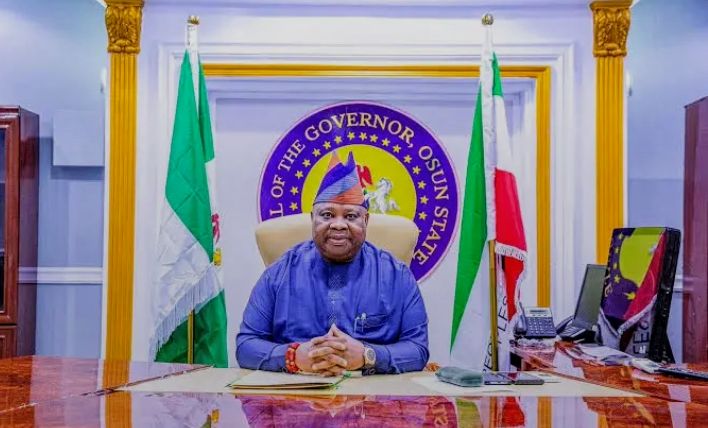
President Bola Tinubu, South-West governors, diplomats and other prominent political figures have been invited to the second-term inauguration of Osun State Governor, Ademola Adeleke, scheduled for November 27.
The Secretary to the State Government (SSG), Teslim Igbalaiye, who chairs the inauguration committee, disclosed this on Thursday during a press conference in Osogbo, where he unveiled activities lined up for the ceremony.
Igbalaiye said the Speaker of the House of Representatives, Tajudeen Abbas, federal lawmakers, ministers, senators and the governor’s friends and associates from across the world had also been invited.
According to him, about 15 ambassadors had already indicated interest in attending the event, while five ministers had expressed their intention to be part of the ceremony.
He added that several dignitaries who were not formally invited had also contacted the state government to indicate their willingness to attend.
“We have actually invited several dignitaries. We invited the President, Bola Tinubu. About 15 ambassadors contacted us and said they want to attend the inauguration. Senators, especially from the North, are coming for the inauguration.
“Also, members of the House of Representatives are coming. The Speaker of the House of Representatives: we are not certain yet if he will attend, but we invited him too. Five ministers have indicated interest in attending.
“A lot of dignitaries are coming into the state for the inauguration. South-West governors are coming. All of them want to associate with Imole,” Igbalaiye said.
The inauguration will take place at the Osogbo Township Stadium on November 27.
Unveiling the programmes, the SSG announced that activities would begin with a Jumat service on Friday at the Central Mosque, Oja Oba, Osogbo.
An interfaith prayer session is scheduled for Saturday at the open space in the parking lot of the Government House, Osogbo.
The final of the Ademola Adeleke Victory Soccer Tournament will also hold on Saturday afternoon at the Fakunle Comprehensive High School playground in Osogbo.
Other activities include a night of praise and worship at the banquet hall of the Governor’s House and visits by government delegations to orphanage homes across the state, where donations will be made.
The committee also announced an Osun Youth Summit focusing on innovation and enterprise as part of the inauguration activities.
Igbalaiye further disclosed that Adeleke would deliver a state broadcast to appreciate residents for their support.
The inauguration lecture will be delivered by former Kaduna Central Senator, Shehu Sani, with the theme, “Federalism Dilemma: Navigating Institutional Friction, Local Government Allocations, and Executive Overreach.”
The SSG appealed to stakeholders, particularly media organisations, to support the successful coverage of the activities, describing journalists as valued partners in communicating the event to audiences locally and internationally.
The PUNCH had earlier reported that Adeleke was re-elected in the August 15 Osun governorship election, defeating the All Progressives Congress candidate, Bola Oyebamiji, and 13 other contestants.
Adeleke was first elected governor on July 16, 2022, for a four-year term.
Government/Policies
2027 Elections: FG Urges Political Parties, Stakeholders to Strengthen Anti-Corruption Fight
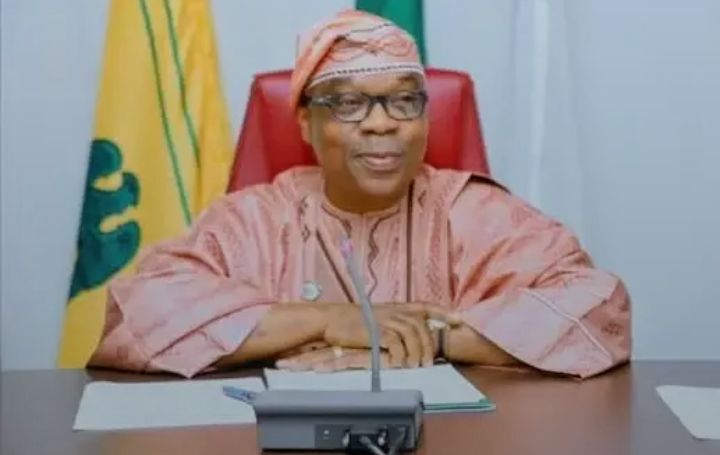
The Federal Government has called on political parties, government institutions, the media and civil society organisations to intensify efforts to tackle corruption, promote accountability and strengthen democratic institutions ahead of the 2027 general elections.
The Minister of State for Foreign Affairs, Ambassador Sola Enikanolaiye, made the call on Wednesday in Abuja through his representative, Mahmud Aliyu, at an international stakeholders’ engagement forum organised by the Diplomatic Correspondents’ Association of Nigeria.
The forum, which focused on anti-corruption, party-building and democratic governance, brought together political party leaders, diplomats, civil society organisations, government officials and other stakeholders to discuss governance challenges and examine lessons from China’s experience.
Enikanolaiye described anti-corruption and effective party-building as fundamental pillars of democratic governance, stressing that Nigeria’s democratic development must go beyond conducting periodic elections.
He said sustainable democracy required strong institutions, inclusive political participation, respect for the rule of law, transparency and accountability to build public confidence in government.
“Anti-corruption and party-building are fundamental pillars of democratic governance, essential for strengthening democratic institutions, ensuring inclusive political participation, upholding the rule of law, promoting transparency and accountability, and fostering public trust in governance,” he said.
The minister explained that democratic governance also involved protecting fundamental freedoms, maintaining institutional checks and balances and ensuring that public officeholders prioritised the interests of citizens.
He noted that these principles aligned with Nigeria’s 4-Ds foreign policy priorities of Demography, Development, Diaspora and Democracy.
According to him, democracy provides the institutional foundation for stability and accountability, while development ensures that diplomatic engagements translate into tangible economic and social benefits.
He added that Nigeria’s population remained a source of economic strength and international influence, while its diaspora community connected the country to global opportunities, expertise, investment and innovation.
Enikanolaiye emphasised that achieving these objectives required the collective commitment of political parties, government institutions, the media and civil society organisations.
Also speaking, the Executive Director of the Civil Society Legislative Advocacy Centre and Transparency International Nigeria, Auwal Rafsanjani, warned that Nigeria’s democratic challenges were not primarily caused by the absence of laws and institutions but by the failure to enforce existing rules and hold influential individuals accountable.
Rafsanjani observed that political interests frequently took precedence over national interests, while political loyalty sometimes overshadowed competence.
He also expressed concern that institutions established to protect the public interest remained vulnerable to partisan interference.
In his presentation on party organisation, discipline and anti-corruption reforms ahead of the 2027 elections, he called for transparent political financing, credible party primaries and stronger anti-corruption institutions.
He warned that the growing influence of money in political competition threatened the credibility of democratic choice, particularly through financial inducements, expensive political gifts, undisclosed campaign contributions and the misuse of public resources.
“Those who spend excessively to acquire political power may subsequently face incentives to recover those investments through public contracts, political patronage and misuse of public resources,” he said.
Rafsanjani urged the Independent National Electoral Commission to strengthen its capacity to monitor campaign financing, investigate suspicious donations and enforce financial disclosure requirements for political parties.
He also called on anti-corruption agencies to investigate allegations of illicit political financing and abuse of public office without discrimination or political interference.
According to him, the credibility of the 2027 general elections will depend not only on the conduct and counting of votes but also on the processes through which candidates emerge and campaigns are financed.
“The credibility of the 2027 elections will depend not only on how votes are cast and counted, but also on how candidates emerge, how campaigns are financed and whether electoral offences attract consequences,” he added.
The Transparency International Nigeria chief further advocated stronger operational independence for the Economic and Financial Crimes Commission, Independent Corrupt Practices and Other Related Offences Commission, Code of Conduct Bureau, INEC and other accountability institutions.
He maintained that anti-corruption agencies must not be perceived as being tough on political opponents while showing leniency towards politically connected individuals.
Similarly, the National Chairman of the Inter-Party Advisory Council, Dr Yusuf Mohammad Dantalle, said weak political parties could not produce strong governments.
He called for internal democracy, respect for party constitutions, financial transparency, ideological clarity and improved capacity-building for political party leaders and members.
“Without disciplined, ideologically-driven and internally democratic political parties, democratic governance will remain fragile,” Dantalle said.
He stressed that the fight against corruption must be collective, non-selective and driven by strong institutions, urging political parties to embrace transparency in their funding and campaign activities.
The Campaign Spokesperson of the National Democratic Congress, Dr Chiogo Constance Ikokwu, also expressed concern over the state of internal democracy within political parties and growing public distrust of the electoral process.
Ikokwu, a former journalist, said her experience in politics had exposed her to challenges that were not always apparent when reporting political developments from the newsroom.
“It is one thing to criticise the shortcomings of a political system from the newsroom. It is quite another to experience those shortcomings from inside the system,” she said.
She argued that democracy should not be measured solely by electoral victories, insisting that political parties must respect their constitutions, internal regulations and the democratic rights of their members.
In its goodwill message, the National Orientation Agency called for collective responsibility in tackling corruption, urging public officials to remain accountable and citizens to reject bribery, dishonesty and the misuse of public resources.
The agency also urged political parties to prioritise fairness, discipline and democratic principles rather than focus exclusively on winning elections.
The forum examined China’s experience in party organisation and anti-corruption under President Xi Jinping, with the Centre for China Studies presenting perspectives on how institutional discipline and governance principles could inform Nigeria’s development.
Participants concluded by calling for stronger institutions, transparent political processes and sustained collaboration among government agencies, political parties, civil society organisations and international partners to strengthen democratic governance ahead of the 2027 general elections.
-
 Security4 months ago
NDLEA Declares Alleged Drug Kingpin, Three Associates Wanted, Freezes ₦9.8bn Linked to Syndicate
-
 National Affairs4 months ago
ICPC Uncovers 908 Suspected Ghost Workers Across 50 Federal MDAs, Recovers ₦942 Million
-

 Business/Finance4 months ago
How to Apply for Tunde Onakoya’s ₦250 Million Scholarship Programme and Free Laptop Offer
-

 Judiciary | Public Safety4 months ago
INEC Tells Court Voter Information Is Not Confidential in Emeka Ike’s ₦10bn Lawsuit
-
 Politics4 months ago
Atiku Challenges Tinubu to Reveal Details of ₦15.13bn SUV Procurement in 2026 Budget
-
 Judiciary | Public Safety4 months ago
Court to Rule Friday on NDLEA’s Bid to Destroy ₦480bn Meth Lab in Ogun
-
 Security4 months ago
Family Paid ₦50 Million Ransom to Secure Release of Abducted Kebbi Judge
-
 News4 months ago
2026 Budget: FG Earmarks ₦962.83bn for SUVs, Empowerment Projects Amid Debt Concerns