
Government/Policies
Nigeria Needs Leaders to End Oppression — Datti Baba-Ahmed

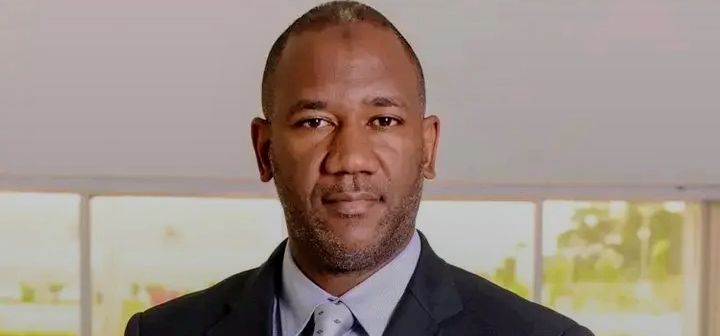
Former Labour Party vice-presidential candidate, Datti Baba-Ahmed, has called for the emergence of leaders capable of ending what he described as oppression in Nigeria.
Baba-Ahmed made the call on Monday while delivering a keynote address at the second edition of the Bala AbdulKadir Mohammed Colloquium held at the Ahmadu Bello International Conference Centre in Bauchi.
The event was organised to commemorate the 68th birthday of Bauchi State Governor, Bala Mohammed.
Speaking at the colloquium, Baba-Ahmed said Nigeria needed leaders who would genuinely stand for the people, protect their rights and ensure that oppression did not become entrenched in the country’s political leadership and society.
He also urged Nigerians to unite, take responsibility for the country’s future and demand good governance from elected officials.
According to him, citizens must play an active role in holding political leaders accountable rather than remaining passive participants in the democratic process.
“Nigeria needs leaders that will stop oppression. Do you remember that there is a saying about injustice and helping the oppressed and the oppressor?
“How do you help someone who is oppressing? You stop him from oppressing. That is what we need to begin to do because now oppression is getting into the DNA of Nigerian leaders and the Nigerian people,” he said.
The former presidential candidate also challenged Nigerians to become more assertive in demanding their rights and participating in governance.
He questioned why citizens could not come together to determine the direction of the country and demand better leadership.
“Why can’t the Nigerian people come together? Why can’t the Nigerian people think for themselves, fend for themselves, stand for themselves and fight for themselves?” Baba-Ahmed asked.
He stressed that democracy should be centred on the welfare and interests of citizens, questioning whether Nigeria’s current democratic system was adequately delivering the benefits expected by the people.
Baba-Ahmed further appealed for forgiveness, unity and trust among Nigerians, urging citizens to recognise the positive contributions of leaders without turning such appreciation into sycophancy.
He said appreciating a leader should involve identifying and learning from the qualities that could benefit society.
“When you appreciate leaders, it is not to massage them. What is even more important is to educate others to appreciate and understand, and take an example, even if it is one single quality from that leader.”
Reflecting on his participation in the 2023 general election, Baba-Ahmed said he had no regrets about supporting what he described as the defence of Nigerians’ constitutional rights.
He urged Nigerians to study the country’s political history and use the lessons learned to build a leadership system focused on the interests and welfare of the people.
Turaki demands better legislation
Also speaking at the event, former National Chairman of the Peoples Democratic Party, Kabiru Turaki, called for an improvement in the quality of representation and legislation in the National Assembly.
Turaki said lawmakers should prioritise legislation capable of improving the lives of ordinary Nigerians rather than introducing measures that would further increase the burden on citizens.
He questioned the impact of the numerous laws passed by the National Assembly on the daily lives of Nigerians.
“Every day, laws are being turned out of the National Assembly. Every day, legislation is made. But the question is, do these legislations fundamentally affect the lives of the common man in this country?” he asked.
According to Turaki, Nigeria needs laws that would directly address major challenges such as unemployment, poverty and insecurity.
“We need legislation that will add value positively to the lives of Nigerians. Legislation that will tackle the problem of unemployment, poverty and insecurity that we are facing today.”
He criticised legislation that, in his view, places additional burdens on citizens and urged lawmakers to become more responsive to the challenges confronting Nigerians.
‘Youths should not wait for tomorrow’
Turaki also called on young Nigerians to become more actively involved in politics and governance, rejecting the longstanding narrative that youths should simply wait for their turn to lead.
He argued that young people must be given meaningful opportunities to participate in the political process rather than being repeatedly told that they are the leaders of tomorrow.
“They will tell you, ‘Youths of today are the leaders of tomorrow.’ You are 28; you will even get to 68. When will that tomorrow come?” Turaki asked.
The former PDP chairman further urged Nigerians from different professional and social backgrounds to participate in politics and democratic activities.
He warned that the withdrawal of credible and experienced individuals from politics could create opportunities for people without the required integrity and competence to occupy leadership positions.
Turaki specifically encouraged traditional rulers, religious leaders, civil servants, businesspeople and other respected members of society to take greater interest in political affairs and elections.
He said citizens must also monitor elected officials and demand accountability from those entrusted with public responsibilities.
“It is only by doing so that we will unlock the process. And when we unlock it, then we have the legal and moral right to call those we elected into responsibility,” he said.









Government/Policies
Jigawa Assembly Approves N46.3bn Supplementary Budget, Total 2026 Budget Hits N948bn
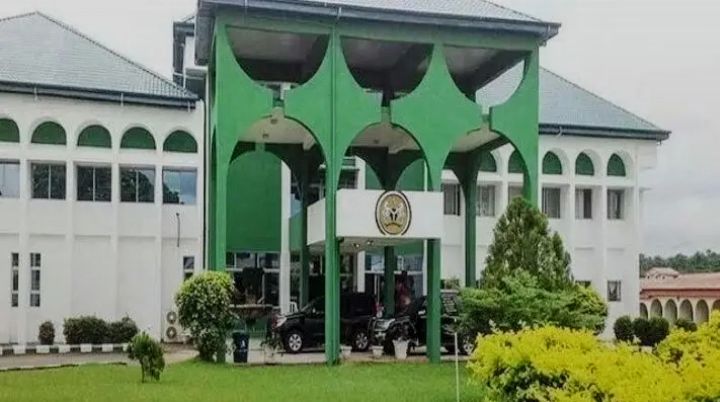
The Jigawa State House of Assembly has approved a N46.369 billion supplementary budget for the state government, alongside an additional N17.109 billion allocation for the state’s 27 local government areas.
The approval was given during plenary on Monday following the consideration and passage of the supplementary appropriation bill by the lawmakers.
Speaking with journalists after the session, the Speaker of the Assembly, Haruna Aliyu Dangyatin, said the supplementary budget was designed to address emerging developmental priorities and strengthen service delivery across the state.
With the approval, Jigawa State’s 2026 budget has increased from the initial N901.841 billion to N948.210 billion.
Similarly, the combined budget estimates of the 27 local government areas have risen from N288.848 billion to N305.957 billion following the additional N17.109 billion approved by the Assembly.
Dangyatin said the lawmakers subjected the supplementary budget proposal to detailed scrutiny before approving it, noting that the Assembly made about 186 recommendations in the course of its consideration.
“We have critically examined the supplementary request and made about 186 recommendations to ensure transparency and value for money before passage,” the Speaker said.
The Assembly had earlier approved the state’s N901.841 billion 2026 budget on December 23, 2025, after Governor Umar Namadi presented the proposal to the lawmakers on November 25, 2025.
The budget, tagged the “Budget of Innovation and Transformation for Greater Jigawa II,” placed significant emphasis on capital development, education and agriculture.
According to the Speaker, about 77 per cent of the original budget was allocated to capital projects, while more than 26 per cent was earmarked for the education sector, with substantial provisions also made for agriculture.
Dangyatin said the newly approved supplementary appropriation would complement the original budget and support the state government’s transformation agenda.
He assured residents that the Assembly would strengthen its oversight responsibilities to ensure that both the original and supplementary budgets were properly implemented.
The Speaker also reaffirmed the commitment of the House to supporting policies and programmes aimed at improving the welfare of residents across Jigawa State.
He urged the executive arm of government to ensure the timely release of funds for projects captured in the approved budget, stressing the importance of effective implementation.
The House subsequently adjourned plenary after completing the third reading and passage of the supplementary appropriation bill.
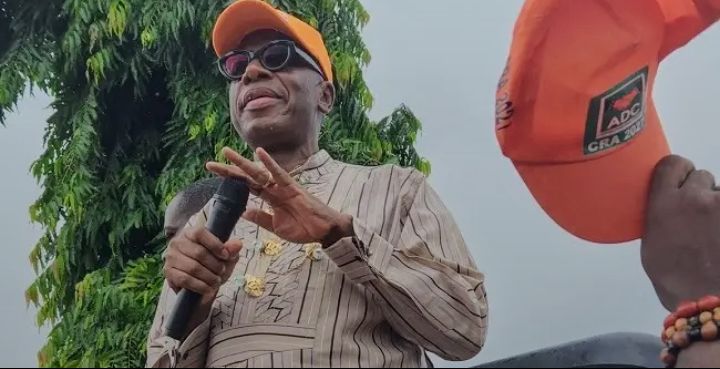
Former Minister of Transportation and African Democratic Congress vice-presidential candidate, Rotimi Amaechi, has said an administration led by the party’s presidential candidate, Atiku Abubakar, would reduce the cost of fuel, transportation and food within its first year in office.
Amaechi made the statement on Friday while appearing on Channels Television’s Politics Today, where he criticised the economic policies of President Bola Tinubu’s administration and outlined some of the measures he said the ADC would implement if elected in the 2027 presidential election.
He argued that the removal of petrol and electricity subsidies had increased the financial burden on households, with many Nigerians struggling to afford basic necessities.
“Everybody is suffering, everybody is looking for food to eat. People can’t buy fuel or travel. The airlines are threatening to increase the cost of transportation; everything is skyrocketing,” Amaechi said.
The former Rivers State governor also criticised the Tinubu administration over its electricity policies, saying Nigerians were yet to see the level of improvement in power supply that he claimed the President had promised.
“For Christ’s sake, President Tinubu does not have the right to speak; he doesn’t.
He promised power and said if he doesn’t give power, they should not vote for him. Nigerians are waiting to vote him out,” he said.
Amaechi backs Atiku’s production subsidy plan
Amaechi said Atiku had pledged to reintroduce government intervention in the petroleum sector as part of measures to reduce the cost of living.
“Atiku said I should tell you people that he will bring back the subsidy,” he said, adding that the proposed intervention would also address electricity costs.
He cited his personal electricity bill as an example of what he described as the impact of the current electricity tariff structure.
“My house electricity bill was N500,000; now I pay N4 million. Atiku said if he comes, I will go back to N500,000. No more Band A and B because government will subsidise it,” Amaechi said.
However, Amaechi clarified that the ADC’s proposal was not necessarily a return to the former petrol subsidy arrangement but what the party describes as a production subsidy.
“The greatest asset you have is that the presidential candidate has said, I will bring back subsidy. We are not saying we are putting back consumer subsidy. We say we are putting back production subsidy,” he said.
Atiku has previously explained that his proposed model would focus on supporting locally refined petroleum products rather than subsidising imported petrol.
The ADC presidential candidate said the proposed intervention would be capped, budgeted and independently audited, with imported petrol excluded from the scheme.
The proposal has also drawn questions from the All Progressives Congress Presidential Campaign Council, which has asked Atiku to explain the legal, fiscal and operational framework for the proposed production subsidy.
Fuel subsidy removal blamed for rising costs
Amaechi linked the rise in transportation and food prices to the removal of petrol subsidy under the Tinubu administration.
“He just held microphone and didn’t care. He just said remove subsidy. Since he removed subsidy, transportation increased, food prices increased, tomatoes, corn, everything,” he said.
He maintained that restoring government intervention in the petroleum sector would have a wider effect on the economy.
“Atiku said he will bring back subsidy. If Atiku brings back subsidy, everything will come down,” Amaechi added.
Atiku has repeatedly criticised the removal of petrol subsidy and said he would introduce a production-focused model if elected president in 2027.
In September, the ADC presidential candidate said his proposal would support crude refined in Nigeria and was intended to reduce fuel costs while encouraging domestic refining.
Amaechi raises concern over education, insecurity
The ADC vice-presidential candidate also raised concerns about education and insecurity, claiming that the number of out-of-school children had increased under the Tinubu administration.
“The number of out-of-school children has risen from 12 million to 20 million under Tinubu,” he said, while putting the number of illiterate Nigerians at 92 million.
Amaechi also linked insecurity to the inability of farmers to access their farmlands.
“Insecurity also increased. You no even fit go farm, and government doesn’t care,” he said.
The former minister said the combination of insecurity, rising transportation costs and high food prices had created additional difficulties for Nigerians whose livelihoods depend on agriculture and movement between rural communities and markets.
Why I am contesting, Amaechi explains
Explaining his decision to contest the 2027 presidential election on the ADC platform, Amaechi said his motivation was his understanding of the challenges confronting the country.
“I don’t care who else is running. I’m running because I’m a Nigerian candidate.
Because I know the Nigerian problem. And I can solve the Nigerian problem,” he said.
He also expressed confidence in the ADC’s prospects if the party appears on the ballot in the 2027 election.
“Whether free and fair or not free, if we [ADC] are on the ballot, President Bola Tinubu will lose the election,” Amaechi said.
The statement comes as political parties and presidential aspirants intensify preparations for the 2027 general elections, with economic hardship, fuel prices, food costs, electricity tariffs and insecurity emerging as major issues in the political debate.
While Atiku has outlined a production-subsidy model aimed at supporting domestic refining, the APC has questioned the cost, funding mechanism and legal basis of the proposal.
Edo State Governor, Senator Monday Okpebholo, has assured residents of the state that his administration will continue to prioritise the protection of lives and property while urging citizens to embrace peace and unity.
Okpebholo gave the assurance in a message issued by his Chief Press Secretary, Patrick Ebojele, on Thursday to mark Nigeria’s 66th Independence Anniversary.
The governor described security as his administration’s first responsibility, noting that economic activities such as farming, trade and investment could only thrive in a peaceful environment.
“We have worked hard to make Edo safer. We are rebuilding our roads, upgrading our schools and hospitals, and creating opportunities for our teeming youths.
“The safety of every Edo citizen, in the city and in the village, remains my first duty,” he said.
Okpebholo said his administration would continue to collaborate with security agencies, traditional rulers and community leaders to sustain peace across the state.
He described traditional and community leaders as important partners because of their closeness to residents and their knowledge of the local terrain.
The governor also warned individuals who may attempt to disrupt the peace in the state, declaring that Edo would not provide a safe haven for criminals.
“Edo State is not a safe place for criminals,” he said.
Beyond security, Okpebholo highlighted what he described as ongoing efforts by his administration to improve healthcare, infrastructure, agriculture and education under the SHINE Agenda.
He said several hospitals that had been closed for years, with some shut for nearly two decades, had been reopened, while more than 600,000 residents had been enrolled in the Edo State Health Insurance Scheme (EDOHIC).
The governor also said his administration had maintained regular salary payments and noted that Edo was among the states implementing the ₦75,000 minimum wage.
While acknowledging that there was still more work to be done, Okpebholo said the achievements recorded so far represented a foundation for further development rather than the completion of his administration’s task.
He commended Edo residents for their patience and urged them to continue providing feedback to the government.
“Government exists to serve you, and I will keep listening, even when the feedback is uncomfortable,” he said.
The governor also commended President Bola Ahmed Tinubu for what he described as efforts to reposition Nigeria through the Renewed Hope Agenda.
He said the Federal Government’s economic policies were aimed at achieving national revival, stability and growth.
Okpebholo urged Edo residents to use the 66th Independence Anniversary to recommit themselves to peace, unity and responsible citizenship.
According to him, true patriotism is reflected in how citizens treat one another and protect public assets.
He wished the people of Edo State a peaceful Independence Day celebration and prayed for continued progress in the state and across Nigeria.
Idahosa urges Nigerians to renew faith in Nigeria
Also, Edo State Deputy Governor Dennis Idahosa urged Nigerians to renew their faith in the country and commit themselves to building a stronger, united and prosperous nation.
Idahosa made the call in a statement issued by his Chief Press Secretary, Friday Aghedo, to mark Nigeria’s 66th Independence Anniversary.
He described October 1 as a reminder of the courage and sacrifices of the generation that secured Nigeria’s independence in 1960.
According to the deputy governor, Nigeria has demonstrated remarkable resilience despite the challenges it has faced since independence, adding that the country’s greatest strength remains its people and diversity.
He urged Nigerians to recommit themselves to the ideals of unity, peace, justice, democracy and shared prosperity.
“Nigeria is a nation of great promise. We may have faced challenges along the way, but our story is not one of failure; it is one of resilience, courage, and an unbroken determination to build a better country.
“The Nigeria of our dreams will not be built by government alone. It requires the patriotism, sacrifices, creativity, and commitment of every Nigerian,” Idahosa said.
The deputy governor also commended President Tinubu for efforts to reposition the economy and strengthen the foundation for sustainable development.
He assured that sub-national governments would continue to support the national development agenda.
Idahosa further reaffirmed the commitment of the Okpebholo-led administration to improving the lives of Edo residents through investments in security, infrastructure, healthcare, education, agriculture and human capital development.
He urged Nigerians not to lose hope in the country, stressing that nation-building requires patience, sacrifice and responsible citizenship.
“Let us choose hope over despair, unity over division, and service over selfishness. The Nigeria we desire is possible if we work together and put the interest of our nation above our differences,” he said.
Idahosa congratulated Nigerians on the 66th Independence Anniversary and prayed for continued peace, unity, prosperity and progress across the federation.
-
 Security3 months ago
NDLEA Declares Alleged Drug Kingpin, Three Associates Wanted, Freezes ₦9.8bn Linked to Syndicate
-

 Business/Finance2 months ago
How to Apply for Tunde Onakoya’s ₦250 Million Scholarship Programme and Free Laptop Offer
-
 National Affairs2 months ago
ICPC Uncovers 908 Suspected Ghost Workers Across 50 Federal MDAs, Recovers ₦942 Million
-

 Judiciary | Public Safety3 months ago
INEC Tells Court Voter Information Is Not Confidential in Emeka Ike’s ₦10bn Lawsuit
-
 Politics2 months ago
Atiku Challenges Tinubu to Reveal Details of ₦15.13bn SUV Procurement in 2026 Budget
-
 Judiciary | Public Safety2 months ago
Court to Rule Friday on NDLEA’s Bid to Destroy ₦480bn Meth Lab in Ogun
-
 Security2 months ago
Family Paid ₦50 Million Ransom to Secure Release of Abducted Kebbi Judge
-
 News2 months ago
2026 Budget: FG Earmarks ₦962.83bn for SUVs, Empowerment Projects Amid Debt Concerns