
News
African Coalition Rejects Water Privatisation, Demands Public Investment


The Our Water, Our Right Africa Coalition (OWORAC) has urged African governments to reject the privatisation of public water systems and prioritise public investment to guarantee universal access to safe, affordable and reliable water and sanitation services.
The coalition warned that public-private partnerships, commercial tariffs, concessions, outsourcing and prepaid water-meter systems could worsen existing inequalities if access to essential water services increasingly depended on people’s ability to pay.
It argued that transferring control of public water infrastructure to commercial interests could expose vulnerable communities to higher costs, inadequate services and potential public health risks.
The coalition made its position known at a press conference on Monday to mark the 2026 Africa Week of Action Against Water Privatisation, a week-long mobilisation scheduled to run from October 12 to 18.
The campaign, themed “Reclaiming Africa’s Water Future: Public Water for All,” calls for stronger public water systems, increased government funding and greater community participation in decisions affecting access to water.
Speaking on behalf of the coalition, the Convenor of Water Citizens Network Ghana, Geoffrey Occansey, highlighted the scale of the global water crisis, noting that 2.1 billion people lacked safely managed drinking water in 2024, while 3.4 billion lacked safely managed sanitation.
He added that 167 million people in sub-Saharan Africa relied on limited drinking-water services during the same period, accounting for more than half of the global population using services at that level.
According to the coalition, inadequate public investment, weak water utilities, rapid urbanisation and climate-related pressures have continued to undermine access to reliable water supplies across the continent.
It said many households, particularly those in low-income communities, were forced to depend on unsafe water sources or purchase water from vendors, public standpipes, private boreholes, tankers and packaged-water suppliers.
The coalition expressed concern that such alternatives often came with higher costs and insufficient guarantees of water quality and safety.
Water Costs Hit Low-Income Households Hardest
Occansey cited research indicating that low-income households in sub-Saharan African cities that depend on water vendors could pay between 10 and 20 times more per unit of water than wealthier households connected to public water networks.
He described the disparity as a poverty penalty, in which people with the least financial resources could end up paying the highest prices for an essential service.
“Research on urban water access in sub-Saharan Africa has found that low-income households dependent on vendors may pay 10 to 20 times more per unit of water than wealthier households connected to public networks,” he said.
“This is a poverty pen
alty in which those with the lowest incomes can end up paying the highest prices for an essential service.”
The coalition argued that the situation underscored the need for governments to strengthen public water utilities and expand reliable water networks, rather than introduce arrangements that could make essential services less affordable for vulnerable households.
Coalition Warns Against Commercial Control
OWORAC acknowledged the urgent need for increased investment in water infrastructure and sanitation but maintained that financing arrangements should not undermine the right of communities to access safe and affordable water.
It raised concerns about governments increasingly turning to public-private partnerships, concessions, commercial tariffs and prepaid water-meter systems as possible solutions to water supply challenges.
According to the coalition, such arrangements could deepen existing inequalities and create additional challenges, including infrastructure neglect, labour abuses and environmental degradation.
Occansey argued that years of inadequate public investment should not automatically justify transferring responsibility for essential services to private companies.
“Privatisation schemes have a well-documented track record of failure above and beyond the immediate concern of unaffordable service, ranging from infrastructure neglect to labour abuses to environmental degradation,” he said.
“This underscores why the answer to years of public underinvestment cannot simply be to transfer public responsibilities to commercial interests.”
The coalition called for stronger public institutions, adequate funding for water infrastructure and workers, improved planning systems and greater transparency in the management of public water resources.
Environmental Pollution Raises Water Safety Concerns
The coalition also warned that poor sanitation, inadequate wastewater management and unmanaged solid waste continued to contaminate water bodies, threaten public health and worsen flooding in several African cities.
It cited a 2025 investigation by Global Witness concerning a Veolia-managed landfill in Colombia. According to the coalition’s account of the investigation, footage appeared to show untreated leachate being discharged into waterways flowing into protected wetlands, while tests commissioned for the investigation found elevated mercury levels at one sampling location.
OWORAC also referred to allegations by the Gabonese state concerning petroleum waste at pumping stations following years of Veolia’s operations, as well as allegations of significant financial mismanagement involving Suez’s operations in Senegal.
The coalition’s references to these cases formed part of its broader argument that governments should exercise strong public oversight over water-related infrastructure and environmental management.
It maintained that water governance must prioritise public health, environmental protection and accountability rather than commercial interests alone.
Climate Change Increases Pressure on Water Systems
OWORAC said droughts, floods, pollution and other climate-related disruptions had made it increasingly urgent for African governments to strengthen public water institutions and invest in resilient infrastructure.
It warned that inadequate water and sanitation systems could leave communities more vulnerable to climate shocks, particularly in rapidly growing urban areas where existing infrastructure struggled to meet demand.
The coalition argued that administrative failures and years of underinvestment should not be used as justification for transferring essential public services to private interests.
Instead, it called for increased government spending, stronger public utilities, improved data collection and planning, protection of water resources and meaningful participation by communities in decisions affecting water access.
Coalition Seeks Stronger Water Governance Commitments
The campaign comes as the African Union has designated 2026 as the Year of “Assuring Sustainable Water Availability and Safe Sanitation Systems to Achieve the Goals of Agenda 2063.”
Occansey said the launch of the Africa Water Vision 2063 and Policy, alongside the 2026 United Nations Water Conference, provided opportunities for governments to strengthen their commitments to water availability and sanitation.
The coalition said its position paper, Implementing the Africa Water Vision 2063: An OWORAC Coalition Position on Water Justice, Public Financing and Democratic Water Governance, examined gaps in implementing the vision and proposed measures to advance human rights, public accountability and adequate public financing.
Among its demands, OWORAC called for measurable national and regional financing commitments, transparent disclosure of water-related contracts and tariffs, adequate funding for public water utilities and meaningful participation by communities, workers, women and other affected groups in water governance.
It also urged governments to reject privatisation, concessions, public-private partnerships, management and lease contracts, outsourcing, prepaid water-meter systems and other arrangements that transfer control or delivery of public water services to commercial interests.
Occansey maintained that African governments should focus on building dependable public water systems capable of meeting the needs of their populations.
“Africa’s water future cannot hinge on attracting more private investment. It must be built on functioning public water systems that people can rely on,” he said.
Organisations participating in the coalition’s campaign include the Senegalese Water Justice Network, Corporate Accountability and Public Participation Africa, the Amaka Nweke Foundation and Disability Not a Barrier Initiative in Nigeria; Water Citizens Network and Revenue Mobilisation Africa in Ghana;
Green Scenery in Sierra Leone; Voices for Water in Zimbabwe; the Biodiversity and Biosafety Association of Kenya; and Corporate Accountability International.
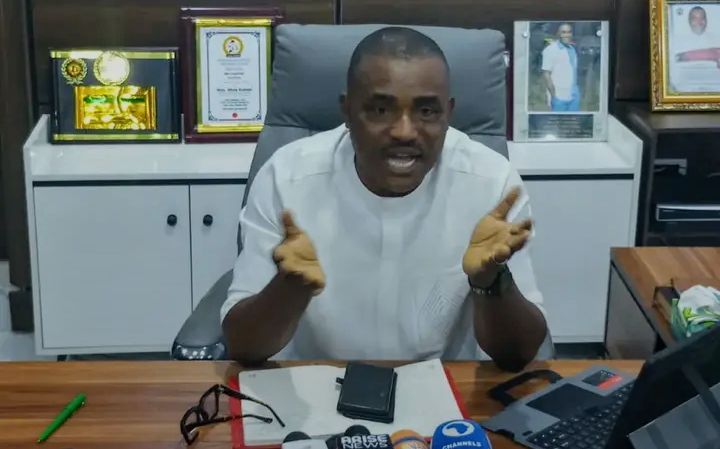
The Anambra State Government has dismissed allegations that roads constructed under Governor Chukwuma Soludo are substandard, describing criticisms circulating on social media as politically motivated.
The state Commissioner for Works and Infrastructure, Okey Ezeobi, said the administration’s road construction projects remained largely intact, with more than 95 per cent of completed roads reportedly in good condition.
Ezeobi stated this on Wednesday during a press briefing in Awka, where he addressed public concerns over the quality and condition of roads constructed across the state under the Soludo administration.He added that some Federal Government road projects had equally experienced similar challenges due to the impact of the rainfall.
The commissioner said the state government would remove damaged asphalt from affected sections and introduce cement-based stabilisation to address underground water problems and prevent further deterioration.
He reiterated the government’s commitment to improving road infrastructure, while also noting that the South-East had benefited from Federal Government interventions in road construction and infrastructure investment.
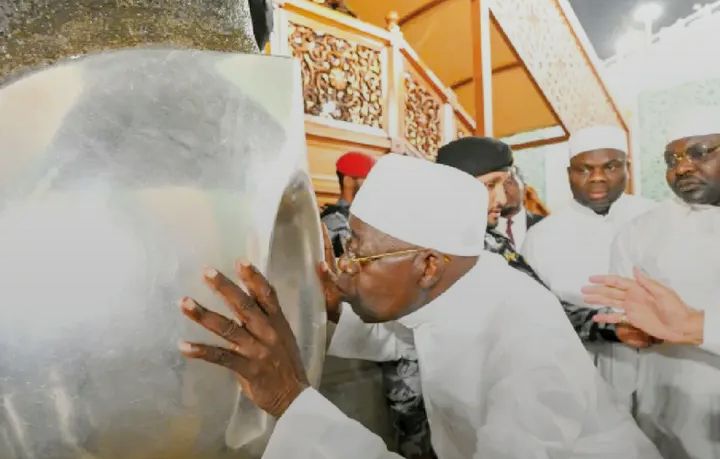
President Bola Tinubu has returned to Abuja after completing a week-long lesser pilgrimage, known as Umrah, in Makkah, Saudi Arabia.
The President arrived at the Nnamdi Azikiwe International Airport, Abuja, at 8:53pm on Wednesday aboard the presidential Airbus A330-200, according to a brief update by the State House media office.
He was received at the airport by the Chief of Staff to the President, Femi Gbajabiamila; the Minister of Education; the Minister of State for Defence; the Inspector-General of Police; and other senior government officials.
Tinubu had departed King Abdulaziz International Airport in Jeddah earlier on Wednesday at 5:13pm Saudi time aboard the presidential aircraft.
The presidential visit, which commenced on Thursday last week, was primarily for the performance of Umrah at the Grand Mosque, Masjid al-Haram.His comment came days after he formally flagged off his re-election campaign in Kaduna on October 24, ahead of the January 16, 2027 general elections.
Members of the presidential entourage included the National Security Adviser, Mallam Nuhu Ribadu, and the governors of Sokoto, Jigawa, Kaduna, Borno and Yobe States, among other government officials.
The President’s return marks the end of his week-long religious visit to Saudi Arabia as political activities ahead of the 2027 general elections continue to gather momentum.
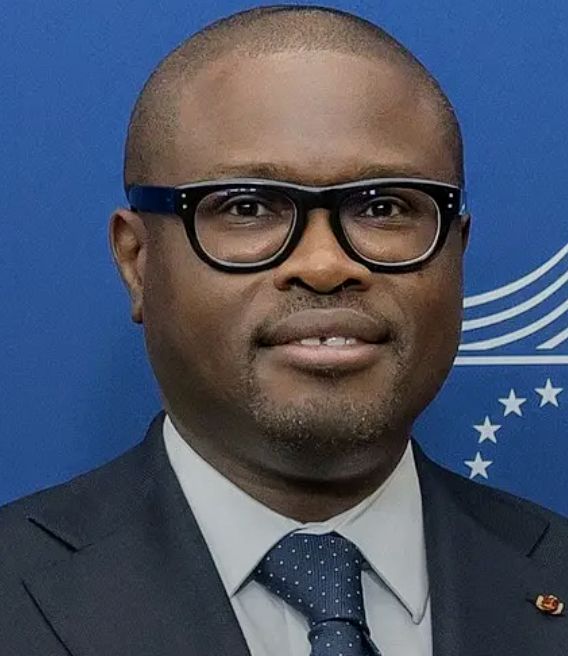
Benin’s President, Romuald Wadagni, has reshuffled the country’s military leadership, nearly a year after a failed coup attempt and amid growing security threats in the West African nation.
Wadagni announced the changes on Wednesday, appointing new heads for the army, air force and navy as his administration intensifies efforts to address security challenges facing the country.
The reshuffle comes months after Beninese soldiers loyal to the government foiled an attempt by some military officers to overthrow former President Patrice Talon in December 2025.
France and Nigeria reportedly supported efforts to prevent the coup.
Following the failed plot, Talon had declared that the situation in the country was “completely under control”, crediting loyalist soldiers with helping to protect his administration.
Wadagni, who served as economy minister under Talon for 10 years, succeeded him as president in April 2026.
Under the latest changes, General Abou Issa has been appointed to replace General Fructeux Gbaguidi as Chief of Army Staff.
Gbaguidi will now serve as the permanent secretary of the National Defence and Security Council.
Wadagni also appointed Colonel Andre Dokoui Fofo as head of the land-based military, while Colonel Herve Setondji Allotchenou will lead the air force.
Captain Dossa Hounkpatin was named the new head of the navy.
The military shake-up comes as Benin faces an increasingly difficult security situation, particularly in its northern regions, where jihadist groups affiliated with Al-Qaeda and the Islamic State have intensified activities across the borders with Burkina Faso and Niger.
The worsening security situation is among the major challenges confronting Wadagni, who assumed office in April after spending a decade overseeing the country’s economy.
His administration is also facing diplomatic challenges arising from strained relations with neighbouring Sahel countries, which are currently governed by military juntas.
The juntas have expressed distrust towards Benin over its close relations with France, a development that has complicated regional security cooperation.
The latest military appointments are expected to form part of the government’s efforts to strengthen the country’s defence structure and respond to emerging security threats.
-

 Security4 months ago
NDLEA Declares Alleged Drug Kingpin, Three Associates Wanted, Freezes ₦9.8bn Linked to Syndicate
-

 National Affairs3 months ago
ICPC Uncovers 908 Suspected Ghost Workers Across 50 Federal MDAs, Recovers ₦942 Million
-

 Business/Finance3 months ago
How to Apply for Tunde Onakoya’s ₦250 Million Scholarship Programme and Free Laptop Offer
-

 Judiciary | Public Safety4 months ago
INEC Tells Court Voter Information Is Not Confidential in Emeka Ike’s ₦10bn Lawsuit
-

 Politics3 months ago
Atiku Challenges Tinubu to Reveal Details of ₦15.13bn SUV Procurement in 2026 Budget
-

 Judiciary | Public Safety3 months ago
Court to Rule Friday on NDLEA’s Bid to Destroy ₦480bn Meth Lab in Ogun
-

 Security3 months ago
Family Paid ₦50 Million Ransom to Secure Release of Abducted Kebbi Judge
-

 News3 months ago
2026 Budget: FG Earmarks ₦962.83bn for SUVs, Empowerment Projects Amid Debt Concerns