
Judiciary | Public Safety
Gombe Court Sentences Two Men to Death by Hanging for Robbery, Murder


The Gombe State High Court has sentenced two men, Buhari Sule and Muktari Ali Hilami, to death by hanging for the armed robbery and murder of a 35-year-old man, Murtala Rabi’u.
The judgment was delivered on Wednesday by Justice Muhammad-Auwal Haruna of the Gombe State High Court, sitting in Court No. 5.
The court found Sule and Hilami guilty of criminal conspiracy, armed robbery and culpable homicide over the September 18, 2025 attack on Rabi’u at Garin Galadima village, near Pindiga, in Akko Local Government Area of Gombe State.
According to the prosecution, the two men conspired to attack the deceased and armed themselves with dangerous weapons, including sticks and hoes.
The prosecution told the court that the defendants attacked Rabi’u and robbed him of his mobile phone and N7,400 in cash.
It was further alleged that the assailants inflicted serious injuries on the victim, resulting in his death, before dumping his body in a maize farm.
Presenting the case, the state counsel, Abdulkadir Ibrahim, said the offences committed by the defendants contravened Sections 97, 297 and 221 of the Penal Code Law.
Ibrahim told the court that the defendants had agreed among themselves at Garin Galadima village to attack the deceased.
He said they subsequently armed themselves with dangerous weapons and carried out the attack.
The prosecutor said the defendants stole an Itel keypad phone belonging to Rabi’u, which had no SIM card, as well as N7,400 in cash.
According to him, the money was later shared between the defendants after they dumped the deceased’s body in a maize farm.
The charges were read and explained to the defendants during proceedings, but both men pleaded not guilty.
In the course of the trial, the prosecution called two witnesses, who gave evidence before the court and were cross-examined by defence counsel, Dan Mamman.
The defence also called one witness, who was subsequently cross-examined by the prosecution.
Delivering judgment, Justice Haruna said the court had carefully examined the charges, evidence presented by the prosecution and testimony provided by the defence.
The judge said the prosecution had succeeded in establishing the allegations against the defendants beyond reasonable doubt.
Justice Haruna particularly relied on the testimony of the first prosecution witness in reaching his decision.
He said the defendants had failed to establish their defence against the charges brought against them.
Consequently, the court found Buhari Sule and Muktari Ali Hilami guilty of criminal conspiracy, armed robbery and culpable homicide.
Justice Haruna sentenced both men to death by hanging, ordering that they be “hanged by the neck until they are dead.”
The judgment followed the court’s consideration of evidence presented by both sides during the trial.









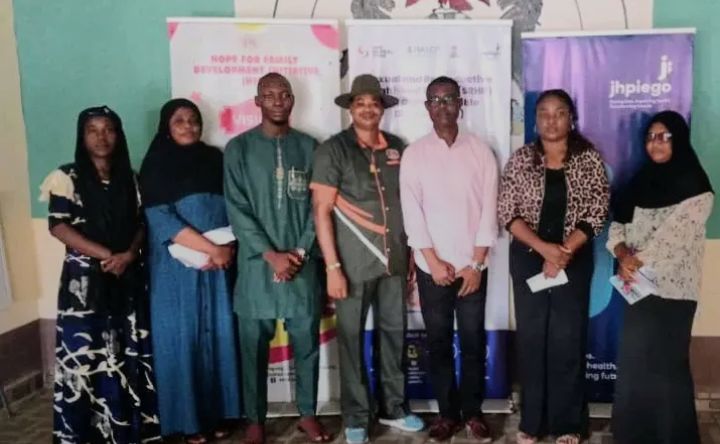
Stakeholders in the health and development sector have urged journalists in Kwara State to use their platforms to expose human rights abuses, gender-based violence, discrimination and stigma against vulnerable people.
The stakeholders, however, stressed the need for journalists to ensure that their reports protect the dignity, privacy and confidentiality of victims and survivors.
The call was made during a sensitisation meeting on stigma, rights abuse, gender-based violence and discrimination organised under the Advancing Integrated Health Services Delivery for Sexual and Reproductive Health and Rights and Communicable Diseases project.
The development was contained in a statement issued on Wednesday by the Press Secretary of the Kwara State Ministry of Health, Saad Hamdalat, in Ilorin.
Speaking at the meeting, the Executive Director of the Hope for Family Development Initiative, Stephen Akinyele, urged journalists and social media influencers to use their platforms to challenge harmful narratives and promote accurate information about vulnerable populations.
Akinyele said the media had an important role to play in reducing stigma and discrimination against people living with HIV, adolescents, survivors of gender-based violence and other vulnerable groups.
He said, “The media must disseminate accurate and stigma-sensitive information, challenge harmful misconceptions and protect the privacy, confidentiality and dignity of people living with HIV, adolescents, GBV survivors and other vulnerable groups.”
According to him, HFDI had reached about 50,000 community members in Kwara State with sexual and reproductive health social and behaviour change messages as part of its intervention.
He added that 250 community and religious leaders had been sensitised, while 30 community-led initiatives focused on stigma and discrimination had also been facilitated.
Akinyele further disclosed that the organisation had organised 50 referral coordination meetings and facilitated and documented 2,470 completed referrals to strengthen access to sexual and reproductive health and communicable disease services.
He explained that the project was funded by the Global Fund through the National AIDS and STIs Control Programme and implemented by Jhpiego, with HFDI serving as an implementing partner in Offa, Asa and Moro Local Government Areas.
Also speaking, the Project Director, Chioma Oduenyi, represented by the Jhpiego State Team Lead, Williams Awotunde, said the project was designed to integrate sexual and reproductive health services with interventions addressing HIV, tuberculosis, malaria and sexually transmitted infections.
Oduenyi said the integrated model would make healthcare access easier by allowing clients to receive multiple services during a single visit.
“The integrated approach allows clients to access multiple services during a single visit, helping to reduce the time and cost of accessing healthcare,” she said.
She disclosed that Jhpiego currently supports 15 primary healthcare centres across Offa, Asa and Moro LGAs through training, mentoring, supportive supervision and monitoring.
According to her, the intervention also promotes skilled birth attendance as part of broader efforts to reduce maternal and newborn mortality.
Oduenyi called for sustained community engagement involving traditional and religious leaders, Ward Development Committees and other community structures to tackle stigma, discrimination and gender-based violence.
The stakeholders also called on the government, healthcare providers, communities, development partners and media organisations to strengthen collaboration towards ensuring equitable access to healthcare and protecting vulnerable people from stigma, discrimination and rights abuses.
They emphasised that responsible reporting, community sensitisation and stronger healthcare systems were necessary to create an environment where vulnerable people could seek healthcare and support without fear of discrimination or loss of dignity.

Nigerians can now obtain affidavits from the Federal High Court without travelling to a court premises, through the court’s Electronic Court Management System (ECMS) e-Affidavit Portal.
The fully digital service allows applicants to register, complete application forms, upload supporting documents, make electronic payments and download approved affidavits from anywhere with an internet connection.
The portal was introduced to provide a secure and efficient process for affidavit applications and related court services. It operates in line with the Nigeria Data Protection Act (NDPA) 2023.
According to information on the Federal High Court’s e-Affidavit Portal, applicants can apply for different types of affidavits, including change of name, correction of date of birth, loss of documents, change of signature, next of kin, marriage, banking and other purposes.
Applicants can also track their applications and download completed affidavits after approval.
How to apply for a Federal High Court affidavit online
1. Create an account
Applicants should first register on the Federal High Court’s Electronic Court Management System portal at the official portal.
During registration, users are required to provide their full name, phone number, date of birth, email address and password.
The name entered should be the name the applicant wants to appear on the affidavit.
After creating an account, log in and select the affidavit module.
2. Complete your affidavit profile
Before submitting a new affidavit application, applicants must complete their affidavit profile.
The portal requests information such as:
Native town
Residential address
Occupation
NIN
Country of origin
State of origin
Gender
Religion
Date of birth
Applicants must also upload a passport photograph and an identity document.
The court advises users to carefully check all information supplied before saving their profile.
3. Select the type of affidavit
After completing the profile, applicants can choose from the available affidavit services.
The categories include:
Name-related affidavits: Change of Name, Correction of Name and Harmonisation of Name(s).
Date-of-birth affidavits: Statutory Declaration of Age, Declaration of Age for a Minor and Correction of Date of Birth.
Loss and incident affidavits: Loss of Items, Burglary, Theft, Robbery, Damage and Missing Person.
Identity and personal matters: Good Conduct, Next of Kin, Guardianship, Verification of Address and State of Origin.
Marriage-related affidavits: Bachelorhood, Marriage Declaration, Spinsterhood and Non-impediment.
Banking affidavits: Change of Bank Phone Number, Non-Indebtedness and Single Account Ownership.
General-purpose affidavits: Authorisation, Transfer of Ownership, Claim of Ownership, Sponsorship and Affidavit of Means.
There are also options relating to academic documents, institutional matters, political office candidacy and other purposes.
4. Fill out the application form
After selecting the required affidavit, the applicant will be taken to the relevant application form.
The information required depends on the type of affidavit selected.
For example, an applicant seeking correction of date of birth may be required to provide the reason for the correction, the incorrect date of birth and the correct date of birth.
Applicants will also provide their email address and phone number and select their preferred Federal High Court division.
Available court options include Federal High Court divisions in various states and the Federal Capital Territory.
5. Upload supporting documents
Applicants are required to provide documents such as a recent passport photograph, a valid means of identification and a signature.
The signature can be uploaded or drawn through the portal.
Accepted identification documents include:
National Identification Number (NIN)
International passport
Driver’s licence
Voter’s card
Applicants should ensure that uploaded documents meet the portal’s specifications.
The application reviewed for this report indicated a 300KB file-size limit for each relevant upload.
6. Preview your application
Before submitting the application, applicants should use the preview option to carefully review the information provided.
The preview allows users to check their name, identification details, affidavit information, contact details and selected court division.
This stage is important because the portal states that payments are final, non-refundable and non-transferable.
Applicants should therefore correct any errors before proceeding.
7. Accept the terms and submit
After checking the application, the applicant must agree to the applicable terms and conditions.
The applicant must also consent to the processing of personal information in accordance with the Nigeria Data Protection Act.
The application can then be submitted.
8. Pay the affidavit fee online
After submission, applicants are directed to make payment electronically.
The portal provides payment options including Paystack and Remita.
The application reviewed for this report displayed a fee of N1,797 for the selected affidavit.
However, applicants should confirm the amount displayed for their particular application before making payment because fees may differ according to the service and may change over time.
The portal warns that payments are final, non-refundable and non-transferable.
9. Download your approved affidavit
After payment and processing, the completed affidavit can be downloaded from the portal.
A copy is also sent to the applicant’s registered email address.
The Federal High Court says affidavits issued through the portal are protected with unique barcodes and reference numbers that can be used for verification.
Applicants are warned against falsifying, altering or misusing affidavits, as such actions may constitute criminal offences and attract legal consequences.
What happens if your application is queried?
Applicants whose applications are queried for additional information or documents are expected to respond within 72 hours, according to the portal.
Failure to respond to a query or make the required payment within the stipulated period may result in automatic deletion of the application without a refund or further notice.
In such a situation, the applicant may have to begin a fresh application and make a new payment.
What happens to the personal information provided?
The portal collects personal information such as NIN details, passport photographs, signatures and contact information for purposes including affidavit applications, verification and other lawful activities.
Applicants should therefore ensure that the information and documents submitted through the platform are accurate and belong to them.
Federal High Court e-Affidavit Portal
The Federal High Court’s e-Affidavit service is accessible through its Electronic Court Management System, allowing eligible applicants to complete the process remotely rather than visiting a court premises.
Applicants should use the official Federal High Court portal and carefully follow the instructions displayed for their specific affidavit type.

Prominent jurists and retired judges have cautioned lawyers and judicial officers against excessive reliance on artificial intelligence, warning that unchecked use of the technology could undermine the administration of justice and weaken the rule of law.
The jurists spoke on Saturday in Port Harcourt, Rivers State, at the launch of a book titled AI, Justice and the Rule of Law: The Denton-West Principles for AI Governance, Digital Sovereignty and Constitutional Democracy, published in honour of retired Court of Appeal Justice Sotonye Denton-West.
The speakers acknowledged the growing importance of AI in the legal profession but stressed that its use must be carefully regulated and balanced with human judgment.
They warned that relying excessively on AI for legal research, case filing, drafting and judgment writing could create serious risks, including inaccurate information, loss of human judgment and possible miscarriages of justice.
Leading the discussion, Denton-West said AI could not replicate the human emotions and judgment required in the administration of justice.
She urged judges and legal practitioners to approach the technology cautiously rather than accepting its outputs without proper evaluation.
“We should be careful to balance things and always remember that we have human nature within us; the essence of God is in us. If we are adopting AI, we should adopt it with care and a bit of balance because nothing is ever perfect,” she said.
The retired judge noted that AI had now become increasingly relevant to the judiciary and warned that careless adoption could have serious consequences.
“Now it has come to the judiciary where I belong, and I felt that if judges accept this as it comes without evaluating or being careful, it could lead to a lot of miscarriages of justice,” Denton-West added.
Also speaking, the reviewer of the book and retired Justice of the Rivers State High Court, Adolphus Enebeli, said the rapid development of AI required appropriate safeguards to prevent its misuse.
While acknowledging that AI was now an established part of modern society, Enebeli advised lawyers and judges to verify information generated by AI platforms before relying on it in legal proceedings.
He stressed that lawyers remained responsible for whatever information or material they submitted to the court, regardless of whether it had been generated with the assistance of AI.
“The rule, in my mind, is that once data is generated, you must verify that you made the appropriate input or that it gives an accurate answer to your query.
“It is for the lawyer to verify because whatever you submit, you are accountable for it. That is why we are emphasizing these points,” he said.
Representing the Chief Judge of Rivers State, Justice Simeon Amadi, Justice Tamunoigoni Oji said judges in the state had already begun discussing the implications of AI for the judiciary.
Oji said the technology should serve the judiciary rather than replace human reasoning and judicial responsibility.
“AI is built for us, not us for AI, so there must be a balance in how we use it,” she said.
She expressed hope that the book would provide practical recommendations on how AI could be integrated into the judicial system without compromising the quality and originality of judicial decisions.
Oji warned that the convenience offered by AI could tempt judicial officers to depend on it excessively, particularly when faced with tight deadlines.
She said, “If I am in a hurry and I have a judgment tomorrow without having written anything, all I do is prompt AI and it gives me a response. But it can never be original.
“So, no matter how good AI is, it can never take the place of human intellect.”
The author of the book, Obele Akinniranye, said the publication was written to celebrate Denton-West’s contributions to Nigeria’s legal development while contributing to the growing debate on artificial intelligence, justice and constitutional governance.
Akinniranye called on the Federal Government to develop comprehensive policies and legal frameworks to guide the responsible integration of AI into Nigeria’s judicial sector.
She said the growing influence of artificial intelligence made it necessary to establish safeguards that would ensure technological innovation remained subject to legal accountability.
“As AI becomes increasingly influential, there is an urgent need for legal frameworks capable of ensuring that technology remains accountable to the law and that innovation remains consistent with justice.
“This book seeks to contribute to that important conversation,” she said.
The concerns raised at the book launch come amid the growing adoption of AI tools across professional sectors, including legal research and document preparation.
The speakers, however, emphasised that technological assistance should complement rather than replace the independent reasoning and accountability expected of legal practitioners and judicial officers.
-

 Security3 months ago
NDLEA Declares Alleged Drug Kingpin, Three Associates Wanted, Freezes ₦9.8bn Linked to Syndicate
-

 Business/Finance3 months ago
How to Apply for Tunde Onakoya’s ₦250 Million Scholarship Programme and Free Laptop Offer
-

 National Affairs3 months ago
ICPC Uncovers 908 Suspected Ghost Workers Across 50 Federal MDAs, Recovers ₦942 Million
-

 Judiciary | Public Safety3 months ago
INEC Tells Court Voter Information Is Not Confidential in Emeka Ike’s ₦10bn Lawsuit
-

 Politics2 months ago
Atiku Challenges Tinubu to Reveal Details of ₦15.13bn SUV Procurement in 2026 Budget
-

 Judiciary | Public Safety3 months ago
Court to Rule Friday on NDLEA’s Bid to Destroy ₦480bn Meth Lab in Ogun
-

 Security2 months ago
Family Paid ₦50 Million Ransom to Secure Release of Abducted Kebbi Judge
-

 News2 months ago
2026 Budget: FG Earmarks ₦962.83bn for SUVs, Empowerment Projects Amid Debt Concerns