
World News | International Affairs
AEDC to Halt Electricity Supply in Key Abuja Areas for Six-Hour Maintenance

The Transmission Company of Nigeria (TCN) has announced a six-hour electricity outage in parts of Abuja on Wednesday, September 23, 2026, to enable engineers carry out preventive maintenance on a major power transformer.
The scheduled maintenance is expected to affect electricity supply to several key areas of the Federal Capital Territory between 10:00am and 4:00pm.
TCN, in a statement issued on Wednesday, said its maintenance team would conduct routine checks on a 100MVA power transformer and its associated switchgear at the Central Area GIS 132/33kV Transmission Substation.
According to the company, the exercise is part of its efforts to strengthen the reliability and operational efficiency of the national transmission network.
“The maintenance exercise will enable TCN engineers undertake routine preventive checks on the transformer from 10:00am to 4:00pm on Wednesday, September 23, 2026,” the company stated.
The maintenance work will temporarily affect the ability of the Abuja Electricity Distribution Company (AEDC) to supply electricity to customers connected to the affected transmission network.
Areas expected to experience the outage include Wuse Zones 1 to 7, the Sheraton Hotel area, the Central Business District, Utako and Jabi, as well as surrounding communities.
TCN said the interruption was necessary to enable its engineers safely carry out the planned maintenance on the transformer and associated equipment.
The company apologised to electricity consumers in the affected areas for the inconvenience caused by the scheduled outage.
“TCN apologises for the inconvenience this planned outage will cause electricity consumers in the affected areas,” the statement added.
The transmission company explained that routine preventive maintenance is necessary to identify potential faults early and ensure critical equipment remains in good working condition.
It said the exercise forms part of its ongoing efforts to maintain the reliability of the national transmission network and reduce the risk of avoidable equipment failures.
Residents and businesses in the affected parts of Abuja are therefore expected to experience an interruption in electricity supply during the six-hour maintenance window.
The outage is scheduled to end by 4:00pm, after which electricity supply to the affected areas is expected to resume, subject to the successful completion of the maintenance exercise and restoration of supply by the relevant electricity authorities.


World News | International Affairs
Army College Warns Nigerians Against Fake International Conference Advertisement
The Nigerian Army College of Logistics and Management (NACOLM), Ojo, Lagos, has warned members of the public to disregard an online advertisement promoting a purported international research conference allegedly scheduled to take place at the institution.
The college said the advertisement for the purported “Highstone Global University USA International Research Conference” was false and fraudulent, stressing that NACOLM had no affiliation or involvement with the programme.
In a statement dated September 22, 2026, the college said no such conference had been authorised to take place at its premises.
NACOLM Public Relations Officer, Major Innocent Audu, said the institution had no relationship with the organisers of the purported programme.
“The College has no affiliation, partnership, endorsement or involvement whatsoever with the said programme, and no such conference has been authorised to take place at the College,” Audu said.
The college consequently urged Nigerians to disregard the advertisement and avoid making payments or providing personal information to individuals behind the purported conference.
It warned that members of the public could expose themselves to fraud or other risks by responding to the unauthorised solicitation.
“Members of the public are therefore advised to disregard the advertisement and refrain from making any payments or providing personal information in connection with the purported programme,” the statement added.
NACOLM said it remained committed to protecting the integrity of its name, facilities and official engagements, noting that legitimate programmes involving the institution would be properly authorised and publicly communicated.
According to the college, any authorised event or programme involving NACOLM would be announced through its recognised official communication channels and those of the Nigerian Army.
The institution also urged members of the public to exercise caution when responding to online advertisements claiming to be affiliated with the college.
It advised anyone who encounters suspicious solicitation linked to the purported conference to report it to the appropriate authorities.
The warning comes amid growing concerns over fraudulent online advertisements and schemes that use the names of reputable institutions to solicit money or personal information from unsuspecting members of the public.
NACOLM
Therefore reiterated that the purported Highstone Global University USA International Research Conference had no official connection with the college.
World News | International Affairs
Ending Nigeria’s Endless Electricity Crisis: What Government Must Do
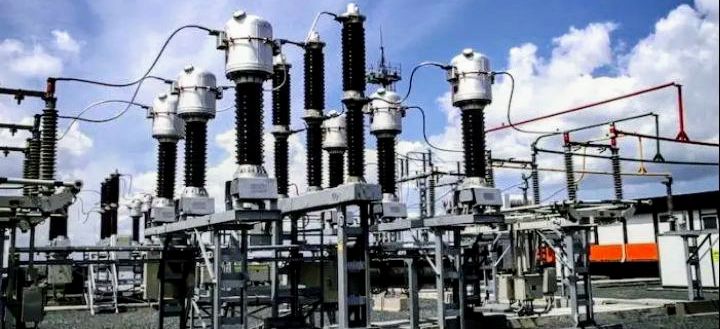
Nigeria’s electricity crisis has moved beyond an infrastructure challenge to become a national economic emergency, with unreliable power supply continuing to constrain growth, destroy jobs, deepen poverty and weaken public confidence in government.
For a country of more than 200 million people, average electricity generation of roughly 3,500MW to 4,500MW remains a major obstacle to development, particularly when installed generation capacity is above 13,000MW.
The electricity sector was privatised in 2013 with the expectation that private investment, commercial discipline and improved.
management would translate into more reliable power supply. More than a decade later, however, millions of Nigerians still endure prolonged blackouts, while businesses spend heavily on diesel and petrol generators to remain operational.
The frequent collapse of the national grid has also become a recurring feature of Nigeria’s electricity crisis.
The consequences extend across virtually every sector of the economy.
Manufacturers face rising production costs, small businesses lose revenue during prolonged outages, hospitals struggle to maintain uninterrupted services, while students and households are frequently forced to depend on alternative sources of power.
Nigeria’s ambition to industrialise, create jobs and compete effectively in the global economy will remain difficult to achieve without affordable and dependable electricity.
Gas supply remains a major obstacle
The problems stretch across the entire electricity value chain, beginning with generation.
Gas-fired power stations, which account for a significant portion of Nigeria’s electricity generation, continue to face inadequate gas supplies, pipeline vandalism and weak commercial arrangements that discourage investment.
Generation companies also contend with ageing infrastructure, stranded generation capacity and outstanding payments.
The country’s heavy reliance on thermal generation further exposes the electricity market to disruptions in gas supply.
Government must therefore prioritise reliable gas delivery to power plants.
The domestic supply obligation for gas-to-power should be strengthened, while credible payment guarantees should be introduced to provide greater certainty for gas suppliers.
Security agencies must also intensify efforts to prevent pipeline, transmission tower and electricity cable vandalism.
Those responsible for deliberately damaging critical energy infrastructure should be investigated and prosecuted in accordance with the law.
At the same time, idle and gas-constrained power plants should be rehabilitated and returned to service where economically viable.
Nigeria should also accelerate diversification of its energy mix by expanding gas, hydro and solar generation rather than relying excessively on a single source.
Transmission infrastructure requires urgent attention
Transmission remains another major weakness in the electricity system.
Ageing and overstretched infrastructure, vandalised towers, inadequate spinning reserves and poor regional balancing leave the national grid vulnerable to disturbances.
The system requires modern control and protection equipment, including functioning relays, automated operations and full implementation of Supervisory Control and Data Acquisition technology.
Transmission investment should also focus on the weakest points of the network, while ensuring that new infrastructure can accommodate growing demand and increasing renewable-energy generation.
The objective should not simply be to generate more electricity but to ensure that available power can be transmitted safely and efficiently to areas where it is needed.
Distribution companies must improve service
Distribution remains equally problematic.
Aggregate technical, commercial and collection losses have remained high, while millions of electricity consumers are still without functioning meters.
Estimated billing has contributed to widespread dissatisfaction and weakened trust between consumers and electricity distribution companies.
Electricity theft, vandalism, inaccurate customer records and inadequate investment have further weakened the distribution market.
Metering therefore needs to become a central component of distribution reform.
Distribution companies should accelerate the deployment of meters, clean up customer databases and complete feeder-level commercial mapping to establish more accurate information about electricity users and consumption.
Measures against electricity theft should also be strengthened, while ensuring that consumers are protected from arbitrary billing and other abuses.
Resolving the sector’s financial crisis
The electricity market’s financial problems also require a transparent and coordinated solution.
Payment-assurance mechanisms and appropriate power-sector recovery instruments could help address verified outstanding obligations and restore confidence among participants in the electricity value chain.
Government could also examine lawful mechanisms for resolving outstanding obligations, including appropriate debt net-offs involving tax and customs liabilities where applicable.
Responsible asset consolidation and balance-sheet financing may equally help unlock fresh investment, provided such measures are transparent and commercially sustainable.
Without addressing the sector’s financial weaknesses, efforts to attract new investment will continue to face significant obstacles.
Government must make reform measurable
Nigeria does not lack reports, policy documents or committees on electricity.
What has been missing is sustained implementation, measurable targets and accountability.
The Federal Government should therefore treat electricity reform as a national mission with clearly defined deadlines and publicly available performance indicators.
Specific milestones should be established for gas supply, generation recovery, transmission upgrades, metering and reduction of distribution losses.
Both public institutions and private operators should be required to meet agreed performance targets, with appropriate sanctions for persistent failures.
Rural electrification must also remain a priority. Grid expansion should be complemented by decentralised renewable-energy systems capable of supplying communities that are difficult or expensive to connect to the national network.
Nigeria’s electricity crisis is solvable, but doing so requires coordinated action across generation, gas supply, transmission, distribution and financing.
Reliable electricity is not merely a convenience. It is essential infrastructure for manufacturing, education, healthcare, technology, agriculture and job creation.
After more than a decade of electricity-sector privatisation, Nigerians need measurable improvements rather than another cycle of promises and policy announcements.
The country cannot power its economic future with excuses. It needs sustained investment, disciplined implementation and accountability across the electricity value chain.
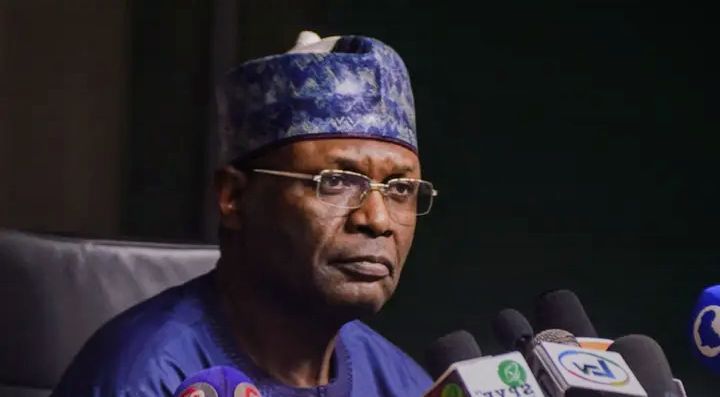
The Nigerian Embassy in Qatar has reduced the processing time for passport renewals and new applications to about two weeks following a 10-day passport intervention exercise held in Doha.
The intervention, which took place between August 11 and 21, 2026, enabled the embassy to process passport applications for 751 Nigerian nationals residing in Qatar.
According to a statement issued by the mission on Monday, the applications comprised 441 requests for five-year passports and 310 applications for 10-year passports.
The embassy said distribution of the completed passports began on September 18, less than one month after the biometric capture exercise was concluded.
The development means beneficiaries of the intervention were able to receive their travel documents significantly earlier than is usually expected under conventional diplomatic passport processing cycles.
Nigeria’s Ambassador to Qatar, Prof. Mahmood Yakubu, described the development as a major milestone in the mission’s efforts to improve consular service delivery.
“The fact that passports are now being completed and returned within about two weeks of capture demonstrates our commitment to improving service delivery and responding to the needs of our community,” Yakubu told reporters.
He said the mission understands the importance of valid passports to Nigerians living in Qatar, particularly those whose international travel, employment and residency arrangements depend on valid travel documents.
The embassy explained that the accelerated processing initiative was introduced in response to increasing demand for consular services from Nigeria’s growing expatriate community in the Gulf country.
The intervention was designed to handle a significant number of passport applications within a dedicated period, after which the embassy proceeded with the production and distribution of the completed documents.
According to the mission, the faster turnaround is expected to reduce the waiting period for Nigerians seeking to renew or obtain passports, particularly applicants whose travel plans, employment arrangements or residency status are linked to the validity of their Nigerian passports.
The embassy’s intervention also highlights the important role of Nigerian diplomatic missions in providing essential consular services to citizens living abroad.
Passport issuance and renewal remain among the major services provided by Nigerian embassies and consulates, serving as a key point of interaction between citizens abroad and their home country’s diplomatic representatives.
During the 10-day exercise in Doha, 751 applications were processed, comprising both five-year and 10-year passport requests.
The mission said the accelerated production and distribution process had enabled beneficiaries to obtain their passports earlier than would ordinarily be expected under standard diplomatic processing timelines.
For applicants who participated in the Doha intervention exercise, the commencement of distribution on September 18 marked the final stage of the process following biometric capture.
The embassy said the initiative reflects its continued focus on improving the efficiency and accessibility of consular services for Nigerians resident in Qatar.
The latest development comes as Nigerian diplomatic missions abroad continue to explore ways of responding to the growing consular needs of Nigerians in the diaspora, with passport services remaining a critical area of demand.
For Nigerians in Qatar, the reduced processing period could help ease some of the challenges associated with waiting for renewed or newly issued passports, especially where valid travel documents are required for international travel, employment and residency-related processes.
-

 Security2 months ago
NDLEA Declares Alleged Drug Kingpin, Three Associates Wanted, Freezes ₦9.8bn Linked to Syndicate
-
 National Affairs2 months ago
ICPC Uncovers 908 Suspected Ghost Workers Across 50 Federal MDAs, Recovers ₦942 Million
-

 Business/Finance2 months ago
How to Apply for Tunde Onakoya’s ₦250 Million Scholarship Programme and Free Laptop Offer
-

 Politics2 months ago
Atiku Challenges Tinubu to Reveal Details of ₦15.13bn SUV Procurement in 2026 Budget
-

 Judiciary | Public Safety2 months ago
INEC Tells Court Voter Information Is Not Confidential in Emeka Ike’s ₦10bn Lawsuit
-
 Judiciary | Public Safety2 months ago
Court to Rule Friday on NDLEA’s Bid to Destroy ₦480bn Meth Lab in Ogun
-
 Security2 months ago
Family Paid ₦50 Million Ransom to Secure Release of Abducted Kebbi Judge
-

 News2 months ago
2026 Budget: FG Earmarks ₦962.83bn for SUVs, Empowerment Projects Amid Debt Concerns