
News
Hackers Steal $351.6m From Bitget Wallets, Exchange Links Attack to North Korean Hackers


The exchange said its security systems detected unauthorised transfers from some of its hot wallets at about 18:31 UTC on Thursday, September 24, prompting the activation of its emergency response protocols.
In an initial security notice signed by Bitget Chief Executive Officer, Gracy Chen, the exchange said the breach was restricted to parts of its hot and warm wallet infrastructure, while its cold wallets remained secure.
“Estimated funds affected: approximately $351.6 million,” Bitget said.
Following the incident, Bitget temporarily suspended withdrawals as a precautionary measure, while deposits and trading remained operational.
The exchange also assured customers that their funds were protected by its User Protection Fund, which it said held more than $464 million.
“User funds are safe. The full amount of this loss falls within the coverage of Bitget’s User Protection Fund, which currently holds over $464 million,” the exchange said.
How the hackers moved the funds
In a subsequent update, Chen disclosed that the attackers had compromised a critical backend system within Bitget’s wallet infrastructure.
According to the CEO, the attackers used the compromised system to manipulate transaction data and trigger the exchange’s authorisation process, allowing funds to be transferred out.
“The attacker compromised a critical backend system within our wallet infrastructure, used it to spoof transaction data, and triggered our authorization process to move funds out,” Chen said.
Chen said Bitget’s investigation had ruled out the compromise of private keys, adding that the exchange had successfully contained the incident and prevented further unauthorised transfers.
“Private key compromise has been ruled out, this excludes the more severe risk scenarios. Loss containment is confirmed. No further unauthorized transfers are possible,” she said.
However, Bitget said investigations were still ongoing to determine precisely how the attackers gained access to the backend system.
The exchange said it would release a comprehensive technical report after its findings had been fully verified.
Assets affected
Bitget later disclosed that the stolen assets included Ethereum (ETH), XRP, BNB, Avalanche (AVAX), Tether (USDT), USD Coin (USDC) and other tokens.
The affected transactions occurred across several blockchain networks, including Ethereum, XRP Ledger, Arbitrum, Avalanche, Optimism, BNB Smart Chain and Base.
Chen said all on-chain cold wallets had been checked and confirmed secure.
“All on-chain cold wallets have been confirmed secure and unaffected,” she said during a livestream with users.
Bitget also contacted the foundations and relevant organisations behind the affected blockchain networks.
According to Chen, some of them had confirmed that wallet addresses associated with the attackers had been frozen.
Bitget links attack to North Korean hackers
On the possible identity of the attackers, Chen said Bitget’s preliminary analysis had identified similarities between the incident and known North Korean hacking operations.
“Based on IP behavior patterns and on-chain analysis, the attack method in this incident is highly consistent with known patterns of North Korean hacker organizations,” she said.
She added that Bitget had reported the incident to relevant authorities and was cooperating with a global investigation.
The exchange also said it had notified law enforcement agencies and blockchain security firms as it pursued measures to contain the attack and recover the stolen assets.
Bitget Wallet unaffected
Chen clarified that the incident did not affect Bitget Wallet, the exchange’s decentralised wallet product.
“Bitget Wallet operates completely independently from Bitget exchange infrastructure, and this incident has no impact on it whatsoever,” she said.
According to the exchange, the security breach was limited to its exchange-side wallet infrastructure.
Withdrawal restoration timeline
Bitget said several technical teams were working on system remediation and additional security measures before withdrawals could be fully restored.
However, the exchange declined to provide a specific timeframe until the recovery process had been completed and verified.
“Our goal is to complete a full recovery as soon as possible. We will announce the specific time window immediately upon confirmation.
We will not commit to timelines we cannot deliver on,” Chen said.
Bitget had earlier promised hourly updates on the incident and said it would publish a full report covering the root cause, investigation findings and corrective actions within 24 hours.
The $351.6 million incident is among the major security breaches to hit a cryptocurrency exchange, underscoring the risks associated with attacks targeting centralised exchange infrastructure and digital-asset custody systems.


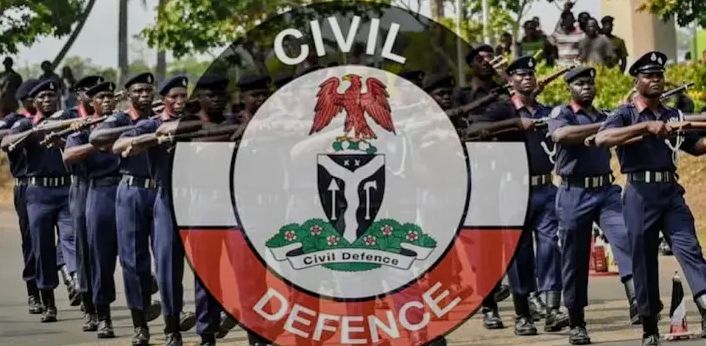
The medical team of the Independent Committee of Inquiry investigating the deaths of 37 suspected illegal miners in the custody of the Nigeria Security and Civil Defence Corps has commenced work to determine the cause, mechanism and manner of their deaths.
The committee also said it would interview survivors, suspects, witnesses and other individuals with relevant information as it begins its investigation into the incident.
The Secretary of the committee, Prof. Isa Hayatu Chiroma, SAN, disclosed this in a statement issued on Wednesday.
According to Chiroma, the committee held its inaugural meeting shortly after its members were sworn in and adopted a work plan to guide the investigation.
He said the medical team had already commenced its assignment of examining the circumstances surrounding the deaths.
“The Committee’s medical team has already begun work to determine the cause, mechanism and manner of the deaths,” the statement said.
The committee said it would visit all relevant locations connected to the incident and engage with government agencies as part of efforts to establish what happened.
It also plans to interview survivors, suspects and other persons considered to have material knowledge of the circumstances surrounding the deaths.
“The Committee will visit all relevant sites, engage with relevant government agencies, and interview survivors, suspects and other persons with material knowledge of the incident,” Chiroma said.
The panel added that it would obtain documents and other relevant materials needed to establish the facts surrounding the deaths.
“It will also gather all documents and other materials necessary to establish the full facts of the matter,” the statement added.
The 37 persons died on Thursday, September 17, 2026, while in the custody of the NSCDC Niger State Command after they were detained over suspected illegal mining.
The circumstances and cause of the deaths have not yet been established.
The Federal Government on Tuesday inaugurated a 10-member independent committee to investigate the incident following a directive from President Bola Tinubu.
The Minister of Interior, Olubunmi Tunji-Ojo, who inaugurated the committee in Abuja, said the panel was mandated to establish the identities of the deceased, determine the immediate and remote causes of their deaths and investigate the circumstances surrounding their arrest and detention.
Tunji-Ojo also directed the committee to examine the legality and conditions of the detention facility and determine whether relevant laws, detention procedures and human rights standards were complied with.
The minister specifically charged the committee to investigate whether the deceased persons were subjected to torture or inhumane treatment, or denied necessary medical care while in detention.
He also directed the panel to determine whether any officer committed negligence or professional misconduct in the course of the detention.
“Investigate whether or not the deceased persons were tortured, inhumanely treated, or denied medical care or attention during their detention,” Tunji-Ojo said.
He further directed the committee to interview officers involved in the arrests and detention, other detainees, relatives of the deceased, witnesses, medical personnel and anyone else with relevant information.
The minister warned that anyone who attempted to interfere with the investigation would face serious consequences.
“Any attempt by anybody to destroy or conceal evidence, intimidate witnesses, or obstruct this investigation will be treated as a serious offence against the nation, and it will not be tolerated,” he said.
As part of its evidence-gathering process, the committee said it would invite memoranda from interested individuals and organisations.
It appealed to members of the public to cooperate with the panel and provide information that could assist the investigation.
The committee said details concerning the submission of memoranda, including the venue and date for physical presentations, would be communicated in due course.
“The Committee appeals to members of the public to support its work and has resolved to invite memoranda from interested individuals and organisations,” the statement said.
The panel reaffirmed its commitment to conducting what it described as a thorough, fair, transparent and evidence-based inquiry.
It also promised to keep the public informed about the progress of its investigation.
The committee has two weeks to complete its assignment and submit its report to the Minister of Interior.
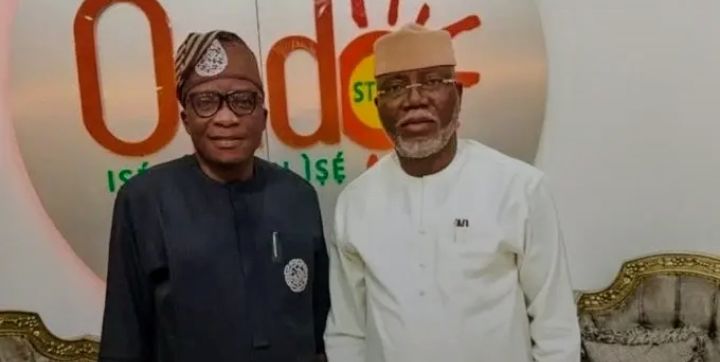
A former South-West Coordinator of the Labour Party Presidential Campaign Council in the 2023 general election, Sola Ebiseni, has defected to the All Progressives Congress and declared support for President Bola Tinubu’s re-election bid in 2027.
Ebiseni, who until his defection was a Labour Party chieftain and Secretary-General of the pan-Yoruba socio-political organisation, Afenifere, announced his decision during a meeting with Ondo State Governor, Lucky Aiyedatiwa, at the Government House in Akure on Thursday.
Reports on the development also indicate that Ebiseni has resigned his position as Afenifere Secretary-General following his move to the APC.
The former Labour Party leader was accompanied by his supporters to the meeting, where he expressed his readiness to work for Tinubu’s second-term bid.
Ebiseni said his decision to support the President was based on what he described as the national interest, political stability and the need for continuity in the country’s leadership.
He also argued that the presidency should remain in southern Nigeria, saying this would contribute to political stability in the country.
“Our declaration today for the President’s second term is in tandem with the views of most Nigerians and political gladiators that the office of the President should still be in southern Nigeria in the interest of the political stability of the federation,” Ebiseni said.
He further cited the Lagos-Calabar Coastal Highway as an important consideration, particularly for communities in Ondo State’s coastal areas.
According to him, the project is significant to his Ilaje people and he intends to work with the Tinubu administration to ensure its implementation, including what he described as the proper coastal alignment through Ondo State.
“Politics is local, and as a leader of my Ilaje coastal people of Ondo State, this road is the most significant life-changing project for us, and I am here to join President Bola Ahmed Tinubu for its full implementation, particularly its proper coastal alignment in the state,” he said.
Ebiseni also said his decision followed consultations and engagements with political actors across the country.
“I can assure you that I am just the forerunner for a group of Nigerians who have quietly moved across the six geopolitical zones in the last year. We have also engaged with political gladiators in the process,” he said.
He added that the findings from those engagements, which he said informed the decision to support Tinubu, would be made public in greater detail.
Speaking on the security situation, Ebiseni said he believed supporting the current administration would allow the country to build on its existing security framework rather than starting afresh with a new administration.
“Above all, particularly in the area of security, it is in the national interest to support the current Commander-in-Chief and build on his new salutary security architecture, rather than experimenting with a new architecture and design,” he said.
Aiyedatiwa welcomes defectors
Receiving Ebiseni and his supporters, Governor Aiyedatiwa welcomed their decision to join the APC and assured them of integration into the party’s campaign structure ahead of the 2027 general elections.
The governor said Ebiseni’s political experience and grassroots activities across Ondo State, alongside his involvement in Afenifere and other socio-cultural organisations, would be useful to the party’s mobilisation efforts.
Aiyedatiwa also referenced Ebiseni’s previous political positions, including his service as chairman of the old Ilaje-Ese-Odo Local Government and as a commissioner in Ondo State.
“Chief Ebiseni’s position as Secretary-General of Afenifere and his activities in other sociocultural organisations are an added advantage to the tasks ahead,” the governor said.
He added that Ebiseni and his supporters would contribute to the campaign for Tinubu’s re-election, which he said the APC and its supporters in Ondo State were committed to.
Aiyedatiwa further explained that the presence of the APC state chairman at the meeting was intended to assure Ebiseni and his supporters that they would be accommodated within the party’s campaign structure.
The defection comes as political parties and their supporters intensify mobilisation and realignment ahead of the 2027 general elections.
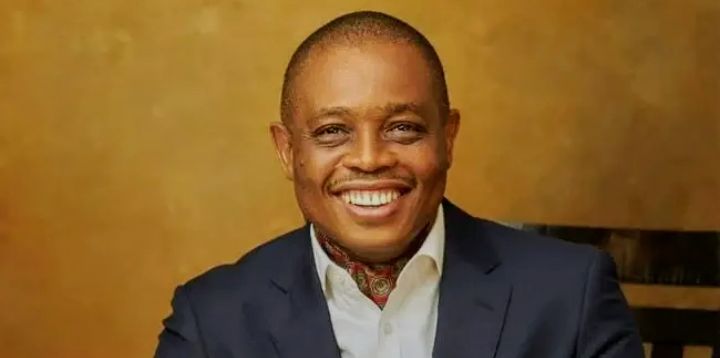
The immediate past President of the Nigerian Bar Association, Mazi Afam Osigwe, SAN, has criticised the growing reliance on election tribunals and courts to determine electoral victories, saying the development is gradually weakening the power of voters in Nigeria’s democracy.
Osigwe said controversial legal technicalities and difficulties in proving violations of electoral laws had increasingly shifted the determination of election outcomes away from voters and towards the judiciary.
The former NBA president spoke on Thursday in Enugu at the 22nd Nigeria Guild of Editors Conference, where he criticised what he described as the “judicialisation” of Nigeria’s electoral process.
He argued that the growing number of election petitions and prolonged legal battles had created a situation in which politicians increasingly looked to the courts after elections rather than relying solely on the support of voters to secure political office.
Osigwe said the problem was partly linked to the difficulty of establishing non-compliance with electoral laws in court.
He said, “A judge once presented a paper called ‘The Judicialisation of the Electoral Process.’
He argued that because of the difficulty of proving non-compliance with the Electoral Act, the courts have gradually and increasingly usurped the role of the voters. I couldn’t agree more.”
According to him, Nigeria records a very high number of election petitions globally, while delays in resolving electoral disputes have further complicated the process and weakened public confidence.
Why Nigerians are losing interest in voting
Osigwe also linked declining voter turnout to the perception among some Nigerians that their votes may not ultimately determine who emerges victorious at the polls.
He said some voters had become discouraged by what they perceived as irregularities between voting at polling units and the final collation of results.
“They believe that between polling units and collation centres—especially at night—miracles happen before daybreak. So why vote?” he asked.
He said the situation had also created an environment in which politicians could allegedly influence voters with money and food items such as rice and salt, while thugs were sometimes recruited during elections.
Osigwe further criticised the conduct of some state electoral commissions, alleging that ruling parties routinely emerged victorious in elections conducted by such bodies.
“Sometimes you’ll be waiting for ballot papers, and results are already announced,” he said.
BVAS, IReV and election disputes
The former NBA president also raised concerns about the legal treatment of technology introduced to improve the transparency of Nigeria’s electoral process, particularly the Bimodal Voter Accreditation System and the INEC Result Viewing Portal.
He argued that some court decisions concerning electoral technology had undermined the effectiveness of the innovations.
Osigwe cited a court position that treated the BVAS machine itself as the primary evidence in certain electoral disputes rather than the printout generated from it.
He said, “The court held that the BVAS machine itself is the primary evidence, not the printout. So you must physically carry the BVAS from every polling unit to court within strict time limits.”
According to him, such legal requirements can create significant difficulties for litigants seeking to challenge electoral irregularities within the prescribed period.
Calls for electoral and judicial reforms
Osigwe also criticised the practice of politicians routinely approaching the courts after elections, arguing that the trend had contributed to declining confidence in the judiciary.
He alleged that some judges had been caught taking bribes and called for reforms to strengthen the credibility and independence of the electoral and judicial systems.
He also argued that pre-election matters should not be justiciable, as he expressed concern about the extent to which the courts have become involved in political contests before and after elections.
Reflecting on Nigeria’s broader political challenges, Osigwe cited Chinua Achebe’s The Trouble with Nigeria, attributing the country’s persistent problems to leadership failure across society.
“We gained independence 64 years ago. We keep making excuses, and we only end up making many lawyers wealthy and corrupt judges richer,” he said.
Osigwe warned that unless Nigeria reforms its electoral and legal systems, public confidence in elections could continue to decline.
He said a situation where voters increasingly believe that courts, rather than their ballots, determine electoral outcomes could pose a serious challenge to democratic participation.
He therefore called for reforms that would strengthen the credibility of elections, ensure that votes are properly counted and collated, and restore citizens’ confidence that their ballots can determine who governs them.
-
 Security2 months ago
NDLEA Declares Alleged Drug Kingpin, Three Associates Wanted, Freezes ₦9.8bn Linked to Syndicate
-
 National Affairs2 months ago
ICPC Uncovers 908 Suspected Ghost Workers Across 50 Federal MDAs, Recovers ₦942 Million
-

 Business/Finance2 months ago
How to Apply for Tunde Onakoya’s ₦250 Million Scholarship Programme and Free Laptop Offer
-
 Politics2 months ago
Atiku Challenges Tinubu to Reveal Details of ₦15.13bn SUV Procurement in 2026 Budget
-

 Judiciary | Public Safety2 months ago
INEC Tells Court Voter Information Is Not Confidential in Emeka Ike’s ₦10bn Lawsuit
-

 Judiciary | Public Safety2 months ago
Court to Rule Friday on NDLEA’s Bid to Destroy ₦480bn Meth Lab in Ogun
-
 Security2 months ago
Family Paid ₦50 Million Ransom to Secure Release of Abducted Kebbi Judge
-
 News2 months ago
2026 Budget: FG Earmarks ₦962.83bn for SUVs, Empowerment Projects Amid Debt Concerns