
News
LAUTECH Resident Doctors’ Strike Enters 32nd Day Over Welfare Demands

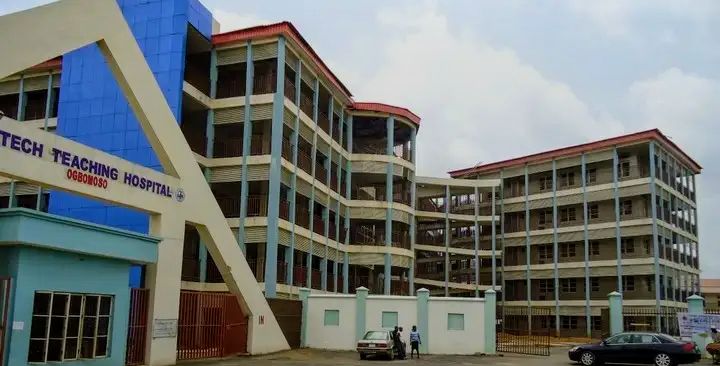
Resident doctors at the Ladoke Akintola University of Technology Teaching Hospital (LAUTECH), Ogbomoso, Oyo State, have entered the 32nd day of their industrial action over unresolved welfare and remuneration issues.
The Association of Resident Doctors, LAUTECH Teaching Hospital, Ogbomoso, said its demands include the implementation of the Professional Allowance Table, payment of outstanding Medical Residency Training Fund (MRTF), and settlement of six months of Minimum Wage arrears.
In a statement jointly signed by the association’s President, Dr Mustapha Adedapo A., and Secretary, Dr John Stephen, on Tuesday, the doctors said the strike followed the expiration of an eight-week ultimatum issued to the Oyo State Government.
The association described the action as the resumption of an earlier suspended warning strike, which was initially suspended following appeals from the hospital management and its board.
“The ongoing industrial action represents the resumption of an earlier suspended warning strike, following the expiration of an eight-week ultimatum issued to address the longstanding welfare crisis confronting resident doctors in LAUTECH Teaching Hospital, Ogbomoso,” the association said.
Doctors list outstanding welfare demands
According to the resident doctors, the implementation of the Professional Allowance Table remains one of the major issues yet to be resolved.
The association also called for the full payment of the Medical Residency Training Fund and settlement of outstanding Minimum Wage arrears covering six months.
The doctors, however, acknowledged some steps taken towards resolving their concerns, including efforts to establish the legal framework for the Medical Residency Training Act and the part payment of the Medical Residency Training Fund.
“We recognise these steps as important developments and remain hopeful that the outstanding components will be addressed expeditiously,” the association said.
The association maintained that the Professional Allowance Table was important to the welfare and retention of medical personnel.
It claimed that Oyo State was the only state in the South-West yet to implement the allowance table.
“Oyo State, despite its long-standing reputation as the Pace Setter State, remains the only state in the South-West yet to implement the Professional Allowance Table,” the doctors stated.
Doctors warn of manpower shortage
The resident doctors expressed concern over the continued loss of skilled medical personnel from LAUTECH Teaching Hospital, warning that the trend could affect both specialised healthcare delivery and medical residency training.
The association said the hospital provides specialised services in areas including orthopaedics, urology, paediatrics, obstetrics and gynaecology, while also serving as a referral centre for patients from Oyo State and beyond.
It argued that maintaining adequate skilled manpower was essential to sustaining these services and ensuring effective residency training.
“The continued loss of skilled manpower poses a significant threat to the sustainability of residency training and the ability of the hospital to provide the specialised healthcare services for which it was established,” the association said.
The doctors therefore urged the Oyo State Government to urgently address their demands and introduce welfare packages capable of attracting and retaining specialist medical personnel.
“We therefore call on the Oyo State Government to take decisive steps to salvage this fortress of hope for thousands of citizens from further deterioration and loss of skilled manpower by implementing welfare packages that are competitive with what is obtainable in neighbouring states,” the association said.
The doctors added that resolving the issues would strengthen the hospital’s capacity to provide quality tertiary healthcare to residents of Oyo State and neighbouring communities.
NARD backs LAUTECH doctors
The Nigerian Association of Resident Doctors (NARD) has also expressed solidarity with the LAUTECH resident doctors.
NARD listed the payment of Medical Residency Training Funds, implementation of the corrected Professional Allowances Table, payment of Minimum Wage arrears and other outstanding payments among the issues requiring urgent attention.
The national body warned that failure to resolve the grievances could result in broader industrial action at the regional and national levels.
The development comes after the LAUTECH resident doctors initially embarked on a five-day warning strike over the welfare issues.
The action was later suspended following appeals from the hospital management and its board, after which the doctors issued an eight-week ultimatum to the relevant authorities.
With the ultimatum now expired and the industrial action having entered its 32nd day, the resident doctors said they remained open to dialogue and constructive engagement with the government and other stakeholders.
The association expressed optimism that the Oyo State Government would intervene to resolve the dispute and restore normalcy to the teaching hospital.
“We remain optimistic that His Excellency, the Governor of Oyo State, with the goodwill and confidence that his administration enjoys, can bring about the necessary intervention to restore the strength, stability and agility of LAUTECH Teaching Hospital, Ogbomoso,” the association said.
The doctors also appealed to the state government to leverage Oyo’s reputation as the “Pace Setter State” by taking steps that would promote higher standards in healthcare delivery and medical training.
“As the Pace Setter State, we believe in the ability of the Oyo State Government to do more than merely implement what is obtainable elsewhere, but to lead, as Oyo State has historically done, by setting standards that others can follow,” the association said.
The resident doctors said they remained committed to resolving the dispute through dialogue while urging the government and other stakeholders to take decisive steps towards ending the prolonged industrial action.

Violence has remained a persistent feature of Nigeria’s national conversation. But perhaps more disturbing than the frequency of killings is the growing danger that Nigerians may become accustomed to them.
The latest killings in Plateau State are another grim reminder of how dangerously familiar violence has become in parts of the country.
At least nine people were reportedly killed in separate attacks across Barkin Ladi, Riyom and neighbouring communities between Saturday night and Sunday morning, September 19 and 20, 2026. Among the victims was a pastor who was reportedly on his way to church.
The Northern Christian Association condemned the attacks and warned against allowing the deaths of innocent citizens to become routine.
Its chairman, Joseph Hayab, said every life lost should command the attention of government and society, regardless of ethnic, religious or political differences.
The latest attacks reportedly included the killing of five people travelling towards Gana-Ropp in Barkin Ladi when their vehicle came under attack. Two other people, including a pastor, were reportedly killed while on their way to church at Dorowa Babuje. Separate killings were also reported in Baten Wereng and Ratyidi.
Hayab’s warning deserves wider reflection.
“Is that how lives have become so cheap that they can now be taken at will?” he asked, urging Nigerians not to become accustomed to killings.
That question goes beyond Plateau State. It speaks to a broader national crisis in which the death of citizens can quickly become another statistic, another headline and, eventually, another forgotten story.
Only weeks before the latest Plateau attacks, at least 25 people were reported killed in an overnight attack on Bin-Per village in the state.
Reuters reported that a local councillor said 23 people were killed during the attack, with another victim later dying in hospital.
Yet, barely weeks later, public attention has moved on to another casualty figure.
That may be one of the most disturbing consequences of prolonged insecurity.
When death becomes a statistic
Repeated exposure to violence can change the way society responds to tragedy.
When killings occur frequently enough, individual victims risk disappearing behind numbers.
Nine killed in Plateau.
Twenty-five killed in another attack.
Eleven killed along a road in Taraba.
Thirty-seven detainees dead in Niger State.
Each number represents people who had families, friends, responsibilities and plans.
Yet the speed with which one tragedy replaces another in the news cycle can make the victims appear to exist only as figures.
The deaths of 37 suspected illegal miners in the custody of the Nigeria Security and Civil Defence Corps in Niger State provide another troubling example.
The detainees were arrested during operations around M.I. Wushishi and Lukoto on September 15 and 16 before 37 were found dead in custody on September 17.
The NSCDC initially referred to a suspected disease outbreak, while authorities subsequently said the exact cause of death remained subject to medical and laboratory investigations.
The incident has since prompted investigations, with the NSCDC suspending its Niger State commandant and other officers linked to the deaths.
Whatever the eventual findings establish, the incident reinforces a fundamental principle: people in state custody do not cease to have a right to life.
The same principle applies to travellers killed on roads, farmers attacked in their communities, worshippers ambushed on their way to church and residents forced from their homes.
A long history of violence
Nigeria’s insecurity did not begin with the current administration.
An analysis published by HumAngle in 2023, using data from the Nigeria Security Tracker and the Armed Conflict Location & Event Data Project, found that more than 63,000 fatalities were recorded between June 2015 and May 2023, an average of about 22 deaths per day.
The analysis included deaths involving civilians and security personnel and covered violence by both state and non-state actors.
The figures demonstrate how deeply insecurity became embedded in the country during the eight years of Muhammadu Buhari’s administration.
The problem has continued under President Bola Tinubu.
Amnesty International reported in May 2025 that at least 10,217 people had been killed in attacks by armed groups across seven states during the first two years of Tinubu’s administration. The organisation recorded 6,896 deaths in Benue and 2,630 in Plateau among the states covered by its investigation.
The Nigerian government disputed aspects of Amnesty International’s figures and said some of the claims were inconsistent with data in its possession.
These differing assessments are important because casualty figures should be treated with care. But the disagreement over numbers should not obscure the central reality:
thousands of Nigerians have continued to lose their lives to violence.
Democracy must value life
Nigeria’s history of military rule and prolonged communal, ethnic and religious conflicts has left a painful legacy.
But democracy should represent more than the periodic transfer of political power.
It should also mean a stronger culture of accountability, protection of citizens and respect for human life.
Leadership matters.
When citizens are killed, presidents, governors and heads of government agencies should respond with more than carefully worded statements of condemnation.
Condemnation is necessary, but it cannot be the final response.
Families need justice. Communities need protection.
Victims deserve to be remembered as human beings rather than casualty figures.
Security agencies, too, must recognise the enormous responsibility that comes with the authority entrusted to them.
Protecting life and property is not simply a constitutional or institutional obligation; it is the foundation of public trust.
Compassion must not be selective
There is also a responsibility on citizens.
Nigeria’s political, ethnic and religious divisions have sometimes affected how people respond to violence.
A death can attract sympathy from one section of society and indifference from another simply because of the perceived identity or political affiliation of the victim.
That is dangerous.
A life should not become more valuable because the victim is the relative, supporter or associate of a politician we admire.
Neither should a death become less important because the victim belongs to a community, ethnic group, religious group or political camp with which we disagree.
Social media has made this problem more visible. Reports of killings are sometimes questioned, dismissed or politicised before the facts are properly established.
The result is a public conversation in which even tragedy can become another battlefield.
That should concern every Nigerian.
Nigeria must not normalise death
The challenge before Nigeria is therefore not only how to stop individual attacks.
It is also how to prevent society from losing its capacity to be outraged by the needless loss of life.
The nine people killed in Plateau were not statistics. The 37 people who died in custody in Niger were not merely a number.
The victims of violence along the Rafin Kada–Wukari road in Taraba were not simply another entry in a security report.
The road attacks there had reportedly claimed 11 lives by August.
Every figure represents a human story.
Nigeria cannot afford to become a country where death is ordinary and compassion is selective.
Every life matters, whether the victim is a farmer, trader, traveller, worshipper, student, security officer, detainee or public servant.
The country must therefore resist the temptation to become numb.
A society that stops being shocked by the unnecessary killing of its citizens risks losing something deeper than security: it risks losing its conscience.
And no nation should become so familiar with violence that the death of its people no longer shocks it.
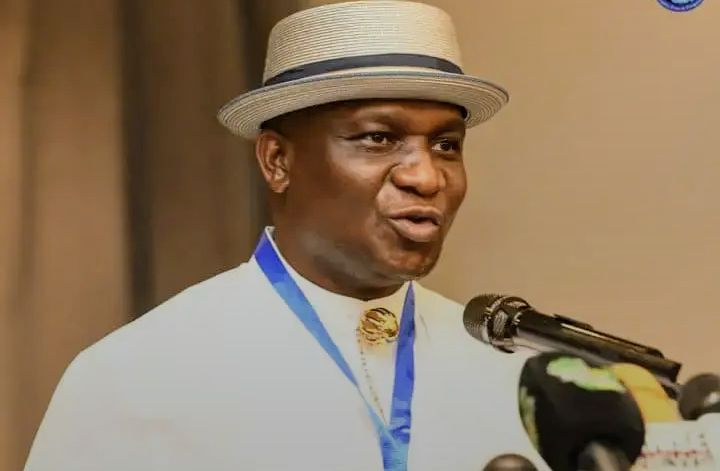
The Niger Delta Development Commission has urged traditional rulers, community leaders, youth groups and residents across the Niger Delta to take collective responsibility for protecting public infrastructure against vandalism and theft.
The NDDC Managing Director, Dr Samuel Ogbuku, made the call at a Stakeholders’ Forum on Public Infrastructure and Vandalism Prevention held in Port Harcourt, Rivers State.
Ogbuku, who was represented at the event by the Director of Administration and Human Resources, Sir Kelechi Nwelue, said the government had a responsibility to provide basic infrastructure, but communities must ensure that such facilities are protected after they are delivered.
According to a statement issued on Sunday by the NDDC Director of Corporate Affairs, Sealed Thompson-Wakama, Ogbuku said the destruction of public infrastructure places additional financial pressure on government and slows the pace of development.
He explained that funds that could have been used to provide new infrastructure were often diverted to repair facilities that had already been constructed but were vandalised.
“The aim of the government is to focus on infrastructure, but after building, how do we protect it? Where public infrastructure is vandalised, money meant for new projects is diverted to repair what has been built, thus limiting infrastructure progress.
“Security is an important factor in society. Development strengthens security and security protects development,” he said.
The NDDC boss urged community leaders to regard government-funded projects in their areas as community assets rather than facilities belonging exclusively to the government.
He called for increased awareness among residents to encourage them to protect infrastructure and report suspicious activities to the relevant authorities.
“There is a need to create awareness and educate citizens that projects executed by the government are the property of the community, and they should protect it.
“We should move to building a culture where vandalism becomes socially unacceptable,” Ogbuku said.
He urged residents, traditional institutions, community leaders, youth organisations and other stakeholders to take ownership of public infrastructure and work together to prevent vandalism and theft.
Ogbuku also highlighted the need for greater community involvement in protecting roads, bridges, electricity facilities, water projects, schools, healthcare centres and other development projects established across the Niger Delta.
He said protecting such facilities was essential to ensuring that communities continued to benefit from government investments.
Also speaking at the forum, the NDDC Director of Community and Rural Development, Theophilus Alagoa, expressed concern over the destruction of government facilities in communities, noting that in many cases, no one takes responsibility for protecting them.
Alagoa said the forum was aimed at educating residents and stakeholders about the need to safeguard public infrastructure.
“This event was organised to inform and educate everyone that government projects are our property and it is imperative to take care of the investment,” he said.
He warned that vandalising, destroying or stealing government infrastructure constituted a serious crime and an act of economic sabotage.
According to him, vandalism and theft of public facilities not only result in the loss of government resources but also disrupt the delivery of essential services to residents.
He added that deliberate destruction of infrastructure increases the cost of maintaining and replacing facilities, thereby placing additional pressure on public finances.
The event facilitator, Ibiyekaribo Inko-Tariah, said the programme was organised as part of efforts to protect government-funded projects and ensure that critical infrastructure continued to serve the communities for which they were provided.
- The stakeholders’ forum underscored the importance of community participation in protecting public investments and sustaining development projects across the Nigeria.
News
Tinubu Celebrates Bishop Oyedepo at 72, Commends His Contributions to Education and Human Development

President Bola Tinubu has congratulated the Founder and Presiding Bishop of Living Faith Church Worldwide, Bishop David Olaniyi Oyedepo, on his 72nd birthday.
In a statement issued on Sunday by his Special Adviser on Information and Strategy, Bayo Onanuga, the President joined the Oyedepo family, members of Living Faith Church Worldwide, the Christian community and the cleric’s admirers in celebrating his life and decades of service.
Tinubu commended Oyedepo for his contributions to the moral and spiritual development of individuals and communities, particularly his emphasis on integrity, discipline, diligence, responsibility and excellence.
The President also highlighted the cleric’s contributions to education and human-capital development through institutions established by his ministry, including Covenant University and Landmark University.
According to Tinubu, Oyedepo’s influence extends beyond the pulpit into education, publishing, leadership development and humanitarian service, while noting the international presence of the Living Faith Church.
“For over four decades of ministry, Bishop Oyedepo has become a prominent Nigerian voice on faith, leadership, integrity, education and human development,” the President said.
Tinubu also praised the social-development initiatives associated with Oyedepo’s ministry, including schools, healthcare facilities and humanitarian interventions.
He further acknowledged the activities of the David Oyedepo Foundation, particularly its support for education and assistance to people in need.
“Bishop David Oyedepo has devoted decades to preaching faith, promoting integrity and encouraging excellence, while investing substantially in education and the development of human capacity,” Tinubu said.
The President prayed for continued wisdom, strength, good health and renewed grace for the cleric as he continues his service to God and humanity.
“On this auspicious occasion of his 72nd birthday, I celebrate his life of service and pray that Almighty God will continue to grant him wisdom, strength, good health and renewed grace as he advances the cause of faith, education, morality and human development,” Tinubu said.
Tinubu wished the Bishop many more years of fulfilment, good health and continued service.
-
 Security2 months ago
NDLEA Declares Alleged Drug Kingpin, Three Associates Wanted, Freezes ₦9.8bn Linked to Syndicate
-
 National Affairs2 months ago
ICPC Uncovers 908 Suspected Ghost Workers Across 50 Federal MDAs, Recovers ₦942 Million
-

 Business/Finance2 months ago
How to Apply for Tunde Onakoya’s ₦250 Million Scholarship Programme and Free Laptop Offer
-
 Politics2 months ago
Atiku Challenges Tinubu to Reveal Details of ₦15.13bn SUV Procurement in 2026 Budget
-

 Judiciary | Public Safety2 months ago
INEC Tells Court Voter Information Is Not Confidential in Emeka Ike’s ₦10bn Lawsuit
-
 Judiciary | Public Safety2 months ago
Court to Rule Friday on NDLEA’s Bid to Destroy ₦480bn Meth Lab in Ogun
-
 Security2 months ago
Family Paid ₦50 Million Ransom to Secure Release of Abducted Kebbi Judge
-

 News2 months ago
2026 Budget: FG Earmarks ₦962.83bn for SUVs, Empowerment Projects Amid Debt Concerns