
Education
Miva Open University inaugurates new study centre in Kaduna


Miva Open University has inaugurated a new study centre in Ungwan Sarki, Kaduna State, as part of efforts to expand access to flexible higher education and provide students with closer access to academic support services.
The new facility is the latest addition to the university’s growing network of study centres across Nigeria, following the establishment of centres in Uyo, Akwa Ibom State; Abeokuta, Ogun State; and Ibadan, Oyo State.
Speaking during the commissioning of the Kaduna centre, the Vice-Chancellor of Miva Open University, Prof Tayo Arulogun, said the facility was established to make education more accessible while complementing the institution’s online-first learning model with physical spaces where students can interact and receive support.
Arulogun said the university recognised that access to education extended beyond providing an online learning platform, noting that students also needed opportunities to connect with one another, engage with the institution and access academic assistance.
“The launch of our Kaduna Study Centre is another step towards making education accessible and bringing the Miva experience closer to more students.
“We recognise that accessibility goes beyond providing an online learning platform; it is also about creating opportunities for students to connect, engage and receive the support they need,” he said.
According to the vice-chancellor, the Kaduna centre will provide students with academic support, opportunities for interaction and access to various university activities.
He encouraged students and members of the wider community to take advantage of the facility and the opportunities it provides.
A Master of Information Technology student of the university, Fareedah Misbakhun, who attended the inauguration, welcomed the development, saying the centre would provide her with an alternative environment for studying.
“As someone who loves to read outside my home, in a quiet environment, having a centre in Kaduna that provides me with such an opportunity is a very beautiful development for me,” she said.
The university said the expansion of its physical study-centre network was driven by the growth in its student population and geographical reach.
It explained that the centres were designed to complement, rather than replace, its online learning platform, giving students additional options for academic engagement and support.
The Kaduna facility is expected to provide a physical touchpoint for students in the state and surrounding areas who are enrolled in Miva Open University’s programmes.
The commissioning was attended by a lecturer at Miva Open University, Dr Abubakar Ijoko; Chief People Officer of uLesson Group, Oladipo Olugbemi; Prof Tayo Arulogun; and the Head of Community Growth and Brand Experience at Miva Open University.
The university’s latest expansion comes amid growing interest in flexible and technology-enabled higher education, with institutions increasingly combining online learning platforms with physical support structures to meet the varying needs of students.
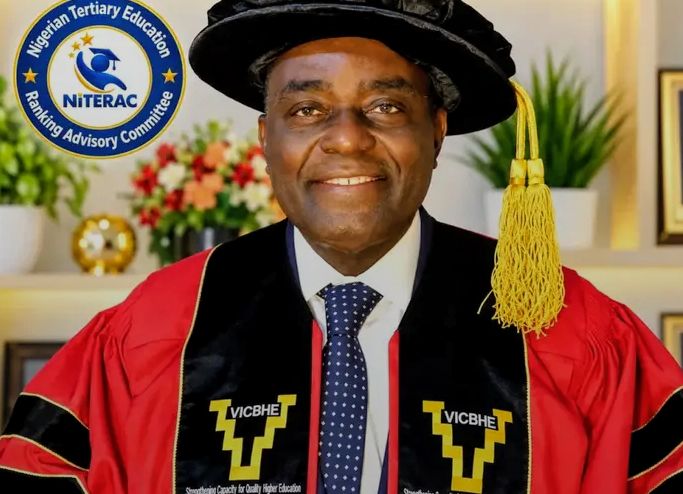
Nigerian universities must strengthen their global academic reputation, research output and international collaborations to improve the country’s performance in global university rankings, Chairman of the Nigerian Tertiary Education Ranking Advisory Committee (NiTERAC), Prof. Peter Okebukola, has said.
Okebukola, a former Executive Secretary of the National Universities Commission, made the submission while assessing Nigeria’s performance in the 2027 Times Higher Education (THE) World University Rankings released on Wednesday.
The 2027 ranking assessed 2,297 universities across 118 countries and territories, with Nigeria recording 29 ranked universities, an increase from 24 institutions in the 2026 edition.
Nigeria also recorded the highest number of ranked universities in sub-Saharan Africa, which had 69 institutions featured in the latest edition.
According to Okebukola, the increase in the number of Nigerian universities in the global ranking should be accompanied by greater attention to areas where the country continues to perform below its potential.
He identified global academic reputation as the biggest opportunity for improving Nigeria’s standing, noting that reputation-related measures account for 33 per cent of the overall ranking score.
Okebukola said Nigerian universities could improve their international academic standing by participating more actively in international conferences, undertaking joint research projects, attracting visiting professors and strengthening relationships with academics and alumni in the diaspora.
He also called for improved research funding and productivity, more accurate institutional data submission, increased doctoral output, deeper international collaboration and mobility, as well as stronger engagement with industry and greater patenting activity.
His assessment showed that Research Quality was Nigeria’s strongest ranking pillar, with a mean score of 43.3. Research Environment and Teaching recorded mean scores of 13.9 and 20.6 respectively.
Covenant, UI, UNILAG lead Nigerian universities
The latest THE ranking placed Covenant University, the University of Ibadan and the University of Lagos jointly in Nigeria’s highest position, within the 801–1000 global band.
Covenant University improved from the 1001–1200 band in the 2026 edition, while the University of Ibadan and the University of Lagos retained their positions.
Four other Nigerian universities — Ahmadu Bello University, Bayero University, Landmark University and the University of Ilorin — were placed in the 1001–1200 band.
The development brought the number of Nigerian universities in the global top 1,200 to seven.
Okebukola noted that federal universities continued to dominate Nigeria’s institutions in the upper bands, with five of the seven universities in the top 1,200 being federal institutions.
They are the University of Ibadan, University of Lagos, University of Ilorin, Ahmadu Bello University and Bayero University.
He said the number of federal universities in the top 1,200 increased from three in 2026 to five in 2027, while their share of Nigeria’s institutions in the band rose from 60 per cent to 71.4 per cent.
Overall, 19 federal universities, seven state universities and three private universities were ranked.
32 universities listed as Reporters
Beyond the 29 institutions that made the ranked table, 32 Nigerian universities were listed as “Reporters” after submitting data but failing to meet the requirements for inclusion in the ranking.
Sixteen of the Reporter institutions are private universities, 12 are state-owned and four are federal universities.
Okebukola said the latest results should be treated as a diagnostic tool for the Nigerian higher education system and provide empirical evidence for the work of NiTERAC.
The THE World University Rankings assess research-intensive universities based on their core missions, with indicators covering areas such as teaching, research, knowledge transfer and international outlook.
Nigeria to introduce national tertiary institutions ranking
Against the backdrop of the latest global ranking, Okebukola disclosed that NiTERAC had commenced work on a national ranking of Nigerian universities, polytechnics and colleges of education.
He said the exercise followed a directive from the Minister of Education, Dr Tunji Alausa, and is expected to be completed before December 15, 2026.
According to him, the national ranking is designed to stimulate healthy competition among tertiary institutions while helping Nigeria improve its performance in international rankings.
He said the national exercise would complement global rankings and enable institutions to identify gaps in areas such as research environment, doctoral output and academic reputation.

The Peoples Democratic Party governorship candidate in Akwa Ibom State, Engr. Emem Coffie, has urged Nigerian youths to prioritise education and skills acquisition rather than pursue quick success.
Coffie made the call while speaking with journalists on Wednesday, stressing that education remains an important foundation for professional competence, career development and national economic growth.
He expressed concern over the growing perception among some young people that education is a waste of time, warning that such a mindset could undermine youth development and limit the country’s ability to produce skilled professionals.
According to him, academic knowledge provides the foundation upon which young people can build specialised careers, particularly in technical and scientific fields.
The civil engineer said education had played a significant role in the development of advanced economies, noting that the success of some individuals without university degrees should not be used to discredit formal education.
He explained that technical professions require both theoretical knowledge and practical experience.
“The truth is that engineering is probably 90 percent from scientific theory and 10 percent empirical,” he said.
Coffie gave robotics engineering as an example, saying aspiring professionals would need basic knowledge of subjects such as physics, chemistry and mathematics before progressing into areas including mechanical, electrical and electronic engineering.
He said he had sponsored hundreds of students in Akwa Ibom State, Enugu and Abuja as part of his efforts to support young people and promote access to education.
The PDP candidate, however, stressed that university education should not be regarded as the only route to economic success.
He called for greater government support for vocational education, apprenticeships, entrepreneurship and other forms of skills development.
“I want to see a country where the youths are very specific in their achievements in where they are going,” he said.
“Everybody doesn’t need to go to university, that’s why we get everybody wrong, but whatever level, whatever trade you should apply, the government should support you, train you, and make you relevant.”
Industrialisation needed to create jobs
Coffie also called for greater investment in industrialisation in Akwa Ibom, arguing that education and skills development must be linked to available economic opportunities.
He identified oil and gas, refineries, gas processing facilities and steel plants as sectors capable of creating employment opportunities for young people in the state.
He proposed apprenticeship programmes through which youths could receive practical training for jobs in emerging industries, while also receiving financial support during their training.
“You begin to prepare them, empower them to program the way they will learn such skills, and within that period pay them, even if they are doing an apprenticeship scheme, pay them during that period so that you can encourage them to participate in such,” Coffie said.
He equally advocated increased support for small and medium-scale enterprises through affordable financing to enable traders and entrepreneurs to expand their businesses and create additional jobs.
The governorship candidate proposed the establishment of cottage industries across the 31 local government areas of Akwa Ibom to create employment, utilise local raw materials and increase household incomes.
He cited palm oil processing and the production of briquettes from palm kernel waste as examples of small-scale industrial activities that could be developed across the state.
Coffie seeks return to Akwa Ibom development master plan
Coffie also called for a return to what he described as Akwa Ibom’s original development master plan, urging successive administrations to sustain projects initiated by previous governments rather than abandon them.
He listed the deep seaport, science park, airport, road network and power plants among projects he said were associated with the state’s development plans.
The engineer, who has about 35 years of professional experience, argued that road construction alone could not solve poverty unless accompanied by industrial and commercial activities capable of providing sustainable employment and incomes.
He said his proposed development agenda, tagged “A New Drive Back to the Genesis,” would focus on human capital development, industrialisation, skills acquisition and support for small businesses.
“When I say Genesis, let’s go back to that master plan and start to execute it all over again,” he said.
“Road construction is interesting but road construction does not put food on the table of people.”
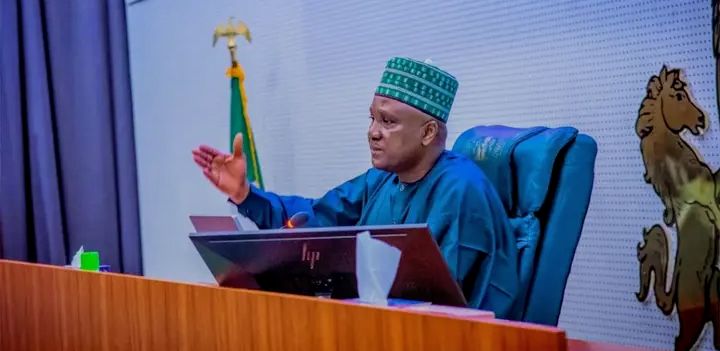
The Speaker of the House of Representatives, Tajudeen Abbas, has sponsored the registration of 120 inmates of the Nigerian Correctional Service, Federal Capital Territory Command, for the 2026 National Business and Technical Examinations Board and National Examinations Council examinations.
The initiative was part of activities marking Abbas’ 61st birthday and was carried out at the Medium Security Custodial Centre, Kuje, Abuja.
The development was disclosed in a statement issued on Wednesday by the FCT Command Public Relations Officer of the NCoS, DSC Ahmed Duza.
During the event, results were also symbolically presented to inmates who participated in the 2025 NABTEB and NECO examinations.
Represented by his Special Adviser on Humanitarian Affairs, David Igbe, Abbas said the initiative was aimed at ensuring that incarceration did not prevent inmates from accessing education and opportunities for personal development.
“Today we are registering another 120 inmates for this year’s NABTEB and NECO examinations.
“This is a continuation of our commitment to ensuring that incarceration does not become a barrier to education, personal development and the opportunity to build a better future,” he said.
The Speaker commended the management and staff of the NCoS for creating an environment that supports the education and reformation of inmates.
The Controller of Corrections, FCT Command, Christopher Jen, who represented the Controller-General of Corrections, Sylvester Nwakuche, described education as a key component of the reformation, rehabilitation and reintegration of inmates into society.
Jen thanked the Speaker for identifying with inmates as part of his birthday activities and appealed for greater employment opportunities for reformed inmates.
He said inmates who had undergone rehabilitation were prepared to contribute positively to national development if given the necessary opportunities.
The controller also reaffirmed the command’s commitment to expanding access to education within custodial centres, while appreciating the Speaker and other partners supporting educational programmes for inmates.
Similarly, the representative of the Deputy Controller-General in charge of Inmates Training and Productivity, SC Igomu Augustine, commended the initiative and the continued support for education in correctional facilities.
Igomu said Abbas had taken the lead in sponsoring the registration of inmates for NECO examinations across custodial centres.
The Education Desk Officer, DSC Adikwu Owoicho, disclosed that more than 2,000 inmates had been registered for various educational programmes within the FCT Command.
He added that inmates who sat for the 2025 NABTEB and NECO examinations recorded encouraging performances.
Some beneficiary inmates also shared their experiences during the event, which featured birthday tributes, special prayers and the cutting of Abbas’ 61st birthday cake.
-

 Security2 months ago
NDLEA Declares Alleged Drug Kingpin, Three Associates Wanted, Freezes ₦9.8bn Linked to Syndicate
-

 Business/Finance2 months ago
How to Apply for Tunde Onakoya’s ₦250 Million Scholarship Programme and Free Laptop Offer
-
 National Affairs2 months ago
ICPC Uncovers 908 Suspected Ghost Workers Across 50 Federal MDAs, Recovers ₦942 Million
-
 Politics2 months ago
Atiku Challenges Tinubu to Reveal Details of ₦15.13bn SUV Procurement in 2026 Budget
-

 Judiciary | Public Safety2 months ago
INEC Tells Court Voter Information Is Not Confidential in Emeka Ike’s ₦10bn Lawsuit
-

 Judiciary | Public Safety2 months ago
Court to Rule Friday on NDLEA’s Bid to Destroy ₦480bn Meth Lab in Ogun
-
 Security2 months ago
Family Paid ₦50 Million Ransom to Secure Release of Abducted Kebbi Judge
-

 News2 months ago
2026 Budget: FG Earmarks ₦962.83bn for SUVs, Empowerment Projects Amid Debt Concerns