
Education
NDA 2027 Admission: How to Apply, ₦7,100 Form Fee, JAMB Cut-Off Mark and Requirements


The Nigerian Defence Academy (NDA) has opened applications for admission into its 79th Regular Course for the 2027/2028 academic session, inviting eligible male and female Nigerians to apply.
The academy announced that the application portal opened on Monday, November 23, 2026, and will close on April 30, 2027.
Interested candidates are required to pay an application fee of ₦7,100, register for the 2027 Unified Tertiary Matriculation Examination (UTME) conducted by the Joint Admissions and Matriculation Board (JAMB) and select the NDA as their first-choice institution.
Applicants must also meet the academy’s academic requirements and participate in its screening exercises to qualify for admission.
Here is a breakdown of the application process, fees, eligibility requirements, UTME scores and other important information prospective candidates need to know.
When Does the NDA 2027 Admission Application Close?
The application portal for admission into the NDA’s 79th Regular Course opened on Monday, November 23, 2026, and will close on April 30, 2027.
According to the academy, applications are open to both male and female Nigerians who meet the stipulated admission requirements.
The academy stated:
“Online application for admission into the 79 Regular Course (RC) of the Nigerian Defence Academy (NDA), Kaduna will be available from Monday 23 November 2026 to 30 April 2027.”
Prospective applicants are advised to complete their applications before the deadline to avoid missing the admission opportunity.
How Much Is the NDA 2027 Application Form?
The Nigerian Defence Academy application form costs ₦7,100.
Candidates are required to visit the official admission portal at rc.nda.edu.ng, select the ‘Purchase Access Code’ option and provide the necessary information before making payment through the Remita payment platform.
The academy explained that applicants must pay the stipulated ₦7,100 application fee.
It also warned that only payments made using Remita Retrieval Reference (RRR) codes generated through the official application portal would be accepted.
Candidates are therefore advised to avoid making payments through unofficial channels.
How to Apply for NDA 2027 Admission
Interested candidates are required to complete their applications online through the academy’s official admission portal.
The application process involves the following steps:
Visit the official NDA admission portal at https://rc.nda.edu.ng.
Select the ‘Purchase Access Code’ option.
Fill in the required personal details.
Generate the Remita payment reference through the portal.
Pay the application fee of ₦7,100.
Return to the portal and complete the online application.
Upload the required documents, including scanned copies of SSCE, NECO or equivalent examination results and National Identification Number (NIN) details.
Review the information provided and submit the application.
Download and print the acknowledgement form after successful submission.
The academy advised candidates to download and carefully read the application instructions available on its website before proceeding.
It also emphasised that applicants’ NIN details must correspond with the information on their other credentials.
Is JAMB Required for NDA Admission?
Yes. Candidates seeking admission into the Nigerian Defence Academy’s 79th Regular Course must register for the 2027 UTME conducted by JAMB.
Applicants are required to select the Nigerian Defence Academy as their first-choice institution when registering for the examination.
The academy stated that candidates must also sit for the JAMB UTME as part of the admission process.
Failure to meet this requirement could affect an applicant’s eligibility for the admission screening exercise.
What Is the Required JAMB Cut-Off Mark for NDA 2027?
The NDA has stipulated different minimum UTME scores for candidates seeking admission into its various academic programmes.
The requirements are:
Engineering programmes: Minimum UTME score of 210.
Other faculties: Minimum UTME score of 180.
Only candidates who meet the required UTME scores and other admission conditions will be eligible to print their screening test admission cards and participate in the academy’s screening exercise.
Applicants are also advised to consult the NDA website and admission portal for the specific UTME subject combinations and academic requirements for their preferred courses.
What Are the Academic Requirements for NDA 2027 Admission?
Candidates seeking admission into the 79th Regular Course must possess the required Senior Secondary School Certificate Examination (SSCE), National Examinations Council (NECO) or equivalent qualifications.
The academy stated that applicants’ examination results must not be more than five years old at the time of admission.
Candidates must also satisfy the specific subject and grade requirements for their chosen undergraduate programmes.
In addition, the academy identified knowledge of French or Arabic as an added advantage during the application process.
Prospective applicants are encouraged to check the specific requirements for their preferred courses before submitting their applications.
When Will the NDA 2027 Screening Test Hold?
The Nigerian Defence Academy has scheduled its first-phase screening test for Saturday, June 8, 2027.
The exercise will serve as the post-UTME screening stage for candidates who meet the admission requirements.
According to the academy, applicants who qualify for the screening exercise must present the following documents:
Screening test admission card.
JAMB result slip.
Two postcard-sized photographs measuring 3.5 by five inches.
The photographs must show candidates from the chest upwards.
Their names, examination numbers, states, examination centres, courses of study and signatures must also be written on the back of the photographs.
Candidates are advised to ensure that they have all the required documents before appearing for the screening exercise.
What Happens After the First NDA Screening Test?
Candidates who successfully pass the first phase of the screening exercise will be invited to participate in the Armed Forces Selection Board (AFSB) exercise.
The AFSB constitutes the second phase of the NDA admission screening process.
The academy explained that only candidates who successfully pass the initial screening test will be invited to participate in the selection board exercise.
The final list of admitted candidates will be published after the completion of the selection process.
How Long Is NDA Military and Academic Training?
Candidates admitted into the NDA’s 79th Regular Course will undergo five years of combined military and academic training as officer cadets.
The programme is designed to equip cadets with the academic knowledge, military discipline and leadership skills required for service in the Nigerian Armed Forces.
Upon successful completion of the programme, graduates will receive honours degrees in their respective academic disciplines.
These include:
Bachelor of Science (BSc).
Bachelor of Engineering (BEng).
Bachelor of Arts (BA).
In addition to their academic qualifications, successful graduates will receive a Presidential Commission into the Armed Forces of Nigeria.
Who Pays for NDA Training?
The Federal Government of Nigeria will bear the cost of administration and logistics for all Regular Course cadets throughout their training at the academy.
According to the NDA, all admitted Regular Course cadets will undergo their military and academic training at the institution, with the Federal Government responsible for their administration and logistics expenses.
The arrangement means that successful candidates will not be required to bear the full cost of their military training and associated logistics.
However, applicants should carefully review the official admission guidelines for any other applicable requirements.
Where Can Applicants Get More Information About NDA Admission?
Candidates seeking further information about the 79th Regular Course admission, available academic programmes, eligibility requirements and screening arrangements can contact the academy through its official platforms.
The contact details provided by the NDA include:
Official website: www.nda.edu.ng
Application portal: https://rc.nda.edu.ng
Enquiries and support: [email protected]
The academy also disclosed that a compendium of past questions and answers was available for interested applicants.
Candidates can purchase the study material from the Registry of the Nigerian Defence Academy in Kaduna for a fee.
Prospective applicants are encouraged to obtain relevant information directly from the academy’s official platforms and prepare adequately for the admission screening exercises.













The National Association of Nigerian Students (NANS) has called on President Bola Tinubu to caution vice-chancellors and rectors of federal tertiary institutions against arbitrary increases in tuition fees, warning that the practice could undermine the objectives of the Nigerian Education Loan Fund (NELFUND).
The President of NANS, Akinteye Afeez, made the appeal in an open letter to Tinubu dated November 23, 2026, expressing concern that some heads of tertiary institutions were exploiting the existence of the student loan scheme to impose higher fees on students.
Afeez acknowledged the impact of NELFUND in expanding access to higher education and helping students remain in school, describing the initiative as a landmark achievement of the Tinubu administration.
He said he was writing not only as the president of NANS but also as a representative of more than 40.1 million Nigerian students across the country and in the diaspora.
According to him, the introduction of NELFUND has provided relief to students who previously struggled to finance their education, with some unable to gain admission or forced to abandon their studies because of financial difficulties.
He noted that the scheme had helped beneficiaries settle tuition fees and access monthly upkeep allowances, making it easier for them to meet other educational and personal needs.
The NANS president also described himself as a strong advocate of the scheme, stressing that he had consistently supported its sustainability because of its positive impact on students.
However, he expressed concern that some vice-chancellors and rectors were increasing tuition fees under the assumption that NELFUND would cover whatever amount institutions demanded from students.
Afeez said he had engaged several heads of federal institutions over what he described as unjustified fee increases, adding that many of the institutions had failed to provide convincing reasons for the adjustments.
He warned that the continued increases were placing additional financial pressure on students and could eventually defeat the purpose of the federal government’s intervention.
“Many of these increments stem from the belief that the NELFUND scheme will cater for whatever amount the students are mandated to pay,” he said.
He stressed that the student loan scheme was established to make education more accessible and affordable, not to encourage institutions to increase their charges.
According to him, NELFUND should not be regarded as a replacement for adequate government funding of education or used as an excuse to transfer additional financial responsibilities to students.
“The introduction of the NELFUND scheme is not a substitute for education funding. The existence of the Nigerian Education Loan Fund (NELFUND) is not a justification for arbitrary increases in tuition fees,” Afeez stated.
He added that allowing the trend to continue would undermine the achievements of the loan scheme and place the President’s education legacy at risk.
The NANS president, therefore, appealed to Tinubu to intervene by calling vice-chancellors and rectors of federal institutions to order and warning them against arbitrary increases in tuition fees.
He maintained that protecting students from excessive educational costs was necessary to sustain the benefits of NELFUND and ensure that more Nigerians could access higher education without unbearable financial pressure.
Afeez described the scheme as an important part of the administration’s education legacy, urging the President to take decisive action to prevent institutional fee increases from frustrating its objectives.
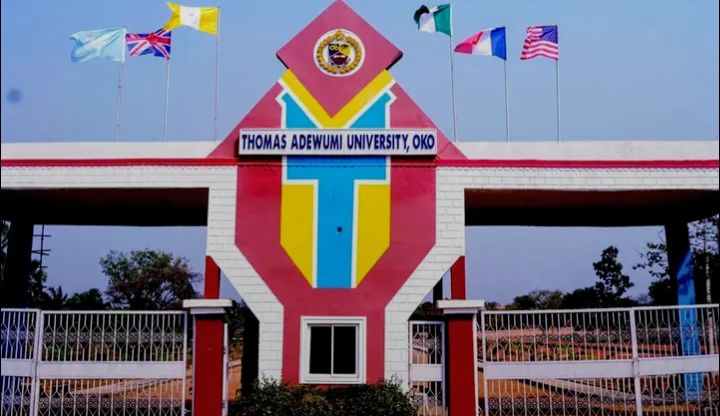
Thomas Adewumi University, Oko-Irese, Kwara State, is set to graduate 153 students at its third convocation ceremony, with nine undergraduates earning First Class honours.
The graduating students comprise 111 undergraduate students, 24 postgraduate students and 18 vocational certificate holders.
The Vice-Chancellor, Prof. Francisca Oladipo, disclosed this on Friday during a press briefing ahead of the convocation ceremony scheduled for Thursday, November 26, 2026, at the university campus.
According to her, the nine First Class graduates emerged from seven academic programmes: Computer Science, Microbiology, Accounting, Economics, Mass Communication, Medical Laboratory Science, and Criminology and Security Studies.
Oladipo also highlighted the strong performance of female students, revealing that women account for 70 per cent of the undergraduate graduating class.
“Seventy per cent of our graduands in the undergraduate category are women, twelve of the thirteen Distinctions in our health sciences programmes were earned by women, and women make up 14 of our 24 postgraduate graduates,” she said.
The ceremony will also mark the graduation of the university’s pioneer postgraduate class, comprising 18 Master of Science graduates, five Master of Business Administration holders and one Postgraduate Diploma recipient.
The vice-chancellor said the institution had recorded significant growth since admitting its first 60 students in 2021.
She explained that the number of undergraduate graduands had increased from 26 in 2024 to 63 in 2025 and 111 in 2026.
“Our academic programmes have grown from 13 in 2022 to 89, comprising 44 undergraduate and 45 postgraduate programmes, while our faculties have increased from three to 11,” she said.
Despite the expansion, Oladipo maintained that the university had sustained its academic standards, noting that all programmes presented for accreditation had received full accreditation.
She also disclosed that every cohort in the latest round of professional examinations recorded a 100 per cent pass rate.
The examinations were conducted by the Nursing and Midwifery Council of Nigeria, the Medical Rehabilitation Therapists Board and the Medical Laboratory Science Council of Nigeria.
On graduate employability, the vice-chancellor said all 111 undergraduate graduands had obtained the university’s Diploma in Data Science and foreign language certificates.
She added that the students collectively earned 916 industry-recognised microcredentials through the institution’s x-Certification Model.
According to her, the university makes the certifications compulsory for undergraduate students before graduation as part of efforts to equip them with practical skills and prepare them for opportunities in the global labour market.
Oladipo also highlighted some of the institution’s innovation achievements, including Team MedPatch, which developed an Internet of Things-enabled smart microneedle patch designed for the early detection of diseases such as malaria and diabetes.
She said the team finished second among 102 teams from 24 universities at the 2025 AFRETEC-UNILAG Innovation-in-Health Challenge, winning a N1.5m grant.
The team subsequently reached the grand finale of the 2026 NBTI NextGen Innovation Challenge in London.
The vice-chancellor further disclosed that two Physiotherapy students of the institution had emerged as president and general secretary of the Nigeria Association of Physiotherapy Students.
She described the achievement as significant, noting that Thomas Adewumi University became the first private university to produce the association’s president.
On the expansion of medical education, Oladipo said the university had secured approval for its MBBS and Radiography programmes.
She added that the institution had entered into a 50-year partnership with the Kwara State Government to use the General Hospital, Omu-Aran, as its teaching hospital.
The vice-chancellor also revealed that the university’s national ranking improved from 252nd in January 2022 to 47th in July 2026, according to Webometrics.
The convocation lecture will be delivered by the Managing Director and Chief Executive Officer of Suntrail Group Limited, Prince Lekan Adewoye, while Kwara State Governor, AbdulRahman AbdulRazaq, is expected to attend as the special guest of honour.
The convocation activities, which commenced on November 20, will climax with the conferment of degrees on November 26, while the professional induction of Physiotherapy graduates is scheduled for November 27.
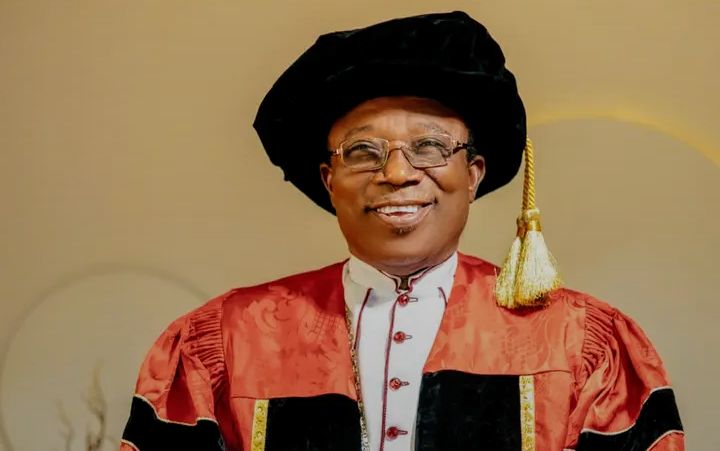
Wesley University, Ondo, Ondo State, has graduated a total of 742 students, with 79 emerging with first-class honours at its 15th convocation ceremony.
The Vice-Chancellor of the institution, Professor Samuel Obenka, disclosed this on Friday while briefing journalists on activities lined up for the convocation ceremony scheduled for Saturday.
Obenka said 434 of the graduating students would receive undergraduate degrees, while 308 would be awarded postgraduate degrees.
Giving a breakdown of the undergraduate results, the vice-chancellor said 79 students obtained first-class honours, 283 graduated with second-class upper division, 71 earned second-class lower division, while one student graduated with a third-class degree.
“A total of 434 undergraduate degree entries have been recorded, comprising 79 first class, 283 second class upper, 71 second class lower and one third class,” he said.
The vice-chancellor identified academic expansion, particularly in professional and highly sought-after disciplines, as one of the major priorities of his administration.
He described the accreditation of new programmes within the College of Medical and Allied Health Sciences and the Faculty of Engineering as significant milestones in the institution’s development.
Obenka added that the university was also strengthening existing academic programmes across its faculties of Education, Arts, Sciences and Agriculture to ensure that its courses remained relevant to contemporary societal needs, technological advancements and national development.
According to him, the convocation ceremony would also feature the inauguration of several infrastructural projects designed to improve teaching, learning, research and administrative efficiency.
The projects include the Vice-Chancellor’s official residence, Engineering New Complex, permanent site/prelate’s gate, Senior Pastor Dr Paul Enenche Medical and Allied Health Sciences Complex, Joseph Teebo CBT/ICT Complex and Faculty of Pharmacy building.
Others are the anatomy building extension and the Wesley University radio studio, among other facilities.
The vice-chancellor said the projects reflected the institution’s commitment to providing a conducive academic environment and strengthening its capacity to deliver quality education.
He further identified the recruitment of qualified academic personnel, expansion of research activities, improvement of infrastructure and establishment of strategic partnerships as key priorities for the university’s future.
Obenka reiterated the institution’s determination to build a university that is academically sound, technologically driven, research-oriented and professionally relevant, while maintaining a strong commitment to character development.
The 15th convocation ceremony is expected to mark another milestone in the institution’s efforts to expand its academic programmes, improve infrastructure and strengthen its contribution to Nigeria’s educational development.
-

 Security4 months ago
NDLEA Declares Alleged Drug Kingpin, Three Associates Wanted, Freezes ₦9.8bn Linked to Syndicate
-
 National Affairs4 months ago
ICPC Uncovers 908 Suspected Ghost Workers Across 50 Federal MDAs, Recovers ₦942 Million
-

 Judiciary | Public Safety4 months ago
INEC Tells Court Voter Information Is Not Confidential in Emeka Ike’s ₦10bn Lawsuit
-

 Business/Finance4 months ago
How to Apply for Tunde Onakoya’s ₦250 Million Scholarship Programme and Free Laptop Offer
-

 Politics4 months ago
Atiku Challenges Tinubu to Reveal Details of ₦15.13bn SUV Procurement in 2026 Budget
-

 Judiciary | Public Safety4 months ago
Court to Rule Friday on NDLEA’s Bid to Destroy ₦480bn Meth Lab in Ogun
-

 News4 months ago
2026 Budget: FG Earmarks ₦962.83bn for SUVs, Empowerment Projects Amid Debt Concerns
-

 Security4 months ago
Family Paid ₦50 Million Ransom to Secure Release of Abducted Kebbi Judge