
News
New Kano Lawmaker Vows Not to Be ‘Bench Warmer’, Promises Effective Representation

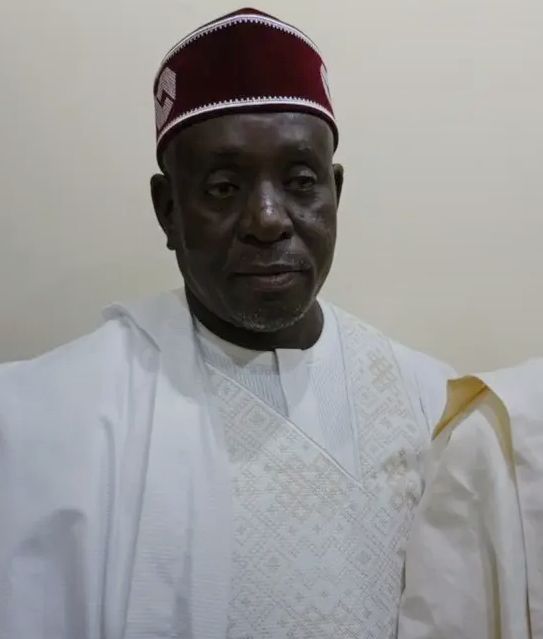
Yusuf Datti-Hussaini, the newly sworn-in member representing Dawakin-Kudu Constituency in the Kano State House of Assembly, has pledged to provide effective and transparent representation to his constituents.
Datti-Hussaini, who was elected on the platform of the All Progressives Congress, made the commitment on Tuesday while speaking with newsmen shortly after taking his oath of office.
The new lawmaker said he would not be a “bench warmer” in the assembly, promising to actively participate in legislative proceedings and work towards improving the welfare and livelihoods of residents of his constituency.
He said, “I will not be here to sleep or abandon my seat. I will make sure I fully represent the people of my area in order to uplift their livelihoods.”
Datti-Hussaini also promised to operate an open-door administration and remain accountable to the people he represents.
He said he would build on the achievements of his predecessor by following up on motions already raised on the floor of the assembly and sponsoring new ones that could attract meaningful development projects to Dawakin-Kudu.
The lawmaker urged his constituents to remain actively involved in the activities of the assembly, saying they should monitor proceedings and demand accountability on programmes and projects meant for the constituency.
“I urge them to follow all programmes and sittings of the House to ensure that all that is being allocated to them, I bring to them, and whatever is missing, I urge them to ask me.
“I promise them that I am not here to cheat them, but I will work to the best of my ability for the betterment of my society and the state in general,” he said.
The News Agency of Nigeria reports that Datti-Hussaini emerged as the representative for Dawakin-Kudu Constituency following the vacancy created after the former occupant of the seat moved to the House of Representatives.
His swearing-in adds a new member to the Kano State legislature, with the lawmaker pledging to focus on constituency development and effective legislative representation.
Kano Assembly reappoints former Speaker Gambo Sallau
In a related development, the Kano State House of Assembly confirmed the reappointment of Gambo Sallau as Chairman of the Kano State Assembly Service Commission.
Sallau, a former Speaker of the Kano State House of Assembly, was returned to head the commission.
His reappointment was confirmed by the lawmakers during the assembly’s proceedings on Tuesday.
The Assembly Service Commission is responsible for administrative matters concerning the legislature and the welfare and career development of its personnel.







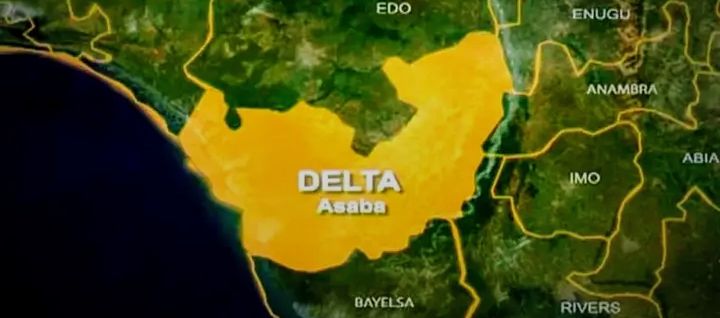
The Delta State Government has deployed three magnetic resonance imaging (MRI) machines, three CT scanners and 25 advanced 4D ultrasound machines to public hospitals across the state as part of efforts to improve access to specialised healthcare.
The Chief Press Secretary to Governor Sheriff Oborevwori, Festus Ahon, disclosed this on Tuesday during an interview on Independent Radio FM 92.3 in Benin.
Ahon said the three MRI machines, which utilise 1.5-Tesla helium-free technology, had been installed at the Asaba Specialist Hospital, Central Hospital, Warri, and the Delta State University Teaching Hospital, Oghara.
According to him, the equipment was acquired to strengthen diagnostic services and reduce the need for residents to travel outside Delta State or abroad to access specialised medical examinations.
He said the government had also acquired three CT scanners, eight dialysis machines and other radiology and laboratory equipment for major public hospitals in the state.
Ahon explained that the 25 4D ultrasound machines had been distributed to general hospitals across the state’s 25 local government areas.
He said the distribution was aimed at bringing modern diagnostic services closer to residents, particularly people who may not have the financial capacity to travel outside the state for medical diagnosis and treatment.
The governor’s aide also disclosed that the state government had employed more than 700 healthcare workers to address manpower shortages across public health facilities.
He said Governor Oborevwori had directed that doctors and nurses who leave the state health service should be replaced immediately to ensure that vacancies do not affect healthcare delivery.
“Because of his commitment to the health sector, the governor recently employed over 700 health workers.
Apart from that, he equally gave a standing order that if, for any reason, any doctor or nurse ‘japa’, he or she should be replaced immediately. There is no room for a vacuum,” Ahon said.
Delta introduces incentives for medical workers
To improve the retention of healthcare professionals, Ahon said the state government had introduced monthly tax-free allowances for medical personnel.
According to him, doctors receive N200,000 monthly, while health officers receive N100,000 as tax-free allowances.
He said the measures were part of efforts to strengthen the state’s healthcare workforce and discourage shortages caused by the movement of medical professionals out of the state.
The government, he added, had also expanded the Delta State Contributory Health Insurance Scheme, with more than three million people enrolled.
Ahon said children aged zero to five years receive free healthcare under the scheme, while 10,000 widows enrolled in the programme receive monthly stipends of N15,000.
Government expands health training institutions
Beyond infrastructure and manpower, Ahon said the state government had established a College of Health Technology at Ovrode in Isoko North Local Government Area to train middle-level health workers.
He also disclosed that a College of Medicine had been established at Southern Delta University, Ozoro, as part of efforts to develop the state’s medical workforce.
The initiatives, he said, were consistent with the administration’s MORE Agenda, which places emphasis on improving healthcare infrastructure, expanding access to medical services and increasing the availability of trained health professionals across Delta State.
The government expects the combination of upgraded diagnostic equipment, increased manpower, healthcare financing and medical training institutions to strengthen public healthcare delivery and make specialised medical services more accessible to residents.
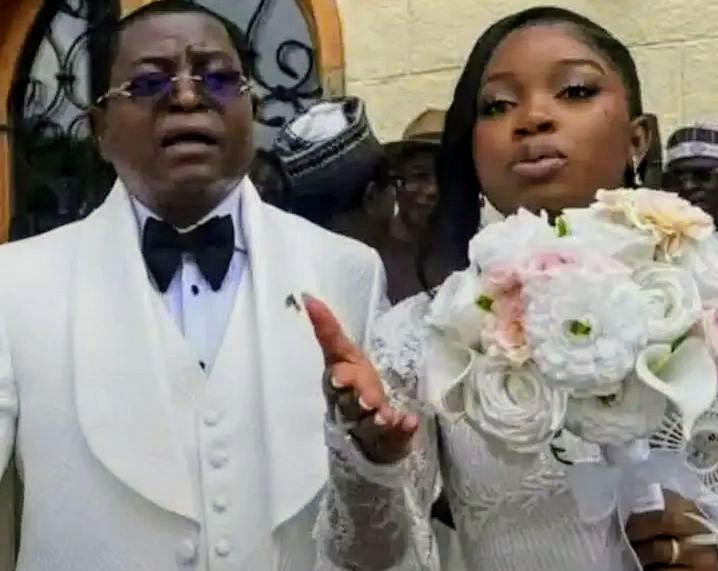
A former Kogi East Senator, Emmanuel Dangana Ocheja, has married his new wife in a ceremony held in Abuja.
The white wedding took place on September 19, 2026, with family members, friends and other guests joining the couple to celebrate the occasion.
A video from the wedding surfaced online on Monday, showing the 70-year-old former senator dancing with his bride during the reception.
In the footage shared by film journalist and Best of Nollywood Awards Chief Executive Officer, Seun Oloketuyi, Ocheja and his wife were seen on the dance floor as guests celebrated with them.
The bride also joined Ocheja as the couple danced together during the ceremony, drawing reactions from social media users who commented on the former lawmaker’s new marriage.
Ocheja, a lawyer and politician from Idah in Kogi State, represented Kogi East Senatorial District in the National Assembly from 2011 to 2015 on the platform of the Peoples Democratic Party.
He was a member of the 7th National Assembly and served on several committees, including Defence and Army, Appropriation, Gas, Judiciary, Human Rights and Legal Matters.
Born on April 3, 1956, Ocheja studied Law at Ahmadu Bello University, Zaria, and was called to the Nigerian Bar in 1982.
He later joined the All Progressives Congress and remained active in Kogi State politics.
The wedding has continued to generate reactions online, with social media users sharing comments about the former senator’s marriage and the ceremony.
The video has also attracted attention because of Ocheja’s long career in Nigerian politics and public service

Violence has remained a persistent feature of Nigeria’s national conversation. But perhaps more disturbing than the frequency of killings is the growing danger that Nigerians may become accustomed to them.
The latest killings in Plateau State are another grim reminder of how dangerously familiar violence has become in parts of the country.
At least nine people were reportedly killed in separate attacks across Barkin Ladi, Riyom and neighbouring communities between Saturday night and Sunday morning, September 19 and 20, 2026. Among the victims was a pastor who was reportedly on his way to church.
The Northern Christian Association condemned the attacks and warned against allowing the deaths of innocent citizens to become routine.
Its chairman, Joseph Hayab, said every life lost should command the attention of government and society, regardless of ethnic, religious or political differences.
The latest attacks reportedly included the killing of five people travelling towards Gana-Ropp in Barkin Ladi when their vehicle came under attack. Two other people, including a pastor, were reportedly killed while on their way to church at Dorowa Babuje. Separate killings were also reported in Baten Wereng and Ratyidi.
Hayab’s warning deserves wider reflection.
“Is that how lives have become so cheap that they can now be taken at will?” he asked, urging Nigerians not to become accustomed to killings.
That question goes beyond Plateau State. It speaks to a broader national crisis in which the death of citizens can quickly become another statistic, another headline and, eventually, another forgotten story.
Only weeks before the latest Plateau attacks, at least 25 people were reported killed in an overnight attack on Bin-Per village in the state.
Reuters reported that a local councillor said 23 people were killed during the attack, with another victim later dying in hospital.
Yet, barely weeks later, public attention has moved on to another casualty figure.
That may be one of the most disturbing consequences of prolonged insecurity.
When death becomes a statistic
Repeated exposure to violence can change the way society responds to tragedy.
When killings occur frequently enough, individual victims risk disappearing behind numbers.
Nine killed in Plateau.
Twenty-five killed in another attack.
Eleven killed along a road in Taraba.
Thirty-seven detainees dead in Niger State.
Each number represents people who had families, friends, responsibilities and plans.
Yet the speed with which one tragedy replaces another in the news cycle can make the victims appear to exist only as figures.
The deaths of 37 suspected illegal miners in the custody of the Nigeria Security and Civil Defence Corps in Niger State provide another troubling example.
The detainees were arrested during operations around M.I. Wushishi and Lukoto on September 15 and 16 before 37 were found dead in custody on September 17.
The NSCDC initially referred to a suspected disease outbreak, while authorities subsequently said the exact cause of death remained subject to medical and laboratory investigations.
The incident has since prompted investigations, with the NSCDC suspending its Niger State commandant and other officers linked to the deaths.
Whatever the eventual findings establish, the incident reinforces a fundamental principle: people in state custody do not cease to have a right to life.
The same principle applies to travellers killed on roads, farmers attacked in their communities, worshippers ambushed on their way to church and residents forced from their homes.
A long history of violence
Nigeria’s insecurity did not begin with the current administration.
An analysis published by HumAngle in 2023, using data from the Nigeria Security Tracker and the Armed Conflict Location & Event Data Project, found that more than 63,000 fatalities were recorded between June 2015 and May 2023, an average of about 22 deaths per day.
The analysis included deaths involving civilians and security personnel and covered violence by both state and non-state actors.
The figures demonstrate how deeply insecurity became embedded in the country during the eight years of Muhammadu Buhari’s administration.
The problem has continued under President Bola Tinubu.
Amnesty International reported in May 2025 that at least 10,217 people had been killed in attacks by armed groups across seven states during the first two years of Tinubu’s administration. The organisation recorded 6,896 deaths in Benue and 2,630 in Plateau among the states covered by its investigation.
The Nigerian government disputed aspects of Amnesty International’s figures and said some of the claims were inconsistent with data in its possession.
These differing assessments are important because casualty figures should be treated with care. But the disagreement over numbers should not obscure the central reality:
thousands of Nigerians have continued to lose their lives to violence.
Democracy must value life
Nigeria’s history of military rule and prolonged communal, ethnic and religious conflicts has left a painful legacy.
But democracy should represent more than the periodic transfer of political power.
It should also mean a stronger culture of accountability, protection of citizens and respect for human life.
Leadership matters.
When citizens are killed, presidents, governors and heads of government agencies should respond with more than carefully worded statements of condemnation.
Condemnation is necessary, but it cannot be the final response.
Families need justice. Communities need protection.
Victims deserve to be remembered as human beings rather than casualty figures.
Security agencies, too, must recognise the enormous responsibility that comes with the authority entrusted to them.
Protecting life and property is not simply a constitutional or institutional obligation; it is the foundation of public trust.
Compassion must not be selective
There is also a responsibility on citizens.
Nigeria’s political, ethnic and religious divisions have sometimes affected how people respond to violence.
A death can attract sympathy from one section of society and indifference from another simply because of the perceived identity or political affiliation of the victim.
That is dangerous.
A life should not become more valuable because the victim is the relative, supporter or associate of a politician we admire.
Neither should a death become less important because the victim belongs to a community, ethnic group, religious group or political camp with which we disagree.
Social media has made this problem more visible. Reports of killings are sometimes questioned, dismissed or politicised before the facts are properly established.
The result is a public conversation in which even tragedy can become another battlefield.
That should concern every Nigerian.
Nigeria must not normalise death
The challenge before Nigeria is therefore not only how to stop individual attacks.
It is also how to prevent society from losing its capacity to be outraged by the needless loss of life.
The nine people killed in Plateau were not statistics. The 37 people who died in custody in Niger were not merely a number.
The victims of violence along the Rafin Kada–Wukari road in Taraba were not simply another entry in a security report.
The road attacks there had reportedly claimed 11 lives by August.
Every figure represents a human story.
Nigeria cannot afford to become a country where death is ordinary and compassion is selective.
Every life matters, whether the victim is a farmer, trader, traveller, worshipper, student, security officer, detainee or public servant.
The country must therefore resist the temptation to become numb.
A society that stops being shocked by the unnecessary killing of its citizens risks losing something deeper than security: it risks losing its conscience.
And no nation should become so familiar with violence that the death of its people no longer shocks it.
-
 Security2 months ago
NDLEA Declares Alleged Drug Kingpin, Three Associates Wanted, Freezes ₦9.8bn Linked to Syndicate
-

 Business/Finance2 months ago
How to Apply for Tunde Onakoya’s ₦250 Million Scholarship Programme and Free Laptop Offer
-
 National Affairs2 months ago
ICPC Uncovers 908 Suspected Ghost Workers Across 50 Federal MDAs, Recovers ₦942 Million
-
 Politics2 months ago
Atiku Challenges Tinubu to Reveal Details of ₦15.13bn SUV Procurement in 2026 Budget
-

 Judiciary | Public Safety2 months ago
INEC Tells Court Voter Information Is Not Confidential in Emeka Ike’s ₦10bn Lawsuit
-
 Judiciary | Public Safety2 months ago
Court to Rule Friday on NDLEA’s Bid to Destroy ₦480bn Meth Lab in Ogun
-
 Security2 months ago
Family Paid ₦50 Million Ransom to Secure Release of Abducted Kebbi Judge
-
 News2 months ago
2026 Budget: FG Earmarks ₦962.83bn for SUVs, Empowerment Projects Amid Debt Concerns