
National Affairs
Nigeria Cannot Afford Return of Petrol Subsidy, Awogbenle Warns


Nigerian author and communication strategist, Seun Awogbenle, has warned that restoring petrol subsidy would undermine the gains of ongoing economic reforms and worsen the country’s fiscal challenges.
Awogbenle made the position known on Thursday while delivering a lecture at the National Policy Dialogue organised by the Institute of Legislative Studies, University of Ilorin.
In his presentation titled, “Interrogating the Political-Economic Substance of the Debate on Fuel Subsidy Removal versus Restoration:
Which Should Interest Nigerians?”, he described the removal of petrol subsidy in 2023 as a necessary step towards addressing longstanding weaknesses in Nigeria’s economic structure.
He identified mounting public debt, low government revenue and the financial burden of multiple subsidies as major challenges that made the previous arrangement unsustainable.
According to him, Nigeria had been borrowing to maintain artificially low petrol prices before the subsidy was removed, while also pledging crude oil yet to be produced to creditors.
He said the country was already facing serious fiscal difficulties in May 2023, with state governments struggling to meet salary obligations and fuel subsidy consuming a significant portion of public revenue.
“In May 2023, there were essentially three problems: a fragile economy with mounting debts, low revenue, and multiple subsidies that created a big hole in our public finances.
“States were struggling to pay salaries, and fuel subsidies were taking up all our earnings,” he said.
Awogbenle likened the continued dependence on fuel subsidy to borrowing from the future, arguing that the policy had become financially unsustainable and threatened the country’s economic stability.
He noted that subsidy removal, alongside foreign exchange liberalisation, banking sector recapitalisation and the clearance of foreign exchange backlogs, formed part of the major economic policy changes introduced by President Bola Tinubu’s administration.
However, he acknowledged that the reforms had imposed significant hardship on Nigerians, particularly through rising food prices and transportation costs.
“The trouble, however, is that the reforms, while necessary, have created unintended consequences. Especially soaring food prices and a rise in the cost of transportation,” he said.
Despite the challenges, the author maintained that the appropriate response should be to address the negative effects of the reforms rather than reverse the subsidy removal policy.
He described calls for subsidy restoration as dangerous, warning that such a move could reverse the progress made under the current economic reform programme.
“But look, to bring back fuel subsidy is to take Nigerians back to the biblical Egypt. Even as mere political rhetoric, it is a dangerous proposition that sets Nigeria back by a mile,” he stated.
The communication strategist also questioned proposals for a producer-based subsidy, including an option attributed to former Vice-President Atiku Abubakar, which would involve supplying crude oil to local refiners at discounted rates.
He argued that Nigeria’s existing crude oil commitments to creditors could limit its ability to meet the demands of domestic refiners under such an arrangement.
He also questioned how the government would finance the difference between market prices and the proposed discounted rates, as well as whether state and local governments would support the financial implications.
Awogbenle further warned that restoring any form of fuel subsidy could undermine foreign exchange reforms, arguing that the two policies were closely connected.
“Fuel subsidies follow the foreign exchange; to return fuel subsidies would be to also return the country to the days of pegging foreign exchange, and that would in effect undo all the gains we have made under current reforms,” he said.
Instead, he urged the Federal Government to redirect part of the fiscal resources made available by the reforms towards interventions that would reduce the burden on vulnerable Nigerians.
He identified food affordability and mass transportation as critical areas requiring urgent government attention, calling for policies that would improve food supply and reduce the cost of movement across the country.
“I believe that if there was any debate at all, it must be on how to manage the attendant fallout and channel part of the fiscal headroom into sectors that provide some cushioning and direct relief to the most vulnerable,” he said.
He also encouraged state governments to establish and strengthen mass transit schemes to ease transportation costs for residents.
Awogbenle listed increased revenue to state governments, improved foreign reserves, foreign exchange stability, competitive exports and a better macroeconomic environment among the benefits associated with the ongoing reforms.
However, he described the rebuilding of Nigeria’s economic foundations as the most significant potential benefit, noting that a stronger economic structure would help attract investments, create employment opportunities and stimulate sustainable growth.
He argued that Nigeria must gradually move away from excessive dependence on primary sectors such as agriculture, mining and extraction towards industrialisation.
According to him, achieving meaningful productivity and economic transformation would require investments in skills development, capital and critical infrastructure.
“I am in no doubt that people must be at the centre of the government agenda, but there is almost nothing we can achieve as a nation when the assumptions and fundamentals that underpin our economy are contrived,” he said.










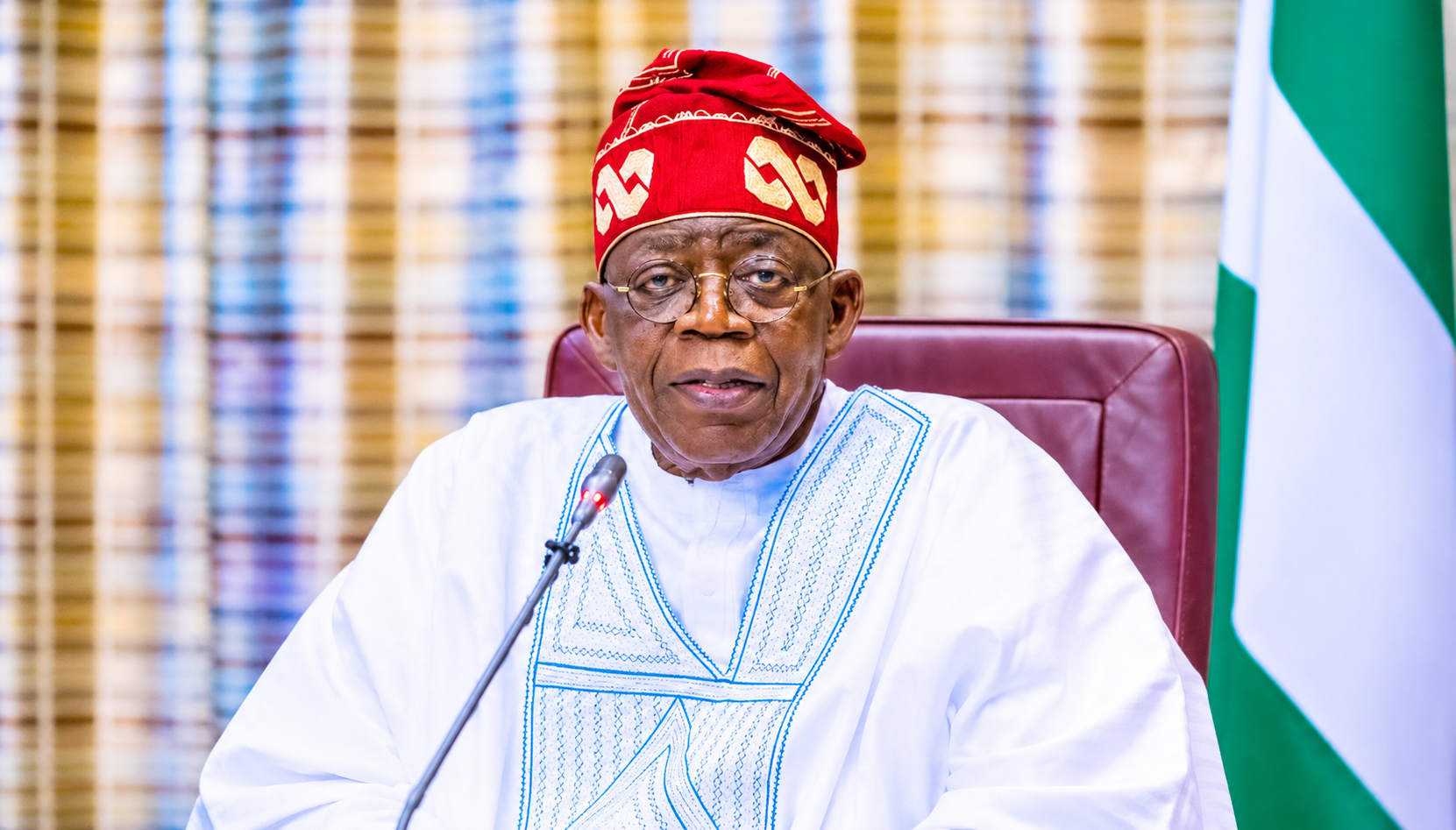
President Bola Tinubu has reaffirmed his administration’s commitment to ending the export of unprocessed solid minerals, declaring that Nigeria must develop local capacity to add value to its abundant mineral resources.
Tinubu said the country must move beyond exporting raw mineral resources and prioritise local beneficiation, processing and the development of integrated value chains capable of supporting industries, creating skilled jobs and boosting economic growth.
The President made the declaration on Thursday while delivering his keynote address at the Nigeria Now! Investing in Energy, Infrastructure and Mining Summit in Abuja.
The summit, themed “United Nigeria, New Horizons, One Investment Destination”, is scheduled to end on November 20, 2026.
Tinubu said developing the mining sector would require improved geological information, transparent licensing procedures, responsible exploration and increased investment in mineral processing.
He explained that the government was determined to ensure that Nigerian businesses played active roles in the mineral value chain rather than allowing the country to remain dependent on exporting raw materials.
“In mining, we’re equally determined to move beyond the export of unprocessed resources. Better geological information, transparent licensing, responsible exploration, and greater investment in beneficiation and processing must support Nigerian industries, skilled employment and meaningful benefits for host communities,” he said.
The President added that his administration was working to build integrated value chains that would strengthen domestic industries and expand opportunities for Nigerian enterprises.
“Our mission is to build integrated value chains in which Nigerian enterprises participate and in which domestic capabilities grow.
“We invite investors to bring technology, finance and commercial enterprise while we continue to strengthen the regulatory certainty and institutional support needed for sustainable returns,” Tinubu stated.
He urged investors to move beyond identifying opportunities and develop viable, bankable projects capable of delivering tangible economic benefits.
Tinubu also reiterated his administration’s commitment to creating an investment-friendly environment that would encourage private-sector participation and attract investments into critical sectors of the economy.
Earlier, the Minister of Solid Minerals Development, Dele Alake, disclosed that reforms introduced by the Tinubu administration had increased annual revenue from the solid minerals sector to more than N100 billion in 2026.
Alake said the sector generated approximately N6 billion annually when he assumed office, but revenue increased to N38 billion in 2024 and N70 billion in 2025.
According to him, the latest figure represents significant progress driven by the government’s local value-addition policy, digitisation of mining processes and efforts to sanitise operations in the sector.
“When I assumed office, the sector’s total annual revenue stood at just ₦6 billion. However, through reforms, the local value addition policy, the digitisation of mining processes, and efforts to sanitise operations within the sector, that figure increased from ₦6 billion to ₦38 billion by 2024,” he said.
“By 2025, it had risen to ₦70 billion. And just about a week ago, the Central Bank of Nigeria (CBN) informed us that we had crossed the ₦100 billion mark this year.”
The minister attributed the growth to deliberate government policies, institutional reforms and improved accountability in the mining industry.
Alake also highlighted the activities of the Mining Marshals, saying the security outfit had strengthened the government’s campaign against illegal mining.
He disclosed that more than 300 suspected illegal mining operators had been arrested, while over 100 mining sites previously controlled by illegal operators had been recovered and returned to their legitimate owners.
However, the minister alleged that some mining operators affected by the enforcement operations were sponsoring efforts to scrap the Mining Marshals.
“As I speak, there have been moves to scrap the Mining Marshals. These moves are sponsored by the operators whom the Mining Marshals have been deployed to bring to justice,” he said.
Alake also defended the removal of fuel subsidy, maintaining that savings from the policy had supported infrastructure development across Nigeria’s six geopolitical zones. He criticised calls for the restoration of the subsidy.
Meanwhile, the Minister of Marine and Blue Economy, Gboyega Oyetola, said the sector had recorded significant progress since the establishment of the ministry in 2023.
Oyetola identified improvements in maritime security, port reforms and the approval of Nigeria’s first National Policy on Marine and Blue Economy as major achievements.
He further disclosed that revenue generated by agencies under the ministry increased from N700.79 billion in 2023 to N1.83 trillion in 2025.
The minister urged investors to explore opportunities in ports, shipping, shipbuilding, fisheries, aquaculture, maritime tourism and logistics.
He said these areas offered significant investment opportunities capable of strengthening Nigeria’s maritime economy and contributing to national development.

The governors of Kano and Enugu states, Abba Kabir Yusuf and Peter Mbah, have accepted appointments as Deputy Grand Patrons of the Nigeria Forward Project, an organisation promoting national unity and citizens’ participation in governance.
The appointments are expected to strengthen the organisation’s leadership structure, nationwide mobilisation and engagement across Nigeria’s six geopolitical zones.
The National Secretary of Nigeria Forward, Abdulhafiz Garba, disclosed this in a statement obtained by The PUNCH on Tuesday, saying both governors had formally communicated their acceptance after receiving their appointment letters.
The letters were jointly signed by the organisation’s Convener, the Minister of Innovation, Science and Technology, Kingsley Tochukwu Udeh, and its Co-convener, the Kano State Commissioner for Youth and Sports Development, Ibrahim Abdullahi Waiya.
According to Garba, the governors were selected in recognition of their leadership qualities, contributions to good governance and commitment to encouraging citizens’ participation in Nigeria’s democratic process.
He described their acceptance as a significant development for the organisation’s ambition to establish a strong national platform built around unity, peaceful coexistence and inclusive participation.
“Their acceptance to serve in this capacity represents an important milestone for the organisation and further strengthens its commitment to building a formidable national platform anchored on unity, peace, social coexistence and inclusive citizens’ participation for national development,” Garba said.
He added that the appointments would provide additional leadership direction and institutional support as the organisation expands its engagement with stakeholders across the country.
Garba further noted that the governors’ decision to accept the positions demonstrated confidence in the project’s vision and was expected to encourage broader support for its programmes and activities.
The Nigeria Forward Project is seeking to establish a platform that will encourage Nigerians to participate more actively in governance and contribute to discussions and initiatives affecting national development.
With the acceptance of the appointments by the two governors, the organisation hopes to strengthen its nationwide presence and advance its objectives of promoting unity, peaceful coexistence and inclusive participation in the country’s democratic process.
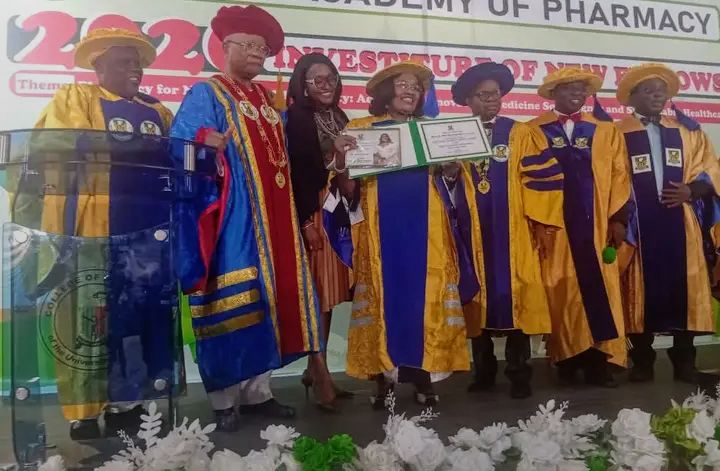
The World Health Organisation (WHO) has called on Nigeria to strengthen local pharmaceutical manufacturing and reduce its dependence on imported medicines, urging the country to work towards producing 70 per cent of its pharmaceutical needs locally by 2030.
The global health agency made the call alongside the Nigerian Academy of Pharmacy at the Academy’s 2026 Annual General Meeting and Investiture of New Fellows held on Tuesday.
The event, themed, “Pharmacy for National Health Security: Advancing Innovation, Medicine Sovereignty and Sustainable Healthcare,” focused on strengthening Nigeria’s pharmaceutical industry through innovation, improved regulation, research and increased investment.
In a keynote address delivered on behalf of the WHO Country Representative in Nigeria, Dr Pavel Ursu, by Dr Akinola Fatiregun, the organisation stressed the importance of building a resilient pharmaceutical sector capable of protecting the country against disruptions in global medicine supply chains.
Ursu noted that Nigeria’s dependence on imported medicines exposed its healthcare system to significant risks, particularly during international emergencies and supply chain disruptions.
He said the Presidential Initiative for Unlocking the Healthcare Value Chain had set a target of achieving 70 per cent local pharmaceutical production by 2030.
“Nigeria needs to strengthen local pharmaceutical manufacturing, reduce dependence on imported medicines and build a resilient pharmaceutical sector capable of safeguarding national health security,” he said.
The WHO representative identified six areas of potential collaboration between the organisation and the Academy, including policy development, implementation research, regulatory science, workforce development, pharmacists’ involvement in health emergencies, and antimicrobial resistance and pharmacovigilance.
He also called for stronger quality standards, increased support for active pharmaceutical ingredient manufacturing and greater utilisation of opportunities provided by the African Continental Free Trade Area to expand access to locally manufactured medicines.
Emphasising the role of pharmacists in achieving universal health coverage, Ursu declared that “there is no universal health coverage without pharmacy.”
Academy calls for stronger pharmaceutical industry
The President of the Nigerian Academy of Pharmacy, Prof. Lere Baale, urged newly inducted fellows to deploy their professional expertise towards transforming the pharmaceutical sector and contributing to national development.
He challenged the fellows to see their recognition as a responsibility to promote collaboration, mentorship, innovation and service.
“Let your fellowship become a platform for collaboration, for mentorship, innovation and service. Do not merely wear this honour of fellowship. Let that honour define your actions,” Baale said.
He maintained that Nigeria possessed the human resources and scientific capacity required to become a major pharmaceutical manufacturing hub but needed stronger partnerships among government, industry players and professionals.
“The time for isolated excellence is over,” he said, calling for collective efforts to strengthen the industry and position Nigeria to serve the wider African market.
Baale also reiterated the need for Nigeria to produce 70 per cent of its medicine requirements locally to improve medicine security, reduce import dependence and establish a sustainable pharmaceutical manufacturing industry.
Okoli urges commitment to local production
The recipient of the Lifetime Achievement Award, Pharm. Stella Okoli, expressed appreciation to the Academy for the recognition, describing it as an encouragement to continue contributing to the development of the pharmaceutical profession.
“Quote me anywhere: Nigeria is the best country in the world. Nobody should feel sorry that they are Nigerian. The only thing we have to do is push hard,” she said.
Okoli urged pharmacists to remain committed to developing Nigeria’s pharmaceutical industry and encouraged young professionals to acquire practical manufacturing experience.
She recalled periods when government policies supported local pharmaceutical production, stressing that sustained government engagement and supportive policies were necessary to help indigenous manufacturers expand their operations.
Pharmacists urged to tackle fake medicines
A former President of the Pharmaceutical Society of Nigeria and Vice-President of the Academy, Pharm. Ahmed Yakasai, said professional recognition must be accompanied by integrity, competence and a commitment to public health.
“It is not just enough to have knowledge; you have to have character,” he said.
Yakasai urged pharmacists to intensify efforts against fake and substandard medicines through improved pharmacovigilance, stronger professional standards and collaboration across the pharmaceutical supply chain.
He stressed that pharmacists had a responsibility to protect the public and strengthen confidence in medicines manufactured and distributed in Nigeria.
Academy inducts 11 new fellows
The Academy inducted 11 new fellows at the ceremony in recognition of their contributions to the pharmaceutical profession.
They include Dr Shakirat Adeshiyan Adeosun, Dr Solomon Aigbavboa, Pharm. Ignatius Kenechukwu Anukwu, Dr Josephine Ihanene Ehimen, Pharm. Bankole Aminu Ezebuilo, Rasheed Oladele Faworaja, Dr Ukamaka Gladys Okafor, Pharm. Prof. Henry Akpobor Okeri, Professor Ogbonna Okorie, Prof. Ibrahim Adekunle Oreagba and Pharm. Dr Titilayo Abidemi Onedo.
The Academy also conferred honorary fellowships on Dr Obiora Anthony Chukwuka and Alhaji Auwalu Abdullahi Rano, while a Distinguished Award was presented as part of the ceremony.
The WHO’s call comes amid growing efforts to strengthen Nigeria’s healthcare value chain, promote local pharmaceutical manufacturing and reduce the country’s vulnerability to international supply disruptions.
-

 Security4 months ago
NDLEA Declares Alleged Drug Kingpin, Three Associates Wanted, Freezes ₦9.8bn Linked to Syndicate
-
 National Affairs4 months ago
ICPC Uncovers 908 Suspected Ghost Workers Across 50 Federal MDAs, Recovers ₦942 Million
-

 Business/Finance4 months ago
How to Apply for Tunde Onakoya’s ₦250 Million Scholarship Programme and Free Laptop Offer
-

 Judiciary | Public Safety4 months ago
INEC Tells Court Voter Information Is Not Confidential in Emeka Ike’s ₦10bn Lawsuit
-
 Politics4 months ago
Atiku Challenges Tinubu to Reveal Details of ₦15.13bn SUV Procurement in 2026 Budget
-

 Judiciary | Public Safety4 months ago
Court to Rule Friday on NDLEA’s Bid to Destroy ₦480bn Meth Lab in Ogun
-
 Security4 months ago
Family Paid ₦50 Million Ransom to Secure Release of Abducted Kebbi Judge
-
 News4 months ago
2026 Budget: FG Earmarks ₦962.83bn for SUVs, Empowerment Projects Amid Debt Concerns