
Education
Otti Orders Re-engagement of Abia Teachers Retired Before 65

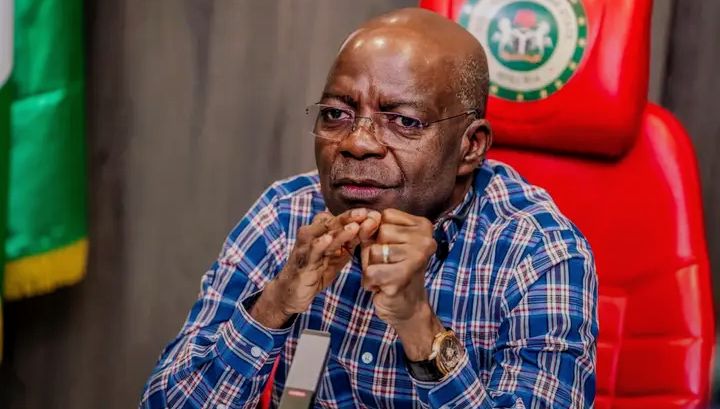
Abia State Governor, Alex Otti, has directed the re-engagement of teachers who were disengaged or retired at the age of 60 but have not yet attained the new retirement age of 65 years.
Otti gave the directive on Monday during activities marking the 2026 World Teachers’ Day celebration in Umuahia, the Abia State capital.
The governor was responding to demands presented by the State Chairman of the Nigeria Union of Teachers, Madu ChukwuJekwu, who appealed to the state government to address issues affecting teachers in the state.
Otti said his administration had previously approved the extension of the retirement age for teachers from 60 to 65 years, stressing that teachers who were affected by the former retirement policy should be returned to service.
“I am surprised that that matter is still outstanding. I want to give instructions from this year, Honourable Commissioner for Basic and Secondary Education, that anybody who is less than 65 years of age, if they have been disengaged, you must return them back,” the governor said.
He further directed the relevant authorities to ensure that all affected teachers were brought back into service, regardless of how close they were to retirement.
“I have given the approval from here. Please bring all of them back. Even if it is six months before retirement, bring them back,” Otti added.
Otti orders payment of teachers’ outstanding dues.
The governor also directed the payment of all outstanding check-off dues owed to teachers within seven days.
He said teachers whose salaries had been delayed because of verification issues must be paid by the end of October.
Otti similarly ordered the payment of salary arrears owed to the 4,075 newly recruited teachers who were yet to receive their salaries, directing that the outstanding payments be settled before the end of the month.
The governor also addressed concerns over outstanding promotions for teachers for the 2021 and 2022 promotion exercises.
He directed the Abia State Universal Basic Education Board to harmonise the promotion process with the State Head of Service and submit the outcome to him for approval.
According to him, the exercise must be completed before the end of October.
Otti highlights education reforms
Speaking on his administration’s education reforms, Otti said the development of smart schools was designed to complement conventional education rather than replace it.
He explained that the initiative was aimed at preparing Abia children for the future by giving them access to modern educational opportunities.
“The whole idea is not to supplant traditional education, but to make the future of education available to our children. They can always have a choice,” he said.
The governor described his administration as one committed to fairness and transparency, assuring teachers that issues affecting their welfare would receive attention.
Commissioner, NUT commend administration
Earlier, the Commissioner for Basic and Secondary Education, Goodluck Ubochi, said the 2026 World Teachers’ Day theme underscored the important role teachers play in shaping society.
Ubochi assured teachers that education remained a major priority of the Abia State Government.
The NUT chairman, ChukwuJekwu, commended the Otti administration for its efforts to reposition the state’s education sector.
He listed the recruitment of more than 9,000 teachers, payment of salary arrears inherited from previous administrations and regular payment of workers’ salaries among the achievements of the government.
ChukwuJekwu also cited the allocation of 20 per cent of the state’s annual budget to education as another major achievement of the administration.
However, he drew the governor’s attention to other challenges confronting teachers in the state and expressed confidence that the government would address them.
The governor’s latest directives are expected to provide relief for affected teachers while accelerating the resolution of outstanding welfare, salary and promotion issues in Abia’s education sector.







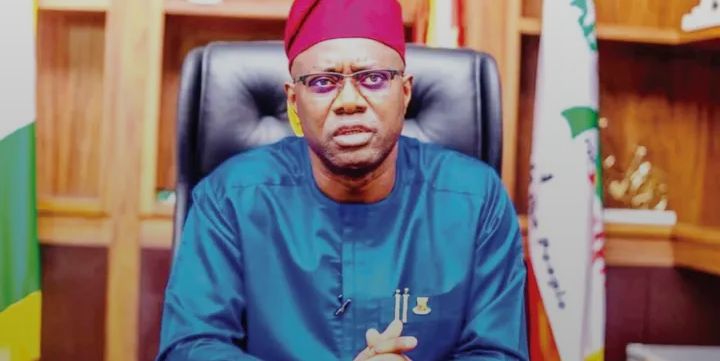
The Oyo State Government says it is working with the Imo State Government and security agencies to secure the safe release of 20 prospective National Youth Service Corps members abducted in Imo State.
The victims, who are graduates from Oyo State, were reportedly travelling from Ibadan to their NYSC orientation camps on Thursday when gunmen attacked two buses conveying them along the Owerri-Onitsha Road in Umunoha, Imo State.
The abductors have reportedly demanded N50 million for each victim, putting the total ransom demand at N1 billion.
The Oyo State Government disclosed its intervention on Sunday in a statement issued by the Commissioner for Information and Civic Orientation, Dotun Oyelade, in Ibadan.
Oyelade said the state government had maintained direct contact with the Imo State Government while also engaging security agencies in both states over the incident.
According to him, Oyo State was contributing its experience from previous kidnapping incidents to support efforts to secure the victims’ release.
“Oyo State is volunteering the templates and experiences it garnered during the Oriire kidnapping incident,” Oyelade said.
He added that the report of the Judicial Commission of Inquiry into the Oriire abduction, submitted the previous week by the panel headed by Justice (Professor) Mojeed Owoade, was also being used in the ongoing discussions between the two state governments.
The commissioner explained that authorities would not necessarily make every security measure public, particularly when disclosure could compromise ongoing operations aimed at rescuing the victims.
He urged attention to be focused on the actions of the Federal Government and the Commander-in-Chief of the Armed Forces, particularly the response within the critical first 72 hours after the abduction.
“The focus should indeed be on the Federal Government and the Commander-in-Chief of the Armed Forces, who are responsible for national security, particularly on the actions taken within the first 72 hours of the incident,” he said.
The abduction has generated concern among the victims’ families and residents, particularly because the graduates were travelling to begin their mandatory national service when the incident occurred.
The Managing Director of Uko Akwa Ibom Motors Nigeria Limited, Isiah Akpan, had earlier confirmed the ransom demand.
Oyelade also recalled that Oyo State Governor Seyi Makinde had previously appealed to President Bola Tinubu to expedite action on the rescue of 40 Borno State students abducted on May 15.
The governor’s appeal followed the abduction of students and teachers of Esinele and Yawota communities in Oriire Local Government Area of Oyo State on the same day.
The Oyo Government said its latest intervention was aimed at supporting the ongoing security efforts rather than compromising operational strategies.
“The Oyo State Government would continue to work with the Imo State Government, security agencies and other relevant stakeholders towards the safe return of the abducted corps members,” Oyelade added.
The incident has again raised concerns over the security of graduates travelling to NYSC orientation camps, with calls for stronger security arrangements along major routes used by prospective corps members.

The abduction of prospective National Youth Service Corps members, political exchanges involving FCT Minister Nyesom Wike and former Rivers State Governor Rotimi Amaechi, and a proposed political realignment by Labour Party youth leaders were among the major stories that dominated Nigeria’s news cycle on Saturday.
Families of 20 prospective NYSC members from Oyo State reportedly faced a 24-hour deadline to raise N1bn ransom demanded by their abductors, while the Imo State Police Command disclosed that it had identified the suspected kidnappers’ camp but was yet to launch an operation because of intelligence indicating that the location had been mined with improvised explosive devices.
In the political space, Wike criticised Amaechi over comments linking the death of his mother to the economic policies of President Bola Tinubu.
Also, youth leaders within the Labour Party proposed consultations with the All Progressives Congress and groups backing Tinubu over a possible political alignment ahead of the 2027 presidential election.
Meanwhile, BUA Group Chairman, Abdul Samad Rabiu, visited President Tinubu alongside his son, Khalifa, as Nigeria marked its 66th Independence anniversary.
1. NYSC abductors demand N1bn ransom as police locate camp
The families of 20 prospective National Youth Service Corps members from Oyo State have reportedly been given 24 hours by their abductors to raise N1bn ransom for their release.
The victims were reportedly abducted while travelling to their respective NYSC orientation camps.
The development has heightened concerns over the safety of prospective corps members travelling to orientation camps across the country, particularly amid renewed calls for stronger security measures along major interstate routes.
In a related development, the Imo State Police Command said it had located the suspected camp where the abducted prospective corps members were being held.
However, the police said they had not immediately raided the location because intelligence indicated that the area had been heavily mined with improvised explosive devices.
The security concerns have reportedly forced law enforcement authorities to approach the operation cautiously in an attempt to avoid putting the lives of the hostages and security personnel at further risk.
The incident has continued to attract public attention as families await the safe return of their relatives.
2. Wike criticises Amaechi over claim on mother’s death
FCT Minister Nyesom Wike has criticised former Rivers State Governor, Rotimi Amaechi, following comments by the former minister that President Bola Tinubu’s economic policies contributed to the death of his mother.
Amaechi had reportedly linked the difficulty of obtaining medicines to the economic situation under the Tinubu administration, saying the cost of medication had affected his ability to afford treatment for his mother.
The former Rivers governor’s comments triggered a response from Wike, who criticised Amaechi over the claim.
The disagreement adds another chapter to the long-running political rivalry between the two prominent Rivers State politicians.
Their political differences have remained a major feature of Rivers State’s political landscape, particularly amid wider alignments ahead of the 2027 general elections.
3. Labour Party youth leaders propose Tinubu alignment
Youth leaders of the Labour Party have proposed consultations with the All Progressives Congress and groups supporting President Bola Tinubu over a possible political alignment ahead of the 2027 presidential election.
The proposal followed a virtual meeting involving the Labour Party’s National Youth Leader, five zonal youth leaders and 32 state youth leaders.
According to the details of the meeting, the proposed engagement with the APC and Tinubu-supporting groups is not yet a final decision by the party’s youth leadership.
The participants said further consultations would be required before any position could be reached, with consensus expected to guide any eventual decision.
The development comes as political parties and various interest groups intensify consultations and mobilisation ahead of the 2027 elections.
Any eventual agreement would also depend on wider discussions within the Labour Party and among the groups involved.
4. BUA chairman Rabiu visits Tinubu with son as Nigeria marks 66th Independence
Chairman of BUA Group, Abdul Samad Rabiu, visited President Bola Tinubu alongside his son, Khalifa, as Nigeria celebrated its 66th Independence anniversary.
Rabiu shared photographs of the visit on X, where he also extended his Independence Day greetings to Nigerians at home and abroad.
The businessman wished Nigerians peace, unity and progress as the country marked another year of independence.
The visit was part of activities surrounding Nigeria’s 66th Independence anniversary, with public figures and business leaders joining millions of Nigerians in commemorating the occasion.
The four developments formed part of the major stories that shaped Saturday’s evening news cycle, spanning security, politics, business and the national Independence anniversary.
Nigeria’s development, with poverty, weak educational infrastructure and the lure of quick income pushing many children away from classrooms and into hazardous work.
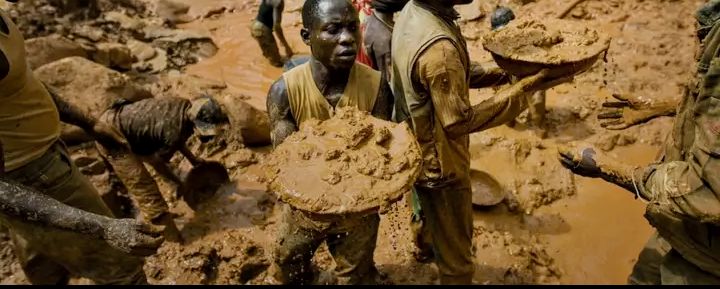
The situation is particularly worrying in mining communities, where children are increasingly being drawn into artisanal and illegal mining activities at the expense of their education and future.
Governor Umar Bago of Niger State recently raised the alarm over the growing involvement of children in artisanal gold mining in the state, saying some boys were abandoning junior secondary schools because they had “tasted money” from mining.
According to the governor, a UNICEF report had warned that by 2027, some local government areas, including Shiroro, could face a situation where there would be hardly any male children in Junior Secondary School Two because of their involvement in artisanal mining.
Such a projection should concern every level of government.
Bago made the disclosure in the aftermath of the death of 37 suspected illegal miners who were reportedly in the custody of the Nigeria Security and Civil Defence Corps in Minna, Niger State.
The governor said some of those arrested during enforcement operations were teenagers between 14 and 18 years old, underscoring the extent to which young people have become involved in the mining economy.
Of particular concern was the governor’s assertion that the state government lacked sufficient authority to effectively stop the practice.
He reportedly said a governor was only a chief security officer “by mouth,” suggesting that governors had limited practical powers to issue and enforce directives against such activities.
Whether or not the constitutional limitations cited by the governor explain the situation, the reality is that children are leaving school for mining sites, and governments at all levels must respond.
The issue is not peculiar to Niger State or Nigeria.
A 2025 report by UNICEF and the International Labour Organisation estimated that 138 million children were engaged in child labour globally in 2024, including 54 million involved in hazardous work.
Mining and quarrying are among the most dangerous forms of child labour.
Globally, an estimated one to two million children between the ages of five and 17 are involved in small-scale mining and quarrying.
The ILO has also reported that children under 18 account for between 30 and 50 per cent of the workforce in some small-scale gold mines in Africa.
The problem affects several countries across sub-Saharan Africa, including the Democratic Republic of Congo, Sierra Leone, Guinea, Cameroon, Mali, Burkina Faso and Uganda.
Similar challenges have also been reported in parts of Asia, including Pakistan, India, Nepal, Cambodia, Indonesia, the Philippines, Mongolia and Bangladesh.
The reasons are familiar: extreme poverty, the attraction of immediate income and inadequate access to quality education.
For poor families, mining may appear to offer children an opportunity to earn money quickly. But the immediate financial benefit comes at a significant cost to their education, health and long-term economic prospects.
Children working at mining sites can be exposed to dangerous machinery, hazardous substances and physically demanding conditions.
In some mining environments, exposure to mercury and other toxic substances can cause serious health problems, while dust and unsafe working conditions can increase the risk of respiratory and other illnesses.
More importantly, removing children from school creates a cycle of poverty that can persist into adulthood.
A child who leaves school to work in a mine may earn some money today but lose opportunities for skilled employment tomorrow.
In this sense, child labour in mining is not merely an issue of illegal employment; it is also an education, poverty and development crisis.
Nigeria therefore needs a coordinated response.
Government agencies responsible for education, mining, child protection and security must work together to prevent children from entering mining sites.
Mining operators and those who knowingly employ or exploit children should face prosecution where they violate existing laws.
Governments should also address the economic circumstances that push families towards mining.
Companies, civil society organisations and communities can play important roles in this regard. Programmes aimed at returning child miners to school, providing accelerated learning and supporting vulnerable families can help break the cycle.
International experience offers useful lessons.
Save the Children, for instance, has implemented programmes aimed at reintegrating child miners into schools and vocational training, while providing support to vulnerable families. The organisation has also used Catch-Up Clubs and accelerated learning initiatives to help children who have fallen behind academically.
The ILO’s SCREAM programme — Supporting Children’s Rights through Education, the Arts and the Media — also uses awareness campaigns and creative activities to highlight the dangers of child labour.
In September 2023, students in Lubumbashi in the Democratic Republic of Congo reportedly used artistic works to draw attention to the message that children belong in schools, not mines.
The African Development Bank has also supported efforts in the Democratic Republic of Congo to improve the welfare of children involved in cobalt mining and facilitate their return to schools or vocational training programmes.
In 2020, the DRC established a commission to coordinate efforts to eliminate child labour in artisanal mining sites, working with international partners to address the problem.
Nigeria can adopt similar approaches.
Governors should not wait for the Federal Government before taking action in mining communities within their states.
They should work with local governments, traditional institutions, religious organisations, security agencies and civil society groups to identify children involved in mining and develop programmes to return them to school.
Investment in vocational education and alternative livelihoods is equally important.
Families dependent on mining for survival need viable alternatives, including opportunities in agriculture, skills acquisition and small businesses.
Building schools in mining communities is necessary, but it is not sufficient.
Governments should also consider targeted assistance for vulnerable families that cannot afford the direct and indirect costs associated with keeping children in school.
Traditional rulers and religious leaders should equally use their influence to educate parents and communities about the long-term consequences of taking children away from school.
The objective should be clear: no child should have to choose between education and survival.
Nigeria cannot afford to sacrifice an entire generation of children to the temporary economic benefits of artisanal mining.
Mining may provide livelihoods, but it must not become a pathway through which children are denied education and exposed to hazardous work.
The responsibility rests with every stakeholder — governments, mining operators, communities, parents, traditional and religious leaders, civil society organisations and development partners.
Mining must not erase education.
-
 Security3 months ago
NDLEA Declares Alleged Drug Kingpin, Three Associates Wanted, Freezes ₦9.8bn Linked to Syndicate
-

 Business/Finance2 months ago
How to Apply for Tunde Onakoya’s ₦250 Million Scholarship Programme and Free Laptop Offer
-
 National Affairs2 months ago
ICPC Uncovers 908 Suspected Ghost Workers Across 50 Federal MDAs, Recovers ₦942 Million
-

 Judiciary | Public Safety3 months ago
INEC Tells Court Voter Information Is Not Confidential in Emeka Ike’s ₦10bn Lawsuit
-
 Politics2 months ago
Atiku Challenges Tinubu to Reveal Details of ₦15.13bn SUV Procurement in 2026 Budget
-
 Judiciary | Public Safety2 months ago
Court to Rule Friday on NDLEA’s Bid to Destroy ₦480bn Meth Lab in Ogun
-
 Security2 months ago
Family Paid ₦50 Million Ransom to Secure Release of Abducted Kebbi Judge
-
 News2 months ago
2026 Budget: FG Earmarks ₦962.83bn for SUVs, Empowerment Projects Amid Debt Concerns