
Politics
Oyebanji: I Delivered on All 2022 Campaign Promises


Ekiti State Governor, Biodun Oyebanji, has declared that his administration fulfilled all the promises he made to residents during the 2022 governorship election, while also recording strong budget performance throughout his first term.
Oyebanji made the declaration on Thursday evening in Aramoko Ekiti during a town hall meeting with stakeholders from Ekiti Central Senatorial District as part of consultations ahead of the preparation of the 2027 state budget.
The meeting was one of a series of engagements organised by the state government to gather the views and requests of residents before the annual budget is prepared.
According to a statement issued by the Governor’s Special Adviser on Media, Olayinka Oyebode, Oyebanji said his administration had remained faithful to its mandate and had not taken the needs of Ekiti residents for granted.
The governor said requests made by residents during previous town hall meetings had been incorporated into the state’s annual budgets and translated into projects across the various local government areas.
“Besides budgetary provisions, our administration had fulfilled the promises I made in 2022 during electioneering campaigns, looking at the quantum of projects he had executed across the council areas,” he said.
Oyebanji challenged residents to examine the records of his administration, insisting that he had not betrayed the trust placed in him by the people.
“Go and check the records; I didn’t betray the people’s trust in the last four years. When I made promises, I would fulfil them. I did everything I promised,” the governor said.
He added that he would continue to fulfil commitments made to the people during his second term.
“I am making some promises before you now, which I believe I will fulfil as long as I remain the governor of this state.
“One thing I can say is that we are together on this journey to make Ekiti great.
I want to assure you that all your requests that will make lives better for you shall be done through direct response from the state or partnership,” he said.
Oyebanji promises 1,500km rural roads
The governor said his administration was working with the World Bank through the Rural Access and Agricultural Marketing Project (RAAMP) to address transportation challenges and improve access to rural communities.
He disclosed that about 235 kilometres of rural roads were being handled under the World Bank partnership, with the third phase of the project expected to commence after the rainy season.
According to him, the broader collaboration is expected to deliver up to 1,500 kilometres of roads across Ekiti State.
“Some of the rural roads, which are now about 235 kilometres, are World Bank projects in partnership with the state government,” Oyebanji said.
He said the road projects would improve connectivity and ease the movement of people and agricultural produce across rural communities.
Governor raises concern over flooding, erosion
Oyebanji also expressed concern over recurring flooding and gully erosion affecting parts of the state, particularly Efon, Aramoko and Ado Ekiti.
He said his administration had undertaken studies into the causes and patterns of erosion in the affected areas and was close to developing a comprehensive strategy to tackle the problem.
The governor said the government was determined to address the environmental challenges rather than allow them to continue disrupting communities.
110 primary health centres renovated
On healthcare, Oyebanji said his administration had renovated 110 primary healthcare centres across Ekiti State as part of efforts to improve access to medical services at the grassroots.
He promised that more health facilities would be upgraded during his second term.
According to him, strengthening primary healthcare infrastructure would help reduce mortality and morbidity among residents by ensuring that more people can access basic medical services closer to their communities.
Oyebanji commends traditional rulers on security
The governor also expressed satisfaction with the reduction in security threats across the state.
He attributed part of the improvement to the role played by traditional rulers and community leaders in gathering intelligence and mobilising residents to respond promptly to suspicious activities.
Oyebanji commended the traditional rulers for taking responsibility for security within their domains and urged continued vigilance.
The governor emerged as Ekiti State governor in October 2022 after defeating the Peoples Democratic Party candidate, Bisi Kolawole, in the governorship election.
Following his re-election in June 2026, Oyebanji is scheduled to begin his second term on October 16.
The governor said his administration would continue to work with residents and development partners to implement projects and programmes capable of improving living conditions across Ekiti State.
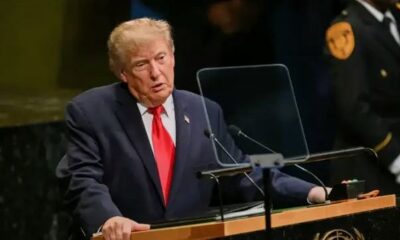









The United States Supreme Court has allowed the administration of President Donald Trump to resume using an expanded federal database to verify the citizenship status of people listed on state voter rolls ahead of the November midterm elections.
The 6-3 decision on Friday lifted, for now, a lower-court restriction that had blocked the Trump administration from using the Department of Homeland Security’s Systematic Alien Verification for Entitlements (SAVE) system for broad voter-verification checks.
The Supreme Court’s unsigned ruling was supported by six justices, while the court’s three liberal members dissented.
The decision allows the administration to continue using the revamped system while the underlying legal dispute proceeds.
SAVE was originally created to help government agencies verify immigration and citizenship information when determining eligibility for federally funded benefits. States have also used the system for voter-verification purposes.
However, the Trump administration expanded the system to incorporate additional federal information, including Social Security records, enabling broader searches of voter-registration databases.
In its ruling, the Supreme Court said the federal government has an obligation to respond when state and local election officials request assistance in verifying the citizenship of voters.
The ruling reverses the immediate effect of a June decision by a federal judge in Washington, D.C., who had blocked the expanded SAVE system after finding that the administration’s changes raised concerns over privacy protections and the accuracy of citizenship information.
The lower-court ruling followed arguments from voting and civil-rights organisations that the revamped database could result in eligible US citizens being incorrectly flagged or removed from voter-registration lists.
The Supreme Court case comes as Trump and his administration have intensified efforts to identify and remove potential non-citizens from voter rolls.
Trump has repeatedly claimed that non-citizens voting in US elections is a significant problem and has also raised concerns about the security of mail-in voting. The administration has argued that the expanded SAVE system is necessary to help states verify voter eligibility.
According to documents filed with the Supreme Court, the updated SAVE system had verified more than 65 million voters across 26 states as US citizens and flagged 28,635 people as potential non-US citizens.
Critics, however, have questioned the reliability of the information and warned that errors in government records could result in eligible citizens being wrongly flagged.
The Supreme Court’s decision does not itself establish that those flagged by the system are ineligible to vote.
Rather, it allows the federal government to continue providing the database and verification service while the legal challenges surrounding the programme continue.
Election-law experts have also said the ruling may have a limited immediate effect on the November midterm elections because federal law places restrictions on systematic voter-list maintenance during the 90 days before a federal election.
The application of that restriction to suspected non-citizens remains the subject of separate legal disputes.
The ruling is one of several election-related disputes reaching the Supreme Court ahead of the November 3 midterm elections, in which control of Congress will be contested.
The decision also represents another step in the Trump administration’s broader effort to increase the federal government’s role in voter-eligibility verification, an approach that has faced legal challenges from voting-rights organisations and other groups.
The legal battle over the SAVE system is expected to continue despite Friday’s emergency ruling.

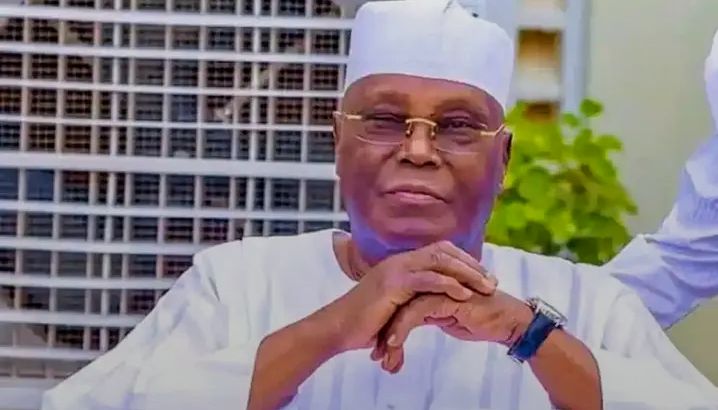
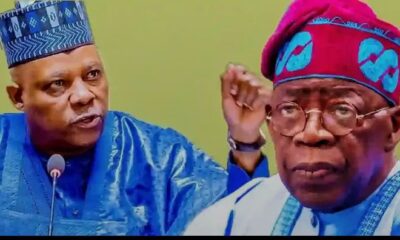
Former Vice-President and African Democratic Congress (ADC) presidential candidate Atiku Abubakar has cited a new survey by SBM Intelligence showing that 67.4 per cent of respondents support restoring petrol subsidy, as the debate over fuel pricing becomes a major issue ahead of the 2027 presidential election.
Atiku said the finding reflects the economic pressure being experienced by households and businesses as petrol prices continue to influence transportation and the cost of goods and services.
He made the comments in a statement issued on Tuesday by his Senior Special Assistant on Public Communication, Phrank Shaibu.
However, the survey figure refers to 1,103 eligible voters interviewed by SBM Intelligence, not all Nigerians. SBM also cautioned that the survey is a snapshot of stated sentiment and does not adjust for historical turnout, population projections or INEC voter-registration figures.
According to SBM Intelligence’s second-wave Nigeria 2027 Voter Sentiment Tracker, petrol has emerged as the second-most cited national problem, accounting for 18.2 per cent of responses.
The issue also received the lowest performance rating among the policy areas associated with the current administration, scoring 1.69 out of four.
On the question of the petrol-pricing policy, 67.4 per cent of respondents rejected the current direction, while 19.2 per cent supported it.
The findings come amid renewed increases in petrol prices and wider concerns about transportation and household costs.
Reuters reported on September 21 that petrol prices had reached about N1,400 per litre in Lagos and Abuja, with prices as high as N1,500 in parts of northern Nigeria.
Atiku also highlighted differences between rural and urban respondents.
He said 32.4 per cent of rural respondents identified petrol as their primary concern, compared with 11.7 per cent of urban respondents.
The survey also recorded regional differences. Petrol was identified as the leading concern by 30.5 per cent of respondents in the South-West and 29.1 per cent in the South-South, according to the figures cited by Atiku.
The regional variation is significant because fuel prices affect transportation, agricultural logistics and the distribution of food and other goods, particularly in communities where alternative transport and energy options are limited.
Atiku blames subsidy removal for economic pressure
Atiku attributed the economic difficulties associated with fuel prices to the removal of the petrol subsidy by the Tinubu administration.
He argued that the policy had contributed to higher transportation and food costs while reducing the purchasing power of households and businesses.
“President Tinubu removed subsidy with a slogan, not a strategy,” Atiku said, arguing that the reform was not accompanied by adequate measures covering domestic refining, mass transportation, wage protection and small businesses.
His comments form part of his broader argument that Nigeria needs a different approach to petrol pricing rather than a complete reliance on market-based pricing.
Atiku proposes production subsidy for local refineries
Atiku has clarified that his proposed intervention would not simply recreate the previous petrol subsidy system.
He said that, if elected in 2027, he would introduce a transparent production subsidy for petroleum products refined in Nigeria and sold to Nigerian consumers, beginning May 29, 2027.
Imported petroleum products, he said, would not qualify.
Under the proposal, the programme would operate within a fixed spending limit, require National Assembly approval and be subjected to independent audits.
Atiku said the objective would be to reduce petrol prices for consumers while simultaneously encouraging domestic refining.
The proposal follows his earlier call for measures to reduce petrol and diesel prices and has now become part of the ADC candidate’s economic message ahead of the election.
APC challenges Atiku to explain the proposal
The proposal has already attracted criticism from the ruling All Progressives Congress Presidential Campaign Council.
APC campaign spokesman Dele Alake has asked Atiku to provide details on the legal, fiscal and operational framework of the proposed production subsidy.
The campaign council questioned how the scheme would operate under the Petroleum Industry Act 2021, how much it would cost the government, what volume of petroleum products would qualify and how the policy would prevent diversion, smuggling and fraudulent claims.
The exchange illustrates the central policy disagreement emerging ahead of 2027: whether Nigeria should continue with market-based petrol pricing or introduce a targeted government intervention to reduce prices for consumers.
Fuel pricing becomes a 2027 election issue
The latest SBM findings suggest that petrol has moved beyond being solely an economic policy issue and has become an increasingly important political concern.
For the Tinubu administration, the challenge is to demonstrate that the long-term benefits it associates with subsidy removal can translate into tangible improvements in household welfare.
For opposition candidates such as Atiku, rising petrol prices provide an opportunity to argue that the costs of the reform have become excessive and that government should intervene more directly.
The debate is unlikely to be resolved simply by the question of whether subsidies should return.
It increasingly centres on who should bear the cost of keeping petrol affordable, how government intervention should be funded, whether domestic refining can reduce exposure to international crude prices, and what safeguards can prevent a return to the fiscal and market distortions associated with poorly targeted subsidies.
With petrol now ranking among voters’ leading concerns in the SBM survey, fuel pricing is set to remain an important part of the economic debate surrounding the 2027 presidential election.
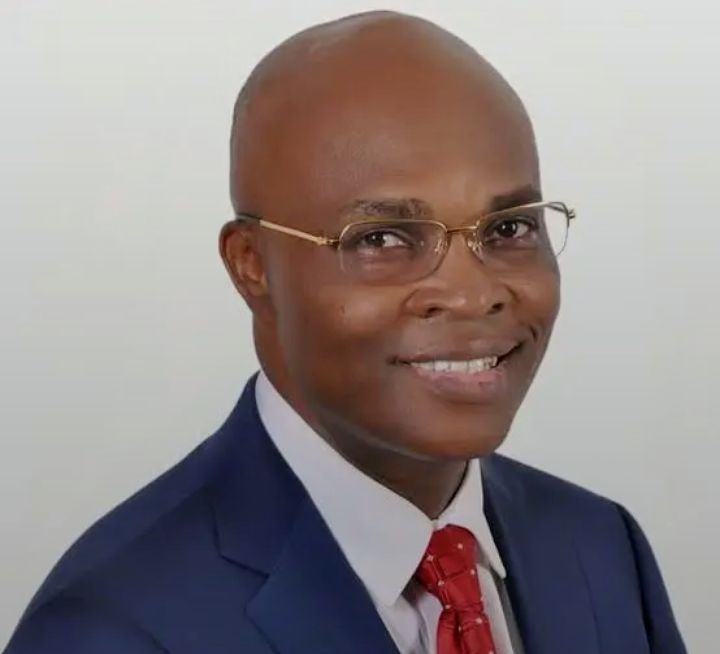
A stalwart of the African Democratic Congress (ADC) and former Edo State governorship aspirant, Kenneth Imasuagbon, has described the late former Peoples Democratic Party (PDP) National Chairman, Dan Orbih, as a courageous, compassionate and loyal politician whose death has created a deep vacuum in Edo State’s political landscape.
Imasuagbon, in a statement issued on Sunday, said he received news of Orbih’s death with shock and sadness, recalling the late politician’s contributions to democratic politics and his acts of kindness to people in times of difficulty.
According to him, Orbih was not only a consummate politician but also a kind-hearted man whose generosity touched many lives.
Imasuagbon particularly recalled Orbih’s support following an accident that left him receiving treatment at a hospital in London.
He said Orbih, alongside the late Chief Tony Anenih and Senator Clifford Ordia, provided financial and moral support to him during the difficult period.
“When I had an accident, Orbih was one of those who sent money to me on my hospital bed in London. He, alongside the late Chief Tony Anenih and Senator Clifford Ordia, stood by me during that difficult period.
“I will never forget that gesture. Some of us can only reciprocate such kindness today through prayers and honouring his memory,” Imasuagbon said.
The ADC chieftain also recalled their political activities during the administration of former Edo State Governor, Adams Oshiomhole, when he and Orbih jointly led the opposition in the state.
He described Orbih’s residence in Benin City as a major meeting point for party members, political associates and democracy advocates during periods of intense political contestation.
“Orbih was a man of uncommon courage. At the height of the political struggle, his house became our meeting point. He never wavered in defending democracy and standing by those he believed in,” he stated.
Imasuagbon further praised Orbih for his colourful personality and ability to connect with supporters during political campaigns, saying the late politician brought humour and entertainment into political activities.
He described Orbih as a committed party loyalist who was deeply passionate about Edo State and dedicated much of his life to the advancement of democracy.
“Under his leadership, we both toured the 192 wards campaigning. He was kind-hearted, loyal to his party and deeply committed to the people of Edo State,” he said.
Imasuagbon also recounted an incident surrounding the 2022 national delegate contest in Esan South-East Local Government Area, saying Orbih resisted pressure to have his name removed from the delegate list.
According to him, some political actors wanted his name removed because of his preferred presidential candidate in the 2023 election, but Orbih refused to yield to the pressure.
“During the 2022 national delegate contest in Esan South-East Local Government Area, which I defeated Giwa Agbomerere, Orbih faced intense pressure that my name should be dropped because I would vote for Atiku Abubakar instead of Wike, even at gunpoint.
“He resisted the pressure and kept my name on the list. I won the contest squarely, and he said his conscience would not allow him to remove my name from the delegate list,” Imasuagbon added.
He described the late politician as a fair and just individual whose political decisions were guided by his principles and conscience.
Imasuagbon extended his condolences to Orbih’s family, praying that God would grant his loved ones the strength to bear the loss.
The Orbih family had announced the death of the prominent Edo politician on September 1, 2026.
In a statement signed by his younger brother, Francis Orbih, the family said Dan Orbih died on Monday, August 31, 2026.
His death has continued to attract tributes from political associates and stakeholders who have acknowledged his long involvement in Edo State and national point.
-
 Security2 months ago
NDLEA Declares Alleged Drug Kingpin, Three Associates Wanted, Freezes ₦9.8bn Linked to Syndicate
-
 National Affairs2 months ago
ICPC Uncovers 908 Suspected Ghost Workers Across 50 Federal MDAs, Recovers ₦942 Million
-

 Business/Finance2 months ago
How to Apply for Tunde Onakoya’s ₦250 Million Scholarship Programme and Free Laptop Offer
-
 Politics2 months ago
Atiku Challenges Tinubu to Reveal Details of ₦15.13bn SUV Procurement in 2026 Budget
-
 Judiciary | Public Safety2 months ago
INEC Tells Court Voter Information Is Not Confidential in Emeka Ike’s ₦10bn Lawsuit
-
 Judiciary | Public Safety2 months ago
Court to Rule Friday on NDLEA’s Bid to Destroy ₦480bn Meth Lab in Ogun
-
 Security2 months ago
Family Paid ₦50 Million Ransom to Secure Release of Abducted Kebbi Judge
-
 News2 months ago
2026 Budget: FG Earmarks ₦962.83bn for SUVs, Empowerment Projects Amid Debt Concerns