
National Affairs
Oyo Deputy Gov Commissions New Egbeda LG Office, Highlights Major Development Projects


Oyo State Deputy Governor, Abdulraheem Bayo Lawal, has commissioned a newly constructed office complex for the Executive Chairman of Egbeda Local Government Area, saying the council is strategically positioned to experience accelerated development.
Lawal spoke on Friday during the commissioning ceremony held at the Egbeda Local Government Secretariat in Ibadan, where awards were also presented to former chairmen of the council in recognition of their contributions to its development.
The Deputy Governor said Egbeda Local Government had become a major development corridor in Ibadan due to several ongoing projects, including the Ibadan Circular Road, the Air Force Base in Ajia and the Ajoda Housing Estate.
According to him, the projects would significantly transform the economic and physical landscape of the council and position it as one of the major beneficiaries of the state government’s long-term development plans.
Lawal appealed to residents and property owners affected by the Ibadan Circular Road project to support the initiative, describing it as a long-term investment in the future of Oyo State.
He assured affected property owners that the government would compensate them in accordance with applicable arrangements and the overriding public interest.
The deputy governor said the government was determined to avoid the unplanned development that occurred around the Lagos-Ibadan Expressway after its construction in 1977.
He explained that the Circular Road corridor was being developed with proper planning to ensure sustainable growth over the next 10 to 30 years.
“Egbeda Local Government is now a modal point within Ibadan—encircled by projects designed to drive development.
From the Circular Road to the Air Force Base and the Egbe-Ona Ara Development Corridor, this local government holds immense prospects for Oyo State,” Lawal said.
He added that the government understood the concerns surrounding the Circular Road project but urged residents to consider its long-term benefits.
“People have been agitating over the Circular Road corridor, but if we want development, certain things must give way for overriding public interest. The benefits may not be immediately visible, but we are planning 10 to 20 years,” he said.
Lawal also recalled that parts of the Lagos-Ibadan Expressway corridor that were originally undeveloped later became heavily built-up because adequate planning was not incorporated into the surrounding development.
He said the state government would ensure that the Circular Road corridor was properly planned to prevent similar challenges in the future.
Project funded through IGR
The Executive Chairman of Egbeda Local Government, Sikiru Sanda, described the newly commissioned office complex as one of the lasting legacies of his administration.
Sanda said the project was fully funded through the council’s internally generated revenue (IGR), adding that its completion demonstrated what could be achieved through prudent management of local government resources.
He expressed appreciation to Governor Seyi Makinde for creating an enabling environment and granting local governments the autonomy needed to implement development projects.
Sanda described Makinde as a transformational leader and assured residents that additional projects were being executed across the council.
He also pledged to remain committed to serving the people of Egbeda and Oyo State until the end of his tenure.
Former chairmen honoured
In their goodwill messages, the Chairman of the Oyo State House of Assembly Committee on Local Government, Emmanuel Akintunde;
former council chairman and former TESCOM Chairman, Chief Akin Alamu; and Co-Chairman of the Oyo State Elders’ Council and former Egbeda Local Government Chairman, Elder Wole Oyelese, commended Sanda for what they described as impactful projects and good governance.
Earlier, the Head of Administration of Egbeda Local Government, Dr Monsurat Ayo-Alaga, said the new office complex reflected the council’s commitment to prudent financial management, accountability and responsible utilisation of public funds.
She said the decision to honour former council chairmen was also aimed at recognising their contributions to the growth and development of Egbeda Local Government.
Ayo-Alaga commended the Makinde administration for its interventions in education, healthcare, water supply, infrastructure and security as part of its grassroots development efforts.
The ceremony was attended by the member representing Egbeda State Constituency in the Oyo State House of Assembly, Olasunkanmi Babalola; Oyo South APM senatorial candidate, Oguntoyinbo Ajadi; Chairman of the Oyo State Local Government Pension Board, Ademola Ige; traditional rulers, religious leaders and other dignitarie.








Bayelsa State Governor, Senator Douye Diri, has described the growing burden of cancer in the state as a serious health challenge, linking concerns over long-term oil pollution to the need for improved cancer diagnosis and treatment facilities.
Diri spoke on Friday while inaugurating an 18-member steering committee for the establishment of the Bayelsa Cancer Treatment and Research Centre at the Government House in Yenagoa.
The governor, who was represented at the event by his deputy, Dr Peter Akpe, said it was unfair and unacceptable for communities that contribute significantly to the nation’s oil wealth to continue facing inadequate access to specialised healthcare.
He said cancer was no longer a distant disease in Bayelsa communities, noting that breast, cervical and prostate cancers were increasingly affecting residents, including people in their productive years.
“Cancer is no longer a distant disease in our communities. Almost every family in this hall has a story: a mother diagnosed too late; a brother who travelled to Lagos, Abuja or abroad and spent everything they owned on treatment,” Diri said.
According to him, many cancer-related deaths occur not necessarily because the disease cannot be treated, but because access to treatment is limited by distance, cost and late diagnosis.
He further raised concerns about the possible long-term health implications of decades of oil pollution in the state.
“In Bayelsa, we carry an additional burden. Decades of oil pollution have left their mark on our land, our water, and we fear, on the health of our people,” the governor said.
Diri cited the Bayelsa State Oil and Environmental Commission Report of 2023, which, according to him, raised serious concerns about the long-term health consequences of exposure to oil pollution.
He said the state could no longer accept a situation where communities bear the environmental and health costs associated with the nation’s oil wealth without adequate healthcare support.
“We will not accept a situation where our communities bear the cost of the nation’s wealth and are then left without the care they need. Therefore, a cancer treatment centre in Bayelsa State is not a luxury; it is a matter of health justice,” he said.
Committee gets wide-ranging mandate
The governor charged the 18-member steering committee to undertake an empirical assessment of the cancer burden across Bayelsa State and make recommendations on the establishment of the proposed centre.
Among other responsibilities, the committee is expected to recommend the most suitable location for the facility, identify the required equipment and infrastructure, and explore partnerships and sustainable financing options.
Diri also directed the committee to consider the manpower requirements of the proposed centre, including the recruitment and retention of competent specialists.
Other areas highlighted in its terms of reference include staff training, facility maintenance, accessibility, as well as the availability of drugs and other medical consumables.
The governor said the members were selected based on their competence and years of experience in relevant fields.
Cancer burden no longer manageable with half measures — Brisibe
In his acceptance speech, the chairman of the steering committee and Commissioner for Health, Prof. Seiyefa Brisibe, thanked the governor for entrusting the members with the responsibility of working towards the establishment of what he described as a world-class cancer treatment and research centre.
Brisibe said the inauguration demonstrated the Diri administration’s commitment to improving the health and well-being of Bayelsans.
He described the cancer burden in the state as a reality that had imposed significant financial, physical and emotional pressure on families.
According to him, residents often have to travel outside Bayelsa, and in some cases outside Nigeria, to access cancer diagnosis and treatment.
“Families in Bayelsa endure the excruciating financial, physical and emotional toll of travelling outside the state and often outside the country, just to access basic diagnostic and therapeutic cancer care.
This will end with the mandate for the work we are about to begin,” he said.
Brisibe said the committee was carefully constituted with individuals possessing the expertise required to develop a sustainable cancer care system in the state.
The committee members include Dr Jones Stow, Prof Jumbo Johnbull, Dr Boboye Ifie, Dr Oluwadare Marcus, Dr James Omietimi, Dr Ebikapaye Okoyen, Dr Ngowari Torunana, Mrs Beatrice Olomiete, Hon Kingsley Kuku, Dr Ibimonye Porbeni and Mr Nimifagha Esindu.
Others are Prof Kelvin Kiridi, Dr Timipa Peregha-West, Magdalene Alabinte, Prof Beleudanyo Fente, Dr Elizabeth Obiorah and Dr Embeleakpo Apere.
The proposed Bayelsa Cancer Treatment and Research Centre is expected to provide residents with improved access to cancer screening, diagnosis and treatment, potentially reducing the need for patients to travel outside the state for specialised care.
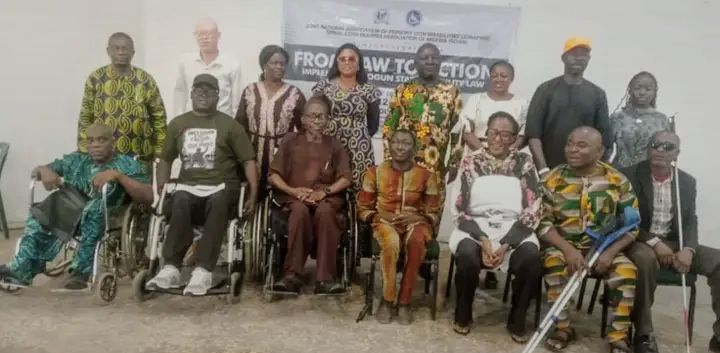
The Joint National Association of Persons with Disabilities (JONAPWD) and the Spinal Cord Injuries Association of Nigeria (SCIAN) have called on the Ogun State Government to fully implement the state’s Disability Law, nearly nine years after it was signed into law.
The groups made the demand on Wednesday during a joint press briefing at the Nigeria Union of Journalists (NUJ) Hall, Iwe Iroyin House, Oke-Ilewo, Abeokuta.
They urged Governor Dapo Abiodun to provide the necessary political direction to conclude the implementation process before the expiration of his tenure in eight months.
The Ogun State Disability Law was signed by the former governor, Senator Ibikunle Amosun, on December 27, 2017.
However, the disability groups said the law had yet to be fully operationalised, leaving persons with disabilities waiting for the legal framework to translate into functioning institutions, enforceable protections and accessible public systems.
The National President of SCIAN, Abdulwahab Matepo, and the Ogun State Chairman of JONAPWD, Ayo Awobona, made the call during the briefing.
The organisations stressed that a law enacted to protect the rights and welfare of persons with disabilities should not remain only on paper but must be translated into practical measures that improve the lives of affected citizens.
“A law passed to protect the rights of persons with disabilities must not remain a law on paper. It must become a law in action,” the groups said.
According to them, the disability community had engaged the state government and other stakeholders through meetings, consultations, letters, courtesy visits and media advocacy since 2025 in an effort to address the challenges surrounding the implementation of the law.
They, however, said the engagements had not produced the desired result.
The groups clarified that their campaign was not aimed at confronting the state government but at ensuring that previous commitments were translated into concrete action.
They also warned that discussions around possible amendments to the law should not be allowed to indefinitely delay its implementation.
The organisations called for the existing law to be operationalised in accordance with applicable legal procedures while any necessary amendments are pursued through the appropriate legislative process.
According to them, both processes can take place simultaneously, allowing the government and the disability community to address existing implementation gaps while considering improvements to the legal framework.
The groups said the failure to fully implement the law had practical consequences for persons with disabilities across Ogun State.
They identified education, healthcare, transportation, employment, economic participation and political engagement among the areas affected by the lack of effective implementation.
They also called for public institutions to become more accessible and for mechanisms to be established through which the rights of persons with disabilities can be protected and government obligations monitored.
The organisations cited a World Health Organisation estimate that about 16 per cent of the global population experiences significant disability.
They also referred to the 2025 JONAPWD “Assumptive Data of Persons with Disabilities in Nigeria”, which estimated that 1,032,221 persons were living with disabilities in Ogun State.
The figure, according to the organisations, was based on a 15 per cent benchmark applied to the National Population Commission’s 2025 population projection.
Matepo said the disability community regarded government as an important partner in achieving greater inclusion and was prepared to work constructively with the state administration.
“JONAPWD and SCIAN recognise government as an essential partner in achieving disability inclusion. We are therefore not presenting ourselves as opponents of government.
“We are presenting ourselves as partners seeking accountability and implementation,” he said.
He added that the organisations remained willing to provide technical input, participate in consultations, review proposed amendments, mobilise the disability community and work with the government.
“But partnership must produce results,” Matepo said.
He listed several steps already taken by the disability community, including writing letters, attending meetings, making courtesy visits, engaging legal experts and government officials, conducting public awareness activities and participating in consultations.
“We have continued to pursue dialogue. The next step should now be action,” he said.
Matepo specifically appealed to Governor Abiodun to intervene and ensure that the implementation process was concluded before the end of his administration.
“We respectfully call on His Excellency, Prince Dapo Abiodun, CON, to provide the necessary political direction to ensure that the process of implementing the Ogun State Disability Law is concluded before the expiration of his term in office,” he said.
He disclosed that JONAPWD had already formally appealed to the governor to intervene and direct the relevant authorities to conclude the necessary processes and commence implementation.
“We therefore ask that this matter receive the necessary attention at the highest level of the state government,” Matepo added.
The organisations maintained that effective implementation of the Disability Law would strengthen protections for persons with disabilities and provide a clearer framework for ensuring their participation in social, economic and political activities across Ogun State.

The Anambra State AIDS Control Agency (ANSACA) has unveiled a new newsletter and telehealth service aimed at strengthening HIV prevention, testing, treatment and care across the state.
The twin initiatives were launched on Wednesday at Chyben Leisure Hotel, Awka, as part of efforts to improve access to reliable HIV information and healthcare services while strengthening community participation in the state’s HIV response.
Speaking at the event, the Executive Director and Project Manager of ANSACA, Dr Nkem Okeke, said the agency was taking the fight against HIV beyond offices and conventional health facilities to communities where residents could access services more easily.
Okeke disclosed that the agency had tested more than 2,500 people for HIV since April 2026 through outreaches conducted in communities, motor parks, workplaces and tertiary institutions.
He also announced the establishment of community structures, including Ward Action Committees on AIDS and Campus Action Committees on AIDS, to strengthen grassroots participation in HIV prevention and awareness.
The event was held under the theme, “Harnessing Digital Innovation to Strengthen the HIV Response, Bridging Communities and Advancing Health in Anambra State.”
According to Okeke, Anambra and Nigeria had reached a critical stage in the HIV response, making it necessary to adopt innovative approaches to prevent new infections and ensure that people living with HIV and those at risk can access appropriate services.
He said the newly introduced telehealth service would provide dedicated hotlines through which residents could access confidential counselling, referrals and credible information about HIV.
“Telehealth service is expected to introduce dedicated hotlines through which residents can call in for counselling, referrals, and reliable information on HIV.
“ANSACA Telehealth Service is geared towards removing physical barriers to healthcare access.
The service will ensure confidentiality to enable residents to ask sensitive sexual health questions and seek guidance without the fear of public stigma,” he said.
Okeke explained that the platform would provide information and counselling on HIV prevention and care, including Pre-Exposure Prophylaxis (PrEP), Post-Exposure Prophylaxis (PEP), HIV testing, treatment and stigma.
He said about 176 primary healthcare centres offering free HIV services had already been linked to the platform.
According to him, callers would be assessed and directed to appropriate healthcare facilities for further care and follow-up where necessary.
Okeke said the initiatives represented more than the launch of a publication and telephone service, stressing that they were designed to bridge the gap between information and action, as well as between communities and life-saving healthcare services.
“Since April 2026, when I assumed office, the agency has tested over 2,500 persons through community, motor park, workplace and tertiary institution outreaches, and has made Anambra the only state in Nigeria with Ward Action Committee on AIDS and CACA for campuses,” he said.
The ANSACA boss said the integration of digital technology into the HIV response would make it easier for residents to seek information and support without necessarily having to visit health facilities before obtaining initial guidance.
He added that confidentiality would be a major component of the telehealth service, particularly because fear of stigma and discrimination could discourage some people from seeking HIV-related information and services.
The state Commissioner for Information and Value Reorientation, Dr Law Mefor, commended ANSACA for the progress recorded within less than five months of Okeke assuming office.
Mefor said the agency was moving in the right direction by using digital technology to improve access to healthcare information and support.
According to him, the telehealth service would complement the state government’s telemedicine programme by connecting residents with relevant healthcare information and specialist support.
He also noted that increased access to HIV information and early testing could contribute to reducing stigma associated with the disease.
The commissioner said the initiative further demonstrated the state government’s commitment to supporting vulnerable people and ensuring that those who may otherwise be abandoned could access essential services.
The Chairman of the occasion, Sir Izuchukwu Nwabueze, said the newsletter would improve documentation, communication and community engagement around ANSACA’s HIV interventions.
He added that the telehealth platform would help remove barriers preventing residents from accessing HIV information, counselling and referrals.
Nwabueze said the initiatives could contribute to Anambra’s target of achieving zero new HIV infections, zero AIDS-related deaths and zero stigma and discrimination by 2030.
The keynote speaker, Prof Ifeoma Njelita, urged stakeholders to ensure that digital technology remained a bridge to healthcare rather than an end in itself.
Njelita said people should remain at the centre of the HIV response, identifying access to HIV testing as one of the major gaps that required greater attention.
She called for stronger local ownership of HIV interventions, particularly under Anambra’s 2026–2028 HIV Strategic Plan, which places emphasis on young people.
The highlight of the event was the unveiling of the ANSACA newsletter and telehealth service, alongside a drama presentation and other activities.
The agency said the initiatives were expected to strengthen communication, improve access to HIV services and deepen community participation in Anambra’s efforts to prevent new infections and improve HIV care.
-

 Security2 months ago
NDLEA Declares Alleged Drug Kingpin, Three Associates Wanted, Freezes ₦9.8bn Linked to Syndicate
-
 National Affairs2 months ago
ICPC Uncovers 908 Suspected Ghost Workers Across 50 Federal MDAs, Recovers ₦942 Million
-

 Business/Finance2 months ago
How to Apply for Tunde Onakoya’s ₦250 Million Scholarship Programme and Free Laptop Offer
-

 Politics2 months ago
Atiku Challenges Tinubu to Reveal Details of ₦15.13bn SUV Procurement in 2026 Budget
-

 Judiciary | Public Safety2 months ago
INEC Tells Court Voter Information Is Not Confidential in Emeka Ike’s ₦10bn Lawsuit
-

 Judiciary | Public Safety2 months ago
Court to Rule Friday on NDLEA’s Bid to Destroy ₦480bn Meth Lab in Ogun
-

 Security2 months ago
Family Paid ₦50 Million Ransom to Secure Release of Abducted Kebbi Judge
-

 News2 months ago
2026 Budget: FG Earmarks ₦962.83bn for SUVs, Empowerment Projects Amid Debt Concerns