
2027 Elections
The Politics of Bridge Building: How Seyi Tinubu Is Expanding City Boy’s Reach Ahead of 2027

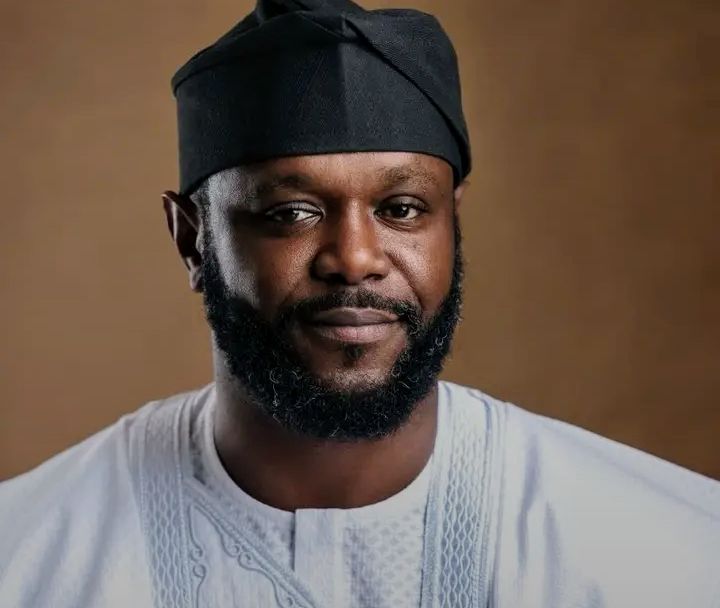
In Nigerian politics, some contributions are made from the podium, while others happen quietly through conversations, relationships and the painstaking work of bringing people together.
For Seyi Tinubu, Patron of the City Boy Movement, the emerging political story is increasingly one of building bridges, expanding conversations and connecting his father’s political project with a new generation of Nigerians.
The significance of that role lies not only in political mobilisation but also in the breadth of constituencies being reached.
Under Seyi Tinubu’s patronage, the City Boy Movement has continued to expand its engagements with young people, community leaders, professional groups, religious organisations and ethnic constituencies, creating a wider network around youth participation and political engagement.
One of the notable examples came recently when the Youth Wing of the Christian Association of Nigeria and the National Council of Muslim Youth Organisations signed a Peace Accord ahead of the 2027 general elections.
The accord commits both groups to religious tolerance, peaceful coexistence and responsible youth participation while rejecting political violence.
The initiative comes against the backdrop of Nigeria’s religious diversity, where political disagreements can sometimes become entangled with religious identities.
Its message is straightforward: political differences should not become religious conflict, while young Nigerians should be encouraged to embrace dialogue and peaceful participation.
Reaching across ethnic and professional constituencies
The engagement with the Ohanaeze Ndigbo FCT Chapter, led by its President, Chief Hon.
Andrew Okonkwo Ugwu, represents another dimension of the bridge-building effort.
The meeting provided an avenue for engagement with the Igbo community in the Federal Capital Territory, coming amid broader efforts by the City Boy Movement to strengthen relationships with Igbo stakeholders.
Earlier, Ndigbo for Asiwaju Bola Ahmed Tinubu 2027 Forum entered into a partnership with the movement to deepen political engagement, economic empowerment and national integration.
Another engagement involved the Association of Nigerian Artisans and Technicians.
The significance of such an engagement goes beyond the meeting itself. Artisans and technicians constitute a large and economically important constituency whose concerns often become prominent during elections but require sustained engagement well before voting day.
The emerging philosophy behind the City Boy Movement’s outreach appears to be straightforward: go to the people, listen to them and build relationships with them.
It reflects an understanding that modern political mobilisation cannot be sustained by social media activity alone.
City Boy moves beyond campaign platform
Seyi Tinubu has also spoken about the evolution of the movement.
At the City Boy Movement’s maiden National Retreat in Abuja, he described the organisation as having evolved beyond its original role as a campaign platform into a national movement focused on youth participation, democratic engagement and service.
He urged members to serve as communicators, educators, mobilisers and ambassadors of hope, while engaging citizens with facts, empathy and responsibility.
The emphasis gives political mobilisation a more community-oriented dimension.
Rather than simply communicating political messages, members are expected to reconnect citizens with government and explain policies within communities, wards, markets and campuses.
Seyi Tinubu specifically charged the movement to serve as a bridge between government and the people.
The organisational work supporting that ambition has also been significant.
The July 2026 National Retreat brought together the movement’s Governing Board, National Working Committee, national directors, state directors and stakeholders from the 36 states and the Federal Capital Territory.
The retreat was used to strengthen structures, inaugurate leadership and prepare the organisation for intensified grassroots mobilisation.
Targeting 10 million youth votes
The City Boy Movement has also announced an ambitious target of mobilising 10 million youth votes for President Bola Ahmed Tinubu in the 2027 presidential election.
Its leadership has stressed that such a target cannot be achieved through slogans or social media activity alone.
Instead, the movement says it requires real people, membership expansion, ward structures and sustained community engagement.
The strategy places young Nigerians at the centre of the movement’s political mobilisation efforts.
In June, The Bridge for Renewed Hope, a youth mobilisation platform, formally aligned with the City Boy Movement after its national inauguration in Abuja.
The group said its objectives included deepening youth participation in governance and mobilising support for President Tinubu.
Together, these developments point to an effort to construct a political network that reaches beyond traditional party structures and established political actors.
Building a broad coalition
The range of engagements also illustrates the diversity of constituencies being targeted.
Christians and Muslims. Igbo and non-Igbo communities. Artisans and professionals.
Young people and community leaders.
Established political actors and a new generation of politically active Nigerians.
For Seyi Tinubu, the assignment also carries a personal political dimension.
As the President’s son, his public activities naturally attract attention. However, his involvement with City Boy places him in a different arena, where he is helping to build relationships, organisational structures and youth networks around his father’s political project.
The effectiveness of that effort, however, will ultimately depend on what happens beyond meetings, photographs and public declarations.
The more significant test will be whether the engagements produce lasting relationships, responsible political participation and stronger connections between citizens and public institutions.
That is where political mobilisation can acquire a broader meaning.
The road to 2027
For now, the City Boy Movement is expanding its engagement with different groups and communities, with Seyi Tinubu increasingly associated with efforts to connect those constituencies.
The approach places conversation, inclusion and grassroots relationships at the centre of political mobilisation.
The road to the 2027 general elections is expected to generate intense political activity across Nigeria.
But before voters cast their ballots, political organisations and movements will also be competing for something less tangible: trust, relationships, membership and influence within communities.
It is in that space that Seyi Tinubu and the City Boy Movement are seeking to establish themselves.
Their evolving strategy is not simply about building a campaign structure.
It is about building bridges between political actors and constituencies, between government and citizens, and between Nigeria’s established political networks and a younger generation seeking a greater role in the country’s democratic process.






2027 Elections
Shettima Says Peter Obi Cannot Match Buhari’s Popularity, Urges Igbos to Build National Alliances
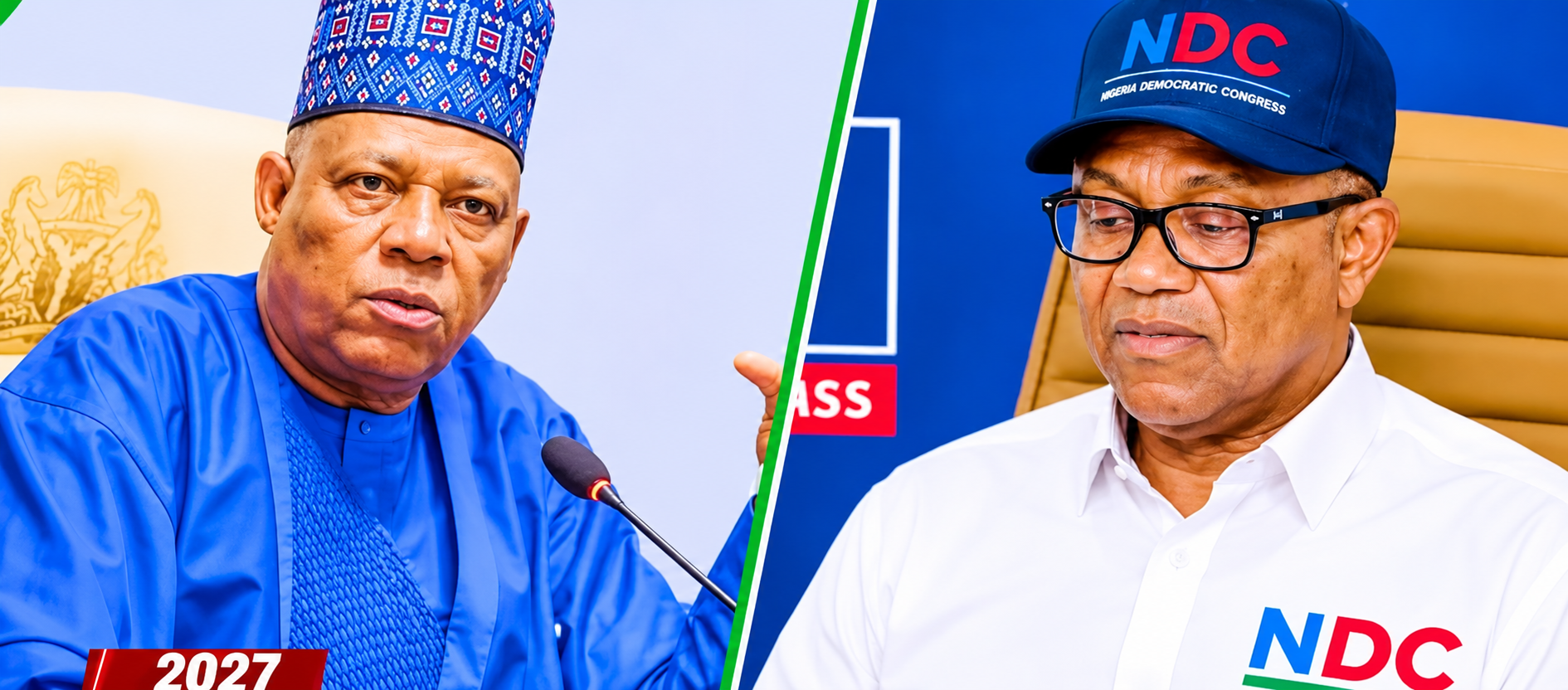
Vice-President Kashim Shettima has declared that former President Muhammadu Buhari enjoyed greater popularity than former Anambra State Governor and presidential candidate of the Nigeria Democratic Congress (NDC), Peter Obi.
Shettima made the remark on Thursday, November 19, 2026, during the All Progressives Congress (APC) presidential campaign rally in Awka, Anambra State, where he urged the people of the South-East to strengthen their political relationships with other regions of the country.
The Vice-President argued that Buhari’s political experience demonstrated that popularity within a particular region was insufficient to secure victory in Nigeria’s presidential elections.
According to Shettima, Buhari contested the presidency in 2003, 2007 and 2011 but failed to win despite enjoying considerable support in Northern Nigeria.
He said the former president had a strong electoral base of approximately 15 million votes in the North but still needed broader national support to achieve his presidential ambition.
“Again, he had a strong base of 15 million votes in Northern Nigeria. He tried again in 2011, he lost. Because having a strong base across the nation is what you need to win a presidential election in a country like Nigeria,” Shettima said.
The Vice-President also cautioned the Igbo people against allowing political disagreements to create divisions between the South-East and other parts of Nigeria.
He maintained that the region remained an important component of the country’s political and economic structure, urging its people to build stronger relationships across regional boundaries.
Shettima claimed that approximately 17 million Igbo people lived in Northern Nigeria, while another 10 million resided in Lagos.
He said the figures highlighted the importance of political engagement beyond the South-East, encouraging the people to take advantage of their widespread presence across the country.
“Don’t let anyone tell you that Igbos are not an essential component of the Nigerian configuration,” he said.
He further appealed to the people of the region to embrace political tolerance and make informed decisions ahead of the 2027 general elections.
Speaking about his personal relationship with the Igbo community, Shettima disclosed that some of his closest friends and aides were from the South-East.
He said he had maintained strong relationships with people from the region and had committed personal resources and time to issues affecting them since assuming office as Vice-President.
Shettima also recalled the political alliance that brought the APC to power in 2015, urging the South-East to strengthen its participation in national politics.
His comments come amid growing political realignments ahead of the 2027 general elections, with Peter Obi expected to remain one of the prominent opposition figures in the contest for national political support.
The remarks also place renewed attention on the debate surrounding regional political influence, national acceptance and the importance of building alliances across Nigeria’s geopolitical zones ahead of the next presidential election.
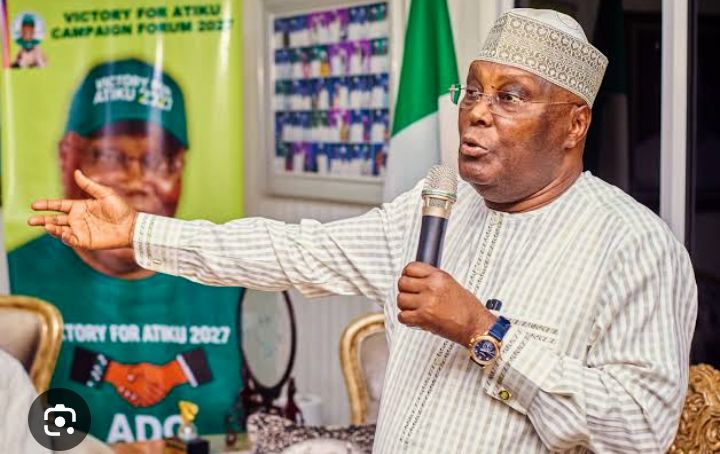
Former Vice-President Atiku Abubakar has called on the Independent National Electoral Commission (INEC) to subject its proposed Artificial Intelligence (AI) system to an independent audit before deploying the technology for managing election results in the 2027 general elections.
Atiku warned that using artificial intelligence in election result management without adequate transparency and safeguards could undermine public confidence in the electoral process.
He expressed concern that algorithms could potentially delay, reject or interfere with the transmission of polling unit results if their operations were not properly monitored.
The former vice-president made the demands in a petition addressed to the INEC Chairman on behalf of the African Democratic Congress (ADC) and other democratic stakeholders.
In a statement issued on Thursday by the Director of Strategic Communication of the ADC Presidential Campaign Council, Phrank Shaibu, Atiku called for the disclosure of the technical and operational details of the proposed system.
He specifically requested access to its source code, training data, discrepancy-detection criteria, as well as the identities of its developers and third-party vendors.
Atiku also urged INEC to grant independent cybersecurity experts, political party representatives and civil society technologists access to the system for a comprehensive assessment ahead of the nationwide mock accreditation exercise scheduled for November 28, 2026.
The former presidential candidate raised concerns over INEC’s planned integration of artificial intelligence and intelligent document processing into the process connecting its Data Verification and Authentication System with the INEC Result Viewing (IReV) portal.
According to him, Nigerians deserve to understand how the technology operates and the extent of its involvement in election result management.
“INEC cannot ask Nigerians to trust a system whose rules they are forbidden to see. If an algorithm can flag a polling unit result sheet, the public deserves to know what triggers that flag, who set the threshold, who can change it and what happens to the result afterward,” he said.
He warned that technical challenges such as poor lighting, unfamiliar handwriting and worn-out paper could cause genuine polling unit result sheets to be flagged or delayed.
Atiku maintained that such limitations should not become grounds for withholding valid election results, insisting that discrepancies must be handled consistently across polling units.
He consequently called on the commission to establish and publicly disclose a clear procedure for reviewing results flagged by the AI system.
He said INEC should explain who would be responsible for reviewing flagged results, how decisions would be documented, the process for notifying political parties and how errors could be challenged.
Atiku further insisted that artificial intelligence should serve strictly as an administrative tool under human supervision and should not be permitted to delete, alter or permanently block election results.
He also asked the electoral commission to reaffirm the legal status of Form EC8A, the polling unit result sheet completed and signed by presiding officers and party agents.
“The polling unit result sheet, Form EC8A, records what happened where the people voted. INEC must publicly reaffirm the legal status of the physical form completed and signed at the polling unit, and explain how it will resolve any conflict between that document and an AI assessment.
“A machine’s verdict cannot be allowed to quietly displace the evidence witnessed by voters and party agents,” he added.
The former vice-president also proposed that political parties be given real-time monitoring access through a dedicated dashboard or observer interface.
He said such access would enable parties to monitor results flagged by the system, upload delays and submissions that might be blocked during elections.
Atiku urged the National Assembly to summon INEC’s leadership and its Information and Communication Technology Directorate to explain the system’s design, operational safeguards and arrangements for an independent audit.
He also called on election observers and international partners to incorporate the digital handling and transmission of results into their election monitoring activities.
Similarly, he advised voters to document results as announced and displayed at their respective polling units to provide records that could be compared with electronically uploaded results.
Atiku linked the demand for transparency to his campaign’s promise of an affordable life, arguing that Nigerians must be allowed to determine their political future without technological interference.
“Voters must be free to accept or reject that promise at the ballot box. No hidden algorithm should stand between a struggling family’s vote and the change that family hopes to see,” he said.
He urged INEC to address the concerns before public mistrust surrounding the proposed technology escalated into an electoral crisis.
INEC’s IReV portal provides public access to scanned copies of polling unit result sheets. However, the portal is distinct from the statutory process through which election results are collated and declared.
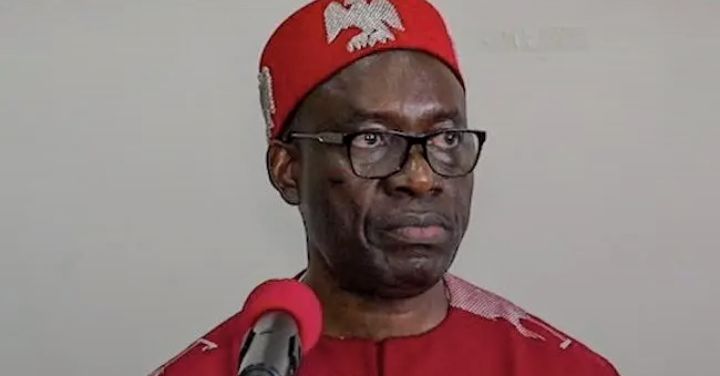
Anambra State Governor, Professor Chukwuma Soludo, has formally declared the support of the All Progressives Grand Alliance (APGA) for President Bola Tinubu’s re-election bid in the 2027 general election.
Soludo announced the party’s decision on Thursday while handing over the APGA flag to Vice-President Kashim Shettima during a joint presidential campaign rally organised by APGA and the All Progressives Congress (APC) in Awka, Anambra State.
The rally, held at Dr Alex Ekwueme Square, was tagged “SoluTinubu 2027” and attracted supporters of both political parties, who turned out in their respective party colours with flags and campaign materials.
Speaking at the event, the governor said APGA had maintained an alliance with the party at the centre since 2011, noting that the relationship had been sustained through cooperation between elected representatives of both parties.
Soludo explained that APGA lawmakers in the National Assembly had consistently worked with their APC counterparts, describing the relationship as an example of political cooperation.
“APGA has always been in solidarity with the party at the centre, and therefore, that partnership has meant that all the APGA members of the National Assembly in Abuja, they work with the caucus of the APC and the National Assembly,” he said.
The governor also disclosed that the Speaker of the House of Representatives had commended the cooperation between APGA and APC lawmakers.
He said the Speaker described the APGA caucus as one of the most cooperative groups in the House of Representatives.
Describing Thursday’s gathering as a joint rally, Soludo said the partnership between the two parties should continue in the interest of progress and national development.
“Now, I want to emphasise that this flag, we are handing it over in the spirit of progressives working together. Here in Anambra, we are united for one candidate, and that candidate is President Bola Tinubu and Vice-President Shettima,” he said.
However, Soludo clarified that the alliance would not prevent APGA and APC from fielding separate candidates for other elective positions, including the Senate, House of Representatives and State House of Assembly.
He explained that candidates who emerge victorious would cooperate with the caucus of the other party at their respective legislative levels.
According to him, APGA lawmakers elected into the National Assembly would work with the APC caucus, while APC lawmakers elected into the Anambra State House of Assembly would cooperate with the APGA caucus.
“That is in the spirit of progressives working together,” the governor added.
Soludo subsequently announced that APGA’s National Working Committee, National Executive Committee and the wider party membership had resolved to adopt Tinubu as their preferred candidate for the 2027 presidential election.
He urged APGA members across the country to mobilise support and votes for the President and his running mate, Shettima.
The governor said the decision was informed by the party’s commitment to national unity and its position that a Southern President should be allowed to complete his tenure before power returns to the North.
“APGA National Working Committee, National Executive Committee, and the entire APGA family, we have resolved to adopt, in the spirit of one Nigeria, united Nigeria, in the spirit of solidarity with a Southern President to complete his term before the presidency goes back to the North,” he said.
Soludo further linked the endorsement to the principles of progressivism, cooperative federalism and national unity.
He then formally handed over the party’s flag to Shettima, declaring APGA’s readiness to campaign and mobilise support for Tinubu and the Vice-President ahead of the 2027 election.
“In the spirit of progressivism, in the spirit of cooperative and competitive federalism, in the spirit of unity and progress of one indivisible united Nigeria, we hereby handing our flag that all APGA faithful all over Nigeria will campaign and mobilise votes for President Bola Tinubu and his vice-presidential candidate, Senator Kashim Shettima, GCON. Therefore, we hand over to you,” Soludo said.
-

 Security4 months ago
NDLEA Declares Alleged Drug Kingpin, Three Associates Wanted, Freezes ₦9.8bn Linked to Syndicate
-

 National Affairs4 months ago
ICPC Uncovers 908 Suspected Ghost Workers Across 50 Federal MDAs, Recovers ₦942 Million
-

 Business/Finance4 months ago
How to Apply for Tunde Onakoya’s ₦250 Million Scholarship Programme and Free Laptop Offer
-

 Judiciary | Public Safety4 months ago
INEC Tells Court Voter Information Is Not Confidential in Emeka Ike’s ₦10bn Lawsuit
-

 Politics4 months ago
Atiku Challenges Tinubu to Reveal Details of ₦15.13bn SUV Procurement in 2026 Budget
-

 Judiciary | Public Safety4 months ago
Court to Rule Friday on NDLEA’s Bid to Destroy ₦480bn Meth Lab in Ogun
-

 Security4 months ago
Family Paid ₦50 Million Ransom to Secure Release of Abducted Kebbi Judge
-

 News4 months ago
2026 Budget: FG Earmarks ₦962.83bn for SUVs, Empowerment Projects Amid Debt Concerns