
World News | International Affairs
Uganda Bus Crash: Death Toll Rises to 24 After School Excursion Tragedy

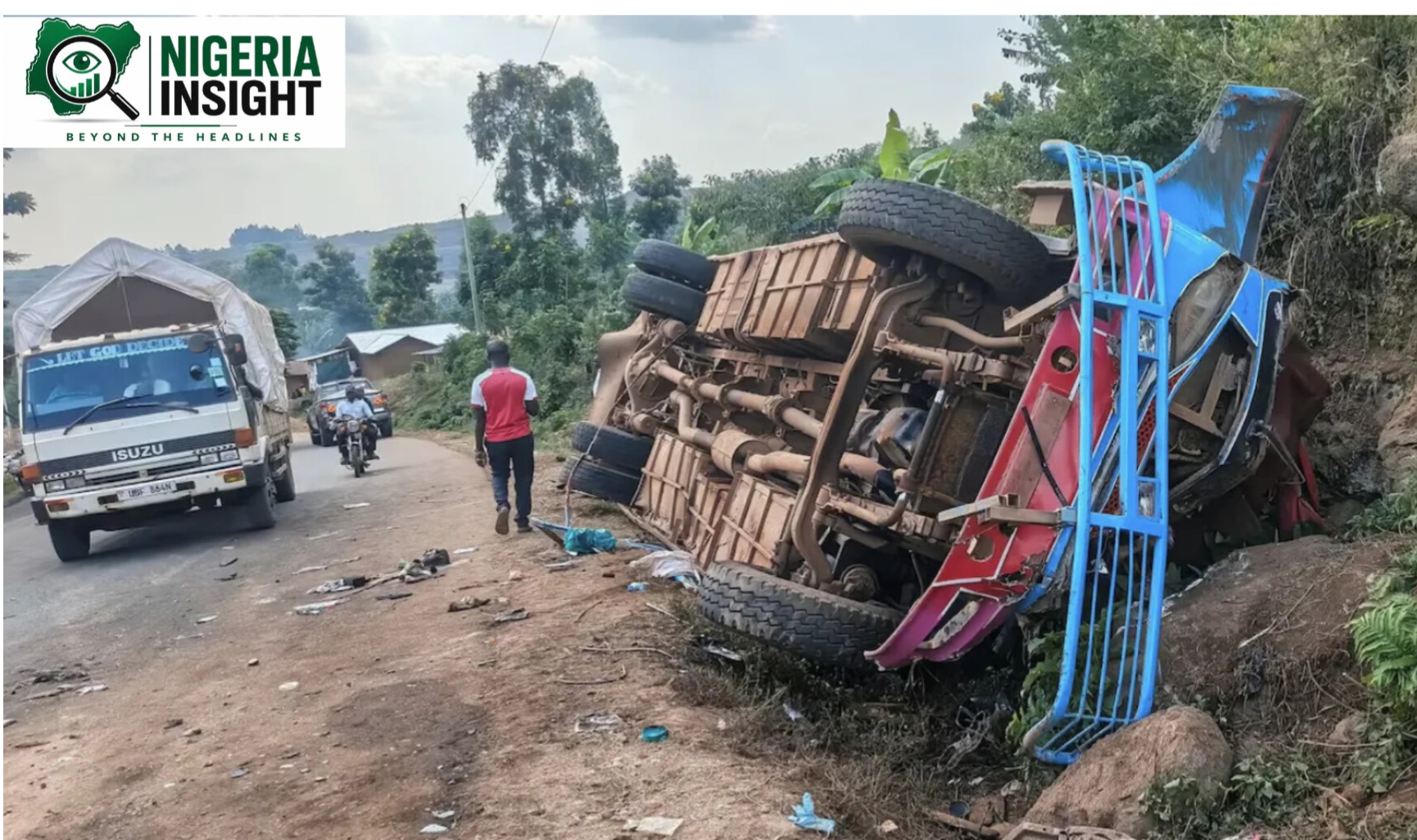
A school excursion turned tragic in eastern Uganda after the death toll from a bus crash involving pupils of King David Junior School rose to 24, following the deaths of three more children who succumbed to injuries sustained in the accident.
The pupils were returning to Kampala after an educational trip to the popular Sipi Falls in Kapchorwa District when the school bus veered off the road, struck a large rock and overturned along the Kapchorwa–Mbale Road.
Preliminary police investigations indicate that the driver lost control of the vehicle, although the exact cause of the crash remains under investigation.
Uganda Police said 24 fatalities have now been confirmed, while more than 20 survivors remain hospitalised, receiving treatment for injuries sustained in the crash.
Authorities added that several of the deceased have been identified, while efforts continue to identify the remaining victims and support affected families.
The bus was one of several vehicles transporting pupils on the educational excursion.
The other vehicles completed the journey safely and returned to Kampala without incident.
In response to the tragedy, Uganda’s Ministry of Education and Sports announced the immediate suspension of all school educational trips nationwide pending a comprehensive review of safety procedures.
The government said the temporary measure would allow investigators to determine the circumstances surrounding the crash and enable authorities to strengthen safety guidelines for school transportation and educational excursions.
Police have also directed schools currently on excursions to report to the nearest police station for assistance in ensuring the safe return of learners.
The crash has once again highlighted concerns over road safety in Uganda, where traffic accidents continue to claim hundreds of lives annually.
Factors such as speeding, mechanical failures, poor road conditions and inadequate enforcement of traffic regulations have frequently been cited as contributing causes of fatal crashes.
Road safety advocates have called for stricter inspections of school buses, improved driver training and stronger enforcement of transport safety standards to better protect children travelling on educational trips.
The Uganda Police Force, government officials and humanitarian organisations have expressed condolences to the families of the victims, the management of King David Junior School and the wider school community.
As investigations continue, the tragedy has prompted renewed calls for stronger road safety measures to prevent similar incidents and ensure that educational excursions do not end in avoidable loss of life.
School excursions are intended to enrich learning through practical experiences outside the classroom.
The Kapchorwa tragedy underscores the critical importance of safe school transportation, proper vehicle maintenance, qualified drivers and effective road safety enforcement.
The incident is likely to influence future policies on school travel, not only in Uganda but across the region.









World News | International Affairs
Kuwait Says Iranian Strike Hits Another Power and Water Plant, Raising Regional Tensions

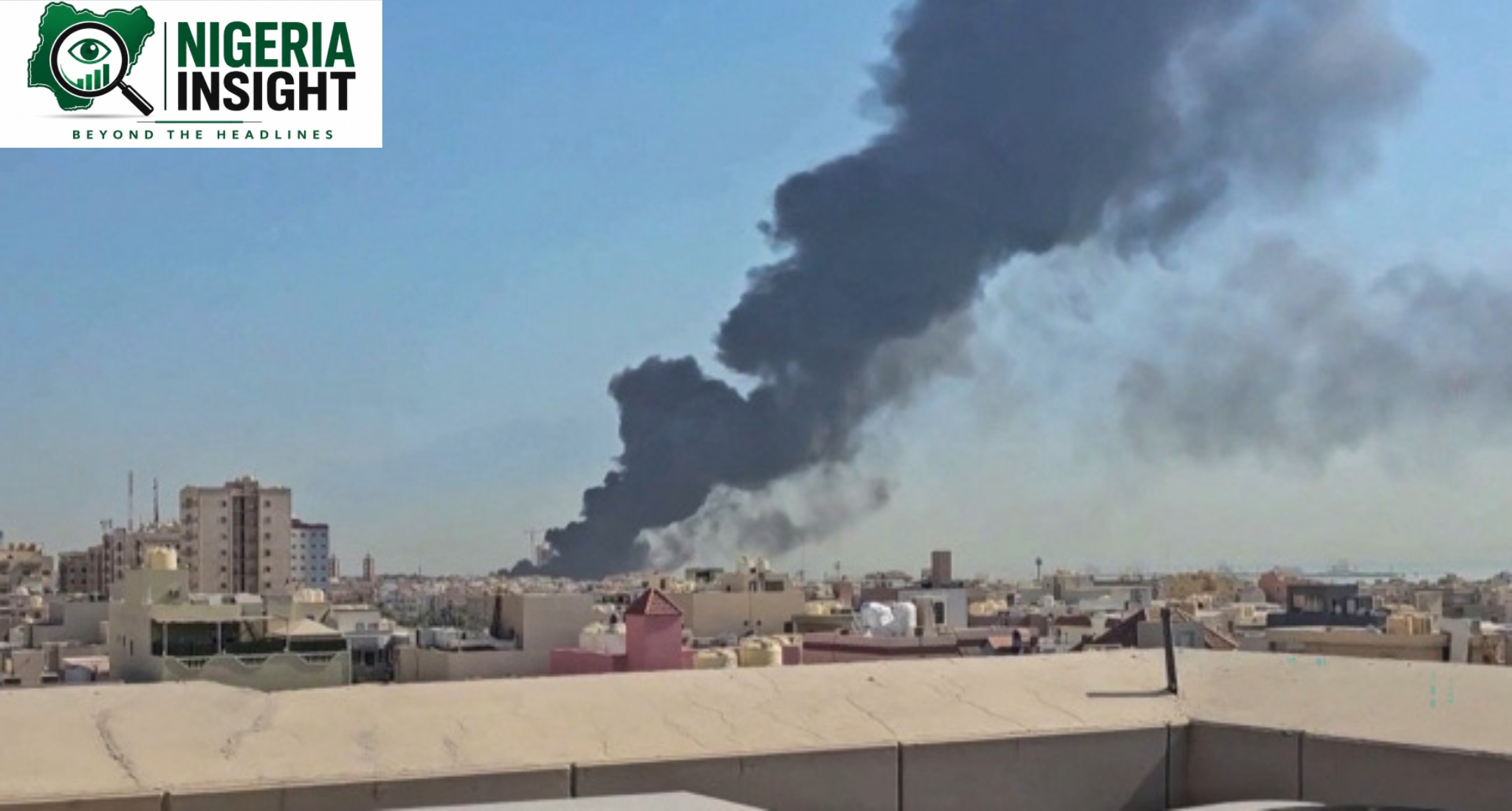
Kuwait has accused Iran of carrying out another strike on one of its electricity and water desalination facilities, saying the latest attack triggered a fire and forced the shutdown of several power generation units, intensifying concerns over the widening conflict in the Gulf region.
The incident comes just one day after Kuwaiti authorities reported a similar attack on critical infrastructure, fuelling fears that vital civilian facilities are increasingly becoming targets as tensions in the Middle East escalate.
According to a statement issued on Saturday by Kuwait’s Ministry of Electricity, Water and Renewable Energy, the latest strike hit an electricity generation and water distillation plant, causing a fire in one of the facility’s components.
“Another electricity and water distillation plant was targeted by a hostile attack that led to a fire erupting in one of the plant’s components,” the ministry said.
Authorities added that the incident led to the temporary deactivation of several electricity generation units as emergency teams worked to contain the fire and assess the extent of the damage.
While officials have not disclosed the full impact of the attack on electricity or water supplies, the incident has heightened concerns about the vulnerability of critical infrastructure across the Gulf.
Kuwait relies heavily on desalination plants to meet its freshwater needs, making such facilities essential to the country’s daily water supply and energy security.
Emergency response teams were deployed to the affected plant, and authorities said technical assessments were underway to restore normal operations as quickly as possible.
The reported strike comes amid heightened military tensions involving Iran and several countries in the region.
Recent weeks have seen an increase in missile and drone attacks targeting military installations, energy infrastructure and strategic facilities, raising fears that the conflict could spread beyond its current theatres.
Analysts warn that attacks on energy and water infrastructure not only threaten national security but also risk disrupting essential services for civilians.
The latest development is expected to intensify calls from the international community for restraint and renewed diplomatic engagement to prevent further escalation.
Security experts have warned that continued attacks on civilian infrastructure could have significant humanitarian and economic consequences, particularly in a region that plays a central role in global energy production and maritime trade.
As of the time of publication, there was no immediate response from Iranian authorities regarding Kuwait’s allegations.
Attacks on electricity and water facilities carry consequences beyond the battlefield.
Damage to critical infrastructure can disrupt essential public services, affect economic activity and increase humanitarian risks for civilian populations.
As tensions continue to rise across the Middle East, the protection of civilian infrastructure remains a key concern for governments and international organization.
World News | International Affairs
Seven Killed in Reported Ukrainian Drone Strike on Russian Logistics Centre

Russian authorities say at least seven people have been killed and 24 others injured following a Ukrainian drone attack on a logistics centre in western Russia, marking another deadly episode in the continuing conflict between the two countries.
According to Russian officials, the attack targeted a logistics facility operated by Wildberries, one of Russia’s largest e-commerce companies.
Emergency services said the strike triggered a fire at the site, with rescue teams deployed to search for survivors and contain the damage.
Regional authorities confirmed that those injured were taken to nearby hospitals for treatment, while investigations into the full extent of the attack remain ongoing.
Russian officials accused Ukraine of carrying out the drone strike, describing it as another attack on civilian infrastructure inside Russian territory.
Authorities said emergency responders worked through the aftermath of the strike to extinguish the blaze and assess structural damage at the logistics centre.
The identities of the victims had not been fully disclosed at the time of publication.
The incident adds to a growing number of cross-border drone attacks reported by both sides as the conflict increasingly extends beyond the frontlines.
As of the time of publication, Ukrainian authorities had not officially commented on the reported attack.
Ukraine rarely confirms responsibility for strikes inside Russian territory, although Kyiv has maintained that military operations are aimed at weakening Russia’s war-fighting capabilities.
Ukrainian officials have also argued that attacks on strategic infrastructure are a response to Russia’s continued military offensive and repeated strikes on Ukrainian cities.
The Russia-Ukraine war, now in its fourth year, has witnessed an increasing use of drones by both countries to target military installations, logistics hubs, energy facilities and other strategic assets.
Analysts say the widespread deployment of long-range drones has transformed the nature of the conflict, allowing both sides to strike deep into each other’s territory while reducing reliance on conventional air operations.
The war has continued to exact a heavy humanitarian toll, with thousands of civilians killed or injured, millions displaced and critical infrastructure damaged across both countries.
The latest strike comes amid continued international efforts to encourage a diplomatic resolution to the conflict, even as fighting persists across multiple fronts.
Global leaders have repeatedly warned that further escalation could deepen humanitarian suffering and prolong instability in Europe, with wider implications for global food supplies, energy markets and international security.
As investigations continue, the reported attack underscores the evolving nature of the conflict, where civilian and commercial infrastructure increasingly finds itself caught in the crossfire of one of Europe’s deadliest wars in decades.
The increasing use of drones by both Russia and Ukraine demonstrates how modern warfare is evolving.
Beyond military consequences, attacks on logistics and commercial infrastructure can disrupt supply chains, affect civilian livelihoods and further complicate diplomatic efforts to end the conflict.
World News | International Affairs
Israel Says It Has Killed Hamas Commander Walid Haniyeh in Targeted Operation

The Israeli military has announced the killing of Walid Haniyeh, whom it identified as a deputy commander in Hamas’ elite Nukhba force, during what it described as a targeted operation in the Gaza Strip.
In a joint statement, the Israel Defense Forces (IDF) and the Israel Security Agency (Shin Bet) said Haniyeh played a command role during the October 7, 2023 Hamas-led attack on southern Israel.
Israeli authorities alleged that he directed a militant cell that crossed into Israeli territory and was involved in the abduction of civilians into Gaza.
According to the Israeli military, Haniyeh had also been involved in recruiting fighters and overseeing training within Hamas’ military wing before his death.
The IDF said the operation formed part of its ongoing campaign to target Hamas commanders and dismantle the group’s military infrastructure.
Israeli officials have linked Haniyeh to the October 7 attack, during which Hamas fighters killed civilians and soldiers and took hostages into Gaza.
However, Nigeria Insight has not independently verified additional claims circulating on social media regarding specific atrocities allegedly committed by Haniyeh.
At the time of publication, no independent international investigation or court judgment had established those specific allegations.
As of publication, Hamas had not issued an official statement responding to the Israeli announcement regarding Haniyeh’s death.
The killing comes as military operations continue in Gaza despite repeated international calls for a lasting ceasefire and expanded humanitarian access.
The conflict has resulted in significant casualties, widespread displacement and a worsening humanitarian crisis, according to United Nations agencies.
Israel has maintained that its operations are aimed at dismantling Hamas’ military capabilities and preventing future attacks.
Hamas has continued to oppose Israeli military operations, while international mediators have sought to broker ceasefire agreements and secure the release of remaining hostages.
The latest operation underscores the continuing volatility of the conflict and the challenges facing diplomatic efforts to achieve a durable peace in the region.
-

 Judiciary | Public Safety3 days ago
Analysis: Why Would Mary Habila’s Father Oppose an Autopsy?
-

 Judiciary | Public Safety2 days ago
Supreme Court Restores Final Forfeiture of Emefiele’s Seven Luxury Properties
-

 Uncategorized8 hours ago
NEMA Urges Residents in Flood-Prone Areas to Relocate as Heavy Rains Intensify
-

 Security2 days ago
Kogi Rescues Abducted NECO Candidates as Governor Ododo Reaffirms No-Ransom Policy
-
 Analysis | Security | National Affairs2 days ago
Analysis: Why Military Recruitment Appears Lower in Nigeria’s South-East
-

 Editorial2 days ago
When Nigeria’s Elite Choose Foreign Classrooms, What Does It Say About Our Universities?
-

 World News | International Affairs23 hours ago
Israel Says It Has Killed Hamas Commander Walid Haniyeh in Targeted Operation
-

 Sports4 days ago
Stanley Nwabali Opens Up on Family Tragedy and Mental Health Before Chippa United Return