
Sports
Who Are the Emiratis Behind Crisis-Hit Manchester City?

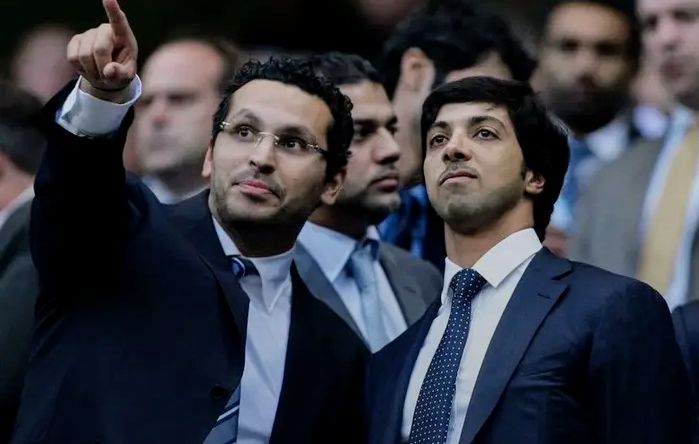
Manchester City’s transformation from an underperforming English club into one of the most dominant forces in world football has been closely linked to the enormous financial backing of Abu Dhabi.
Since the club was acquired by the Abu Dhabi United Group in 2008, City have enjoyed unprecedented investment, winning multiple Premier League titles and establishing themselves as a major force in domestic and European football.
But the club is now facing a major legal crisis after the Premier League found Manchester City guilty of financial-rule breaches following a lengthy investigation.
The Premier League had brought 115 charges against City in February 2023, accusing the club of breaching financial regulations and failing to cooperate with the investigation.
The league subsequently confirmed that City had been found guilty of charges relating to financial breaches, including allegations that the club used sham contracts and concealed funding.
Potential sanctions could include significant fines, the stripping of titles and, in the most severe scenario, expulsion from the Premier League.
Manchester City have continued to deny wrongdoing and are expected to appeal the verdict. Club chairman Khaldoon Al Mubarak has also maintained confidence that City will ultimately establish their position.
At the centre of Manchester City’s ownership structure are two of the United Arab Emirates’ most influential figures: Sheikh Mansour bin Zayed Al Nahyan and Khaldoon Al Mubarak.
Sheikh Mansour bin Zayed Al Nahyan
Sheikh Mansour bin Zayed Al Nahyan is one of the most powerful figures in the United Arab Emirates.
Born in 1970, he is the younger brother of UAE President Sheikh Mohamed bin Zayed Al Nahyan. He serves as vice-president and deputy prime minister of the UAE, as well as chairman of the country’s Presidential Court.
Mansour’s Abu Dhabi United Group acquired Manchester City in 2008, ushering in a new era for the club.
His influence extends far beyond football. He chairs Mubadala Investment Company, one of the UAE’s major state-backed investment funds, which manages hundreds of billions of dollars in assets.
Khaldoon Al Mubarak, Manchester City’s chairman, is also the chief executive of Mubadala.
Mansour’s business and political interests have given the Manchester City ownership significant influence across sectors including investment, media, infrastructure and energy.
His activities outside football have, however, attracted controversy.
He is a majority owner of RedBird IMI, which reached an agreement to acquire The Daily Telegraph before the transaction was blocked following scrutiny over foreign state ownership of British newspapers.
Mansour also owns Abu Dhabi-based International Media Investments, which operates Sky News Arabia.
His name has also featured in international controversy surrounding the war in Sudan.
A New York Times investigation reported that he played a central role in alleged UAE support for Sudan’s Rapid Support Forces, a claim Abu Dhabi has strongly rejected.
The UAE has repeatedly denied allegations that it supports the paramilitary group.
In Manchester, Mansour’s investment has gone beyond the football club.
The Abu Dhabi United Group has invested heavily in the redevelopment of Manchester’s eastern area, including projects around the Etihad Stadium and the club’s wider campus.
However, the nature of some of those investments has also attracted scrutiny, with a University of Sheffield study and reporting by The Sunday Times raising questions about whether the group received favourable arrangements for some redevelopment projects.
Khaldoon Al Mubarak
While Sheikh Mansour is the ultimate figure associated with Manchester City’s ownership, Khaldoon Al Mubarak has become its most prominent public face.
As chairman of Manchester City and City Football Group, Mubarak has overseen much of the club’s transformation since the Abu Dhabi takeover.
He is regularly seen at City matches and has played a central role in the club’s development both on and off the pitch.
Under his leadership, City have invested billions of pounds in players, infrastructure and football operations while significantly increasing their commercial revenues.
City Football Group has also expanded into a global network of clubs, with investments involving teams such as Spain’s Girona and Major League Soccer side New York City FC.
Mubarak is also a major figure in the UAE’s business establishment.
He has served as managing director and group chief executive of Mubadala Investment Company since 2002. The state-owned investment company says it manages hundreds of billions of dollars in assets across more than 80 countries.
He is also a board member of Abu Dhabi National Oil Company, the UAE’s state-owned energy giant.
Beyond his corporate responsibilities, Mubarak holds senior government positions in Abu Dhabi, including membership of the emirate’s Executive Council.
His position has made him one of the most influential non-royal figures in the UAE.
His long involvement with Manchester City has also brought him into contact with senior British political figures.
Reports have described him as having developed close relationships with politicians in Greater Manchester and the wider UK political establishment.
Why the ownership matters
Manchester City’s current crisis goes beyond football because of the scale and influence of the figures behind the club.
Sheikh Mansour’s political position and business interests, combined with Mubarak’s senior roles in Abu Dhabi’s investment and government structures, have made Manchester City closely connected to the UAE’s wider economic and political establishment.
That connection has also helped make City’s legal battle with the Premier League a matter of international interest.
The club’s response to the verdict, the outcome of its appeal and any sanctions eventually imposed could have significant consequences for Manchester City and potentially reshape one of the most successful periods in the club’s history.
For now, City continue to contest the charges, while the ownership group remains at the centre of scrutiny over the financial and governance practices that accompanied the club’s rise to the top of English football.




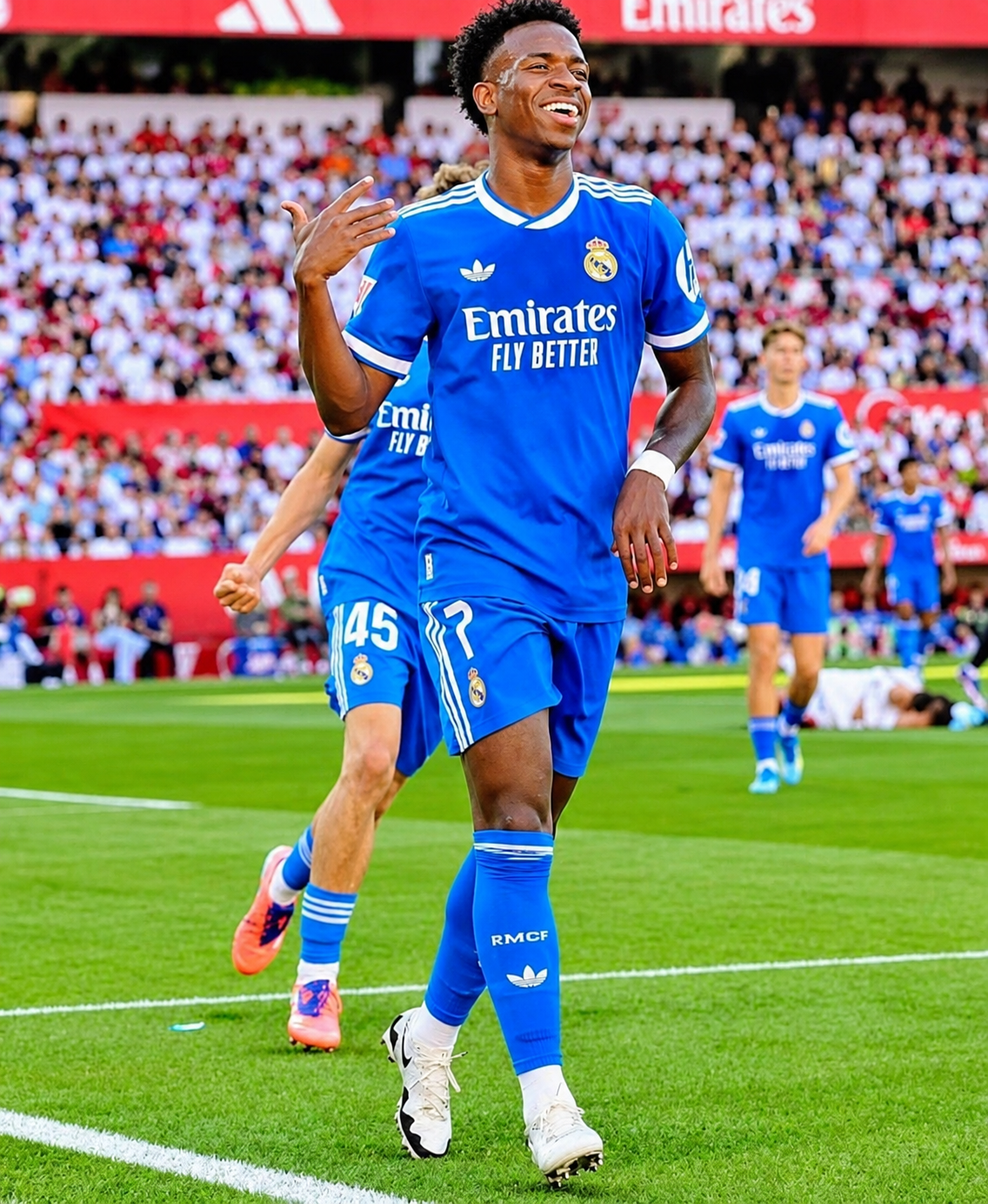
Brazilian forward Vinicius Junior faces a battle to reclaim his starting position at Real Madrid after rediscovering his scoring touch during the international break.
The winger, who has struggled for consistency this season, returned from international duty with renewed confidence after scoring five goals in two friendly matches for Brazil against Japan and Singapore.
However, his impressive performances for the national team have not automatically guaranteed him a place in Real Madrid’s starting line-up, with competition for attacking positions increasing under manager Jose Mourinho.
Real Madrid have continued their impressive run in Vinicius’s absence, reducing Barcelona’s lead at the top of La Liga to three points.
The Spanish giants have the opportunity to temporarily draw level with their Catalan rivals when they host Celta Vigo at the Santiago Bernabeu on Saturday.
Vinicius is available for selection after completing a four-match domestic suspension imposed following an incident involving hair-pulling.
During his absence from domestic action, Madrid defeated Barcelona in the Clasico at Camp Nou, as well as securing victories over Sevilla, Racing Santander and Valencia.
Although Vinicius featured in the club’s Champions League victories over AEK Athens and RB Leipzig during the same period, he failed to reproduce the performances that previously established him as one of the team’s most important attacking players.
The Brazilian joined Real Madrid from Flamengo in 2018 and developed into one of the most dangerous forwards in European football.
He played a significant role in the club’s Champions League triumphs in 2022 and 2024, establishing himself as a key figure in Madrid’s attacking setup.
However, his performances this season have fallen below expectations, with his only goal for the Spanish club coming in August against Real Sociedad.
Meanwhile, Madrid’s record signing, Yan Diomande, has impressed since arriving at the club, scoring four goals in his last eight appearances and strengthening his claim to the left-wing position.
Brazil performances offer Vinicius fresh hope
Vinicius found a much-needed confidence boost during the international break under former Real Madrid manager Carlo Ancelotti.
His five goals in two friendlies against Japan and Singapore offered a reminder of his attacking quality and raised hopes that he could rediscover his best form at club level.
The 26-year-old also admitted that his preparations for the current campaign were affected by the disappointment of Brazil’s early elimination from the World Cup.
He explained that he did not train as extensively as he had in previous years after taking time off to rest and spend time with his family.
“I don’t think I prepared myself as well as I could have after the World Cup because the impact of that tournament is very significant for all Brazilians,” Vinicius told reporters.
He added that Brazil’s unexpected round-of-16 exit affected him emotionally.
The forward also acknowledged that uncertainty surrounding his future at Real Madrid contributed to a difficult period, although he eventually signed a new contract that will keep him at the club until 2032.
Vinicius described the pressure of maintaining elite performances over several years as challenging, pointing out that only Cristiano Ronaldo and Lionel Messi had consistently maintained extraordinary numbers for such an extended period.
“I’m human, I make mistakes often, but I always try to improve,” he said.
Increased competition puts pressure on Brazilian
Former Real Madrid midfielder Predrag Mijatovic believes the uncertainty surrounding Vinicius’s future last summer affected his performances.
Speaking on Spanish radio station Cadena Ser, Mijatovic suggested that the Brazilian appeared happier and more comfortable playing for his national team than for Real Madrid.
He also highlighted the increased competition for places following Diomande’s impressive performances.
According to Mijatovic, Mourinho now faces an important decision over who should occupy the left-wing position.
He maintained that Vinicius performs better when he is happy and suggested that his improved mood with Brazil could help him rediscover his confidence.
Despite his difficult start to the campaign, Vinicius remains optimistic, pointing to his previous seasons as evidence that he can recover his scoring form.
The Brazilian explained that he also struggled to score regularly during the first half of last season before finishing the campaign with more than 20 goals.
He has scored at least 22 goals for Real Madrid in each of the previous five seasons.
Mourinho backs Vinicius to rediscover best form
Despite the criticism directed at Vinicius, including occasional whistles from sections of Real Madrid supporters, Mourinho has continued to express confidence in the forward’s ability.
The Portuguese manager has repeatedly urged him to rediscover the devastating attacking qualities that made him one of Europe’s most feared players.
Speaking in September, Mourinho recalled the difficulties Vinicius had caused him during his previous managerial spell at Benfica.
“The Vini who is at his best kills games — like he killed me in the past when I was with Benfica,” he said.
With Real Madrid still chasing Barcelona in the La Liga title race, Mourinho will hope the Brazilian’s international revival translates into consistent performances at club level.
Vinicius now faces an important test as he attempts to win back his starting position and convince the Madrid manager that he remains the best option on the left wing.
Barcelona and Real Madrid have reportedly inserted €1 billion release clauses into the contracts of nine of their biggest stars as the Spanish giants move to protect their most valuable players from potential transfer interest.
The extraordinary figures are designed to discourage rival clubs, particularly wealthy Saudi Pro League sides, from attempting to sign their prized assets.
Under Spanish football regulations, professional players are required to have release clauses in their contracts. These clauses allow players to leave their clubs if another team meets the stipulated amount.
However, by setting the figures at €1 billion, Barcelona and Real Madrid have effectively made it extremely difficult for potential suitors to sign the players without entering negotiations with the clubs.
According to a report by Planet Football on Thursday, nine prominent footballers, including Kylian Mbappe, Lamine Yamal and Vinicius Junior, have reportedly been handed the astronomical release clauses.
Kylian Mbappe’s arrival at Real Madrid in 2024 was one of the biggest transfer developments in modern football.
The French forward joined Los Blancos as a free agent after leaving Paris Saint-Germain, signing a five-year contract that runs until 2029.
According to Spanish broadcaster COPE, his contract reportedly includes a €1 billion release clause.
Mbappe remains one of the most recognisable and influential players in world football, and Real Madrid are keen to keep him as a central figure in their long-term plans.
2. Lamine Yamal (Barcelona)
Barcelona moved quickly to protect Lamine Yamal after the teenager broke into the club’s first team.
The Spanish winger signed his first professional contract in 2023, aged just 16, with the deal reportedly containing a €1 billion release clause.
His impressive performances have since established him as one of the most exciting young talents in world football.
Barcelona subsequently secured his future with a new contract running until 2031, underlining his importance to the club’s long-term project.
3. Vinicius Junior (Real Madrid)
Brazilian forward Vinicius Junior is another Real Madrid player reportedly protected by a €1 billion release clause.
The attacker signed a contract extension in 2022, with the enormous figure included in the agreement.
Since then, Vinicius has developed into one of the most dangerous forwards in world football, playing a significant role in Real Madrid’s domestic and European successes.
Despite occasional speculation about his future and reported interest from Saudi Arabian clubs, Madrid have continued to value his contribution at the Santiago Bernabeu.
4. Jude Bellingham (Real Madrid)
Real Madrid secured Jude Bellingham’s signature from Borussia Dortmund in 2023 in a transfer reportedly worth approximately €100 million.
The England international made an immediate impression in Spain, quickly establishing himself as one of the club’s most important players.
His combination of creativity, goalscoring ability, physical strength and tactical intelligence has made him a valuable presence in Madrid’s midfield.
Bellingham, whose contract runs until 2029, reportedly has a €1 billion release clause designed to discourage potential buyers.
5. Pedri (Barcelona)
Pedri became the first Barcelona player reportedly handed a €1 billion release clause when he signed a contract extension in October 2021.
The Spanish midfielder has established himself as one of the finest playmakers in world football, earning recognition for his technical ability, passing range, intelligence and composure.
After dealing with several injury setbacks, Pedri returned to top form under manager Hansi Flick and played an important role in Barcelona’s 2024/25 campaign.
The Catalan club further demonstrated its commitment to the midfielder by extending his contract until 2030 in January 2025.
6. Gavi (Barcelona)
Gavi is another Barcelona academy graduate whose contract reportedly contains a €1 billion release clause.
The Spanish midfielder followed Pedri’s example by signing a long-term contract extension with the Catalan giants.
Having progressed through Barcelona’s famous La Masia academy, Gavi has become an important part of the club’s plans for the future.
Although injuries and competition for places have affected his regular involvement, his energy, determination, aggressive pressing and technical quality remain important attributes.
His contract runs until 2030.
7. Eduardo Camavinga (Real Madrid)
Eduardo Camavinga joined Real Madrid from French club Rennes in 2021 as one of Europe’s most promising young midfielders.
The French international has impressed with his versatility, allowing him to operate in different midfield positions and even provide cover at left-back.
Following his development, Real Madrid rewarded him with an improved contract in 2023, reportedly featuring a €1 billion release clause.
The club views Camavinga as an important part of its long-term plans, particularly because of his physical strength, technical ability and adaptability.
8. Jules Kounde (Barcelona)
Jules Kounde joined Barcelona from Sevilla in 2022 and has since established himself as an important member of the club’s defence.
The French international is valued for his defensive discipline, versatility and ability to contribute to attacks.
Barcelona reportedly included a €1 billion release clause in his contract, which runs until 2030.
With several Premier League clubs previously linked with the defender, the enormous figure gives Barcelona significant protection against potential transfer approaches.
9. Rodrygo (Real Madrid)
Rodrygo completes the list of Real Madrid players reportedly protected by a €1 billion release clause.
The Brazilian forward signed a contract extension in 2023, keeping him at the Santiago Bernabeu until 2028.
Since joining Madrid from Santos, Rodrygo has delivered several important performances, particularly in the UEFA Champions League, where he has demonstrated his ability to produce decisive moments.
Despite occasional transfer speculation and competition for places in Madrid’s attacking department, the club continues to regard him as a valuable member of its squad.
His reported €1 billion release clause makes a potential move away from the Spanish capital extremely difficult.

Former Barcelona defender and FC Andorra owner Gerard Pique has criticised the 12-match suspension imposed on his club’s goalkeeper, Jesus Owono, following a collision that led to the death of Tenerife forward Jesus de Miguel.
Owono and De Miguel collided during a Spanish second-tier league encounter on November 2. De Miguel was subsequently rushed to intensive care but died the following day.
The Spanish Football Federation’s (RFEF) disciplinary committee last week handed Owono a 12-match suspension for violent conduct resulting in serious injury.
However, Pique has questioned the severity of the punishment, insisting that the incident was accidental and that the goalkeeper should not be held responsible for the tragic outcome.
Speaking in a video posted on TikTok on Monday, the former Barcelona captain said players, former professionals, coaches and goalkeepers who had reviewed the incident considered it an accident.
“Players, former players, coaches, goalkeepers, everyone has called it an accident.
“I truly believe that imposing the maximum sanction on Jesus for this action puts him in a situation he does not deserve, because he is not to blame for all of this having happened,” Pique said.
He also compared Owono’s punishment with the three-match suspension imposed on Albacete’s Jose Corpas for accidentally kicking Sabadell player Quadri Liameed in the head during another Spanish league fixture.
Pique noted that although Liameed fortunately survived the incident without fatal consequences, the disciplinary committee handed Corpas a significantly lighter punishment.
“Fortunately, Quadri is fine, the consequences in this case were not fatal, and the committee decided to sanction Corpas with three matches,” he said.
Questioning the consistency of the disciplinary decisions, Pique raised concerns about whether the federation was punishing the nature of the action or the consequences that followed.
“With all this, my reflection is: what is being sanctioned, the action or the consequences?” he asked.
Meanwhile, Owono, 25, has withdrawn from Equatorial Guinea’s squad for this month’s Africa Cup of Nations qualifiers against Zimbabwe.
Pique also expressed doubts about the goalkeeper’s ability to return to competitive football immediately after completing his suspension, suggesting that the psychological impact of the tragedy could keep him away from the game for much longer.
“Jesus is going to need far more than 12 matches before he is available and able to compete.
“No sanction is going to bring Demi (De Miguel) back to us,” he added.
In its disciplinary ruling, the RFEF said the referee’s report indicated that Owono struck De Miguel in the chest with his raised leg, using excessive force while the ball was in play.
The federation classified the incident as a serious offence under Article 102 of its disciplinary code, explaining that the circumstances warranted the maximum 12-match suspension permitted under the regulations.
PUNCH Online reports that Tenerife coach Álvaro Cervera had earlier described the punishment as seemingly light considering the death of De Miguel.
However, Cervera acknowledged that the federation had imposed the maximum sanction available under its existing disciplinary rules.
“It might seem a bit light when compared to other cases, but in reality, I don’t think the rules allow for anything else,” the Tenerife coach said.
-

 Security4 months ago
NDLEA Declares Alleged Drug Kingpin, Three Associates Wanted, Freezes ₦9.8bn Linked to Syndicate
-
 National Affairs4 months ago
ICPC Uncovers 908 Suspected Ghost Workers Across 50 Federal MDAs, Recovers ₦942 Million
-

 Business/Finance4 months ago
How to Apply for Tunde Onakoya’s ₦250 Million Scholarship Programme and Free Laptop Offer
-

 Judiciary | Public Safety4 months ago
INEC Tells Court Voter Information Is Not Confidential in Emeka Ike’s ₦10bn Lawsuit
-
 Politics4 months ago
Atiku Challenges Tinubu to Reveal Details of ₦15.13bn SUV Procurement in 2026 Budget
-
 Judiciary | Public Safety4 months ago
Court to Rule Friday on NDLEA’s Bid to Destroy ₦480bn Meth Lab in Ogun
-
 Security4 months ago
Family Paid ₦50 Million Ransom to Secure Release of Abducted Kebbi Judge
-
 News4 months ago
2026 Budget: FG Earmarks ₦962.83bn for SUVs, Empowerment Projects Amid Debt Concerns