
Politics
Wike Challenges Amaechi to Name Projects Attracted to Rivers in 24 Years

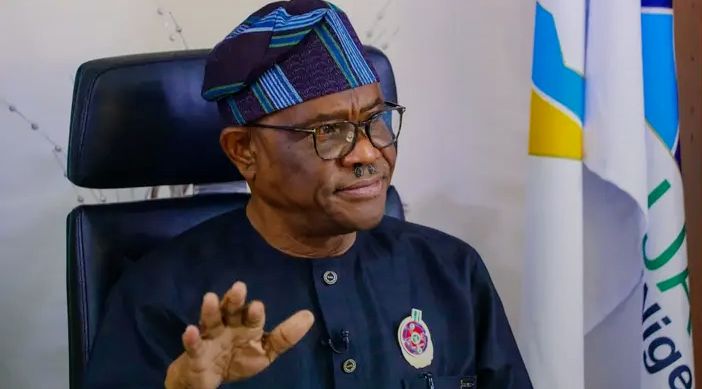
Nyesom Wike has challenged former Rivers State Governor Rotimi Amaechi to account for the projects and political empowerment he brought to Evo Kingdom and Rivers State during his 24 years in public office.
Wike made the challenge on Friday during an interactive session with leaders and stakeholders of Evo Kingdom in Obio-Akpor Local Government Area of Rivers State.
Amaechi served as Speaker of the Rivers State House of Assembly for eight years, governor of the state for eight years and Minister of Transportation for another eight years.
Wike questioned the development legacy of his predecessor, arguing that political leadership should be measured by its impact on the people and the structures established to sustain development after an officeholder leaves power.
The FCT minister also accused some political leaders of monopolising power and failing to groom successors, saying public office should be used to empower others and create opportunities for people from their communities.
He said, “Because how will I answer before God if these people could take that kind of risk, and opportunity came up for you to help, for you to uplift them? But because of your greed, because of your selfishness, you don’t want anybody to reach the level you are.
“You don’t want anybody in Obio-Akpor to be governor again because you have become governor. God will not be happy with me.”
Wike subsequently challenged Amaechi’s supporters to identify specific projects or initiatives he attracted to Evo Kingdom or Rivers State during his years in government.
“Someone was Speaker of the House of Assembly for eight years, Governor for eight years, and Minister for eight years — that is 24 years in top leadership positions! What can anybody point to that he attracted to Evo Kingdom or Rivers State in all those 24 years? Nothing! Not one single thing!” Wike said.
The minister contrasted Amaechi’s record with his own experience in public office, saying he could identify projects he attracted to Rivers State when he served as Minister of State for Education.
“I was a Minister of State for Education, and as I sit here, I can count the projects I brought to Rivers State and my people.
But somebody was Speaker, Governor, and headed a very lucrative ministry as a full Minister for eight years, yet brought nothing back home! How can someone who spent 24 years in power without empowering his people or raising new leaders now turn around to tell you he loves you?” he queried.
Wike also defended his own political record, saying he was satisfied with the positions he had held and was not seeking to return to any office he had previously occupied.
He reaffirmed his support for President Bola Tinubu and said his focus was on contributing to sustainable leadership and supporting the emergence of leaders capable of continuing the development process.
“After all, what do I want that God has not given to me? Nothing! Nothing! Nothing! The only thing I ask from God today is to continue to give me long life,” he said.
“I can’t be a governor again. I’ve been a minister two times. I cannot be chairman of council again. So I am happy. I don’t have anything to lose.”
Wike further argued that the quality of successors and institutions left behind should be central to assessing political leadership.
He warned against a system in which development depends entirely on one individual, saying progress could collapse when such a leader leaves the scene.
“What leadership, as you are leaving, what’s the leadership you have kept behind to continue with where you have stopped? Because our problem here is that you just want only yourself. When you die, everything crumbles. That is not our own case,” he said.
The FCT minister also advised his supporters not to place absolute confidence in political promises or human relationships, urging them to remain guided by faith and personal responsibility.
“As a politician, I know that the only person who will not disappoint is God,” Wike declared.
“So, don’t ever believe that a human being will not disappoint you.
No matter the love you have, do the best you can do. If the person disappoints you, don’t kill yourself. God will right the wrong,” he added.
Wike also recalled how his administration restructured the chieftaincy institution in Rivers State to ensure adequate representation for Evo Kingdom on the Rivers State Council of Traditional Rulers.
He dismissed suggestions that traditional political practices or the use of native charms could intimidate him, maintaining that his political decisions were based on his convictions.
At the meeting, traditional and political leaders expressed support for Wike and the political platform backing his preferred candidates.
Among those who pledged support for President Tinubu and other candidates endorsed by the Rainbow Coalition were Eze Temple Ejekwu and the President of Evo Assembly, Elder Peter Chinwo.







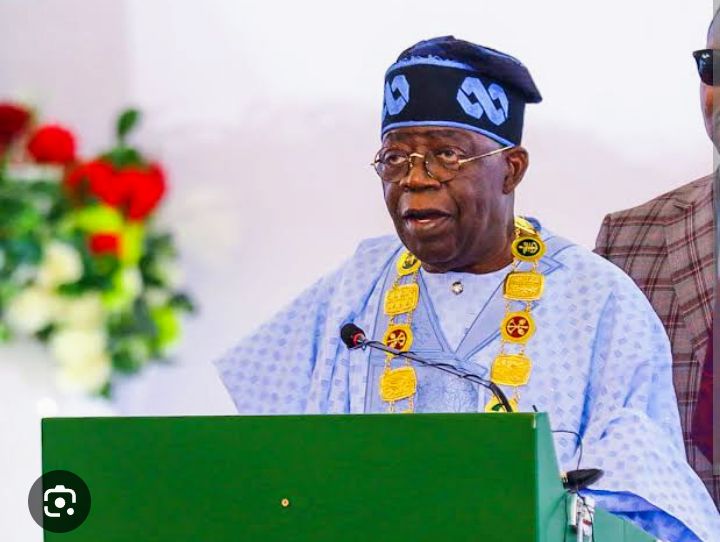
Nigeria’s current crisis is often discussed through the language of economics, politics and security.
Inflation, rising living costs, unemployment, insecurity, corruption and declining public confidence in institutions dominate national conversations.
Yet beneath these challenges lies another problem that deserves greater attention: a growing uncertainty over what constitutes acceptable conduct, accountability and leadership.
This is the problem of moral optics.
Leadership is not only about policies, appointments and government programmes. Leaders also send signals.
How public officials respond to allegations, how public resources are handled, whether institutions are allowed to operate independently, and whether wrongdoing attracts consequences all communicate something about the standards expected in society.
When accountability appears selective, allegations remain unresolved, political loyalty appears to outweigh ethical considerations, or citizens believe that proximity to power offers protection, the consequences can extend beyond government.
They can ripple through society.
Nigeria’s corruption, insecurity, poverty and institutional weaknesses did not begin with President Bola Ahmed Tinubu. They are products of decades of accumulated problems under successive administrations.
However, every government inherits a responsibility not only to govern but also to strengthen public confidence in institutions and the rule of law.
That is why the Tinubu administration, like every government before it, deserves scrutiny over both its policies and the standards it sets through its conduct.
Elections, legitimacy and public confidence
President Tinubu was declared winner of Nigeria’s February 25, 2023 presidential election by the Independent National Electoral Commission (INEC), with 8,794,726 votes.
His major opponents challenged the result in court.
The Presidential Election Petition Court dismissed the principal petitions, while the Supreme Court subsequently upheld Tinubu’s election.
That remains the legal position.
But legal finality and public confidence are not necessarily identical concepts.
A court judgment settles a legal dispute according to the evidence and law before the court. Public confidence, meanwhile, depends on citizens’ broader perceptions of the electoral process, political institutions and the conduct of those entrusted with public office.
This distinction matters because democracy requires more than the formal transfer of power.
It also requires citizens to have confidence that institutions are credible, rules are applied consistently and public officials are subject to meaningful scrutiny.
The continued controversy surrounding aspects of the 2023 election should therefore be understood within that broader institutional context—not as proof that every allegation made by political opponents was established.
The transparency question
Few issues surrounding President Tinubu have generated as much controversy as questions concerning his identity, education and historical records.
Some of those claims have been litigated. Others remain political allegations or matters of public debate.
In 2023, former presidential candidate Atiku Abubakar sought documents from Chicago State University concerning Tinubu’s academic records.
A United States federal court granted the discovery application, allowing specified documents and testimony to be sought for use in the Nigerian proceedings.
The case itself concerned discovery and did not determine the ultimate validity of Nigeria’s presidential election.
That distinction is important.
Court-authorised discovery should not automatically be presented as a judicial finding that an allegation is true.
At the same time, persistent questions about the records of a sitting president naturally create a demand for clarity.
Transparency is not an admission of guilt.
Indeed, where allegations are false, documentary evidence can provide a powerful means of resolving them.
The same principle applies to discussions surrounding the historical United States forfeiture proceedings that have been associated in public debate with Tinubu.
Civil forfeiture proceedings are legally distinct from criminal convictions.
A forfeiture proceeding can concern property allegedly connected to unlawful activity without constituting a criminal conviction of a particular individual. U.S. case law expressly recognises the civil nature of forfeiture proceedings.
Consequently, such matters should neither be dismissed without examination nor inaccurately presented as proof of a criminal conviction.
The appropriate democratic standard is evidence.
Where allegations can be conclusively answered by records, records should speak.
Reform and the human cost
The moral question also extends to economic policy.
The Tinubu administration inherited an economy facing serious structural problems, including weak productivity, fiscal pressures, high inflation and foreign-exchange distortions.
Its response included the removal of the petrol subsidy and major changes to the foreign-exchange regime.
These reforms cannot be described responsibly in only one dimension.
The World Bank has reported improvements in Nigeria’s macroeconomic position following the reforms, including stronger external balances and increased government revenues. It reported that GDP grew by 3.9 per cent year-on-year in the first half of 2025, while foreign reserves exceeded $42 billion.
The World Bank has also stressed that macroeconomic improvement has not yet translated sufficiently into better living standards for many Nigerians.
Its assessments continue to identify high poverty, elevated food prices and weak household purchasing power as major concerns.
This is where economics intersects with morality.
A government can make a legitimate argument that difficult reforms are necessary to stabilise an economy.
Citizens can equally ask how the burden of those reforms is distributed.
The moral question is therefore not simply whether a policy is economically defensible.
It is whether people experiencing its immediate consequences can see a credible path towards improved living standards.
A reform that strengthens government finances but leaves vulnerable households unable to afford food, healthcare, education or transportation creates a political and social responsibility to ensure that the gains of stabilisation eventually reach ordinary citizens.
When survival becomes the dominant calculation
Prolonged hardship can also affect social behaviour.
This does not excuse crime, fraud, corruption, kidnapping, theft or other wrongdoing.
But economic insecurity can create an environment in which more people begin to make decisions primarily around survival.
The question becomes:
How do I survive?
That question becomes dangerous when citizens lose confidence that lawful economic activity will provide a viable path forward.
Nigeria’s security challenges have multiple causes and long histories. Kidnapping, terrorism, banditry and other forms of violent crime cannot be reduced to economic hardship alone.
The state nevertheless has an immediate responsibility to protect citizens, investigate crimes and ensure that those found responsible are held accountable through lawful processes.
When citizens repeatedly observe wrongdoing without credible consequences, confidence in government institutions can weaken.
And when confidence in formal institutions declines, people may increasingly rely on informal systems of influence, protection and survival.
That is how a political or economic crisis can gradually become a social and moral crisis.
The danger of impunity
Perhaps no word better captures the danger than impunity.
If an ordinary citizen believes that a minor offence will attract swift punishment while politically connected individuals can avoid consequences when accused of serious wrongdoing, the resulting lesson is damaging.
The perception can emerge that the law is not primarily about justice.
It is about power.
This is not a problem unique to the present administration. Nigeria has struggled with corruption and institutional accountability for decades.
Transparency International’s 2025 Corruption Perceptions Index, released in February 2026, continues to highlight the global consequences of weak anti-corruption systems and stresses the importance of accountable leadership, stronger justice systems and effective oversight.
Nigeria’s response therefore cannot be another anti-corruption slogan.
It must be institutional.
Investigate where credible evidence exists.
Prosecute where evidence supports prosecution.
Convict where guilt is established.
Acquit where allegations are not proved.
And apply the same legal standards regardless of political affiliation, ethnicity, religion or social status.
That is how confidence in institutions is rebuilt.
When politics becomes a defence for misconduct
Perhaps one of Nigeria’s deepest challenges is not simply that politicians can behave badly.
It is that citizens sometimes defend questionable conduct because the person involved belongs to their political, ethnic, religious or social camp.
This happens across political parties.
It happens across ethnic groups.
It happens across religious communities.
And it can happen even among people who otherwise demand accountability from those on the opposite side.
The result is a dangerous double standard.
Citizens may condemn corruption when their opponents are accused of it but search for excuses when their preferred political actors face similar allegations.
That culture makes genuine accountability difficult.
A democracy cannot develop a sustainable ethical standard if every demand for accountability is interpreted as an attack on a particular group.
The relevant question should be simpler:
What happened, what evidence exists, what does the law say, and what should the appropriate institution do?
That standard should apply to everyone.
Leadership as a national signal
This is ultimately what moral optics means.
A president, governor, minister, legislator or other public official does not merely occupy an office.
The office itself sends a message.
When institutions investigate powerful people transparently, citizens learn that power has limits.
When public officials explain controversial decisions and release relevant records, citizens learn that transparency is expected.
When wrongdoing is investigated regardless of political connections, citizens learn that accountability is possible.
But when institutions appear selective, explanations are avoided and political loyalty becomes the dominant defence mechanism, another message is sent.
Citizens may conclude that rules are flexible for the powerful and rigid for everyone else.
That conclusion can influence behaviour far beyond the political class.
Young people observing public life learn from what society rewards and what it tolerates.
Businesses learn from how contracts and regulations are enforced.
Civil servants learn from whether integrity is protected.
Communities learn from whether justice is consistent.
In that sense, leadership has a ripple effect.
The standard Nigeria needs
Nigeria does not need perfect leaders.
No democracy has them.
What it needs are institutions strong enough to scrutinise leaders, laws applied consistently, and a political culture in which evidence matters more than allegiance.
The Tinubu administration deserves to be judged not only by economic statistics or political achievements but also by the broader institutional environment it helps create.
The same standard should apply to every administration that follows.
The country’s problems are too deep to be solved by personalities alone.
Nigeria needs institutions that can survive personalities.
It needs accountability that does not depend on who occupies the presidency.
It needs citizens who can criticise their own political allies as readily as they criticise their opponents.
And it needs leaders who understand that public office carries not only constitutional powers but also a responsibility to set standards.
The ultimate test of leadership is therefore not whether every allegation against an officeholder can be eliminated.
It is whether the institutions of the country are strong enough to examine those allegations fairly, establish the facts and act according to law.
That is the foundation of public trust.
And without public trust, economic reforms become harder to sustain, security policies become harder to enforce and democratic institutions become increasingly vulnerable to cynicism.
Nigeria’s crisis may be economic, political and security-related.
But beneath all three lies a question of standards.
What behaviour does the country reward, what behaviour does it tolerate, and what behaviour does it hold accountable?
The answer will continue to ripple through Nigerian society long after individual politicians have left office.
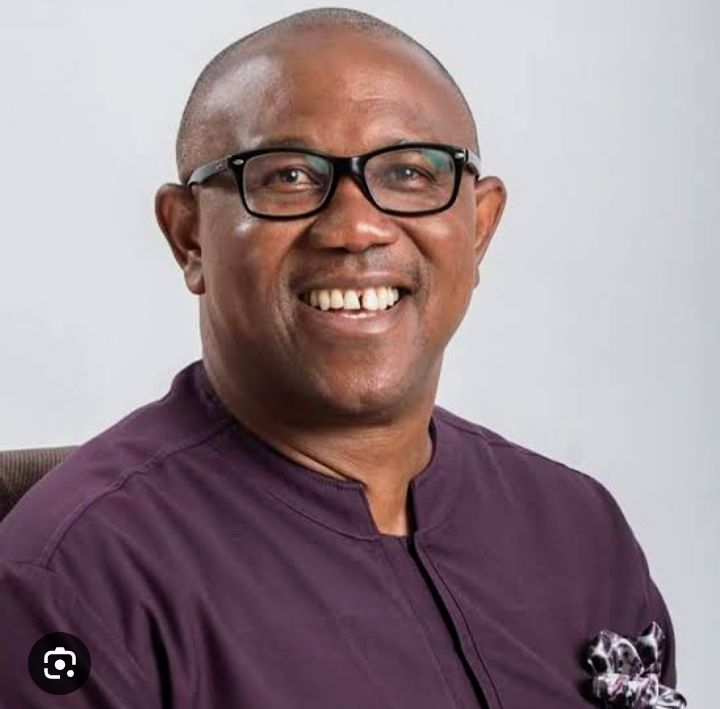
Bello El-Rufai, son of former Kaduna State Governor Nasir El-Rufai and a member of the House of Representatives, has thanked former Anambra State Governor Peter Obi for repeatedly checking on his father during his detention.
Bello made the disclosure during an interview with Ibrahim Ismaila Ahmed, uploaded on Monday and which gained widespread attention on Tuesday.
He said Obi’s repeated calls to inquire about his father’s wellbeing had taught him a personal lesson, particularly because he had previously been critical of the former Anambra governor.
Nasir El-Rufai has been in the custody of the Independent Corrupt Practices and Other Related Offences Commission (ICPC) since February 18, 2026, in connection with an ongoing investigation.
Speaking about politicians and other public figures who had contacted the family during the former governor’s detention, Bello expressed appreciation to several individuals.
“From Waziri Adamawa, to His Excellency, Governor Peter Obi, to His Excellency, Rotimi Amaechi, I’m calling politicians here now, to Jagaban, our father Rabiu Musa Kwankwaso, and many others, I would like to thank them,” he said.
Bello, however, singled out Obi for particular mention, saying the former governor had repeatedly contacted him to check on his father.
“Particularly Governor Peter Obi, you know, he kept calling, you know, like he would just call me just to see how…” Bello said.
He described Obi’s gesture as a life lesson, noting that his previous criticism of the former Anambra governor had not prevented Obi from showing concern for his family.
“And for me at 38 years old, it’s a lesson in life.
“Because in the case of Governor Peter Obi, I used to be critical of him, but, you know… So it’s a lesson,” he added.
Obi had previously spoken against El-Rufai’s prolonged detention, describing it as political persecution.
The former Kaduna governor’s detention has continued to attract political and public attention, with opposition figures and other political actors raising questions about the circumstances surrounding the case and calling for his release.
Meanwhile, Bello said his father had used his time in detention to read, study the Quran and reflect on his life and previous work.
He said the period had provided El-Rufai with an opportunity to spend time in isolation after years of public service.
“And as for Malam, he’s using the time to finish books, catch up, read the Qur’an, which is always, for his, you know, for 10 years he’s been working.
“So it’s also a moment for him to, in isolation, to reflect, to plan better, to tone down, and things like that,” Bello said.
The comments come amid continued political discussions surrounding El-Rufai’s detention and the broader investigation involving the former Kaduna governor.
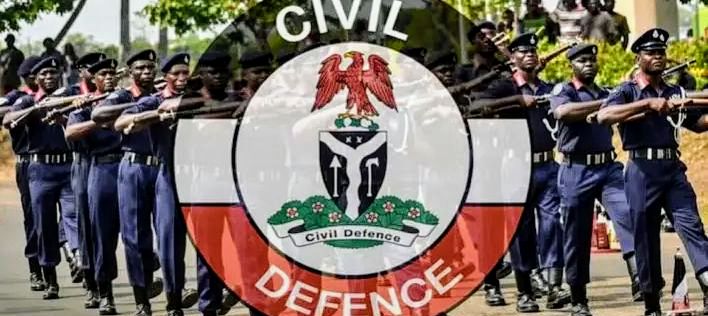
The Nigeria Security and Civil Defence Corps, Oyo State Command, has denied allegations that its State Commandant, Augustine Padonu, extorted money from personnel under his command.
The command described the allegation as unverified and misleading, saying there was no directive from the commandant compelling officers to make financial contributions towards his personal celebrations.
The denial was contained in a statement issued on Tuesday in Ibadan and signed by the Command’s Public Relations Officer, Samuel Opebiyi.
The statement followed a recent online publication alleging that personnel deployed to various beats across Oyo State were forced to contribute money towards Padonu’s birthday celebration and a church harvest programme.
According to Opebiyi, the allegations were false, stressing that the commandant neither directed nor authorised any officer to make financial contributions for either event.
He explained that Padonu’s birthday and the church harvest celebrations took place in early August and were strictly private family matters, with no connection to official resources or activities of the Corps.
The command also questioned the timing of the allegations, noting that they emerged shortly after a major restructuring and personnel redeployment exercise conducted on September 24.
Opebiyi said the exercise was part of routine administrative measures aimed at improving operational efficiency and strengthening the Corps’ preparedness ahead of the 2027 general elections.
He suggested that the publication may have been linked to dissatisfaction among some personnel affected by the new postings.
According to him, disgruntled individuals unhappy with the redeployment exercise could be attempting to undermine the integrity and reputation of the State Commandant.
The spokesperson maintained that personnel rotations and redeployments were normal administrative procedures within the Corps and were necessary to enable the NSCDC to effectively carry out its national security responsibilities.
“The State Commandant remains fully committed to the mandate of the Corps of protecting lives and property, safeguarding critical national assets and infrastructure, and supporting other security agencies in maintaining peace and security in the state,” Opebiyi said.
He added that the commandant remained committed to staff welfare and discipline, while reaffirming the Corps’ zero-tolerance stance on unauthorised levies and deductions from personnel allowances.
The command urged any officer with a legitimate grievance to make use of the appropriate administrative channels for investigation and resolution.
Opebiyi further warned that personnel found to have engaged in misconduct would be subjected to formal disciplinary procedures in accordance with established regulations.
The NSCDC spokesperson also called on media organisations to uphold objectivity and verify allegations before publication, particularly where such claims concern the integrity of security personnel and institutions.
He urged members of the public to disregard unverified reports that could damage confidence in the leadership of the Oyo State Command.
“The command will not be distracted from its duties in an attempt to undermine public confidence in the Corps or the leadership of the State Commandant,” he said.
command.
The command described the allegation as unverified and misleading, saying there was no directive from the commandant compelling officers to make financial contributions towards his personal celebrations.
The denial was contained in a statement issued on Tuesday in Ibadan and signed by the Command’s Public Relations Officer, Samuel Opebiyi.
The statement followed a recent online publication alleging that personnel deployed to various beats across Oyo State were forced to contribute money towards Padonu’s birthday celebration and a church harvest programme.
According to Opebiyi, the allegations were false, stressing that the commandant neither directed nor authorised any officer to make financial contributions for either event.
He explained that Padonu’s birthday and the church harvest celebrations took place in early August and were strictly private family matters, with no connection to official resources or activities of the Corps.
The command also questioned the timing of the allegations, noting that they emerged shortly after a major restructuring and personnel redeployment exercise conducted on September 24.
Opebiyi said the exercise was part of routine administrative measures aimed at improving operational efficiency and strengthening the Corps’ preparedness ahead of the 2027 general elections.
He suggested that the publication may have been linked to dissatisfaction among some personnel affected by the new postings.
According to him, disgruntled individuals unhappy with the redeployment exercise could be attempting to undermine the integrity and reputation of the State Commandant.
The spokesperson maintained that personnel rotations and redeployments were normal administrative procedures within the Corps and were necessary to enable the NSCDC to effectively carry out its national security responsibilities.
“The State Commandant remains fully committed to the mandate of the Corps of protecting lives and property, safeguarding critical national assets and infrastructure, and supporting other security agencies in maintaining peace and security in the state,” Opebiyi said.
He added that the commandant remained committed to staff welfare and discipline, while reaffirming the Corps’ zero-tolerance stance on unauthorised levies and deductions from personnel allowances.
The command urged any officer with a legitimate grievance to make use of the appropriate administrative channels for investigation and resolution.
Opebiyi further warned that personnel found to have engaged in misconduct would be subjected to formal disciplinary procedures in accordance with established regulations.
The NSCDC spokesperson also called on media organisations to uphold objectivity and verify allegations before publication, particularly where such claims concern the integrity of security personnel and institutions.
He urged members of the public to disregard unverified reports that could damage confidence in the leadership of the Oyo State Command.
“The command will not be distracted from its duties in an attempt to undermine public confidence in the Corps or the leadership of the State Commandant,” he said.
and said the recent allegations emerged shortly after a personnel redeployment exercise.
-
 Security3 months ago
NDLEA Declares Alleged Drug Kingpin, Three Associates Wanted, Freezes ₦9.8bn Linked to Syndicate
-

 Business/Finance2 months ago
How to Apply for Tunde Onakoya’s ₦250 Million Scholarship Programme and Free Laptop Offer
-

 National Affairs2 months ago
ICPC Uncovers 908 Suspected Ghost Workers Across 50 Federal MDAs, Recovers ₦942 Million
-

 Judiciary | Public Safety2 months ago
INEC Tells Court Voter Information Is Not Confidential in Emeka Ike’s ₦10bn Lawsuit
-
 Politics2 months ago
Atiku Challenges Tinubu to Reveal Details of ₦15.13bn SUV Procurement in 2026 Budget
-
 Judiciary | Public Safety2 months ago
Court to Rule Friday on NDLEA’s Bid to Destroy ₦480bn Meth Lab in Ogun
-
 Security2 months ago
Family Paid ₦50 Million Ransom to Secure Release of Abducted Kebbi Judge
-
 News2 months ago
2026 Budget: FG Earmarks ₦962.83bn for SUVs, Empowerment Projects Amid Debt Concerns