
News
2027: APC Chairmen Divided Over Working With Wike as Tinubu Seeks Reconciliation

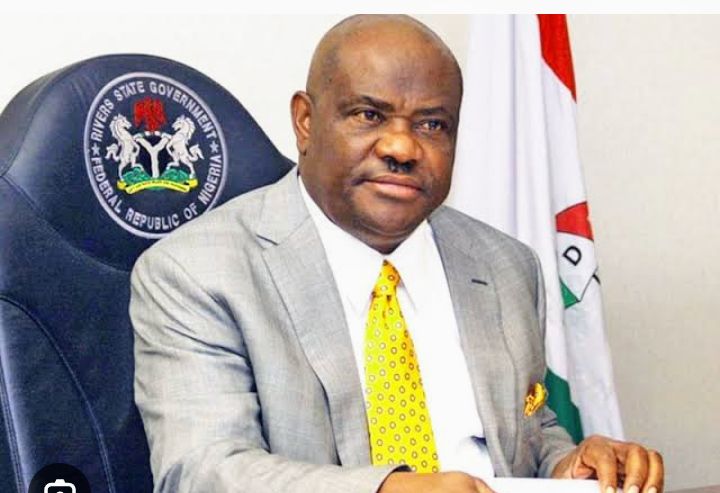
State chairmen of the All Progressives Congress have expressed divergent positions on whether the party should work with the Minister of the Federal Capital Territory, Nyesom Wike, as President Bola Tinubu intensifies efforts to resolve political disagreements ahead of the 2027 general elections.
While APC chairmen and leaders in some states said they would be willing to work with Wike if he formally joined the ruling party or if the national leadership reached an agreement with him, others rejected the prospect of accommodating the minister’s Rainbow Coalition in their states.
The disagreement largely stems from Wike’s continued membership of the opposition Peoples Democratic Party despite serving in the APC-led Federal Government.
Wike has also continued to promote the Rainbow Coalition, a cross-party political platform he says is designed to mobilise support for President Tinubu’s re-election in 2027.
However, his position has created tension with some APC governors and party leaders, who argue that supporting Tinubu at the presidential level should not translate into arrangements that could weaken APC candidates contesting governorship and legislative elections.
Wike, on his part, has maintained that his support for Tinubu does not prevent the PDP from fielding candidates for other elective positions.
APC chairmen take different positions
In Plateau State, APC Chairman Rufus Bature said the party was prepared to work with anyone who belonged to the APC, including Wike, if efforts were made to resolve the disagreement.
However, Bature insisted that Wike could not simultaneously identify with two rival political parties.
“If he wants to join the APC, he is free to do that because we don’t stop people from joining our party. But he cannot be APC in the morning and PDP in the night. We won’t allow that,” he said.
The Jigawa State chapter, however, adopted a more accommodating position.
The state APC Publicity Secretary, Bashir Kundu, said the party appreciated Wike’s contribution to Tinubu’s 2027 campaign and was prepared to work with anyone supporting the President.
Similarly, Gombe State APC Chairman, Mohammed Dantata, said the party would welcome anyone willing to join its ranks.
Zamfara State APC Chairman, Kabiru Moyi, also said he would abide by any decision reached by the party’s national leadership.
“If the National Secretariat of our great party is ready to align with him for the success of the party, I have nothing to say but to accept the decision,” Moyi said.
In Bauchi State, however, APC Chairman Muhammad Tilde said he could not independently determine whether the state chapter would work with Wike, even if President Tinubu succeeded in brokering peace.
Tilde said the issue would require consultations with other party leaders and stakeholders before the state could adopt a position.
Kwara State presented another dimension to the disagreement.
The state APC Chairman, Sunday Fagbemi, declined to comment on the reported reconciliation initiative, while party chieftain Abdul-Rahoof Labelabe said the G15, now known as the OTOGE Progressives, had already begun working with Wike’s coalition in support of Tinubu.
Benue, Sokoto, Kebbi chapters cautious
In Benue State, APC Chairman Benjamin Omale said the state chapter had not received any invitation from the Presidency regarding the proposed reconciliation.
He said the party would adopt a collective position if it was formally approached.
Omale added that the Benue APC remained focused on a unity movement supporting both Governor Hyacinth Alia and President Tinubu ahead of the 2027 elections.
In Sokoto State, APC Chairman Haruna Adiya said there was no issue to resolve between the party and the Rainbow Coalition because no APC member in the state belonged to the platform.
The Kebbi State APC chapter similarly distanced itself from the coalition, saying it recognised only its internal Tinubu/Kauran Gwandu support structure.
In Rivers State, where Wike’s political influence remains a major point of contention, the APC faction led by Emeka Beke warned against allowing the minister to undermine the party’s existing structure.
The faction’s Publicity Secretary, Darlington Nwauju, said the group had yet to determine whether it would work with Wike if President Tinubu brokered an agreement.
Nasarawa APC asks Wike to join party
In Nasarawa State, the APC urged Wike to formally join the ruling party and abandon the Rainbow Coalition.
The state chapter nevertheless commended the minister for supporting Tinubu’s 2027 re-election bid.
Nasarawa APC Publicity Secretary, Augustine Ogaba, said the party did not support political coalitions operating outside its recognised structure.
“As APC members, we do not approve of any coalition that is not recognised or supported by our party’s leadership,” Ogaba said.
He added that the state chapter would welcome Wike if he decided to join the APC.
In Taraba State, the APC said its immediate priority was strengthening the party and supporting Tinubu.
The chapter said it would operate within any framework eventually agreed upon by the President and the party’s organs.
APC structures may shape reconciliation
In Imo State, APC Publicity Secretary Jones Onwuasoanya expressed doubt that President Tinubu would bypass governors and engage directly with state chairmen on the matter.
According to him, the APC operates through established leadership structures, with state chapters expected to comply with the party’s constitution and directives from its leadership.
“There are channels of communication within the party, and the party at the state level will always abide by the Constitution of the party and the guidance of our leaders, especially the Commander-in-Chief,” he said.
Onwuasoanya added that Tinubu would likely consult the governors before taking decisions affecting party structures at the state and local levels.
In Oyo State, APC Publicity Secretary Olawale Sadare declined to comment on the issue, describing it as sensitive.
The divergent positions from the states highlight the political challenge facing the APC as Tinubu seeks to reconcile Wike’s cross-party mobilisation efforts with the interests of the ruling party and its candidates.
While some APC leaders appear willing to accommodate Wike if he works within the party’s structure, others insist that his continued identification with the PDP and promotion of the Rainbow Coalition could create conflicts ahead of the 2027 elections.
The outcome of the reconciliation efforts could therefore have significant implications for the APC’s internal cohesion, its relationship with Wike and the broader political realignment ahead of the 2027 general elections.
The United States Department of War has established an Office of Religious Affairs to strengthen the moral, ethical and spiritual readiness of American military personnel.
The new office was created through a memorandum issued on Wednesday and addressed to senior Pentagon leadership, commanders of combatant commands, directors of defence agencies and Department of War field activities.
The memorandum took effect immediately and created the position of Director of the Office of Religious Affairs, who will serve as a Principal Staff Assistant with direct access to the Secretary of War.
According to the directive, the director will serve as the principal adviser to the Secretary and Deputy Secretary of War on religious affairs across the department.
The office is expected to ensure that adequate resources are made available for religious affairs while helping to align departmental policies with the principles of free religious exercise and spiritual readiness within the military.
The memorandum, however, stressed that the initiative would not force military personnel or civilian employees to participate in religious activities.
“Nothing in this memorandum shall be construed to compel religious participation or to diminish the free exercise rights of any Service member, civilian employee, or family member of any faith or no faith,” the document stated.
Office to oversee military religious programmes
The Office of Religious Affairs will oversee funding and support for religious ministry, facilities and infrastructure, logistics, chaplain procurement programmes, as well as training and education for chaplains and religious support teams.
It will also support chaplain-led programmes, chapel youth programmes and faith-based home-schooling support for military families.
The office is further tasked with sponsoring and overseeing research, technology and analytical tools designed to support and assess spiritual fitness, spiritual readiness and spiritual resilience across the military.
The memorandum also assigns the office responsibility for supporting faith-based initiatives aimed at reducing suicide and strengthening the resilience of military personnel.
It will also oversee contracted services provided by faith-based non-Federal organisations.
The director will have authority to align existing policies and, where necessary, issue policies concerning religious affairs on behalf of the Secretary of War.
The office will also represent the Secretary of War on religious-affairs matters in engagements with Congress, other government departments and agencies, and civilian religious endorsing organisations.
Chaplains board placed under new office
Under the new arrangement, the Armed Forces Chaplains Board and its executive director will operate under the authority, direction and control of the Director of Religious Affairs.
The memorandum also sets out deadlines for establishing the office’s structure and funding.
The Director of Cost Assessment and Program Evaluation, working with the Under Secretary of War (Comptroller) and Chief Financial Officer, has been directed to establish an initial baseline budget for the office.
A funding plan for the 2027 fiscal year is expected to be submitted within 60 days.
Similarly, the Director of Administration and Management has 90 days to formalise the office within the Department of War’s organisational structure and prepare a directive formally establishing it.
The official is also expected to identify the initial allocation of Senior Executive Service, civilian and military positions needed to establish the office.
Military departments given 90 days to submit reports
The memorandum further directs the various departments, working with their respective Chiefs of Chaplains, to submit comprehensive reports within 90 days on unfunded and underfunded religious-affairs requirements.
The reports are expected to cover religious ministry, facilities, logistics, chaplain-led programmes, youth programmes and faith-based home-schooling support.
They will also include suicide-reduction initiatives, contracted faith-based services, research and technology for spiritual fitness and resilience, chaplain procurement programmes, and training and education for chaplains and religious support teams.
The establishment of the Office of Religious Affairs therefore creates a central structure within the Department of War for coordinating religious-affairs policy, resources and programmes while maintaining the stated rights of service members and civilian personnel to practise a faith or have no religious affiliation.

level since global measurements began, but new findings from the Reuters Institute show that two African countries are bucking the trend.
The Reuters Institute’s Digital News Report 2026, based on responses from 48 markets, found that trust in news declined in 29 countries, with the global average falling to 37 per cent — the lowest level recorded since the institute began tracking the measure in 2015.
Kenya and Nigeria, however, recorded an overall news trust level of 68 per cent each, placing both countries jointly at the top of the 48 markets surveyed.
The figure puts the two African countries significantly ahead of the United States, where overall trust in news stood at 25 per cent.
For Felix Imoh, Global PR Manager at Legit, the development raises an important question about the changing relationship between African audiences and digital newsrooms.
“The story worth telling” is not only that trust in news is falling globally, but that some African newsrooms are managing to build credibility with audiences despite difficult economic and technological conditions.
South Africa records decline
The picture is different in South Africa, where overall trust in news fell by five percentage points to 50 per cent.
The decline moved the country from second place among all markets surveyed in 2022 to ninth in the 2026 report.
The decline in audience trust has coincided with pressure on the country’s traditional media industry.
According to the Reuters Institute, the Mail & Guardian reduced its workforce by 12 employees from an already small newsroom of 25 permanent staff.
The development came against the backdrop of wider changes in South Africa’s print media industry, including Media24’s print shutdowns that began in 2024.
The developments highlight the relationship between newsroom capacity and public confidence at a time when media organisations across the world are struggling with declining advertising revenues, audience fragmentation and competition from social media platforms.
Digital-first newsrooms gaining ground
The Reuters Institute data also points to the growing influence of digital-first news organisations in Africa.
In Kenya’s online news category, TUKO.co.ke recorded a weekly reach of 62 per cent, ahead of Citizen TV online, Kenyans.co.ke and Daily Nation online.
In Nigeria, Legit.ng is identified by the Reuters Institute as one of the digital-born brands continuing to grow, particularly among younger audiences.
The growth is taking place despite wider challenges facing Nigeria’s media industry, including pressure on press freedom, advertising economics and laws affecting online activity.
Unlike traditional broadcasters and long-established newspapers, digital-first newsrooms operate in an environment where audiences can move between multiple platforms and competing sources within seconds.
For such organisations, retaining an audience requires more than publishing frequently.
Accuracy, verification and transparency have become central to maintaining credibility.
AI changes newsroom verification
Technology is also changing how newsrooms approach accuracy.
At TUKO.co.ke, editorial decisions are supported by EditorialEye, an in-house artificial intelligence assistant trained on the organisation’s editorial guidelines, search-engine optimisation standards and ethical frameworks.
The system checks and flags content and makes recommendations, but does not write stories. Final editorial decisions remain with human editors.
The distinction is significant as artificial intelligence-generated content becomes increasingly difficult for audiences to identify.
The Media Council of Kenya’s State of the Media 2025 report found that 63 per cent of Kenyan media consumers said they could not distinguish AI-generated content from traditional reporting.
This places additional responsibility on newsrooms to establish clear editorial processes around verification and the use of AI.
Fact-checking and the value of verification
At Legit.ng, the emphasis on verification has also been reflected in stories that became the subject of online misinformation.
One example involved a claim that South Africa had denied BUA Group Chairman Abdul Samad Rabiu a visa.
FactCheckAfrica rated the claim misleading, explaining that Rabiu had been refused entry because the visa he held had expired the previous day, rather than having his visa application rejected.
The verification identified Legit.ng among the outlets that had accurately reported the circumstances from the outset.
Another case emerged in September after a Facebook post distorted the name and figures associated with a pledge by SDP presidential candidate Adewole Adebayo.
FactCheckAfrica subsequently confirmed that the pledge was genuine. Adebayo had proposed an 11-to-15-kilowatt solar commitment for every Nigerian roof within 11 months.
The fact-check also listed Legit.ng’s report alongside reports by PUNCH, Vanguard and Pulse Nigeria as accounts that had accurately captured the pledge.
For digital newsrooms, such examples demonstrate why verification cannot be treated merely as a response to mistakes after publication.
Instead, accuracy has to be incorporated into the reporting process before a story reaches the audience.
A wider African trend
Other digital news organisations, including Briefly News and YEN.com.gh, are also operating within markets where audiences increasingly consume news through digital platforms.
Their experiences reinforce the need to examine Africa’s media landscape beyond the traditional distinction between established newspapers and newer digital publications.
The changing media environment suggests that audience trust can be built by organisations willing to demonstrate how they verify information, disclose the role of technology and correct errors when they occur.
However, the Reuters Institute’s findings also come with an important qualification.
The institute notes that the samples in both Kenya and Nigeria are skewed towards younger, urban and English-speaking respondents. The figures therefore should not be interpreted as fully representative of the entire populations of the two countries.
Even with that limitation, the findings provide an important indication of how digitally engaged audiences in both countries view their news media.
For news organisations operating in an increasingly fragmented information environment, trust is becoming closely tied to transparency, verification and consistency.
The broader lesson is that established media brands cannot rely solely on institutional history to maintain audience confidence.
Newsrooms increasingly have to demonstrate credibility through their journalism — one verified report, transparent correction and clearly explained editorial decision at a time.
As misinformation, artificial intelligence and rapidly changing digital platforms continue to reshape the news industry, the African experience offers an important case study in how digital-first journalism is competing for public trust.
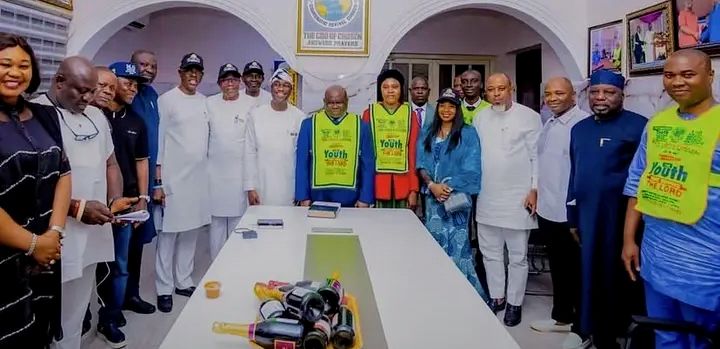
Lagos State Deputy Governor and All Progressives Congress governorship candidate for the 2027 election, Obafemi Hamzat, has met with the General Overseer of the Lord’s Chosen Charismatic Revival Ministries, Pastor Lazarus Muoka, as political activities intensify ahead of the Lagos governorship election.
Hamzat disclosed the meeting in a statement shared on Wednesday, saying discussions centred on the need for collective efforts and collaboration to build a Lagos that works for all residents.
According to the deputy governor, the engagement focused on what he described as a “shared responsibility” to contribute to the development and future of Lagos State.
“I spent time today with Pastor Lazarus Muoka at The Lord’s Chosen Charismatic Revival Ministries,” Hamzat said.
“We spoke about our shared responsibility to build a Lagos that works for everyone and the importance of working together to achieve this,” he added.
Hamzat said his vision for the state remained focused on public service and creating a better future for residents, stressing that he would continue to engage with different stakeholders in pursuit of that objective.
“Our vision remains rooted in service and a commitment to creating a better future for every resident. I will continue to listen and work with others to make this vision a reality,” he said.
The meeting is coming as political activities gather momentum in Lagos ahead of the 2027 governorship election, with political parties and aspirants increasingly engaging various groups and stakeholders across the state.
Hamzat is seeking to succeed Governor Babajide Sanwo-Olu, whose tenure will end in 2027.
The deputy governor was adopted as the Lagos APC’s consensus governorship candidate by the party’s Governance Advisory Council in April, positioning him as the ruling party’s candidate for the forthcoming election.
His engagement with Pastor Muoka adds to his ongoing consultations with stakeholders as he prepares for the 2027 contest.
The meeting also highlights the increasing importance of engagements between political actors and religious or community leaders ahead of the election, although Hamzat’s statement described the discussion primarily in terms of collaboration and the development of Lagos.
As the 2027 election approaches, Hamzat is expected to continue his engagements with residents, groups and other stakeholders as he seeks support for his bid to lead Lagos State.
-

 Security3 months ago
NDLEA Declares Alleged Drug Kingpin, Three Associates Wanted, Freezes ₦9.8bn Linked to Syndicate
-

 Business/Finance2 months ago
How to Apply for Tunde Onakoya’s ₦250 Million Scholarship Programme and Free Laptop Offer
-
 National Affairs2 months ago
ICPC Uncovers 908 Suspected Ghost Workers Across 50 Federal MDAs, Recovers ₦942 Million
-

 Judiciary | Public Safety2 months ago
INEC Tells Court Voter Information Is Not Confidential in Emeka Ike’s ₦10bn Lawsuit
-
 Politics2 months ago
Atiku Challenges Tinubu to Reveal Details of ₦15.13bn SUV Procurement in 2026 Budget
-
 Judiciary | Public Safety2 months ago
Court to Rule Friday on NDLEA’s Bid to Destroy ₦480bn Meth Lab in Ogun
-
 Security2 months ago
Family Paid ₦50 Million Ransom to Secure Release of Abducted Kebbi Judge
-
 News2 months ago
2026 Budget: FG Earmarks ₦962.83bn for SUVs, Empowerment Projects Amid Debt Concerns